


It is believed that during the full-scale war, the number of communications of Ukrainians with the European and generally international community in the professional, humanitarian and political fields increased significantly. This is both true and not quite true at the same time, and later in the text there will be a broader explanation of why exactly. In short, joint actions did not start yesterday and not two years ago, so rather the perspective on them and the scale have changed.
At a time when Russia is destroying housing, infrastructure, and sights, stealing and appropriating Ukrainian art, and most importantly, stealing our country's resources—human, time, and financial, which are necessary for survival and recovery, the support of friends of Ukraine is often becomes life-giving in the literal sense.
Therefore, it is important for us to speak out about what is being restored. About projects and initiatives that bring back to life objects and meanings valuable for national and world heritage.
There are no small or big achievements on this path. Each shift can unfold differently. What is more important - a clean river or a new school? A saved memory or a saved memory? Recreated route or decoration on the facade of a historic building?
Buildings, sights, spaces, ideas, all these are fragments of one whole, our identity. Preserved, they will allow the country to heal the wounds of the past and present.
Fortunately, there are many such initiatives, so our story highlights selected projects in different parts of the country. From small to large, we talk with people and about people who drive change.
Odesa and its thousands of doors
"Thousand Doors of Odessa" is a carpentry restoration workshop. Since 2019, these people have been bringing old doors and facades of Odessa houses back to life. "Thousand doors" was founded Konstantin Yemelyanov and Oleksandr Levitskyi in cooperation with the NGO "Architecture of Odessa". Manages the technical process of restoration Konstantin Kraev.

The restored entrance door of the wing next to the house of Grigory Marazli, built in 1835. Photo source: instagram.com/1000doorsofodessa
The NGO "Center for Project Initiatives "DIRECT"" also played a role in scaling up the activities of the workshop. Its co-founder, Darya Babilunga, acts as the coordinator of the "Doors" grant project, which is currently implemented by Odessa's heritage defenders.
From the beginning, the team's tasks were restoration of objects of the urban environment, popularization of the idea of preserving historical heritage among citizens, the role of a "bridge" between residents of historical buildings and restorers and patrons, as well as research activities: systematization of objects, creation of a map and catalog of historical doors of Odessa with archival materials and drawings.
The initiative "1000 doors of Odesa" received the support of the EU Program. Its full name is the EaP Civil Society Facility (CSF). This is a European Union-funded project implemented by an international consortium led by the Irish organization GDSI Ltd to build the capacity of civil society organizations in 6 Eastern Partnership countries.
Until 2024, the NGO "Thousand Doors of Odesa" together with the NGO "Center for Project Initiatives "DIRECT"" should use the allocated funds to implement the restoration program and the information and educational campaign that they described in the grant.
Currently, the 1000doors.org site is operating with the possibility of creating applications for restoration works, the catalog of historical objects and the dictionary of terms are being filled. The team is working on the development of educational events and excursion routes through Odesa, which will tell the participants about rare doors dating from the end of the 19th and the beginning of the 16th centuries, as well as those that have already been restored by preservationists. Oleksandr Levytskyi says: restorers have now restored XNUMX objects and announced XNUMX more doors that are awaiting renovation.
"The work process looks like this: residents of historic buildings and entrances leave an application on our website. When we are ready to tackle the next door, we contact them, sign the legal documents and dismantle the door. We put temporary ones and get to work. After the door is restored, we return it to its place. This is in a month or a half or two or three, depending on the complexity of the work and many other factors," Oleksandr explains.
The restorer says that there may be features in the condition of the door that cannot be determined in advance, this becomes known in the process of restoration, cleaning from layers of paint, etc.:
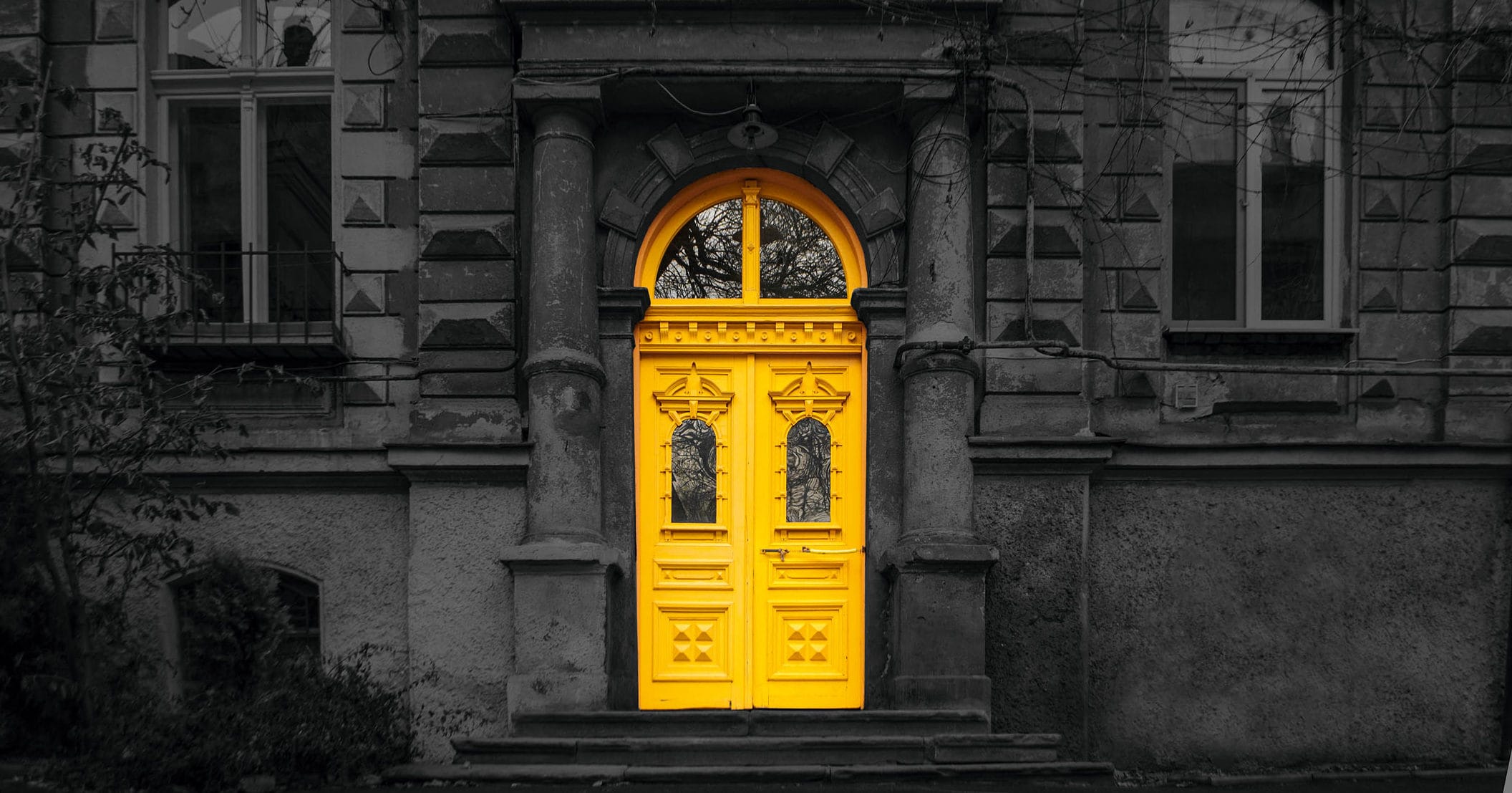
The door of the building 32 on the street Zhukovsky in Odessa. Photo source: pragmatika.media
"In general, there is a pattern of work: removing layers of paint, preparatory sanding, which makes it possible to understand the condition of wood and decorative elements - whether they need to be restored or reproduced. There are also often doors with forged bars, they are cleaned by the method of sandblasting. Lost or damaged decorative metal elements are restored in the forge. After the forge, the doors go to us, where we try to cover the metal product with a three-component paint as soon as possible, which protects them from corrosion and the influence of the external environment."
"The European Union pays a number of our costs, but we would also be very grateful to donors who can support the project by making contributions to our official NGO account." Levitsky notes: stable funding and greater attention to urban restoration from the municipality, authorities and local businesses (which sometimes operate the buildings where the objects in need of restoration are located) could ensure more productive work.
Regarding plans for the future, according to the co-founder of "Thousand Doors of Odessa", the team sees itself until the middle of summer 2024, further plans are affected by a number of factors, including the state of war. At the previous location, where the team rented the workshop premises, there was an attack, but Oleksandr says that it "happened easily" - the glass was broken and the door was damaged, the electricity was damaged.
Oleksandr Levitskyi: "We try to work and not get distracted. Because war is war, and restoration is on schedule"
According to the restorer, it is important to focus attention on rare elements, such as doors, windows, gates. If it is not possible to restore the buildings completely, then at least those parts of them that wear out. This would make it possible to prepare for the tourist seasons that will be relevant after the war, to draw up tourist routes through Odesa that would demonstrate how cultural heritage can change in specific cases, contrasting them with the general state of affairs. For example, restoration of facades is more expensive and difficult to implement.
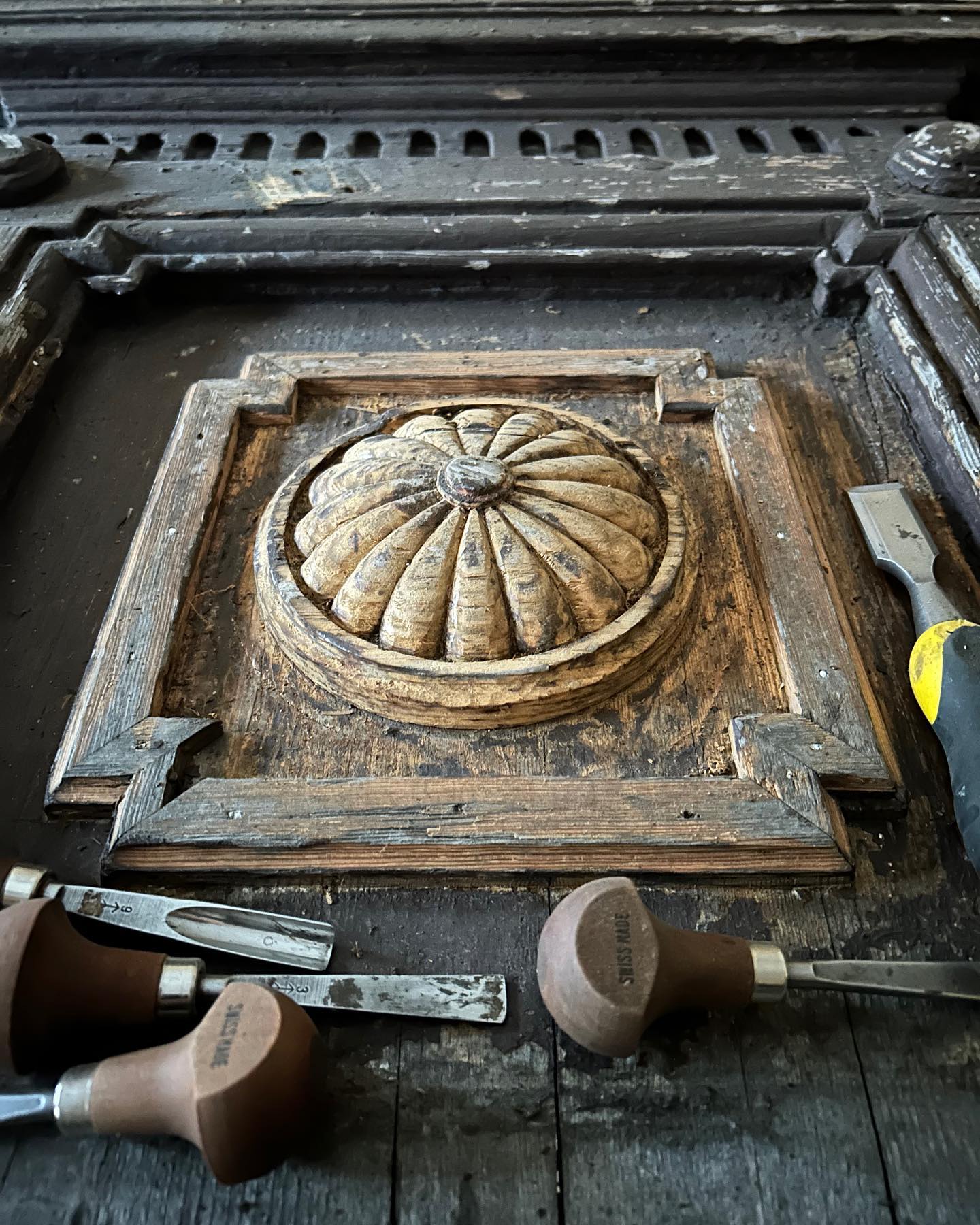
Cleaning of elements from layering before restoration. Photo source: instagram.com/1000doorsofodessa
Oleksandr Levytskyi: "I think it is important to focus on artifacts - they make up the city»
Daria Babilunga, co-founder of the "DIRECT Project Initiatives Center" and coordinator of the grant project implemented by the NGO "Thousand Doors of Odessa", says that it was very important for the team members to draw attention to the problems of restorers in Ukraine: "Even before the full-scale war With this project, Oleksandr Levytskyi and his team wanted to emphasize their activities: that soon we will not have someone qualified to restore. They have huge plans to develop this industry. I believe that the project gave them the opportunity to maintain a workshop, to perform work in a suitable room with the necessary equipment. For example, part of the funds was spent on equipment that is unrealistic to buy with your own funds, if you are a restorer and public figure, and not an entrepreneur. That's why it's an extraordinary help."
Chernihiv and its wooden lace

Wooden lace is a poetic name for wood-carved decoration of shutters, cornices, sandriks (from Italian sandric, Latin sanidis, Greek σανις - board. - Ed. note), overlays and other decorative elements of facades.
Wooden architecture is characteristic of Chernihiv Oblast, this heritage is very vulnerable, because nowadays such a tradition is actually not reproduced during the construction of buildings, and the war increases the risk of destruction. Openwork wood can easily be damaged by time, moisture or fire. Buildings with "lace" mostly date back to the end of the XNUMXth and the beginning of the XNUMXth centuries. This is a venerable age in which they need attention, otherwise these treasures will disappear forever.
"Human indifference is two words that describe the main problem in heritage preservation. And the lack of a mechanism of responsibility." Stanislav Ivashchenko
"Wooden Lace of Chernihiv" is a non-commercial project founded in 2018. He is the author of the idea and the manager Stanislav Ivashchenko, the core of the team is three to four dozen people who actively participate in various project initiatives. Heritage defenders organize inspections and restore houses, conduct research activities - this includes photo and video recording, searches for information about the history of construction and owners; tell about the wooden architecture of Chernihiv Oblast to a wide audience.
Stanislav Ivashchenko says: to date, the team has restored 9 buildings, 3 more are in the works. The website "DMCH" demer.cn.ua has information about approximately 300 objects, it may be more or less complete, depending on what we managed to learn about the building.
A new website of the project is under development, in its updated version it is planned to publish information about 400-500 houses.
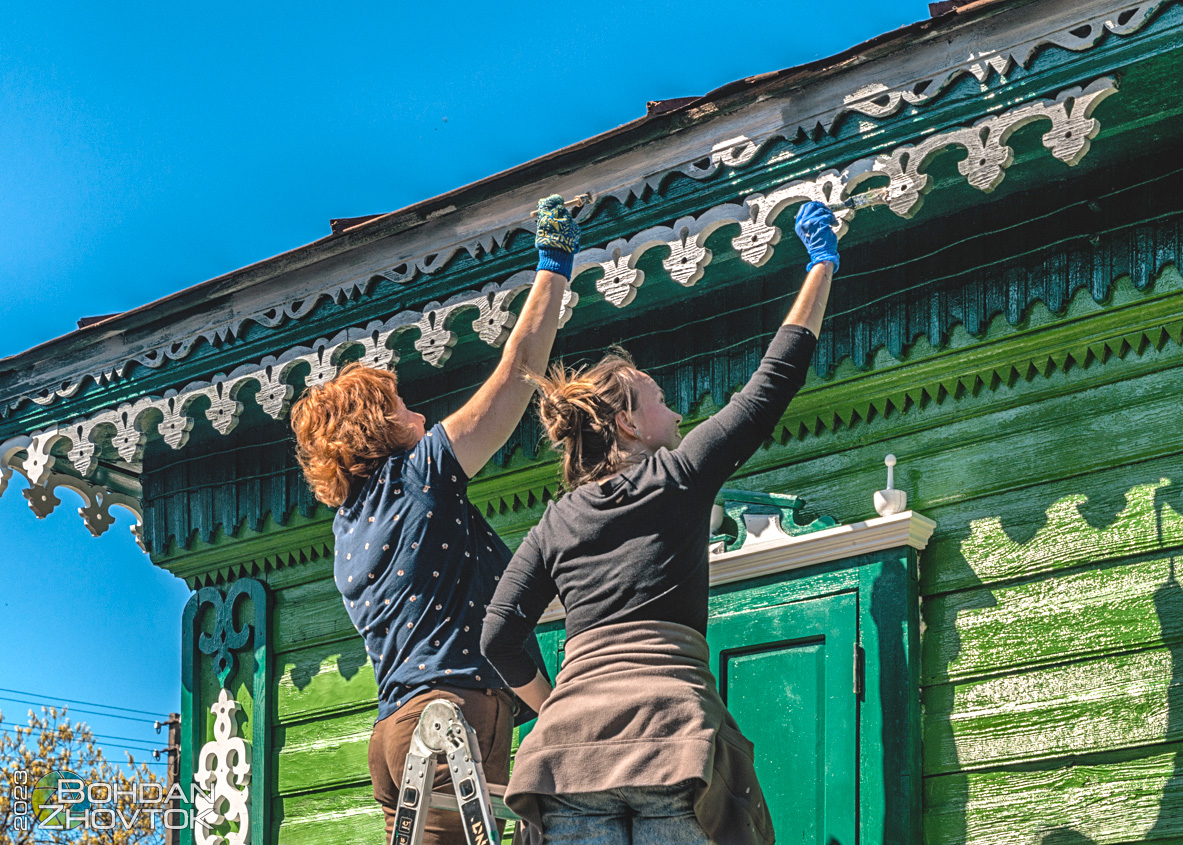
The "DMCH" team restores old houses with wooden decoration and conducts research activities. Photo: Bohdan Zhovtok
Chernihiv activists have been cooperating with specialists from the Department of Mechanical Engineering and Woodworking Technologies of Chernihiv Polytechnic University for a long time, the founder of "DMCH" calls the university partner No. 1. The initiative was supported by the Sumy paint manufacturer Polysan, this year the business helped with materials for the restoration of one of the buildings.
Ivashchenko also talks about a one-time collaboration with the "Tolokar" project - these are mobile digital production workshops equipped with various equipment that can travel to locations. The use of digital tools makes it possible to involve the world's scientific and engineering experience in solving local humanitarian problems, because there is an international network of specialists who exchange ideas. "Tolokartsi" helped restore one of the houses in Chernihiv.
In 2023, the project "Wooden Lace of Chernihiv" selected a monetary grant from the Polish EID Ukraine Foundation. The representatives of the foundation themselves offered to try their hand at the DMCH grant program, being interested in their work.
"With this money, we financed work on two buildings - a building on Zemska Street, 1 and a building on Muzeynnaya Street, 2-B. However, the estimate of these two projects exceeded the funds we received, so we are talking about co-financing," explains Stas Ivashchenko. Also, the team periodically receives tools and some consumables from a foreign patron, a Ukrainian by origin who lives in the USA.
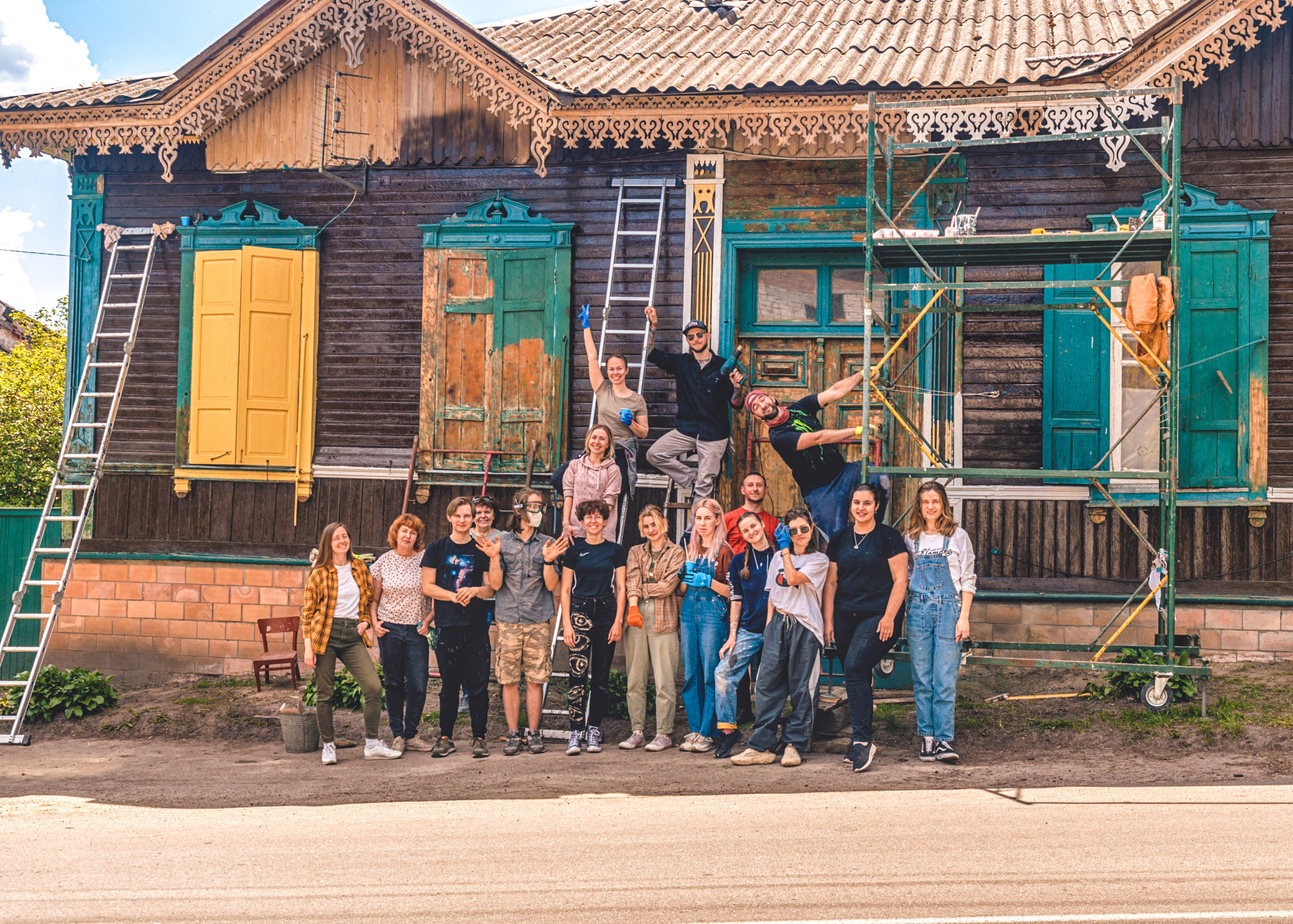
The "DMCH" team restores old houses with wooden decoration and conducts research activities. Photo: Bohdan Zhovtok
Ivashchenko notes: the more partners and friends in the project, both local and international, the easier it is to build up the work and speed it up, take more buildings, attract the resources of other experts, outsource certain tasks.
Due to the war and hardships, the team is now working on a tighter schedule than before, but this year they have a record number of facilities. Work on the site continues, "Wooden Lace" experts participate in filming and YouTube projects.
"We are also working on the restoration of facades, and this year - with the largest number of houses. In parallel, we conduct excursions, our people go on expeditions and explore new settlements. Next, we continue to deal with the museum direction — collecting information, samples of lace. I plan to organize an exhibition of old carving samples in the cold season," says the founder of the project.

Photo source: instagram.com/demer.cn.ua
Stanislav Ivashchenko calls the indifference of ordinary people, balance-keepers, authorities and old habits, when "everything is collective, and therefore not mine, and I should not be responsible for it," as the main obstacle to preserving heritage.
"Restoration of building facades, first of all, is not such an expensive story. Secondly, if it is stretched over time, for example, for half a year or a year, then it is generally quite a cheap pleasure. Strip paint, repaint, cut new lace... I would say it's about human indifference - two words that describe the main problem in this matter. And about the lack of a mechanism of responsibility, if we are talking about registered monuments of history or architecture. In our country, when it comes to castles or palaces, residents of neighboring settlements dismantle them for building materials or graze cows on the territory," the heritage defender states.
The profession of "grant writer" and unmissable opportunities

"Earlier, it seemed to me that about 20% of the population knew what grants are and how it works. During the war, 80% had heard of the word at least once "grant". But in most cases, people don't get into the details of what it is." Daria Babilunga
With the co-founder of the Odessa NGO "Center for Project Initiatives "DIRECT" and Let's Odesa, consultant Diya.Business in Odessa, grant manager Daria Babilunga, we talked about aid programs and grant initiatives for Ukraine as a whole, in order to understand trends and a generalized "portrait" individuals or organizations that have a request for such support.
Grant manager, grant writer, fundraiser are new professions for our country, and Daria declares their existence:
"At one of the public events, I named what I do for the first time in my life. I'm a grant writer. She took the microphone and asked - do you understand that we exist? I consider it a personal victory."
The expert says: European programs and funds worked long before they became known in Ukraine, European youth have been using their opportunities for a long time. The cooperation of Ukrainian organizations with the platforms of Europe and the USA began before the war, in the framework of establishing cooperation, good neighborliness, and our integration into the EU.
In addition to the direct changes in interaction patterns caused by the war, a large number of local public organizations-regranters have appeared in Ukraine, which interact with international funds and offer opportunities to receive relatively small funds. This helped to make the very idea of the grant more recognizable in Ukraine.
Darya notes: previously (she has been working with grants since 2015), proposals to NGOs to work together so that they could receive grant support were often treated as "free cheese in a mousetrap". Now this attitude has changed significantly.
Daria Babilunga: "Why did the war have to happen so that it started working like this?"
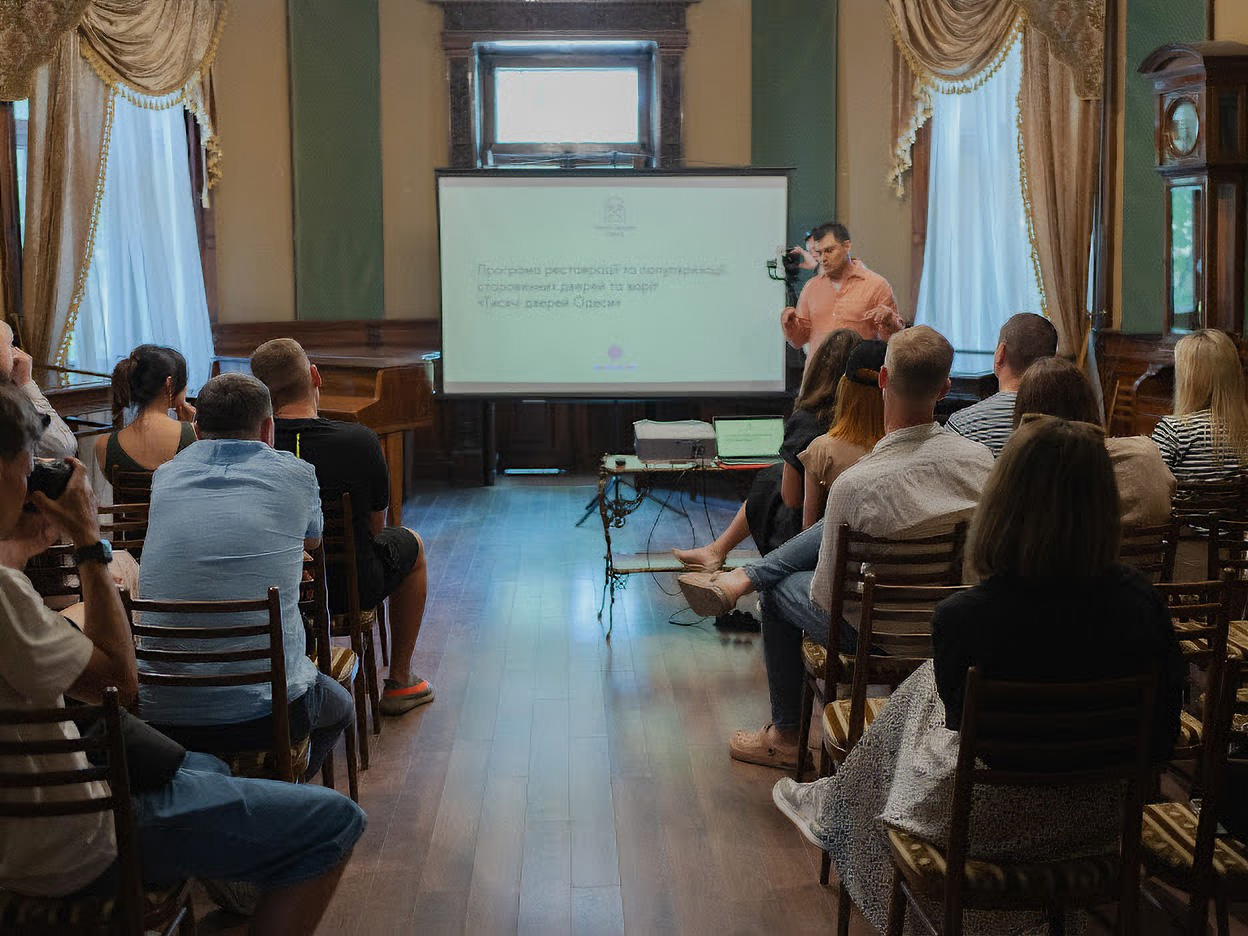
During the presentation of the grant project "1000 doors of Odessa". Photo courtesy of Darya Babilunga
Before the full-scale war, the NGO "Center for Project Initiatives" implemented projects independently.
"In addition to "Thousand Doors", we worked on social initiatives in co-authorship with the authorities, business, and entrepreneurs. It was always about non-commerce — tourism, media, culture, architecture, social projects," says the grant manager.
From 2020-21, the "Center" began to consult others, their work already included successful experience of working with large programs, the Ukrainian Cultural Fund. They were approached by public organizations that wanted to achieve similar results.
"It was a time when there were many competitions from European commissions for the unification of the state and public communications," says Daria. At that time, it was impossible for grassroots initiatives to participate in large programs without approval from state authorities.
"Everything changed during the war, I can't say that these are external factors. We and competence are changing. We are beginning to understand that we are interested in working with businesses, NGOs, and individuals," Babilunga continues. A large share is now occupied by work with charitable foundations.
As for cultural programs and preservation of heritage, according to the expert's observation, at the beginning of the full-scale war, their number did not increase, because other humanitarian priorities appeared.
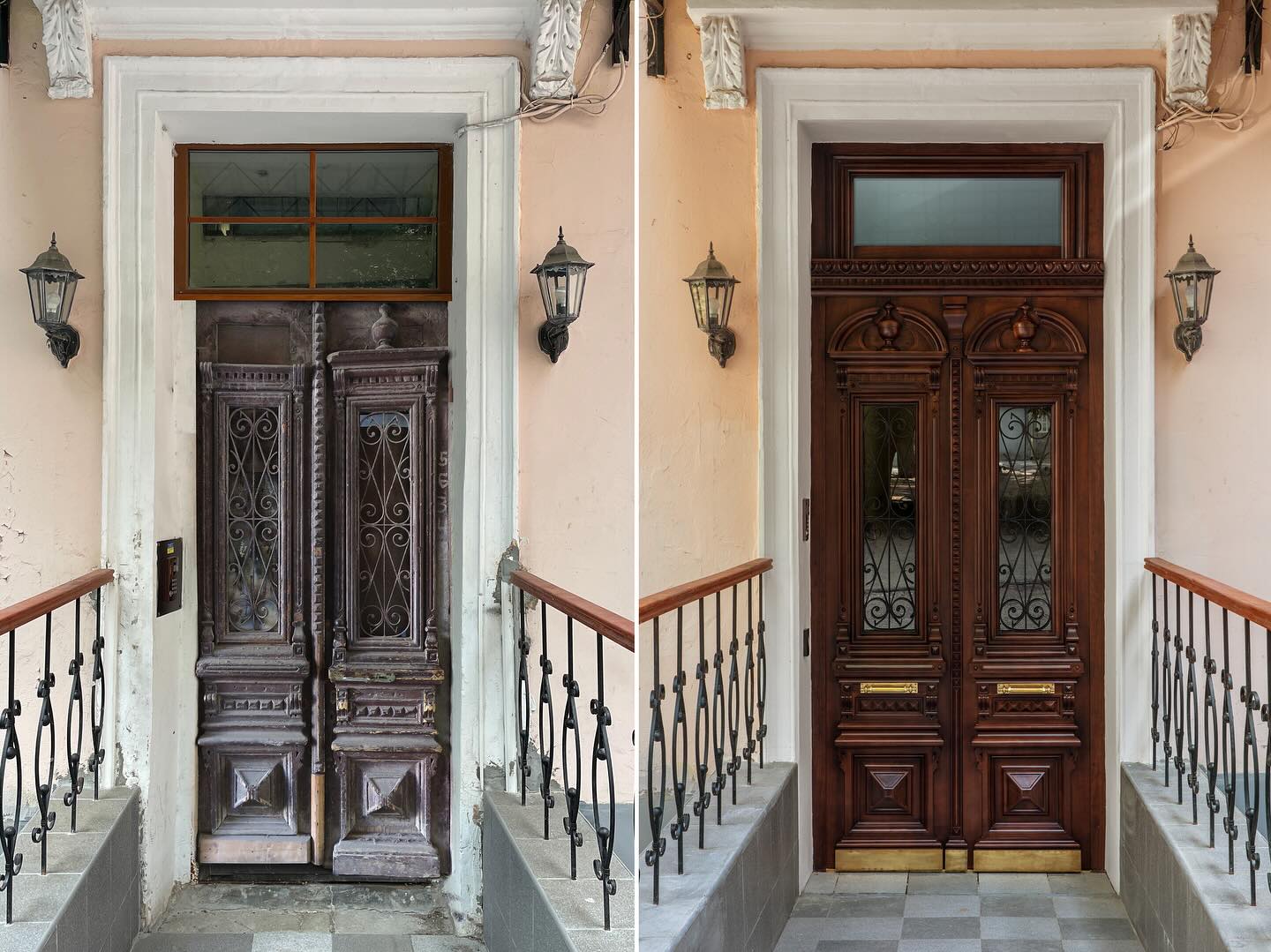
The entrance door of the wing next to the house of Grigory Marazli, built in 1835. Restored as part of the project "1000 doors of Odessa" with the support of the European Commission. Photo source: instagram.com/1000doorsofodessa
"For the first six months, people were moving away, everyone was scared. Those who have already started projects, thought - is it possible to implement them? The competition in which we participated with "Thousands of Odessa Doors" was won by 15 projects across Ukraine. Later, we were told that during the war there were 3 or 4 left for implementation. The rest faded precisely because of new challenges or became physically impossible due to temporary occupation or hostilities. "Somewhere these are territorial issues, and somewhere the teams broke up," Darya recalls. — At the beginning of the full-scale war, missions from different countries began to arrive, some from embassies, some from a certain city, the European Union, American foundations. They asked what the needs were, it was not funded as grants, no performance items, etc. Documents were checked to see if people were really implementing something, they looked at the premises. War, everything must be done faster, faster. And it was somehow not cultural."
Right now, the cultural sector predominates in terms of the number of consultations, followed by educational projects and the rest by humanitarian projects. The Ukrainian creative industry is also interested in support, but the problem for the creative community is to master the documentation and conditions.
Regionally, based on her own communication experience, the expert singles out the west of the country — the city of Lviv, where the city council actively works with programs of international cooperation and assistance, and Rivne, as well as Vinnytsia. In this regard, Odesa still lags behind in the number of initiatives.
"Not everyone understands that people work in grant projects. That there is an employment agreement, and this is work for them." Daria Babilunga
In their work, grant managers now often have to dispel myths, for example, there has been a surge in the interest of individuals in grant opportunities. There are people who have changed their place of residence and because of that lost the opportunity to work in their profession. However, not all of them understand the conditions that must be met in order for participation to be possible. Not all grants are suitable for everyone.
Sometimes people with interesting initiatives cannot count on support because they do not have a registered organization or business, accreditation, or because of their location.
For some ideas, it is more productive to submit an application with a business model for business support in Ukraine, for example in Diya.
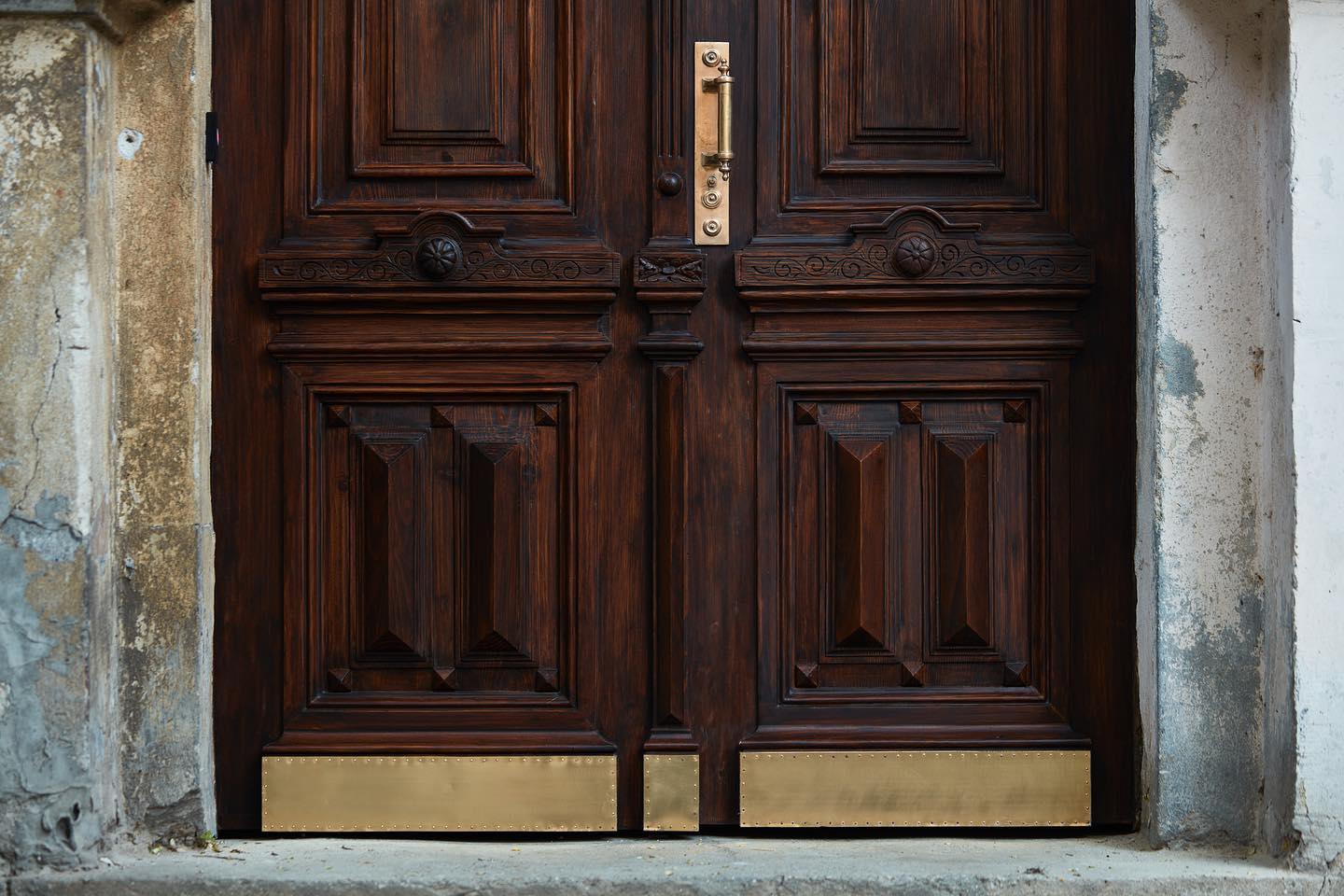
Restored doors on the street. Zhukovsky in Odessa (fragment), profitable wing of H. Feldman. Photo source: instagram.com/1000doorsofodessa
Darya outlines the problems inherent in wartime: the "Center for Project Initiatives" is often consulted by charitable foundations that plan to apply for a grant or have already received international aid. Volunteers during the war sometimes feel confused when the funds they so badly "fall" upon them. They often work under difficult conditions at the front lines and find it difficult to communicate with donors or their representatives.
"These people don't care about documents, they don't have time for that. They help the military and civilians every day, they go to work under fire, says the grant manager. — They cannot write from there at a certain time, they may die altogether. For example, at the moment when you go to Kherson or near Donetsk, or to "zero", they tell you: give 3 commercial offers to prove that you are being driven by a transport company, and not the driver Vasyl in the village - and this is exactly the driver Vasyl... ".
"I have many ideas to build a bridge between organizations that do unrealistic projects, but they are not about documents, because they don't have time for it." - Daria Babilunga
The grant writer says: more than a year after the start of the full-scale war, she sees changes in the cultural community.
"What really makes me happy people are ready to do creative projects, they have some inspiration again. They understand that they are strong in a certain area, and they try to help the country during the war precisely in that area where they are strong. For example, to shoot documentaries with translation and subtitles to convey information outside of Ukraine. At first there were questions - how can you win a grant to do something in Europe? Now it's the other way around - what can be done in Ukraine? What can be done to make them come to us?... So everything is integrated into Ukraine, and not from Ukraine, this is a very good trend."
"Now everything is integrated into Ukraine, and not from Ukraine, and this is a very good trend"
Lviv: treasures of facades, memory and public activity
In the conditions of a full-scale war, Lviv became a hub for many cultural initiatives. The city is often the first to meet guests who come to Ukraine, and has a dense calendar of events — meetings of experts, conferences, forums.
Since 2018, the city authorities have been implementing the Co-financing Program for the renewal of historic gates and windows, which has gained popularity among residents. It was stipulated that 70% of the cost of the works will be paid by the city council, and 30% by the residents themselves, who can apply for participation. During the restoration of windows, co-financing is carried out in the ratio of 60% to 40%, for replacing metal-plastic windows with wooden ones - 50% to 50%.
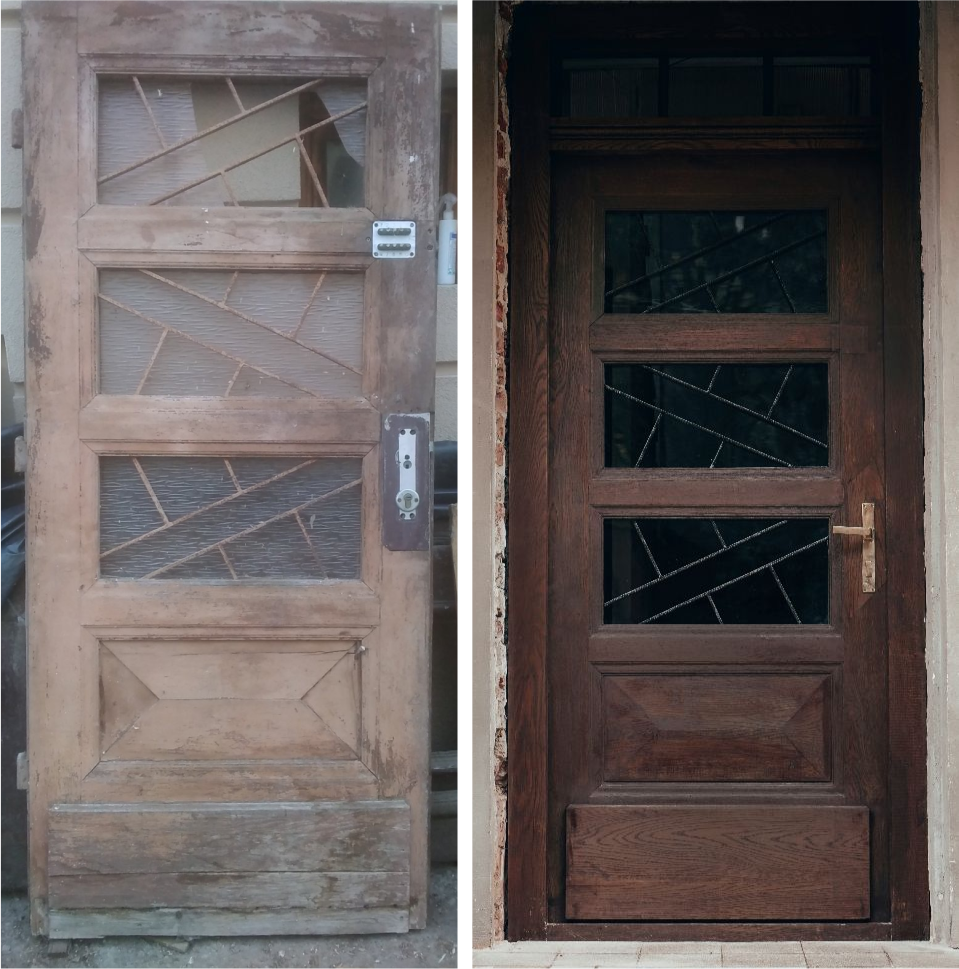
Restoration of historical doors in building 5 on the street. Karmansky in Lviv. Photo source: spadshchyna.lviv.ua
In the Lviv communal enterprise "Heritage Bureau", the Department of Historical Environment Protection, which coordinates this program, says:
"Since the beginning of the large-scale invasion, only critical infrastructure, protected expenses and the Armed Forces have been financed with budget funds in Ukraine. Despite the war, there is a great interest among the residents of the city in the restoration of valuable elements of their houses, so we turned to foreign foundations with a request to help financially support the city's co-financing program. The one who responded to him was the German Eberhard Schöck Foundation (Eberhard-Schöck-Stiftung). Our cooperation in this program has been successfully ongoing for two years. We will try to continue it in the future, because the results and statistics are excellent."
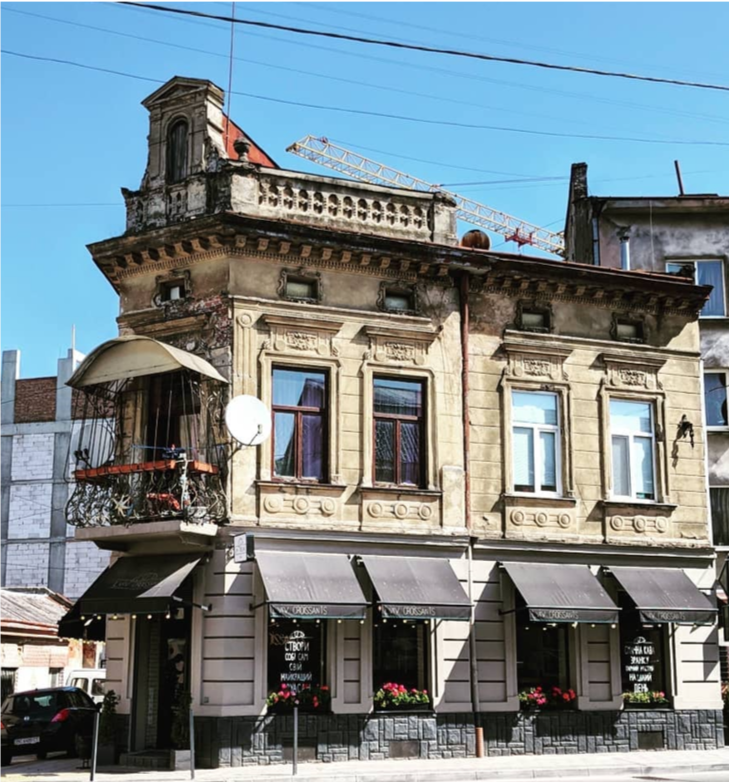
As part of the Lviv co-financing program, two windows in building 143 on the street were restored. B. Khmelnytskyi. Photo source: spadshchyna.lviv.ua
In the conditions of a full-scale war, the Eberghard Schöck Foundation co-finances the share that was previously covered by budget funds.
Last year, under the coordination of the Heritage Bureau, 29 gates and 16 windows in the houses belonging to the historical area of the city were restored, and 12 windows and balcony blocks were replaced with wooden ones.
Currently, LKP "Heritage Bureau" is the coordinator of the program of co-financing the renewal of window and door fillings of residential buildings, which are located on the territory of the historical area of the city, and the executor of the program of repair and restoration of balconies of buildings - monuments of cultural heritage, which will last until 2025. Participants of the program can be owners of balconies, bay windows and loggias located on the main facade of the building - an architectural monument.
For example, one of the latest works implemented in cooperation with the foundation is the restored gate at Shchepkina Street, 5, which is not far from the House of Scientists. The total cost of the restoration works was UAH 75. From this amount, the fund paid UAH 52,5 thousand, and the rest - residents who previously applied for participation in the co-financing program.
The Department for the Protection of the Historical Environment of the Lviv City Council continues to cooperate with the National Institute of Polish Cultural Heritage Abroad, Polonika, which takes care of the protection and preservation of objects of Polish origin or thematically related to Poland located in the country or abroad. The "Polonik" Institute was founded in 2017, this is a long and productive interaction. Areas of cooperation include restoration work for the preservation of movable and immovable monuments, publications, manuscripts, etc., joint research work and cataloging of heritage objects.
In May 2021, the Lviv Regional State Administration signed a memorandum of cooperation with the Polonyka Institute for the protection of common cultural heritage in the Lviv region. Before the signing of the document, Polonika and Ukrainian and Polish restorers were already carrying out restoration explorations and works funded by the Ministry of Culture of Poland; yes, in 2019, restorers worked on the restoration of the facade of the collegiate church of the Holy Trinity in Olytsa, Volyn, and performed conservation work in the Jesuit church and the Armenian Cathedral in Lviv, in 2020, the sculptures and bowls on the facade of the Dominican Cathedral (the Church of the Holy Eucharist) were restored.
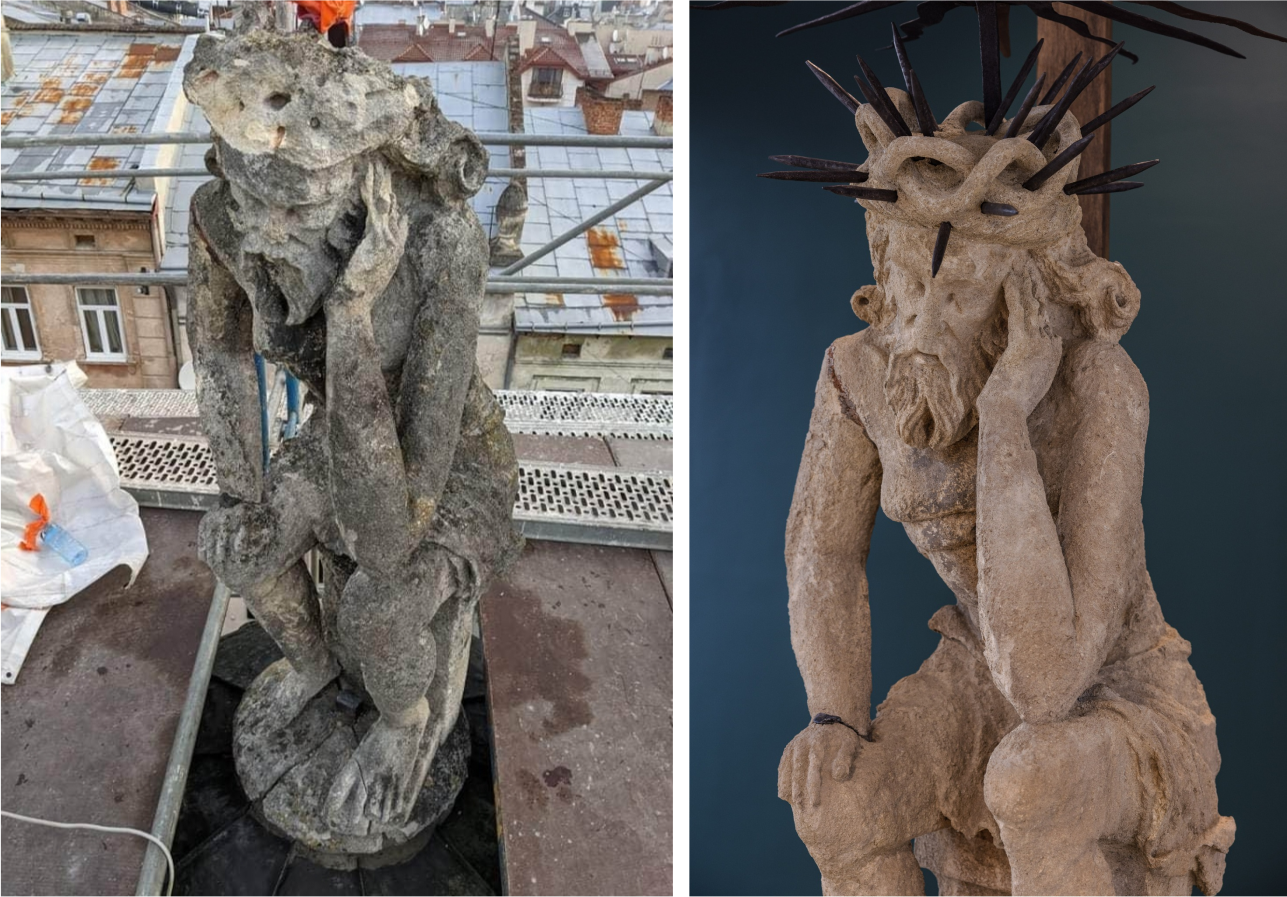
Sculpture of the Sorrowful Christ from the dome of the Boim chapel, before and after restoration. Photo source: spadshchyna.lviv.ua
As part of the "Common Heritage" project, in 2023, a Polish-Ukrainian group of restorers carried out restoration work on tombstones and gravediggers at the Lychakiv cemetery.
Thanks to the combined efforts of the "Polonik" Institute, the Lviv National Art Gallery and Lviv restorers, the sculpture of the Sorrowful Jesus from the Boim Chapel was researched and restored. In 2021, the unique monument of the authorship of the sculptor Andrii Bemer was dismantled from the dome of the chapel due to destruction and after the start of a full-scale war, it was evacuated to Poland, where restoration work was carried out. The Sorrowful Jesus will soon return to Lviv, the sculpture is currently on display at an exhibition in Warsaw.

The renovated square of Koliiv Oblast in Lviv. Photo source: Facebook Khrystyna Protsak (zahid.espreso.tv)
The KP "Heritage Bureau" of the historical environment protection department notes: among the successful implementations related to the city's public spaces, the reconstruction of the Koliivshchyna square, carried out in 2021 thanks to the project, can be cited ReHERIT.
ReHERIT became a joint project of the Department of Historical Environment Protection of the Lviv City Council, the independent research institution "City History Center", the NGO "Laboratory of Urban Space" and the Department of Culture of the Uman City Council. It was implemented with the financial support of the European Union.
"ReHERIT is a project about rethinking, updating and developing the potential of tangible and intangible cultural heritage in Ukraine.
Several components are important for this: working with people, communities and spaces.
The reconstruction of the Koliivshchyna square became the project in which there was the most work with multicultural heritage.
This is one of the smallest squares in Lviv, located on the territory of the former Jewish district. The opening of the square after the restoration took place in September 2021 and was timed to the European Days of Jewish Culture and Heritage," the representatives of the "Heritage Bureau" note.
Restorers and builders restored the historic well, which is the central accent of the square. During the works, the remains of ancient walls and paving were also found.
Today, this square is very popular with local residents and tourists. When passers-by find themselves here, they can better understand the long history of this place, as well as learn more about the people who once lived here.
Vinnitsa. Green meadows, clean rivers and community unity

The renovated park "Chemist" in Vinnytsia. Photo source: Facebook page of Vinnytsia City Council, facebook.com/Vinnytsia
Do you think Vinnytsia is the most "green" city in the country? There is a reason for this.
In 2015, Vinnytsia was the first city in Eastern Europe to receive the European Energy Award. At the beginning of 2022, the Vinnytsia urban territorial community was the first in Ukraine to announce the Green Course within the framework of the European Green Course (EGC), which envisages achieving climate neutrality. A corresponding declaration was signed. In practice, this means that there is a road map with plans to improve the state of the environment in the city, which must be implemented by 2030.
The green course for Vinnytsia was made possible thanks to the initiative of the "Institute of Urban Development" and the municipality and the support of the "Integrated Development of Cities in Ukraine" project. It is implemented by the German Society for International Cooperation GIZ and the Swiss Confederation SECO with the financial support of the governments of Germany and Switzerland.
The GIZ Bureau has been working in Ukraine since 1993 to support reforms in the public administration sector, sustainable economic development, energy efficiency and climate protection. With the beginning of the Great War, GIZ adapted its activities for humanitarian support of Ukrainians and reconstruction of the country.
The project "Integrated Urban Development in Ukraine" was launched in 2016 with the aim of supporting local governments in urban development planning. Lviv, Chernivtsi, Zhytomyr, Vinnytsia, Poltava and Podilsky district in Kyiv participate in the project. Now the II phase of the project is underway.
"Institute of Urban Development" is a communal enterprise of the Vinnytsia City Council, the areas of work of experts are urbanism, strategies for the city, development of international relations and development of civil society (the "City of Content" hub works, where trainings and other events are held).

We asked the representatives of the "Development Institute" about what interesting initiatives have been implemented in Vinnytsia recently. Head of the urban planning department, landscape architect Tatyana Voloshyna says: in addition to the strategic direction, experts are now dealing with the topics of greening and climate change, protection of small rivers and humanization of urban spaces.
"We are implementing the Luka Vinnytsia project. It is practical and simple in its essence: we added a new landscaping format to trees, decorative flower beds and lawns. After all, meadows provide many ecosystem services: they allow you to reduce the temperature more effectively, retain moisture, reduce noise and soil erosion, and it is very important that they help improve urban biodiversity, - explains Tetyana Voloshina. — $1 was raised from the EID Ukraine foundation for seeds and for the project in general. At present, we have sown several test plots, we are observing which plants germinate, we are exchanging experience, and in the future we hope to find our suppliers of seeds of local species. The project was implemented directly by the forces of the municipality — sowing and care were carried out by the workers of the Vinnytsia Zelenbud MCP."

Vinnytsia meadows. Photo provided by CP "Institute of Urban Development", Vinnytsia
By the way, a similar initiative was implemented this year in Lviv. Meadows with various herbs grew green in Ivan Paul II Park, the Garden of Memory, at the Heavenly Hundred Memorial and in several parks.
Greening and ecology expert of the "Institute of Urban Development" Lyubov Kolosova notes: in Lviv, the practice of creating bows was implemented by other responsible persons.
She sees further development of the project in changing approaches to mowing grass in the city.
"Such practices already exist in other cities, for example, a relevant document was developed and approved in Wroclaw last year. However, we still do not have a final vision of how exactly this should happen. There are certain problems, the solution of which requires additional research. This is the determination of areas suitable for the implementation of the approach, treatment of areas under different weather conditions, determination of mowing time, improvement of decorativeness, control of species composition - in particular with respect to invasive species, change of attitude towards such landscaping, etc. The creation of decorative bows is part of the project, which is more aimed at popularizing this practice. Because in fact, newly created decorative meadows and mowing restrictions are quite different things," the expert explains.
You can follow the development of the project in social networks using the hashtag #луки_виннция.
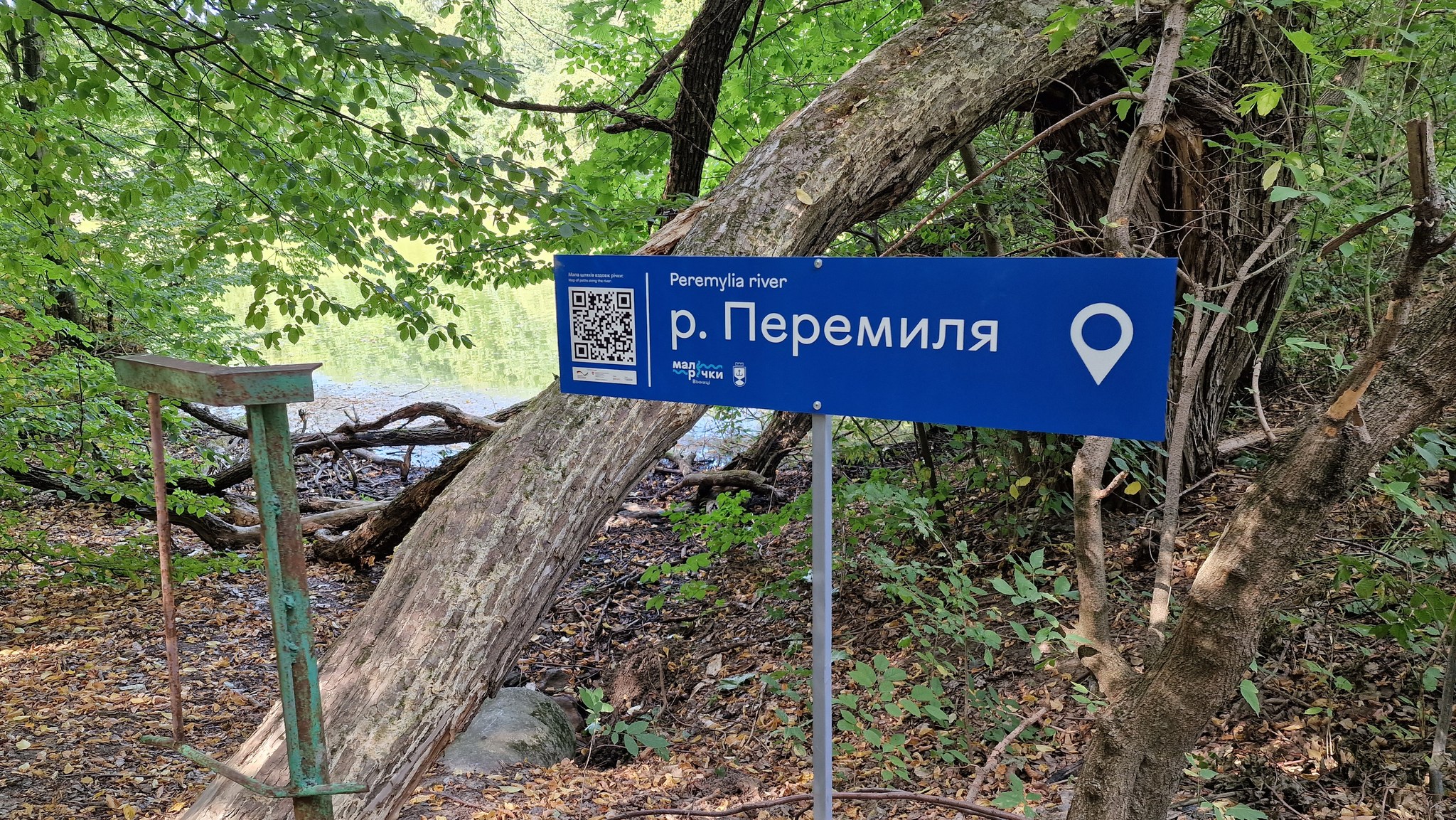
During the research, 64 small rivers, including streams and streams, were discovered in Vinnytsia. Photo source: facebook.com/SmallRiversVinnytsia
Even in the city of Vinnytsia, rivers are reviving. Tetyana Voloshina, head of the urban planning department, says: the concept of the development of small rivers was officially approved as a city document this year.
"Small rivers of Vinnytsia" is a project of integration of small rivers and streams into the urban space. As the initiative's Facebook page proclaims, "a project about water, shores, people and their interaction."
"We have all kinds of "soft" activities, such as tea parties on the rivers with excursions and walks, in the future we also plan to work with separate locations on the rivers. In the course of researching the urban space and studying old maps, we discovered in our city, in addition to the Southern Bug, 64 small rivers, including streams and streams. For the vast majority of citizens, it is not a river, but some kind of misunderstanding, and now we are at the educational stage, because in fact it is an excellent resource for the pedestrian network and recreation in the city. Many rivers do not have names, but some are still known to us, for example, the rivers Peremylya, Tyazhilivka, Dyogtianets, which has a tributary named Dyogtianchyk. This year, 8 test navigation signs were installed, on which the names of the rivers are indicated and there is a QR code that can be used to go to the map of small rivers of Vinnytsia," says Tetyana Voloshina.
The already mentioned GIZ office, which, together with SECO, implements the project "Integrated development of cities in Ukraine II" in Vinnytsia and a number of Ukrainian cities, helps with navigation signs and information measures for the "Small Rivers of Vinnytsia" project as part of the environmental component.
"The involvement of an international donor organization in the work with the space serves as a marker for the residents of the district: the project can be trusted," - Tetyana Voloshina
The restoration of the "Chemist" park in the north-eastern part of the Zamostya district was a sign of support from GIZ and SECO. This is the only park area in this area of the city. Tetyana Voloshina tells: the space became a demo project of the initiative "Integrated development of cities in Ukraine" in Vinnytsia.
"This is primarily a participatory project. For us, it started back in May 2018 with crisis management, went through many stages of work with it, and finally, despite pauses and delays — in particular, due to the full-scale invasion of the Russians in Ukraine — ended in September of this year with the official opening of the renovated park.
Donors not only sponsored the purchase of lighting in the future park, which was critical from the point of view of criminogenicity, and supported the holding of an architectural workshop to develop project solutions. Their inclusion as an international organization interested in the implementation of "bottom-up" initiatives in the work with the space threatened by construction served as a marker for the residents of the district that the project can be trusted. She encouraged the community to actively participate in the participatory and research activities we proposed. Financial participation in the implementation of the demo project from donors amounted to 50 euros, and from the city council - no less. Actually, the reconstruction of the "Chemist" park cost about UAH 33 million," Tetyana Voloshina notes.
Civil engineer, architect, spatial planning expert of Vinnytsia KP "Spatial Development Agency" Maxim Kravchuk talks about his own experience of interaction with GIZ partners:
"My colleagues and I got acquainted with this project in 2016, when work on the preparation of the Concept of Integrated Development of Vinnytsia began. At that time, the project also provided training for specialists from our city at the CANactions urban planning school. Almost all of them continue to work in the structures of the city council, in particular five - in our utility company. During this entire period, our KP cooperated with GIZ in a number of projects, namely, the already mentioned Concept of Integrated Development of Vinnytsia-2030, the project of comprehensive reconstruction of Kotsyubynskyi Avenue "Vinnytsia Mile", reconstruction of Victory Square, development of a model for the development of the Zamostya district, creation of a continuous recreation zone. Alley 12,7 km" on the left bank of the South Bug River and in some other projects".
"Since it is important for us to focus on the most priority areas in the conditions of limited funding during martial law, we asked GIZ to support the project to create a barrier-free environment on the city's sidewalks with the help of spot repair of obstacles on pedestrian paths. Currently, the pilot part of this project is operating on Teatralna Street," continues the representative of the Spatial Development Agency.
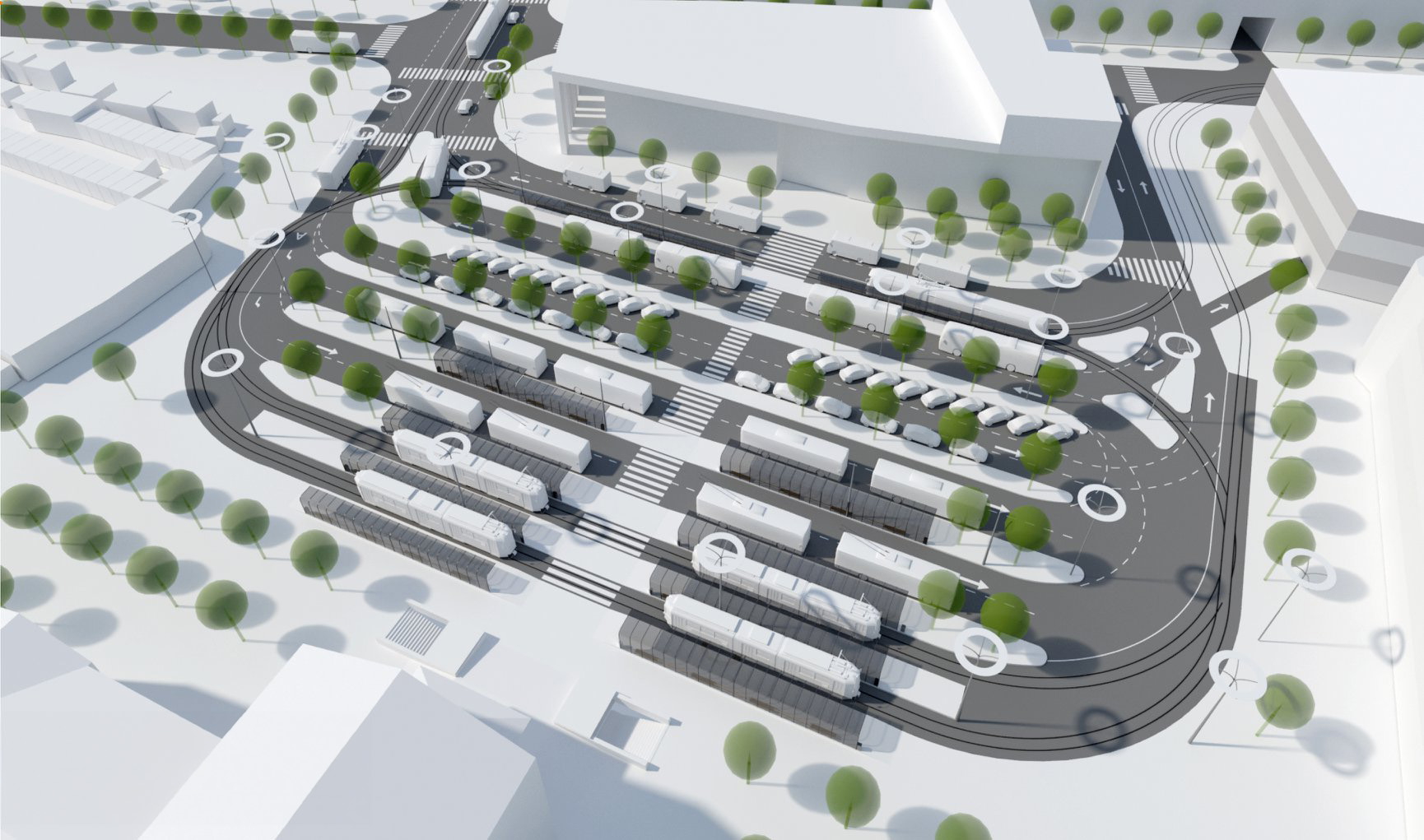
One of the visualizations of the reconstruction of the Station Square in Vinnytsia within the framework of the Vinnytsia Mile strategic project. Image source: Facebook page of Vinnytsia Mayor Serhiy Morgunov, facebook.com/SAMorgunov
"Vinnytsia mile" is a large project, it includes, in particular, the return of tram tracks dismantled in the 1970s and the creation of a new route. According to Maksym Kravchuk, the first phase, the design of Pryvokzalnaya Square, has already begun. However, because of the war, it is difficult to talk about specific terms of its implementation.
"Also, GIZ provided support for educational trips to improve the qualifications of our specialists and exchange experience," Maksym Kravchuk continues, "in particular with other cities participating in the project "Integrated development of cities in Ukraine." Since the full-scale invasion, GIZ has shifted the focus of the projects it supports towards meeting the needs of IDPs. This is how the reconstruction of the dormitories, where Ukrainians in need of housing were housed, was financed. In 2022, our KP started the project "Crisis plan for housing construction in Vinnytsia MTG", within the framework of which GIZ financed research and activities."
Kravchuk notes: since the 2010s, the growth of interest of citizens and activists in urban development and urban planning has become very noticeable. Discussions began on the issue of increasing motorization, and as an alternative to it, the development of sustainable types of mobility, as well as the issue of urban comfort.
"These discussions are active among users of social networks, as well as among activists: separate urban communities and public organizations operating in the field of urban planning have appeared, for example, NGO U7 urban studio, NGO "Veloaktiv Vinnytsia" and others. At the level of the Vinnytsia City Council, modern development issues were also in the focus of the city's leadership — a number of strategic documents focused on the principles of sustainable development and modern urban approaches were developed and approved. In particular, it is the Comprehensive strategy of urban transport and spatial development of the city of Vinnytsia, the concept of integrated development of the city of Vinnytsia 2030, Development strategy of Vinnytsia urban territorial community until 2030.
The support of international organizations plays a major role in these processes. By supporting specific activities and projects, they focus the efforts of local officials on relevant issues. There is also an opportunity to implement those projects that were previously absent or extremely rare, such as participatory activities or support for individual projects of public organizations," he concludes.
Mykolaiv. Master plan, new life for parks and heritage
We used to highlighted the great work that is being done in the city of Mykolaiv to create a new master plan and long-term strategies for the development of the city.
From representatives of the city authorities, Pragmatika received an overview of what key initiatives, including joint ones with foreign partners, are being developed or are being implemented right now, and what practical changes in city locations we will be able to see soon.
Mayor of Mykolaiv Oleksandr Sienkovych notes: "Since the beginning of the full-scale invasion, Mykolaiv has established cooperation with eight European cities. These are Burgas, Hanover, Bedburg, Chelm, St. Helier, Kristiansand, Aalborg, Durres. Most of these cities send us the necessary assistance in the form of utility equipment, public transport, medical equipment, etc. There are cities that have become transport hubs for us. This is, for example, Helm. It is there that we bring aid from different countries and reload it there to deliver it to Mykolaiv."
"Such cooperation is important for us today and is promising in the future, when we can not just accept aid, but develop truly bilateral relations, conduct exchanges, establish cooperation between our business communities," Oleksandr Sienkovych continues. — We also actively work with various charitable foundations, which also provide vital assistance to Mykolaiv: ambulances, water purification stations, building materials. In total, we have about 50 such partners."
The mayor calls cooperation with Denmark, which has taken over the reconstruction of Mykolaiv, a separate page of international work:
"At first, the Danish government helped us to solve urgent problems — provided, for example, pipes to repair water networks, building materials to eliminate the consequences of shelling. Today, we are already working on concrete objects that we will be able to rebuild," he explains.
On October 23, a meeting was held in Mykolaiv, where the concept of a new youth space, which should soon appear in the city, was discussed. The project is planned to be implemented with the involvement of funds from the city budget and international donor aid.
"The creation of the urban youth space is an ambitious task for us," says the mayor of Mykolaiv. — With the beginning of a full-scale war, a large number of young people left the city, we also have cultural institutions damaged by shelling. In addition, now schoolchildren study online, so they lack socialization and comprehensive development. This is evidenced by their comments on social networks: they ask when some institution will resume work in the city, or they write that they lack activities.
Currently, we have preliminary agreements with one of the organizations regarding the co-financing of this project. In the coming weeks, we will document these arrangements. The donor will purchase furniture and all necessary equipment for the youth space, and the city council will renovate the space."
"We want this space to become a center of creativity, self-realization and involvement of young people in public life in Mykolaiv. Actually, we are already involving young people in its creation, so that those boys and girls who will implement their ideas there will help us create this center for them, fill it with the necessary meanings," Oleksandr Sienkovych explains.

The development of a master plan for Mykolaiv by an international team within the framework of the "UN4Mykolaiv" project under the auspices of the UNECE continues. Photo source: www.one-works.com
The long-term pilot project of the United Nations Economic Commission for Europe, in which the Mykolaiv city government and the Ministry of Infrastructure of Ukraine, foreign and Ukrainian architects and experts participate, continues. The chief architect of Mykolaiv Yevgen Polyakov says: in addition to the Italian architectural bureau One Works, the Danish engineering company COWI, which is responsible for water supply and drainage, household waste management and energy (electricity generation and heat supply for the city), was actively involved in the project.
Relevant cooperation documents were signed, Danish experts will cooperate with Italian ones in the development of the engineering part. Long-term (up to 2050) development strategies are being created in three areas - regarding water, energy and waste management for the city.
In addition, the One Works team and partners have already developed preliminary strategies for transport and building sustainable mobility in the city and a landscape strategy. They are currently working on the pilot project "Innovation district" indicated in the UN4Mykolaiv roadmap.
According to Yevhen Polyakov, a backup update of information on the analysis of damage and destruction in the city was also carried out in Mykolaiv. A number of meetings were held with professors of the Milan Polytechnic who specialize in the protection of UNESCO's cultural heritage. Ukrainian and Italian experts join forces to assess the impact of military actions on the city's cultural heritage, analyze the damage to the architectural fund, Politecnico di Milano carried out parallel studies.
Answering questions about specific locations that may be updated in the city in the near future, the city's chief architect first notes a small but interesting project — a square in the Solyani microdistrict. French architect Martin Duplantier and Ukrainian architects are working on the concept and sketch part for its restoration, the team consists of six specialists. D Architecture Ukraine LLC, founded by Duplantier, is also associated with the reconstruction of the Prymachenko Museum in Ivankiv, restoration projects of the Uvarovsky House, a new cultural space in the city of Vorzel, and the development of bomb shelters.
The participation of an international group of architects in the transformation of public space also involves working out the working stage.
How this interaction became possible is the direct speech of the chief architect Mykolayev:
"Martin Duplantier is the head of the National Association of Architecture in France, before the full-scale war he visited Ukraine with lectures for Ukrainian architects. The war mobilized his human resources. He helped the cities of Chernihiv, Kharkiv and Kyiv regions, together with Ukrainian architects he started a company."
During the Lviv Urban Forum, Yevhen Polyakov invited the French architect to visit Mykolaiv, and Duplantier, who was already acquainted with the city's head Oleksandr Sienkovych, responded to the invitation. At first, the Ukrainian-French team planned to participate in research for the master plan, but a large number of foreign institutions are already involved.
"I suggested that he visit the city and see not only iconic locations - for example, the destroyed State Administration building, let's work here - but also small ones. Those that will change small centers of life, local territories. To do something visionary, to show how we can transform the city at the level of the district, micro-district, block," explains Yevhen Polyakov.
Thus, Martin Duplantier and his team agreed to take part in the renovation of a small square, a preliminary memorandum of cooperation was concluded. This is a humanitarian project, it is assumed that it will not be protected by the copyright of the participating architects. If the interaction ends at the concept stage, the city can further use the materials and continue its implementation.
"This is not some iconic place for Mykolaiv - a small green area in which there is nothing new. But this is an example of what should be done with such territories, and an opportunity to test it in work." Evgeny Polyakov
According to Yevhen Polyakov, the main emphasis now is precisely on this — to offer humanitarian investment projects for international partners in order to create opportunities for future investments and rapid reconstruction.
"Make conceptual projects that have a visual part, minimal economic calculations of the cost of stages and implementation. This applies not only to the green zone, but also to schools, hospitals, residential buildings, districts, roads, engineering structures, etc., the architect explains. — In this case, the team has already developed a concept. More precisely, there were three previous concepts with minimum, medium and maximum intervention, which by their logic foresee different costs and funds for implementation. One of them was presented to the public and local discussions and surveys were held about the results of the work, and the decision is currently being finalized. In November, the team should complete this work and also perform a preliminary calculation of the cost of implementing such a project.
This will make it possible to understand how much money needs to be found for its development, how to mobilize its resources, or how the city council can include in programs of comprehensive restoration and present such investment humanitarian projects from foreign partners to local residents."
"This is a new format of work, and I consider this principle to be more democratic than when, for example, the district administration or a department or a utility simply orders a project from someone, because there is no transparency in this, except for the procedure for spending funds. It is much more interesting to work this way, so you can immediately say that there will be a different result," Polyakov adds.
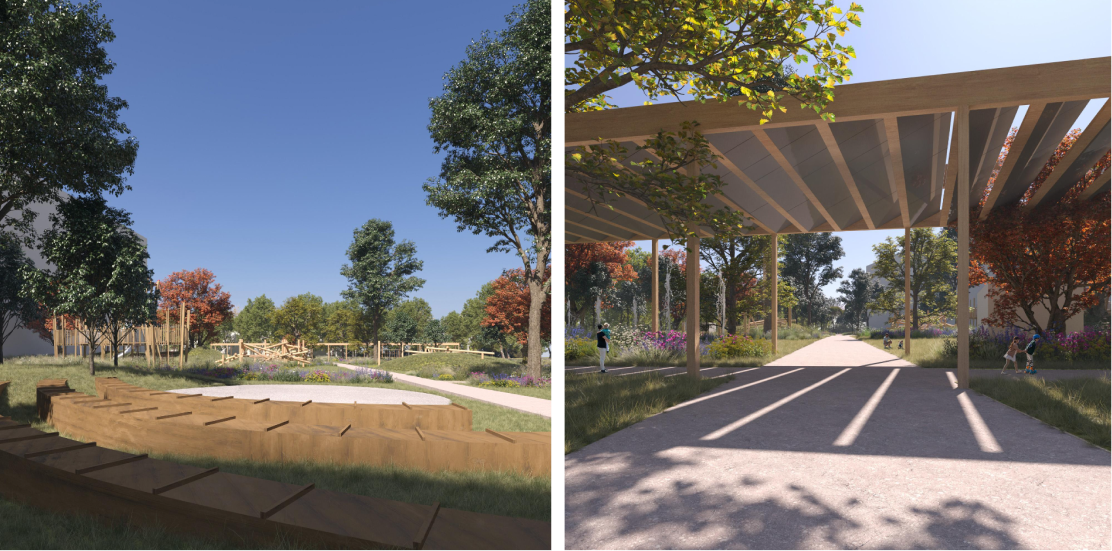
Visualization of the renovation project of the square in the Central district of Mykolaiv. Image source: Martin Duplantier Architectes
The project worth talking about is the restoration of Shevchenko Square by a Kyiv architect Olena Oliynyk with the participation of experts from the Danish Royal Academy.
The cooperation, not surprisingly, began with a publication on Facebook, thanks to which the vice-president of NSAU Olena Oliynyk responded to a public invitation to visit Mykolaiv and participate in the restoration of the city's spaces.
"Some problematic areas of Mykolaiv are its potential, this also applies to the green zones of our city," says Yevhen Polyakov. — Olena Oliynyk wants to implement an interesting idea: an international student workshop in which students from the National Academy of Fine Arts and Architecture of Ukraine and the Danish Royal Academy will participate, who will create student projects under the joint leadership of architecture professors from Ukraine and Denmark. The groups will work on the development of visions, options for the restoration of the green zone and provide us with these materials for further use or refinement, public discussions.
Close to Shevchenko Square are Caskadny Square and Vitrylny Square. The city authorities invited Olena Oliynyk to work with these locations as well.
"The design of this territory does not involve deep intervention, there are beautiful landscapes that allow you to create your own viewing points and platforms. The sailing park is located near the water. We need to open up this area and restore it for the residents. She needs a new life," says Yevhen Polyakov.
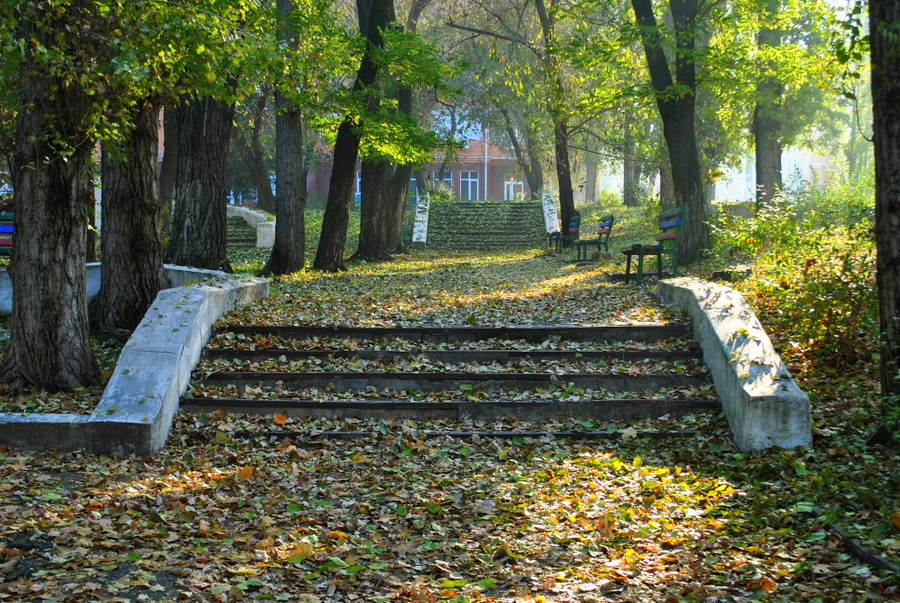
Cascade Square in Mykolaiv. Photo source: promir.info
Another interaction of the city authorities of Mykolaiv, which was managed to be established thanks to Olena Oliynyk and the architect Arkady Peker, — with the Sweetanok charitable foundation. The purpose of the fund's activities is to build housing for war-ravaged Ukrainian communities and to develop innovative urban planning strategies, for which funds are drawn from the USA.
It is planned to develop concepts, and later - working projects for the reconstruction of destroyed schools No. 7 and No. 48, both of which are currently not working. Before the Great War, the 48th school had about 900 children and was destroyed by rocket attacks.
"Now we are at the stage of agreeing on technical aspects, collecting initial data, exchanging tasks - what exactly needs to be designed in order for the educational process to meet modern standards," concludes the chief architect of the city.
In addition, Mykolaiv is holding two all-Ukrainian architectural competitions for the best proposals for memorials commemorating the soldiers who defended Mykolaiv and Ukraine. The competition has been announced for memorial complexes in the Korabelny and Ingul districts, with prizes for architects for the first, second and third places.
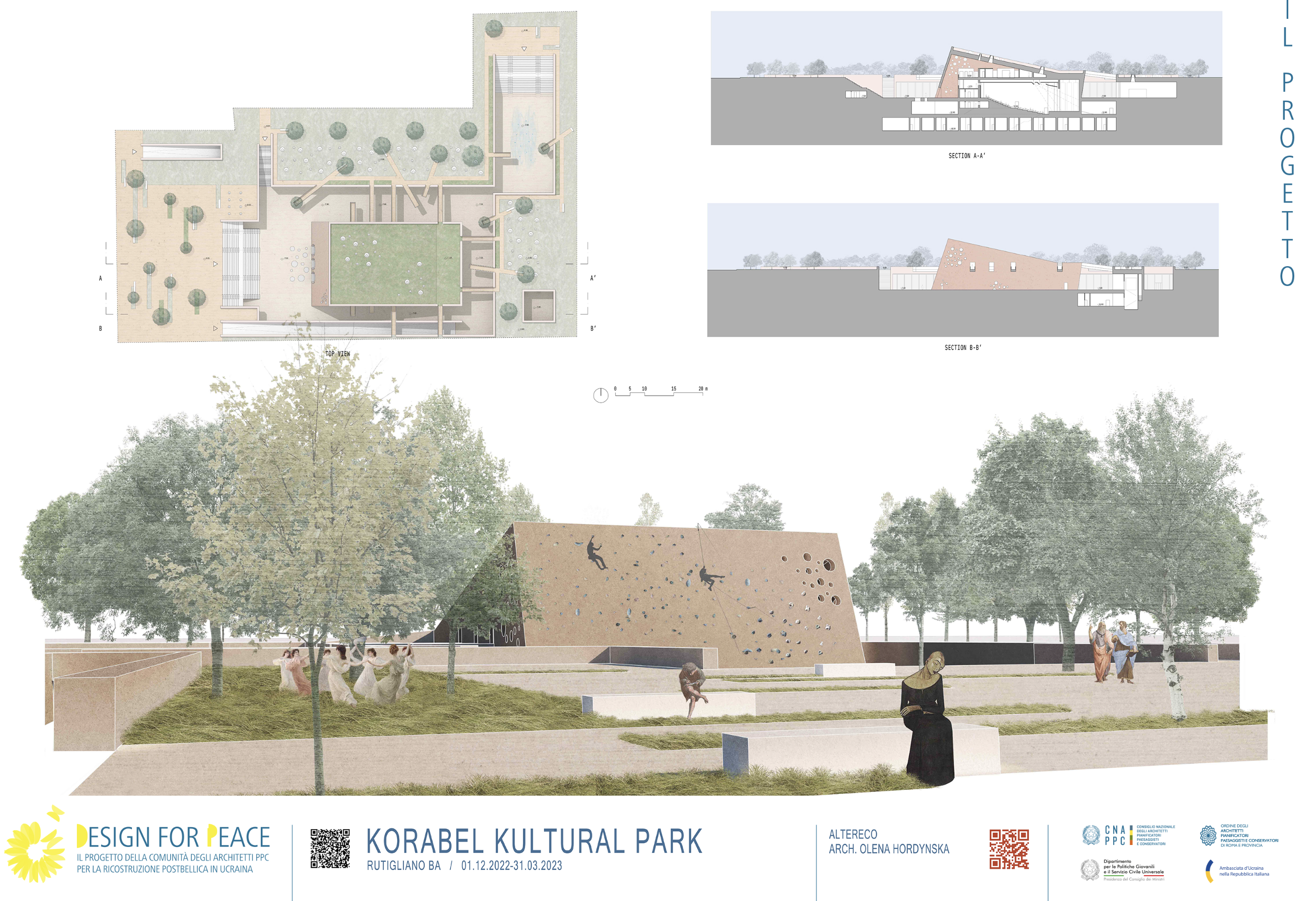
Korabel Kultural Park urban regeneration project (architect Olena Gordynska and Altereco architectural bureau), which this year became one of the winners of the Italian "Design for Peace" competition. Image: www.prostir.ua and from the project presentation
Summarizing this study, we can state: yes, in the context of preservation and restoration, there are still many problems. They are of different types: the ongoing war and the uncertainty of the future. Lack of funds, problems of subordination of bodies responsible for preservation of cultural heritage, restoration of monuments and restoration of objects without monument status in general. Sometimes it is corruption or unscrupulous business interest, or lack of education and carelessness.
At the same time, friends and experts go to Ukraine to help, and Ukrainian architects, public figures and preservationists are warmly received abroad. We are rethinking capabilities and competencies. Many events are held for experts and interested parties, the most recent of which is the October conference in Lviv, which was the first public stage of the long-term UREHERIT program, designed to unite efforts to preserve the cultural heritage of Ukraine in the conditions of war and reconstruction, or the architectural and construction conference "Restoring the past, building the future", organized by the IIS Ukraine media group.
We are very hurt by destruction and loss, but because of them, we should not learn to appreciate what is carefully restored or created here and now. And those who do not get tired of doing it for us and the country.


