

We decided to talk about the interaction of the viral social and psychological phenomenon of the selfie with architecture, design and art of the XXI century. projected onto the urban fabric. We asked our questions to experts - architects, art historians, urban planners, sculptors and gallerists and tried to put together a voluminous puzzle from controversial opinions.
Selfies as a media tool and a field for urban research
Do you have a selfie with the Eiffel Tower or Notre Dame de Paris in your archive? We did not find statistical data on the number of earthlings photographed against the background of Parisian landmarks, but more than half of our editorial staff admitted that they have such pictures. In a sense, a selfie can be considered an act of self-knowledge — in this way, we try to look at ourselves from the outside and get feedback (read: approval) on social networks. The mass culture of the selfie started a chain reaction of technological and media transformations that also affected architecture and art.
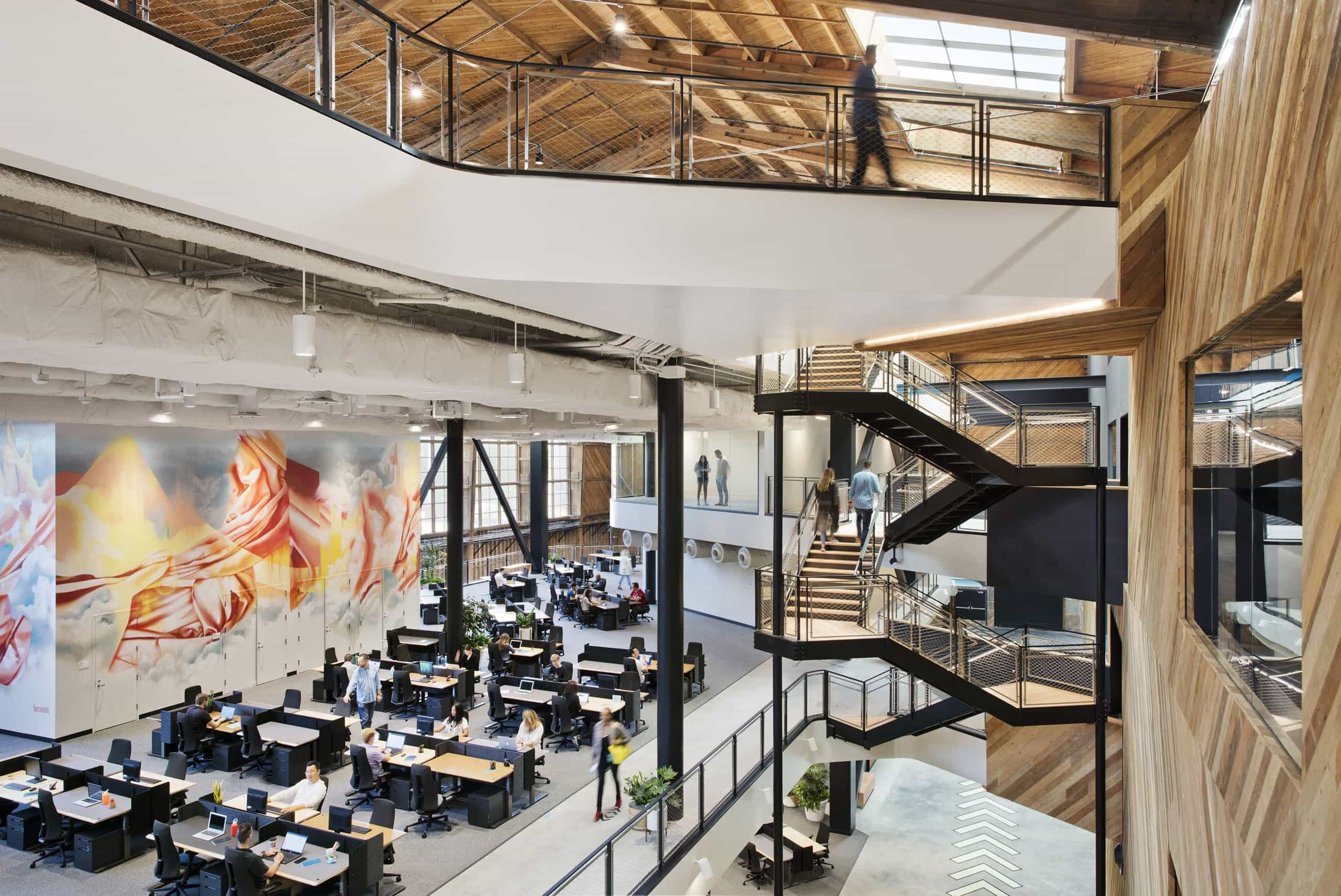
Bright art installations and paintings on the walls - this is how the spaces of the new Google office in Los Angeles look like by ZGF Architects. Image source: zgf.com
The ever-increasing need for backgrounds for selfies gives a powerful stimulus to artists who create street graffiti and indoor murals. Many large technocorporations use selfie walls in the interior design of their offices. For example, the walls of the LinkedIn office in Chicago and the new office in the Google aircraft hangar in Los Angeles are decorated with bright graphics especially for such shootings. The interior design, created by the architects of one of the oldest American studios, Gensler, for the headquarters of Etsy in Brooklyn, is unusually photogenic. There are hundreds of examples. In the same context, the new spaces of Kyiv's UNIT.City can also be mentioned - they are also often found on Instagram.
Selfies are truly invaluable material for research, including the quality of the urban environment
In restaurants, department stores, and beauty salons, selfie rooms with special architecture and lighting are appearing, which make it possible to avoid shadows on the face. And last year, the AMO bureau, a division of Rem Koolhaas' architectural studio OMA, which specializes in research in the field of design, together with Meitu (a company that develops a popular image retouching application) held the "True Me" exhibition in Hong Kong, presented research projects on the selfie phenomenon culture and at the same time created many locations where it was possible to take photos for self-presentation.
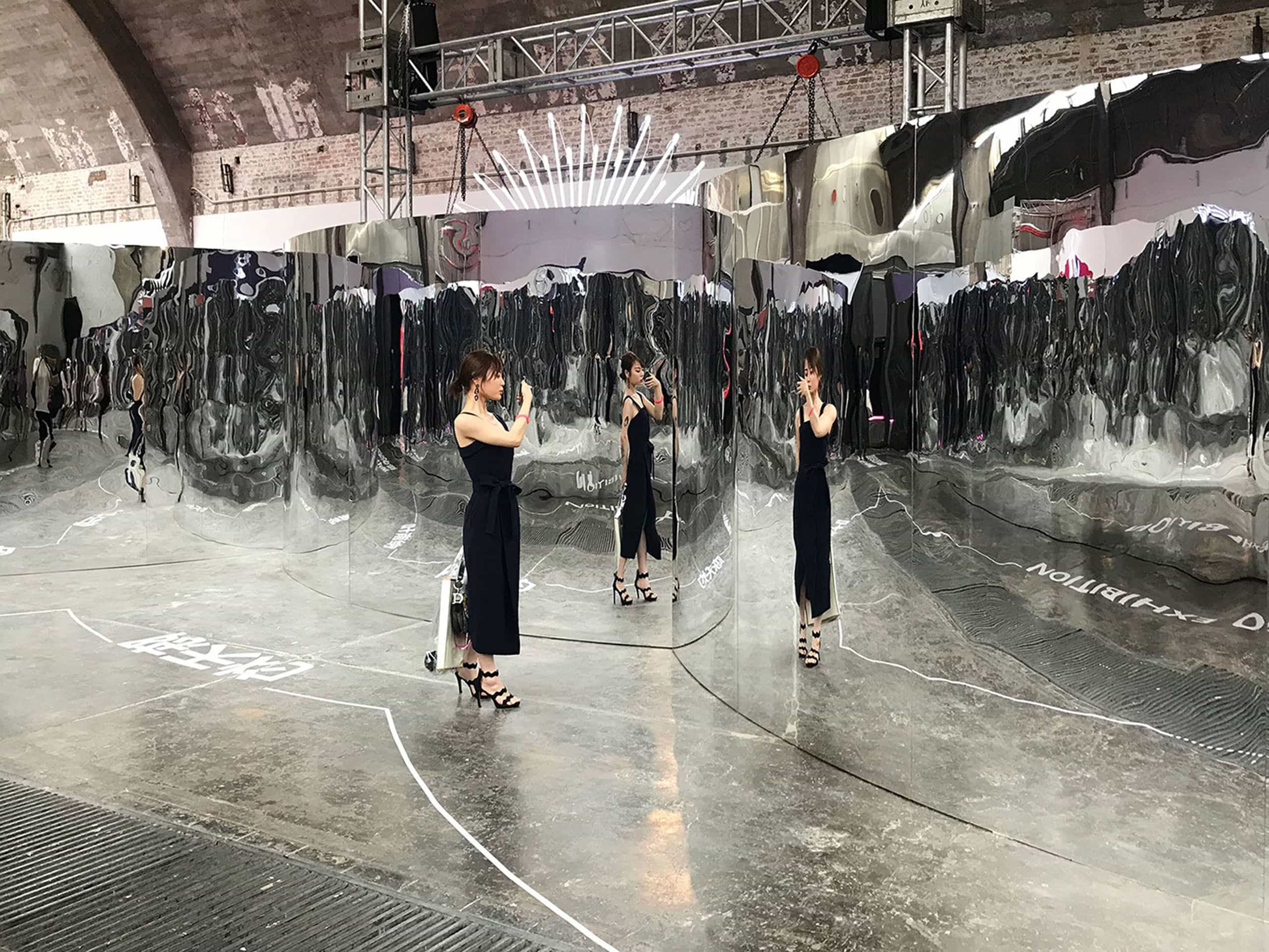
The "True Me" exhibition in Hong Kong, organized by AMO and Meitu, explores the phenomenon of selfie culture. Photo: Bian Jie. Image source: oma.eu
Architects, designers and artists quickly realized that selfies are a powerful media tool for promoting and popularizing their work. Now they are interested in seeing their art objects as often as possible in the lenses of smartphones. At least as a background. The new policy of museums and galleries favors selfie lovers, taking into account their interests when creating expositions - there they try to refuse reflective protective glass whenever possible and put up barriers only in extreme cases. Of course, excesses also happen: for example, in July 2017, a visitor to the 14th Factory exhibition in Los Angeles destroyed the Hypercaine exhibit while trying to take a selfie. Unwittingly, she knocked over the pedestals with the works of the artist Simon Birch - fragile crowns made of brass, marble and wood. The damage was estimated at $200.
Selfies are a powerful media tool for promoting and popularizing the works of architects, designers, and artists
And yet only a small part of selfies are taken indoors. In 2014, NASA created a global selfie map of the world, compiling 36 photos sent by people from different countries. If you look at this mega-mosaic in more detail, you can see that most of the photos are taken mainly against the background of nature and architecture. Yes, and you can also find the Eiffel Tower there.
Sociologists have long understood that selfies are truly invaluable material for research, including the quality of the urban environment. Since people usually do not take selfies in a state of sadness or depression, but share positive emotions, such photos are considered markers of positivity, they can be read as "I'm here and I'm fine here!". Back in 2015, employees of the Center for Urban Anthropology at the Russian KB "Strelka" studied 16 photos with people against the background of attractions and concluded that photoactive streets and spaces are the most attractive and safe. Selfies also make it possible to judge the popularity of individual objects of architecture, public or street art.

Inspired by the results, in 2017, the same team of researchers analyzed more than a million selfies and studied the quality of the urban environment in Russian monocities. And she found out that the inhabitants of the remote area preferred to post photos from the premises and take selfies against the background of nature. According to urbanists, this is due to the lack of special attractive landmarks in industrial towns — spatial and cultural landmarks and public art objects.
Public art and Kyiv
Spring in Kyiv was marked by a kaleidoscope of cultural events, the largest of which was the Kiev Art Week festival (read more about it in the report "Cultural storm. Kyiv Art Week 2019 and its essence" on page 206). Within the framework of the festival, several events were held, one way or another related to public art and issues of reforming public spaces: the world-famous sculptor Jaume Plensa arrived in Ukraine for the first time; in the center of modern art M17 the discussion "Art in public space: pros and cons" was held; and the entrance area to the "Toronto Center", where the Kiev Art Fair was held, was decorated with the 2,5 m high steel "Grain" by GAZ and the four-meter sculpture "Enantiodromia" by Viktor Sydorenko.
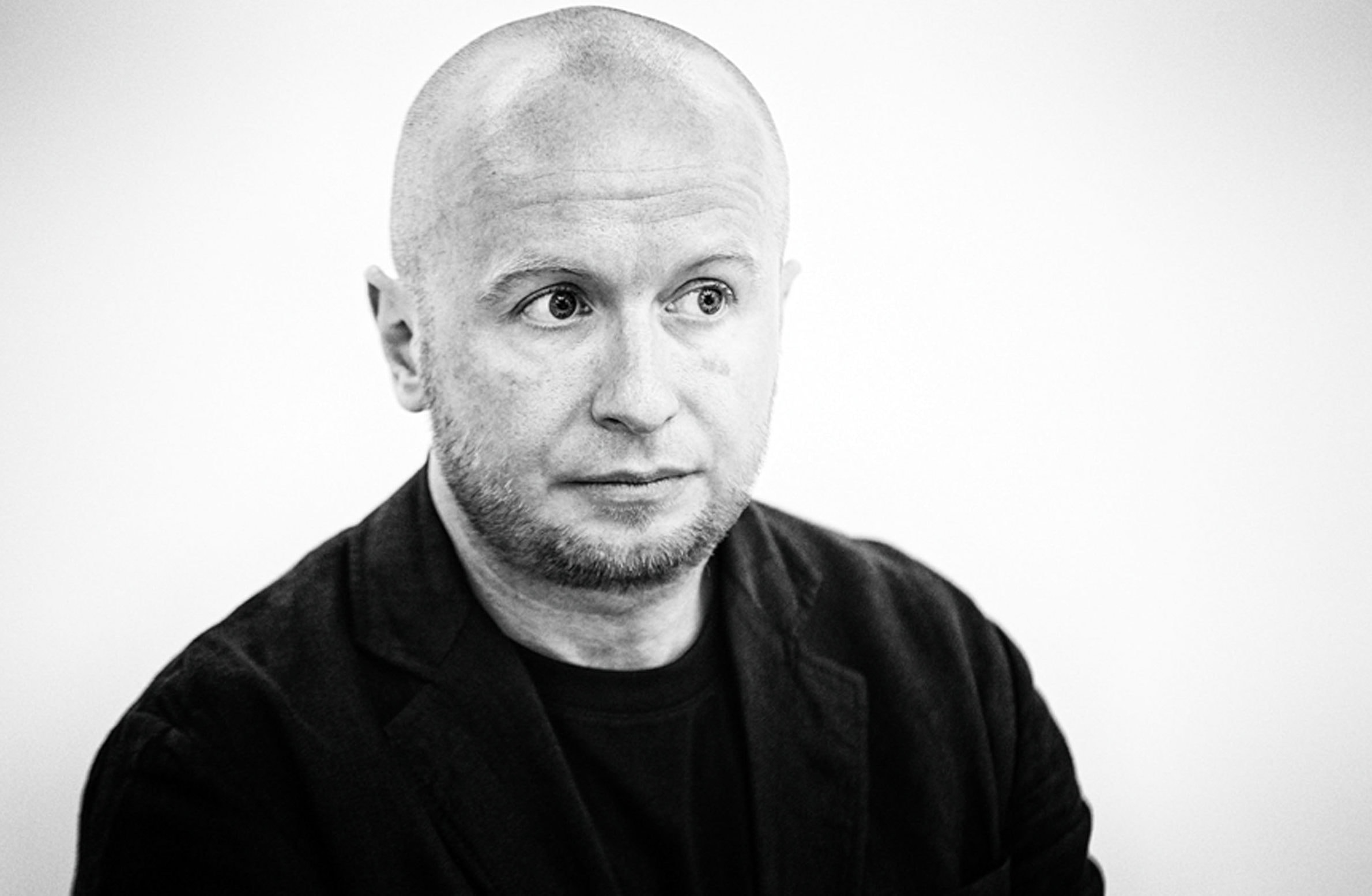
Yevgeny Bereznytskyi, curator of the Kiev Art Week festival
Yevgeny Bereznytskyi, the curator of the Kiev Art Week festival, says that he feels a public need to fill the space with art objects: "There is a will on the part of the creative environment and serious gestures on the part of business in terms of financial support for updating public spaces with the help of sculptures and installations. The sculptures in front of the entrance to "Toronto-Kyiv", in front of the Kiev Art Week space, are the result of cooperation with the M17 gallery. Our partners have selected objects to demonstrate their impact on the environment. This is a kind of teaser or trailer - how public space is transformed when something beautiful appears in it. And the more people see it, the more chances there are that similar projects will be implemented on a permanent basis in the future."
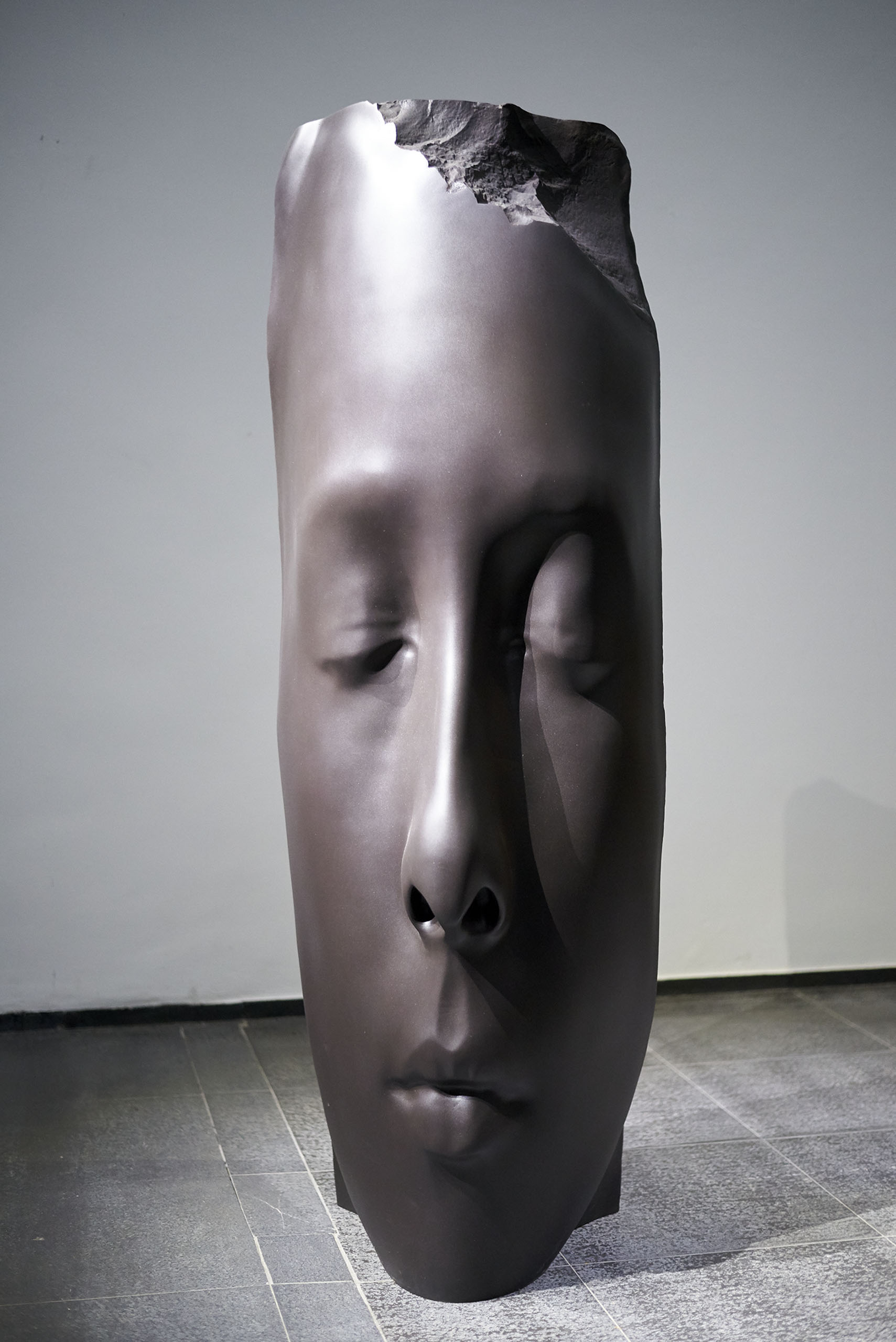
"Dreams of Julia" is a sculpture by Jaume Plensa in the space of the Kyiv Center of Contemporary Art M17. Photo: Yury Ferendovych PRAGMATIKA.MEDIA

Sculptor Jaume Plensa came to Ukraine in May 2019 to give a lecture at the M17 Contemporary Art Center. Photo courtesy of M17
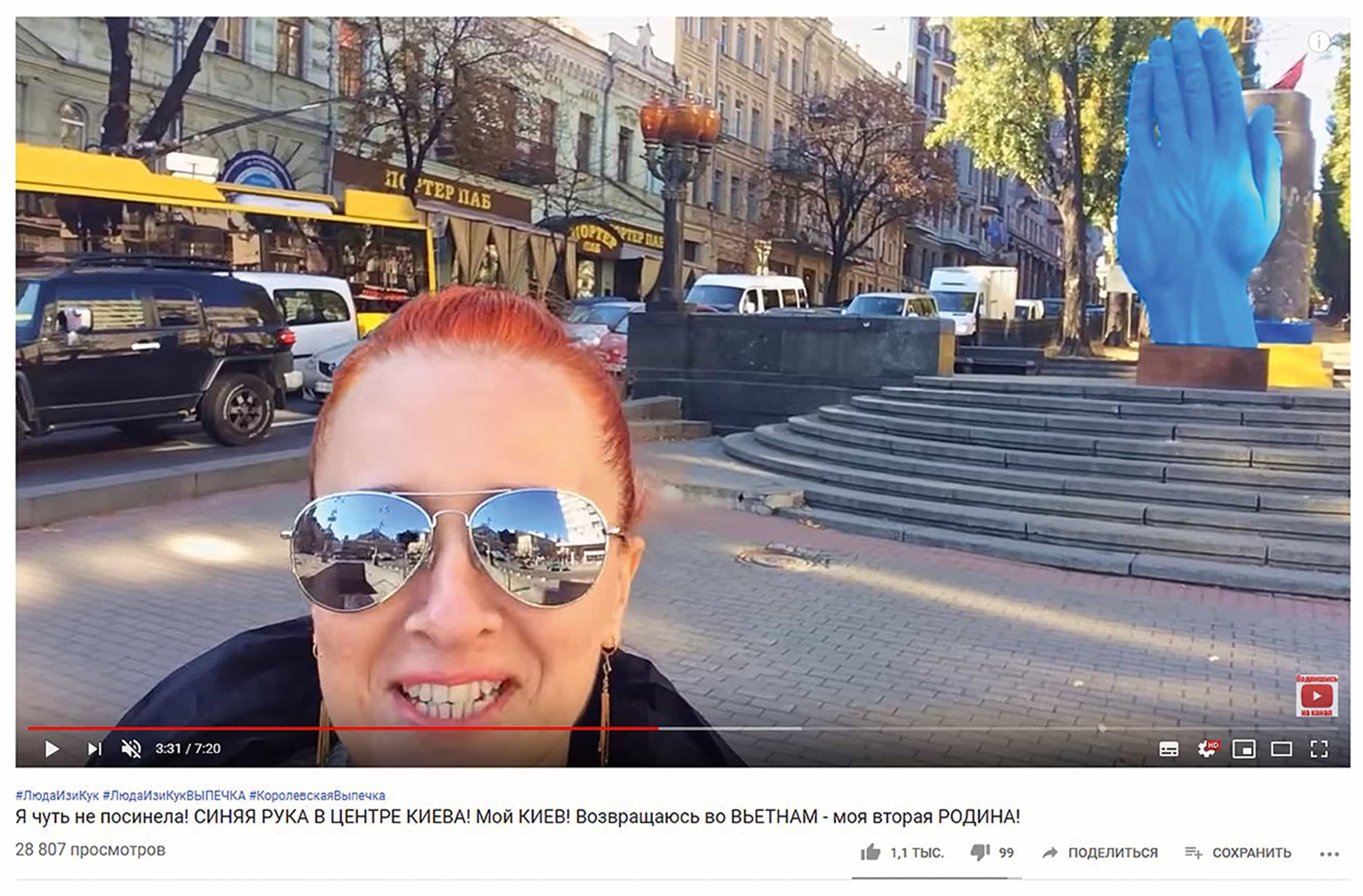
Meanwhile, the people of Kyiv have developed a difficult relationship with objects of public art — even if you don’t remember the monuments destroyed as part of decommunization and the broken leg of Shchors’ horse (the history of the creation and transformation of this monument, by the way, as part of Kiev Art Week, a separate exhibition was dedicated in the Museum of History of Kyiv ). For example, in September 2018, the residents of Kyiv reacted skeptically to the installation of "Blue Hand" - Middle Way sculpture by the Romanian sculptor Bohdan Ratsa, and did not even show a desire to delve into the semantics of the image and the details of the concept. The message of the Moving Monuments project is anti-communist. This is the idea of displacing the memory of the dictatorship with modern art. In Romania, the project's sculptures were installed in the prisons of Pitesti and Rymnicu-Serat, as well as in the city of Brasov, where in 1987 there was a mass uprising against Nicolae Ceausescu. Residents of Kyiv, with rare exceptions, did not go into the intricacies of the concept - for them, "Blue Hand" is at best "the hand of friendship", at worst - "a symbol of the absence of hot water" and "the hand of an avatar".
Even the top Kyiv selfie location, Landscape Alley, to which the people of Kyiv have warm feelings, is actually a territory of cultural and social conflict. The appearance in 2008 of Konstantin Skrytutsky's mosaic sculptures on the Landscape can be considered an act of resistance - this is how the citizens and the artist protected a scenic spot from high-rise buildings. Skrytutsky's sculptures regularly suffer from vandalism, and at one point the artist almost agreed to the offer to move the objects to Kharkiv, where city hall officials promised to provide them with full protection.

Mosaic works of the Ukrainian sculptor Konstantin Skrytutsky on Pejaznaya Alley in Kyiv. Photo: A. Boyko
And in 2011, a scandal broke out already within the creative community: the Kiev Fashion Park project, which provided for the installation of 25 more sculptures at Pejazhka at the expense of patrons, caused outrage among a number of artists. Nikita Kadan, Ksenia Hnilytskaya, Nazar Bylyk and others spoke out against excessive saturation of space with art objects, arguing that such an excess turns a public place into a model of bad taste.
Landscape Alley in Kyiv is a territory of cultural and social conflict
The position of the representative of the city hall, Oleksandr Mazurchak, who at that time held the chair of the first deputy chairman of the KSGA, is very telling: "I watched people come there, everyone wants to take a picture with cats, an elephant and a girl and leave a memory from here, a souvenir. And if they have the opportunity to take not three photos, but ten, that's good, there's nothing wrong with that. We must be tolerant of everything, of different genres, different styles" (interesniy.kiev.ua — 23.03.2011).
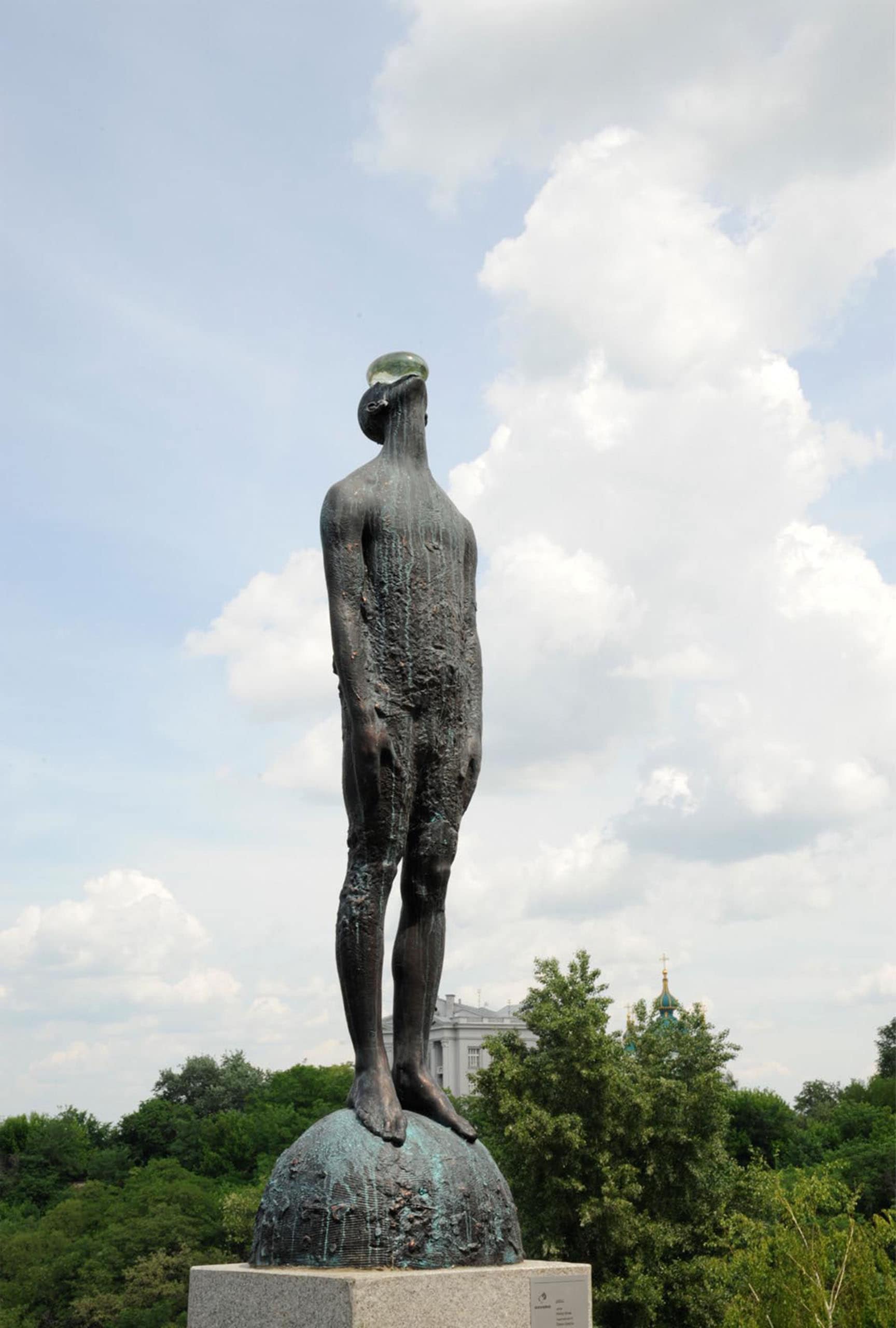
"Rain" by the Ukrainian sculptor Nazar Bylyk on Pejaznaya Alley in Kyiv. Image source: bilyknazar.com
It was such extreme tolerance and omnivorousness that outraged the artists. They called for a more balanced approach to the selection procedure, to reduce the number of objects, to hold consultations with architects and planners in order to determine a suitable location for each work. As a result, the story ended with the installation of 17 more objects.
Sculptor Nazar Bylyk recalled this very story during the discussion "Art in Public Space: Pros and Cons", which took place on May 22 at the M17 Center for Contemporary Art. The author of the famous sculpture "Rain" believes that since 2011, the situation has not fundamentally changed, and until now a logical and transparent approach to the selection and installation of public art objects has not been formed in Kyiv: "Artists want to join the initiatives of installing sculptures and art objects" objects, but this should be done more carefully, more thoughtfully, in cooperation with business and urban planners. Well, now the main art objects in Kyiv are advertising billboards. Because of them, we don't see art or beautiful houses."
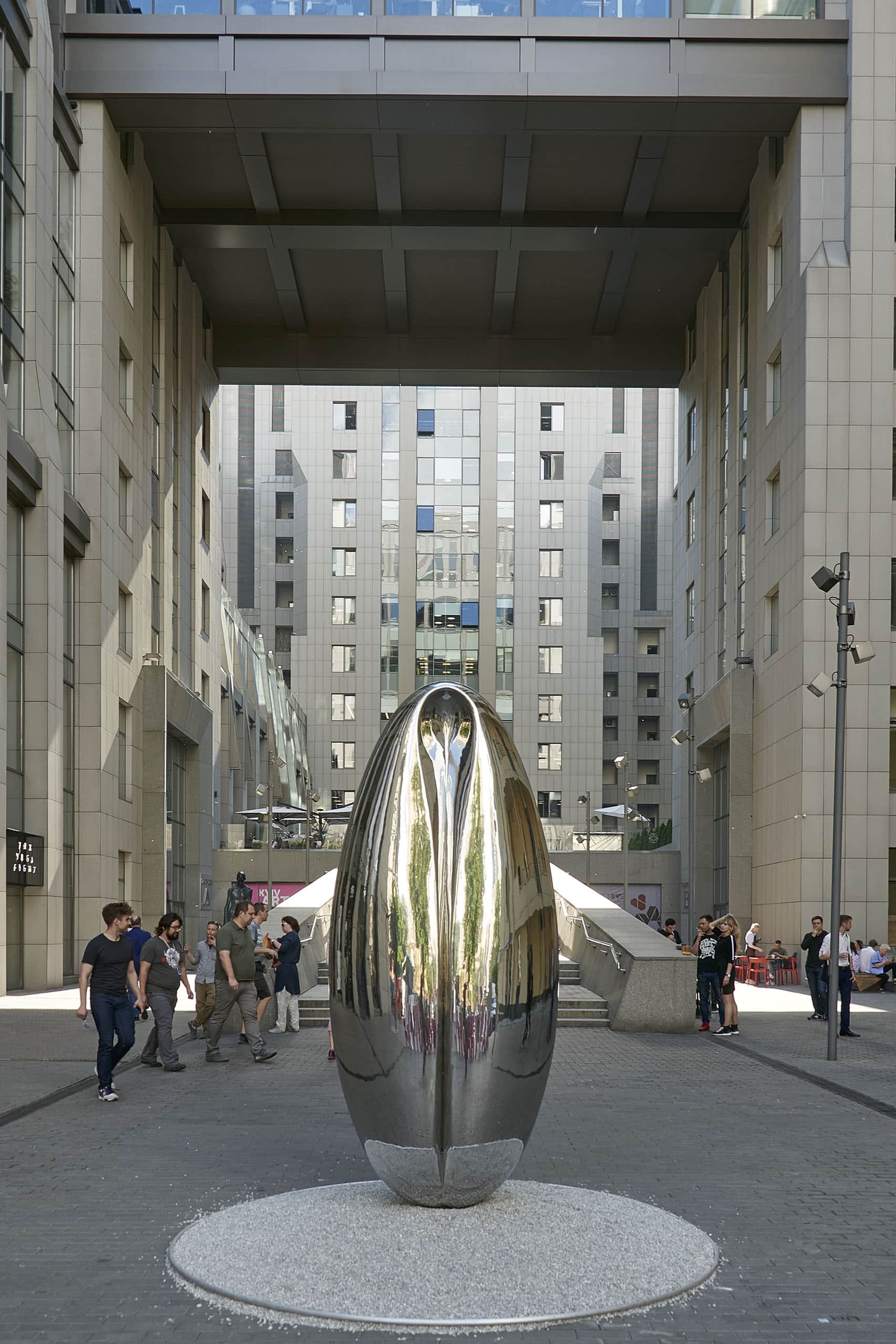
"Zerno" from GAZ on the square in front of the Kyiv complex "Toronto-Kyiv".
Photo: Yury Ferendovych PRAGMATIKA.MEDIA

Kateryna Rai, art critic, initiator of the discussion and curator of the Reforming the space project
According to Kateryna Rai, art critic, initiator of the discussion and curator of the Reforming the space project, bringing objects of modern art into the urban fabric is necessary for the cultural development of society and the Ukrainian capital as a whole: "This is a necessary stage of the development of culture in society, because public art is integration known about contemporary art in the everyday, everyday context of human life. Sculpture is, as we say, art of direct action. She shares space with a person and becomes competitive. In the process of rapid development of megacities, a person can feel lost. Landmarks are violated, there are no locations where he could stop, immerse himself, think and exhale, slow down. It is the sculpture that offers a person a refuge where he can be alone with himself."
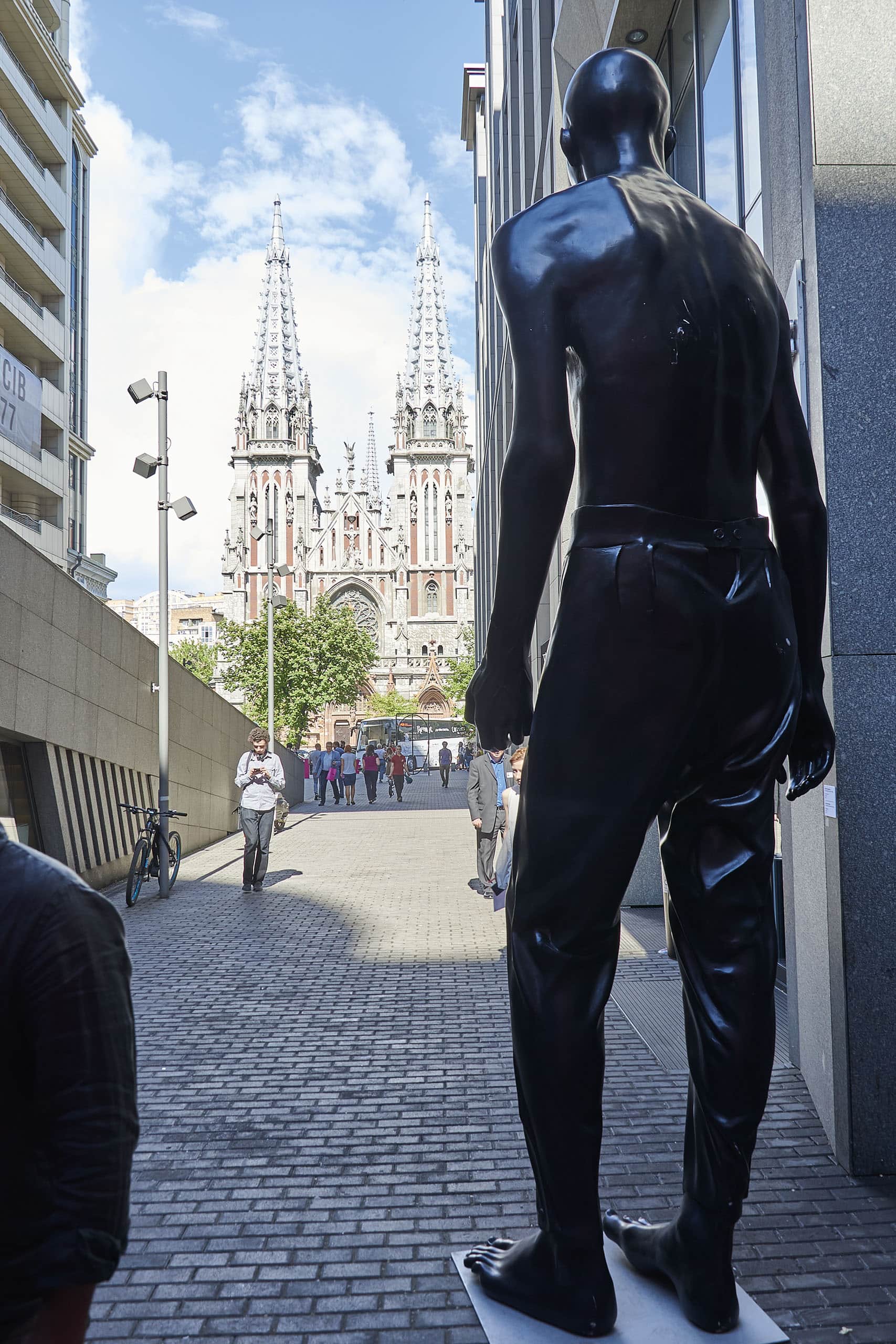
"Enantiodromia" by the Ukrainian sculptor Viktor Sydorenko in the entrance area of the Kyiv complex "Toronto-Kyiv".
Photo: Yury Ferendovych PRAGMATIKA.MEDIA
According to Diana Popova, director of the Culture Department of the KSHA, the city authorities today are ready to participate in initiatives to install new sculptures and installations in open public spaces: "Any intervention in the space of Kyiv makes it richer, makes residents richer and fully fits into the space, renewing the environment. Kyiv is institutionally ready — I'm talking about KSHA. Yes, we are ready. I know that developers are ready to invest in the fact that objects appear around the new building that will serve as a kind of magnet, also increasing the investment attractiveness of the property."
Diana Popova, Director of the Culture Department of the KSHA
But both the developers and the authorities will have to solve the issue of object protection. The easiest way, of course, is to install expensive sculptures on protected, closed territories of elite residential complexes. But this is an oxymoron: being in an isolated space, public art ceases to be an object of public art in the full sense of the word. If vandalism is perceived as a form of resistance, then it is necessary to understand what exactly causes resistance on the part of citizens? Perhaps they intuitively foresee the risks associated with gentrification? Perhaps the semantics of modern Rublic art is too complicated for the Ukrainian commoner?
Developers and authorities will have to solve the issue of public art objects protection

Maksym Golovko, co-founder and architect of the "Agents of Change" organization, believes that the issue is the lack of demand for high-quality art in public spaces. So far, this niche is successfully occupied by kitsch like replicas of the famous I Love New York logo, designed by Milton Glaser and Bobby Zarem, and amateur street and yard sculptures like swans made of car tires. "It seems to me a very good metaphor that Kyiv is a communal house, where the residents did not share the rights, did not share the area, did not share the premises, and everyone does what he wants. So I hung a photo in the hallway because I wanted to, and it doesn't matter if someone doesn't like it. When I leave the house and see a whole family of gnomes in the yard, I understand that people have no questions about who should install sculptures in the city, because they already install them themselves," says Golovko.
Maksym Golovko, co-founder and architect in the organization "Agents of Change"
The absence of grassroots initiatives and passive resistance to innovations is a consequence of unsatisfied household needs, the urbanist believes: "Today, they would rather put up a fence and arrange a parking lot than a sculpture. My opinion is no, not the developer, not the city, not urbanists should be engaged in installing sculptures, but first of all, residents should ask them to start installing these sculptures."
The formation of such a demand "from below" can be expected for decades, Diana Popova is sure: "We understand that we lack education in the field of modern art and there is huge resistance from society - from ignorance. Like it, don't like it - we still think in these categories, although contemporary art is outside of them. It doesn't have to be liked or disliked. It should convey a message, awaken consciousness and thoughts."
Scandals related to public art are an integral part of modern art
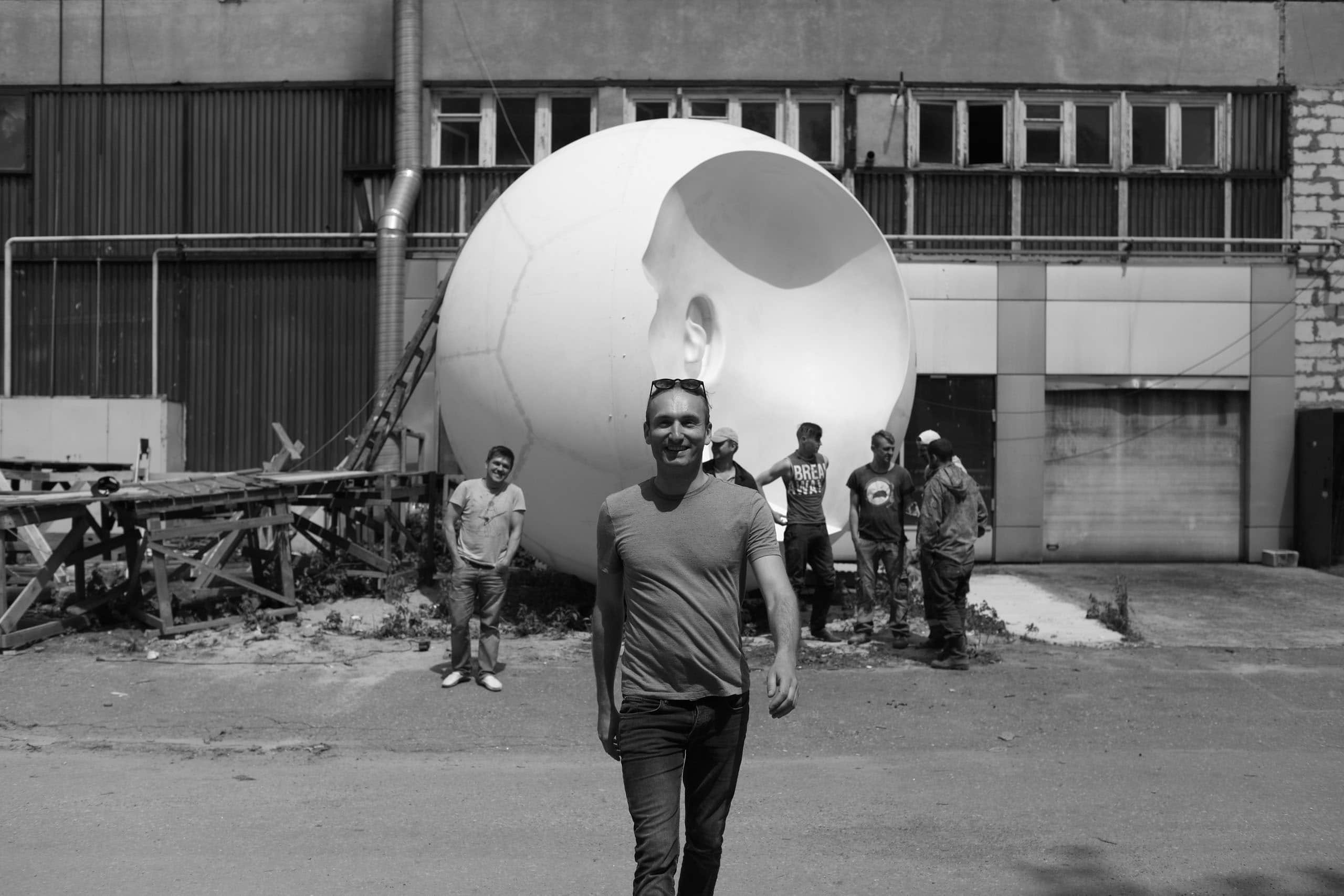
Nazar Bylyk and his Space Around sculpture. Image source: bilyknazar.com
Kateryna Rai is convinced that scandals related to public art are an integral part of modern art: "The Blue Hand experiment was the same challenge to the public as Anthony Hormla's "Angel of the North" (the largest angel figure in the world, installed in Gateshead , England). "Angel" also unleashed a flurry of emotions among local residents, and they sued the state for two years, not wanting it to be installed. And today it is one of the icons of modern sculpture. Therefore, it is not necessary to be guided by the opinion of society - it is necessary to offer some solutions. People need to be swayed, touched, provoked. Yes, contemporary art is provocative and does not always gravitate towards beauty. The main thing is for the objects to be of high quality - not to flirt with the audience, not to entertain them, but to make them think, to improve themselves."
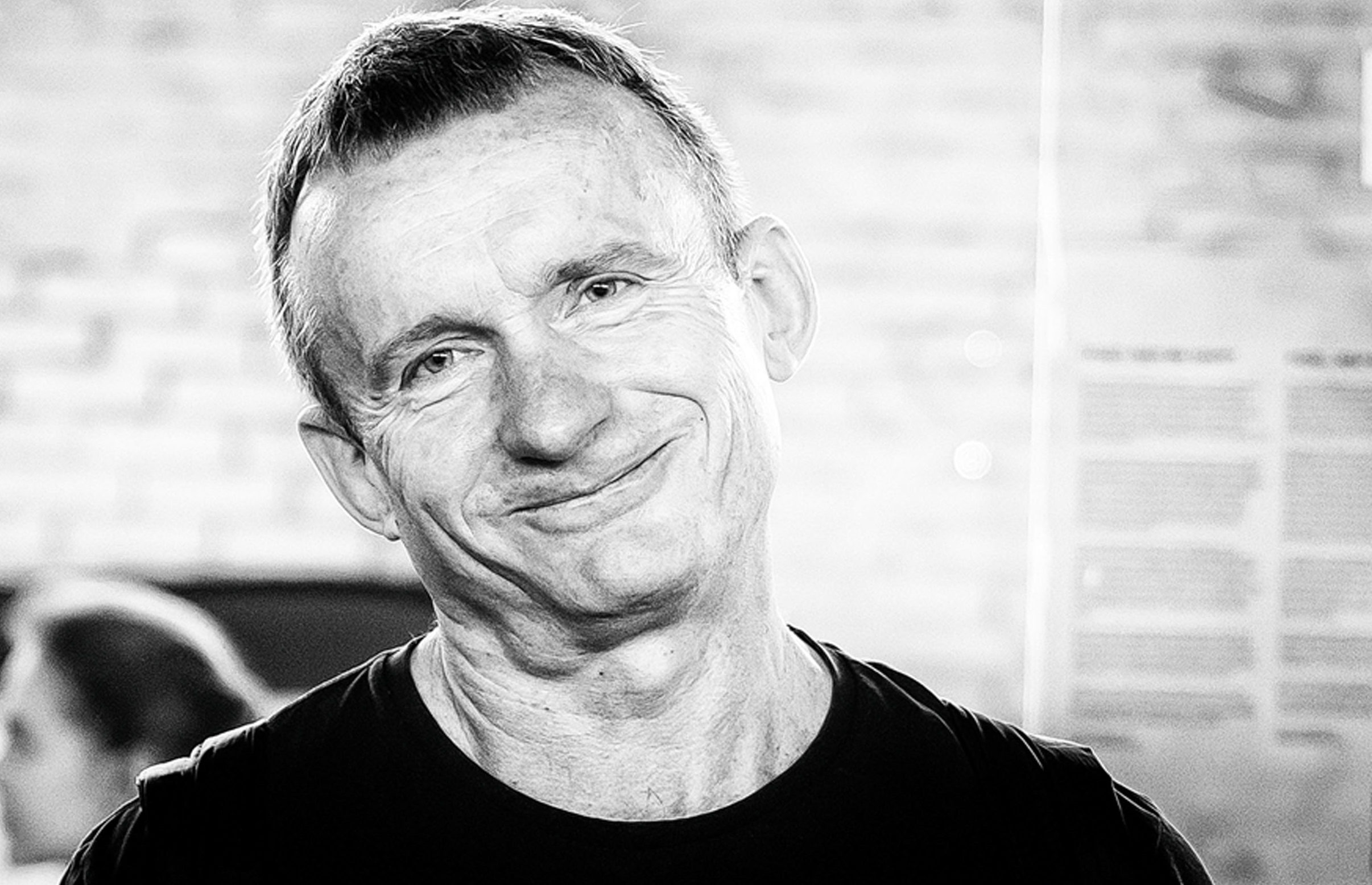
Viktor Zotov, architect
Architect Viktor Zotov honestly admits that he does not like contemporary art. "Art-hu#rt", in his opinion, is just a kind of visual garbage: "I am against decoration.
The form is higher than the content: any shit can be passed off as candy if it is decorated.
Hundreds of thousands of Kyiv residents inhale the stench of defective sewage treatment plants, but instead of reconstructing these sewage treatment plants, they require murals.
You say that there is street sculpture in Europe, but Europe is richer than us in all respects, it's like royal decorations put on a beggar or a peasant. This is tasteless at best.
Cosmetics in our world wins over common sense. The most "decorated" styles arose in the era of the decline of humanism. Cleansing is necessary to heal the body: I am for greater emptiness and freedom in public spaces.
If today most of the attempts to make "art" end up with a low-quality "kugutnei" that insults the dignity of a normal person, try to refrain from "singing in public".
Ephemeral bridges between sculpture and architecture
Jaume Plensa is a Catalan sculptor, laureate of international awards in the field of plastic and visual arts, famous for his participation in the largest projects of artistic interventions in public spaces. In May, Plensa came to Kyiv for the first time to present one of his works "Julia's Dreams", exhibited in the M17 art gallery, and to give a lecture as part of the Reforming the space project.
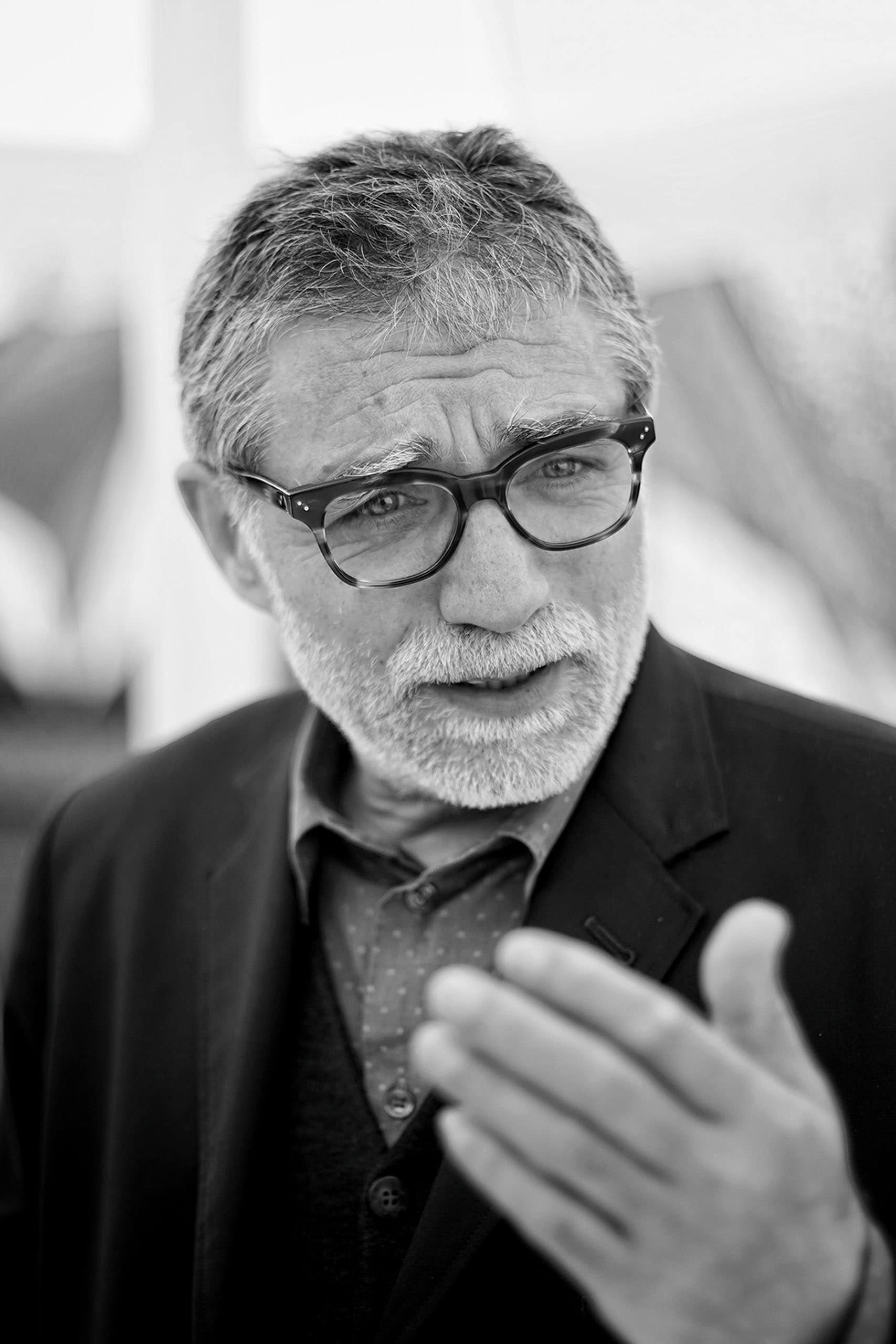
Jaume Plensa, sculptor
Plensa sculptures and the history of their creation is a kind of answer to many of the questions we have indicated above. Jaume, like all artists of contemporary art, repeatedly heard claims similar to the Ukrainian "out of time": "Usually my exhibitions start when the show ends. Because at first, of course, everyone says: "Why is this necessary, it's useless, just throwing money to the wind and so on, we need new hospitals, new institutions"... But when the exhibition ends and the work is taken away, people start asking others questions: "And why are you taking it away? It was so beautiful!" When there is a feeling of loss, there is an understanding of what people really lack. The realization comes - that's what beauty was."
My exhibitions begin when the show ends
You can wait forever for an absolutely lucky moment to finally integrate art objects into the urban environment. Perhaps, Plensa believes, in periods of economic and social depression, art will be able to become a guiding star to a better future. As an example, Jaume told how on a hill, near the closed Sutton Manor mine near the British Liverpool, a 20-meter sculpture Dream appeared in the form of a girl's head with closed eyes - either sleeping or daydreaming. It was made of precast reinforced concrete with a dazzling white, almost shining coating and contrasted sharply with the base of black coal.
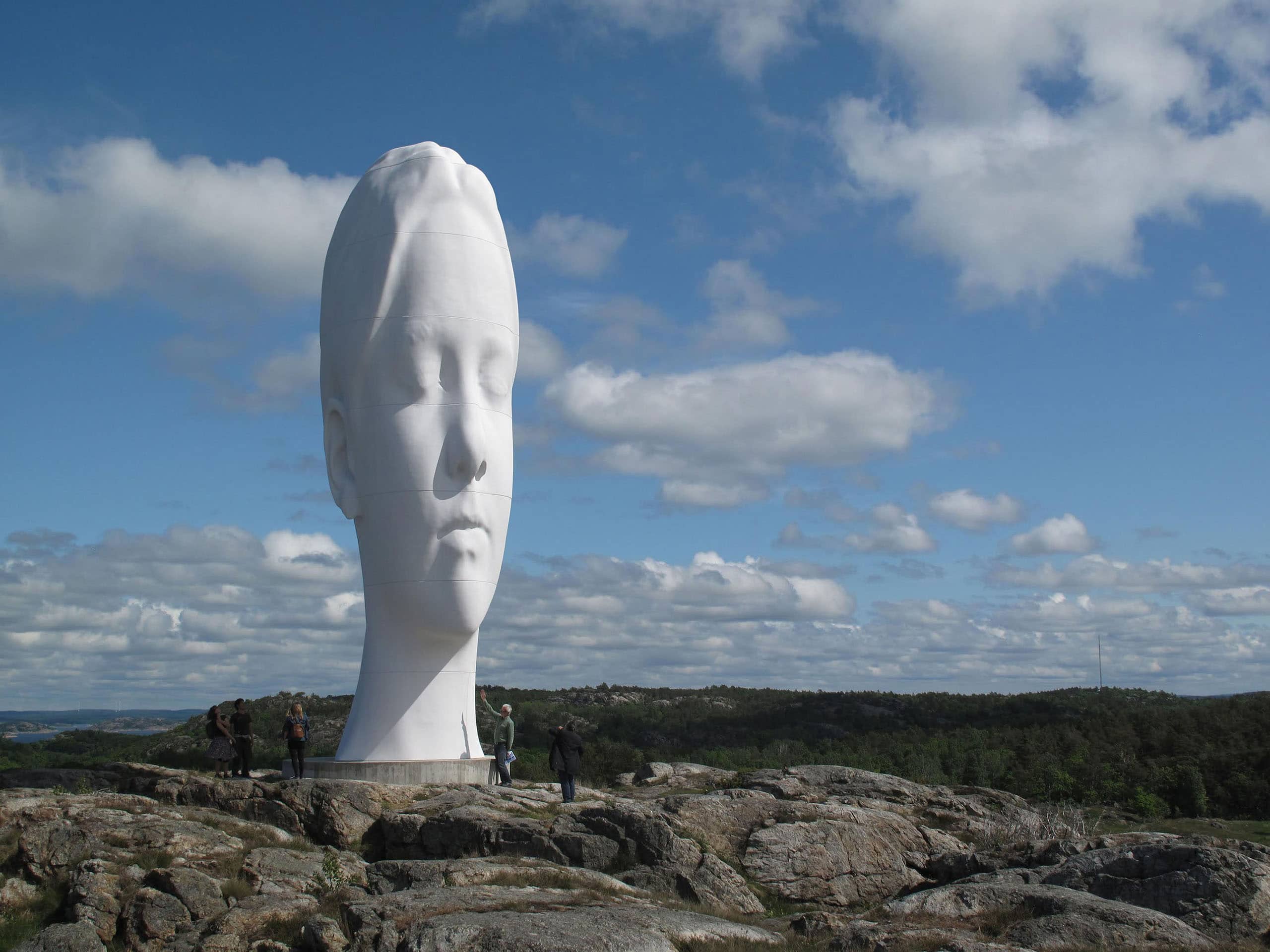
Jaume Plensa's Dream sculpture on a hill near Liverpool (Great Britain). Photo courtesy of M17
"Then the coal mining industry was reformed in Great Britain and many people lost their jobs. The miners turned to me with an offer to implement the project, since at that time they were sorely lacking in some positive impressions, something beautiful. They asked to show them the light. For me, who was born and lives on the shores of the Mediterranean Sea, the world is something ordinary. But they said: "Jaume, when you are at the depth of several hundred meters underground, in eternal darkness, the light becomes your dream." They wanted to implement this project for the sake of the future, for the sake of their children. We installed the sculpture exactly ten years ago, and very soon it will be celebrated in this place, because my work is very important for the local community," Plensa said.
Letters for me are the embodiment of memories of my childhood
The sculptural head of a young dreamer is an archetype of Plensa's work. Once he noticed on the face of a model girl an expression of dreamy poetic calm that struck him. This almost meditative image marked the beginning of a series of works, with the help of which the sculptor tries to spread the humanistic message of a beautiful future to our inner vision. His sculpture "Dreams of Julia", which is exhibited in the Kyiv gallery M17, is from the same series.
However, the figures compiled from letters and symbols initially brought the Catalan sculptor world fame. Returning to semantics, we note that attempts to literally decipher Plensa's ideas are doomed to failure. The sculptor himself explains his experiments with letters as follows: "Letters for me are the embodiment of memories of my childhood. There were many books in our house. And at first, I used full texts to create works — they could have been excerpts of poems. And then I realized that the letters are like cells in the human body, and when combined, they can form a three-dimensional image. I use letters of different alphabets in my works to emphasize: no matter how different we are, we are capable of uniting and creating a family, community, and state."

Source sculpture by Jaume Plensa in Montreal (Canada). Photo: Eva Blue
Tenderness, sensuality, fragility - Plensa's works show that all this can be conveyed in the large format of open urban spaces and natural landscapes. The sculpture can be large-scale and intimate at the same time. According to Plensa, there is no contradiction in this. As an example, he cites the work of Wonderland in Calgary, Canada. A 12-meter head made of painted steel is installed in the square in front of the 236-meter office tower The Bow, which until recently was the tallest building in the city.
The sculpture can be large-scale and intimate at the same time
The sculpture Wonderland is simultaneously a pavilion where people can enter, exploring what Plensa calls "the architecture of the body." The inner space is already intimate, and it seems to protect a person from a skyscraper hanging over him.
"We citizens always have the temptation to talk about architecture and compare everything to it. But my works are about space, they live in space, and not in a given environment. No matter what size our sculptures are, they are always small compared to buildings and the landscape. And for me, they are a bridge between small and large. I believe that sculpture in the context of architecture will always be a poetic refuge, thanks to which we get the opportunity to be alone with ourselves," says Plensa.
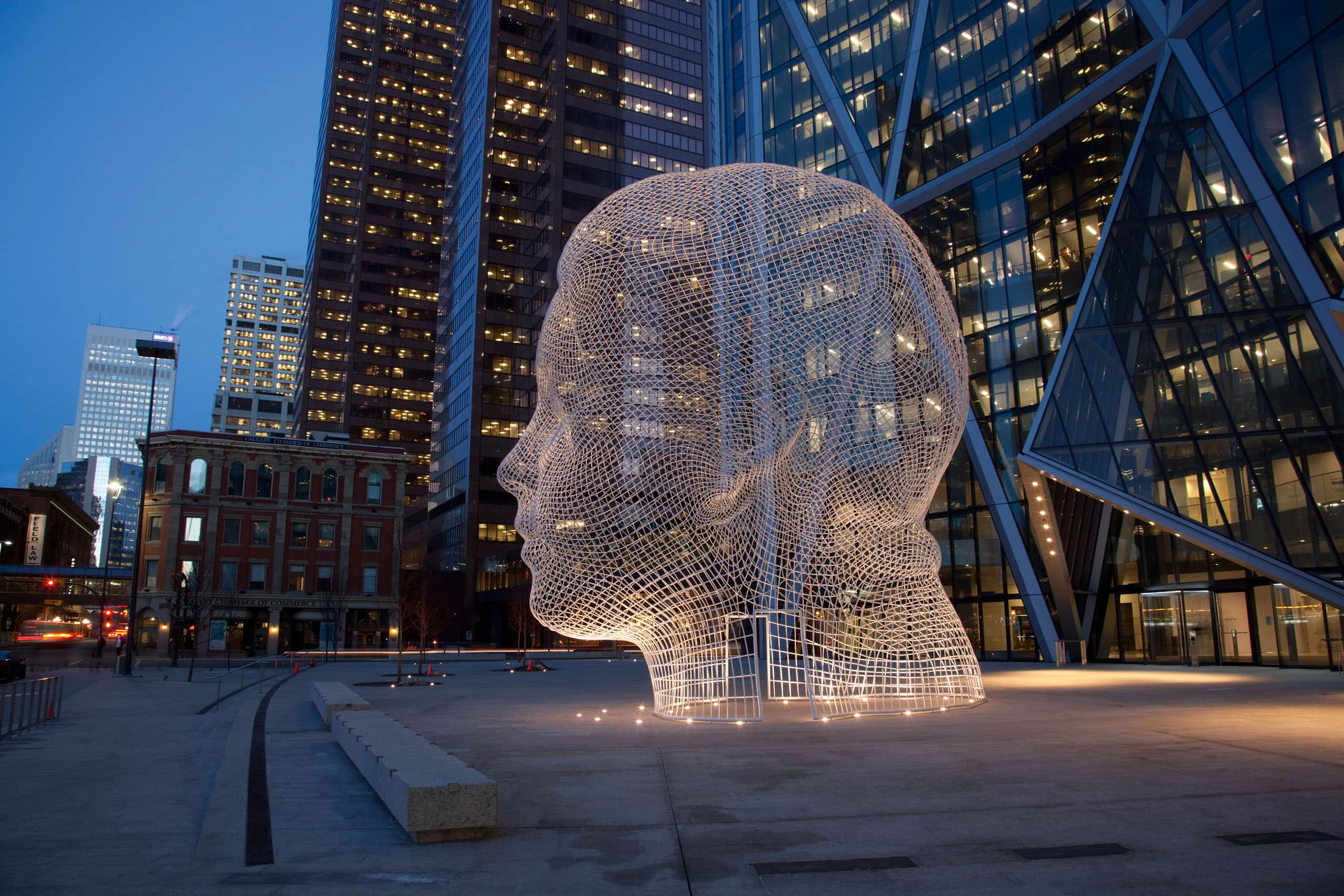
Jaume Plensa's Wonderland sculpture in Calgary (Canada). Photo courtesy of M17
Selfie-architecture — evolution or deviation?
Pavilions similar to those created by Plensa are an amazing hybrid between public art and architecture. What are considered small forms in architecture and urbanism are called installations or sculptures in art. The pavilions were erected at the request of the Serpentine gallery and are a favorite format of the Venice Biennale and many other architectural festivals. Today's pavilions are always innovative, extremely photogenic, as befits art objects, and partly functional. It is not surprising that modern pavilions are often used as locations for selfies. Self-scaling allows a person to take photos on their background without personal technical support.
There are only a few literal examples of specialized selfie architecture
However, for people who know how to find the perspective to put the Eiffel Tower in the frame, the scale of the architecture is almost irrelevant. Moreover, expanding the possibilities for selfies, the Apple corporation released a drone camera back in 2017 that keeps a person's face in focus, filming it from all possible angles.
The selfie pavilion, in the literal sense of the word, was built in Sochi by order of the sponsor of the Olympics, the MegaFon telecommunications company. In the pavilion, the faces of the visitors are scanned in photo boxes, and then the images are transferred to the facade with the help of 11 mechanical drives, resulting in a three-dimensional portrait 000 m high. " of the portrait correlates with "greatness", and also reminds of the destroyed giant Buddha statues in the Bamyan Valley.
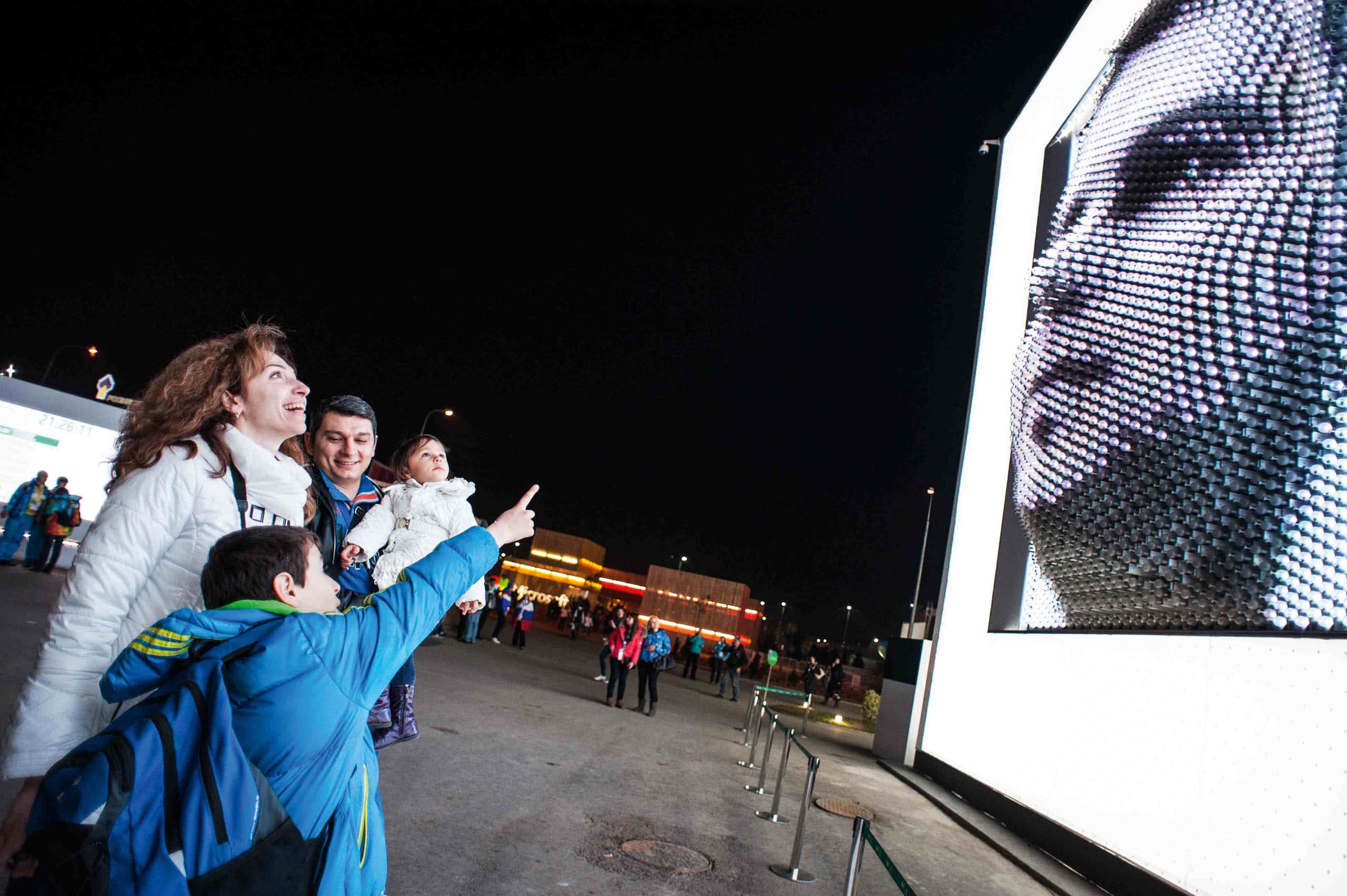
MegaFace Pavilion in Sochi (Russia). The project of the selfie pavilion was developed by the English architect Asif Khan. Photo: Daria Malysheva
However, there are still only a few literal examples of specialized selfie architecture. Photographers, film directors, and cinematographers have long evaluated the qualities of architecture from their professional perspective — for them, the photogenicity of buildings, the correspondence of their character to the mood of the scene, is important to them. If in the theater the director simply ordered the necessary decorations from the scenographer, and at large film factories they continue to do the same, then in the conditions of on-site urban filming, architecture is part of objective reality.
The photogenic nature of the image provides them and their creators with powerful PR
There are also many examples when the photogenic architecture sets the scenario. Thus, the embankment in front of the IAA museum complex became the backdrop for the spectacular opening ceremony of the Eurovision Song Contest 2018 in Lisbon.
15 thousand the ceramic plates that decorate the facade of the building, built in 2016 according to the project of the London architectural office of Amanda Levitt AL_A, work like reflectors, reflecting the setting sun and reflections on the water. They create a completely unique visual effect, and Eurovision producers took this into account when choosing the location. Selfies and photos of celebrities against the background of the MAAT provided the museum with powerful PR.

The MAAT building is the Museum of Art, Architecture and Technology in Lisbon (Portugal), built according to the AL_A design. Photo: Joel Filipe. Source: behance.net
But the deliberate creation of buildings focused on selfie culture can become a dead-end branch of development, a kind of step towards degeneration, says architect Alexander Popov, co-founder and director of the archimatika company: "Overall, it's not bad. If architecture becomes so attractive that people want to be reunited with it at least in a photo, then that's not bad. So, there is penetration of the image created by the architect into the consciousness of the person. But is there any sense in this factor as part of the specification? I think this is overkill. When the priority is the creation of a photogenic facade, architecture turns into decoration. Especially if something becomes a priority, it means that something takes a back seat. Yes, we find our objects on Instagram, we find our exhibition stands there. And if people are photographed against their background, then the message has gone through. We will not assert that the very fact of the appearance of such selfies is bad. It's great, our idea is spreading in this way."
Alexander Popov, co-founder and director of the archimatika company
Alexander Popov remains faithful to the Vitruvian order (utility — strength — beauty), where the aesthetic qualities of architecture are given only the third place: "Any architecture, any design solution should be such that it would not be embarrassing to be photographed against its background. But this is the default setting. There should be no purely utilitarian facades or spaces. If the only goal of this architectural or art gesture is to get on Instagram, then the life cycle of such an object will be very short-term. And if there is a message, and thanks to photogenicity, the message is promoted, then yes, the selfie is a wonderful tool."

The Serpentine 2016 pavilion, designed by architect Bjarke Ingels. Photo: Iwan Baan. Source: serpentinegalleries.org
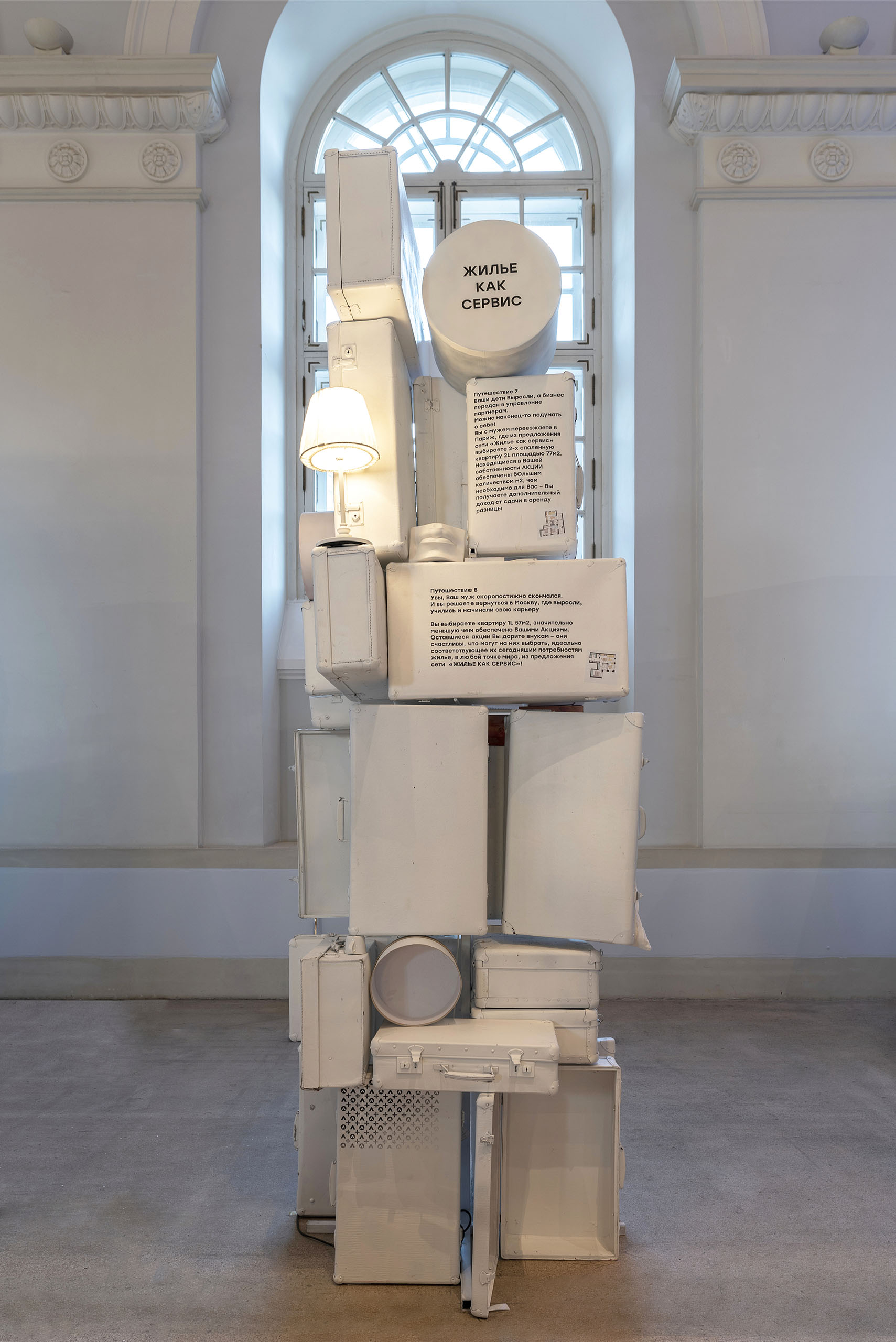
Archimatika's stand at the ARCH Moscow exhibition, 2019. Photo provided by archimatika
Cultural isolationism is definitely not in trend today. Synergy and mutual influence of arts create a chaotic and fruitful environment at the same time, where new essences and meanings arise. And for their acceptance, perhaps, not cold semantic analysis, but animal intuition is more effective. Or contemplation with closed eyes, following the example of Jaume Plensa's dreamy heroines. As recommended by art critic Kateryna Rai: "There is no need to look for the border between sculpture and architecture. On the contrary, we need to look for new points of contact."


