

Our main tool is a mobile application (available for iOS and Android), which works on the basis of augmented reality technology. It is enough to point the smartphone camera at the object that interests you, whether it is a textured historical facade or a detail of the natural landscape. A special "moving brush" allows you to capture a specific pixel on the screen with one touch, after which the program instantly identifies the color code and selects the appropriate paint options from various professional series. You can also easily experiment with color by loading photos already saved in your gallery into the interface.

The Sadolin Visualizer mobile application tries on the color on the wall with the help of augmented reality technology. Image: Sadolin
Viewpoints of Zhytomyr
Zhytomyr has a complex and multi-layered history. According to a legend recorded by the 19th-century theologian Mykola Trypolsky in his work "Historical Data on the City of Zhytomyr, Volyn Province", the city was founded around 884 by a retainer of the Kiev prince Askold named Zhytomyr. This version gives rise to the patronymic explanation of the city's name. Slovak scholar Pavel-Joseph Šafárik suggested that Zhytomyr could be associated with the tribal association of the Zhytomyrs, but this has no direct historical evidence. There were also versions of the origin of the name as a trading center associated with the circulation of rye. Archaeological research in 1982–1983 in the central part of the city discovered materials dating back to the 11th century, which confirms the early existence of a settlement in this territory.

The Byzantine-style Church of the Exaltation of the Holy Cross was built on Zamkova Gora in the 19th century and is located in the very center of Zhytomyr. Photo: open sources
To this day, few monuments have survived in Zhytomyr, reflecting the long historical continuity of the urban environment. Significant losses were caused by the events of World War II, during which about 40% of the housing stock was destroyed. In the post-war period, a large-scale reconstruction of the city took place, with the predominance of typical Soviet buildings and the partial loss of historical objects.

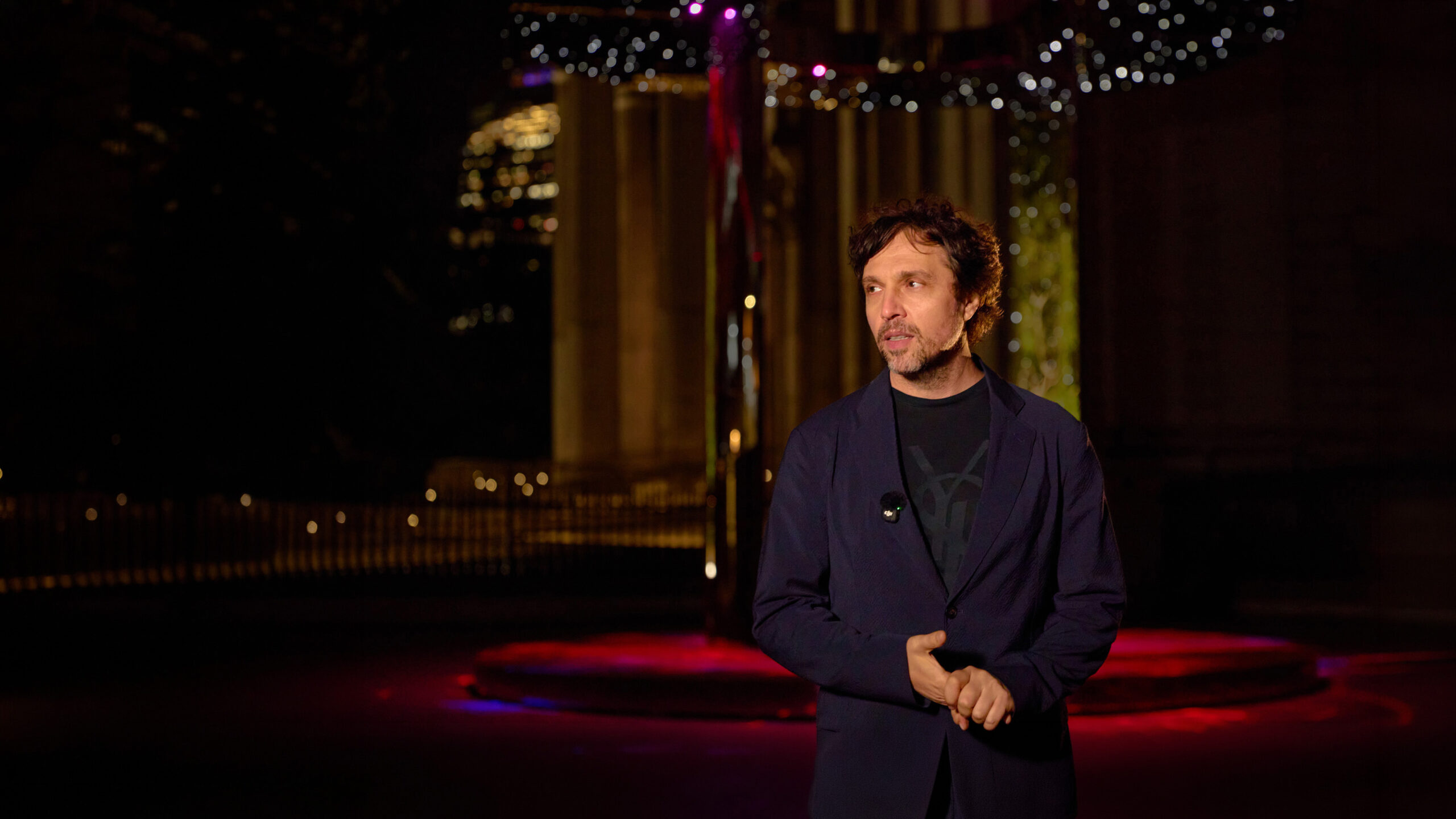
Kyrylo Onatsky, head of the public organization "Zhytomyr Enthusiasts"
A key characteristic of modern Zhytomyr is its natural framework. Head of the public organization "Zhytomyr Enthusiasts" Kyrylo Onatsky notes: "Today it is in many ways a classic post-Soviet city. But its uniqueness lies in the symbiosis of the urban environment with nature. The city has a very strong landscape: the Teteriv River, rocks, parks, elevation changes, incredible viewpoints. And this is what creates the special character of Zhytomyr."
"Almost every district has its own natural dominant or space where you can slow down: slopes, reservoirs, squares, natural landscapes," — Olga Bronstein
Chief Architect of the City Olga Bronstein describes the uniqueness of the urban space as follows: “For me, Zhytomyr is an example of a compact and very human city. Here, you can get to almost any district in 15 minutes, and in this sense it corresponds to the modern European principles of a 15-minute city, where the main functions of life are located close to people. At the same time, Zhytomyr is an extremely green city. Almost every district has its own natural dominant or space where you can slow down: slopes, reservoirs, squares, natural landscapes. This city is not about the aggressive rhythm of a metropolis, but about the balance between urbanism and nature. It is this proximity to nature that creates a special atmosphere.”

Olga Bronshtein, Chief Architect of Zhytomyr
One of the key historical points is Zamkova gora - the territory of the initial formation of the city. There was a medieval fortress here, which has not survived to this day. The architectural ensemble of this zone is formed by the city magistrate of the 18th century, the Church of the Exaltation of the Holy Cross (1900), the Cathedral Church of St. Sophia with a bell tower (1737–1751), the vicarage (1909) and other buildings. A commemorative sign with the year "884" is installed on the territory, which refers to the legendary date of the founding of the city.

A commemorative sign in honor of the founding of Zhytomyr. Photo: Serhiy Dekhtyarenko
The geological position of the Zhytomyr region on the border of the Ukrainian Crystalline Shield has determined the importance of stone as a basic building material. The region is a source of black gabbro, gray granite, red Leznyk granite (Khoroshivske deposit) and labradorite from the Golovynske deposit. Labradorite is distinguished by its optical iridescence effect, due to which the surface of the stone has characteristic blue and green reflections.

Labradorite annotation boards with brief information about the city, installed at the foot of the commemorative boulder. Photo: zhytomyr.city
These materials were widely used in the architecture of not only Zhytomyr, but also other cities in Ukraine. In particular, Zhytomyr labradorite and granite were used in the decoration of Kyiv metro stations, the building of the Verkhovna Rada of Ukraine, and the Cabinet of Ministers of Ukraine.

The Church of St. Sophia is one of the picturesque architectural and historical monuments of ancient Zhytomyr. Photo: Kyiv-Zhytomyr Diocese
The brutality of stone and the fragility of nature
In Zhytomyr, local granite and labradorite form the basis of the urban space and determine the character of the development. As Olga Bronshtein explains, the architecture of the city is difficult to read through individual buildings - it is revealed through the environment as a whole: relief, elevation changes, panoramas, and the interaction of development with the natural landscape.

The suspension bridge in Chaudouara Park is supported by metal cable-stayed structures on two pylons about 70 meters high. Photo: Zhytomyr City Council
The urban space forms a sequence of local routes and observation points. One of them is the pedestrian street Mykhailivska, which leads to the water tower of the late 19th century. The red brick building contrasts with the predominantly gray stone shades of the buildings and is one of the visual landmarks of the city center.

The Water Tower is a historical building at 24 Kosenka Street in Zhytomyr, built in 1898. Photo: Water Tower / Facebook
The route then heads to the Choduarivsky Park-Monument, where natural stone is actively used in the organization of space. The stone stairs and elements of the fence of the Choduariv estate were created in the 19th century with the participation of the stonemason Vaclav Dlouhy, using local granite and adapting to the complex terrain above the Teteriv River.

The famous staircase, built by Czech master Vaclav Dlouhy for Baron Ivan Chaudoire, is located in Chaudoire Park. Photo: Zhytomyr City Council
"The architecture of a city is difficult to read through individual buildings - it is revealed through the environment as a whole," — Olga Bronstein
One of the main points of the route was the suspension bridge over Teteriv, built in the 1980s. It is located at a height of 43 meters above the river and connects the central part of the city with a recreation area. The bridge offers a panorama of the rocky banks and the Teteriv Valley. One of the key natural dominants of this landscape is the Chatsky Head Rock, located in Zhytomyr. It is formed by outcrops of granites of the Ukrainian Crystalline Shield and is one of the most characteristic geological formations of the urban environment.

The Chatsky Head Rock is a natural monument formed as a result of the weathering of granite rocks. Photo: Oleg Martsun
"Zhytomyr is quite restrained in colors: stone, in particular granite, gray, brown, natural shades. But there are bright splashes in this restraint," says Kyrylo Onatsky.
One such striking color accent is the Zhytomyr Local Lore Museum (former bishop's palace), located near Castle Hill. Its Baroque facade is a rich blue color with white stucco decoration.

Vicariate (bishop's house), early 20th century — an old mansion built on Zamkova Square for the head of the Zhytomyr Catholic diocese. Currently, it houses the Zhytomyr Regional Museum of Local Lore. Photo: Neovitaha777
Another important object of the historical development of the center is the building of the Zhytomyr Regional Philharmonic named after Sviatoslav Richter. Built in 1858 as a city theater according to the design of architect Ivan Shtrom, it was considered one of the most modern theater buildings of its time. Special attention was paid not only to constructive solutions, but also to the acoustics and interior design of the hall. Italian masters were involved in the interior decoration, and the ceiling was decorated with decorative paintings with musical and allegorical motifs. Externally, the building is distinguished by a light palette of the facade and plastic decor.

The Zhytomyr Regional Philharmonic building was built in 1858 as a theater building, designed in the neo-Baroque style. Photo: Milamixalchuk
A separate layer of urban architecture in Zhytomyr is formed by public buildings of the second half of the 20th century, primarily buildings of the modernist period. One of the characteristic examples is the cinema "October" on New Boulevard. Its facade is decorated with a large-scale mosaic panel by artist Svitlana Zelena, the crimson-red range of which stands out noticeably against the background of the calm surrounding palette.

The Zhovten Cinema in Zhytomyr, built in 1966, received a new look in 1989 thanks to restoration and a mosaic created by artist Svitlana Zelena. Photo: Space
The modern visual code of Zhytomyr cannot be imagined without its industrial and space layer. The symbol of this era was the National Museum of Cosmonautics named after Sergei Korolev, namely the building of its main exposition. This is a unique example of space futurism. A collection of space technology and equipment is exhibited here, which includes original artifacts that have been in space.

National Museum of Cosmonautics named after S. P. Korolev, exposition "Space". Photo: Ministry of Culture
The interstellar theme in the urban environment also develops through monumental art of the second half of the 20th century. One of the most famous examples is the panel "Constellation of Space" on the facade of the former cinema "Cosmos". Created in the late 1980s based on a sketch by Zhytomyr artist Oleksandr Kostyuk, it is made in the technique of smalt and metal inserts and combines abstract space motifs, zodiac signs and symbols of starry space.

Mosaic "Constellations of Space". Photo: Child of Socialism, 2021
“For me, Zhytomyr is a rather brutal city with a tangible stone, granite texture. Moreover, this granite is multi-colored: with brown, blue, gray inclusions. And all this is combined with the fragility of nature, freshness, greenery, water,” — Kyrylo Onatsky
In 2026, it was decided to dismantle the mosaic for further restoration and conservation. This involves careful removal of the enamel while preserving the authentic material as much as possible and further integrating the work into a new development on the site of the former cinema.

Mosaic fountain in Shoduarivsky Park in Zhytomyr, September 24, 2024. Photo: Suspilne Zhytomyr/Anzhelika Nesterchuk
Kyrylo Onatsky also mentions a separate spectrum of colors, represented by mosaic fountains and panels in Chaudoire Park, created about 46 years ago by Zhytomyr monumental artists. The objects were implemented on the eve of the Olympics-80 as part of the improvement of the park, which then underwent a comprehensive reconstruction. The author's works were performed by seven artists: each of them developed a sketch and independently embodied it in the material, working with smalt and selecting a color palette.

Abstract panel in Shoduarivsky Park in Zhytomyr, September 24, 2024. Photo: Suspilne Zhytomyr/Anzhelika Nesterchuk
Changes at the urban level
Today, Zhytomyr is trying to work not only with its own history, but also with a modern urban identity. It is not only about architecture or landscaping, but also about how the city visually and meaningfully presents itself to its residents and the outside world.
Several years ago, the team of the NGO "Zhytomyr Enthusiasts" worked on an alternative identity for the city, trying to move away from the usual ideas about it. According to Kyrylo Onatsky, the basis was the images that shape Zhytomyr in everyday perception: "For me, Zhytomyr is a rather brutal city with a tangible stone, granite texture. Moreover, this granite is multi-colored: with brown, blue, gray inclusions. And all this is combined with the fragility of nature, freshness, greenery, water."

Branded merchandise of the city with an alternative identity. Image: NGO "Zhytomyr Enthusiasts"
One of the key ideas was to rethink the space dimension of Zhytomyr. “We wanted to show another side of Zhytomyr — the city from which the space era began. Through the figure of Serhiy Korolev, a Zhytomyr resident who opened space to humanity, we laid a very simple idea: anything is possible,” says Mr. Kyrylo. According to him, the identity deliberately received a dark, somewhat mysterious atmosphere with space motifs, but at the same time it was supplemented with bright illustrations and details that create a feeling of lightness.

Composition of the S. P. Korolev Museum of Cosmonautics. Photo: Zhytomyr Regional Tourist Information Center
At the same time, the city is changing at the level of the urban environment. According to architect Olga Bronstein, one of the most important results in recent years has been the creation of new public spaces: "Today, these are places where there are always people, where there are no free benches, where citizens can relax, chat, and simply be in a safe and comfortable environment. During the war, such spaces became especially important for people's mental health."
"We wanted to show another side of Zhytomyr - the city from which the space era began. Through the figure of Sergey Korolev, a Zhytomyr resident who opened space to humanity, we laid a very simple idea: anything is possible," - Kyrylo Onatsky
At the same time, according to Olga Bronstein, the development of the city is impossible without a systematic approach to architecture and planning: "The city must develop in accordance with detailed planning and high-quality architectural solutions, not situational compromises."
A similar approach is supported by city activists. Kyrylo Onatsky is convinced: "For Zhytomyr, it is important to work on two scales simultaneously: to revive large iconic objects and to create small but qualitative changes close to people - in yards, alleys, squares, by the water, in familiar daily routes."

Shoduarivskyi Park after reconstruction. Photo: Zhytomyr City Council
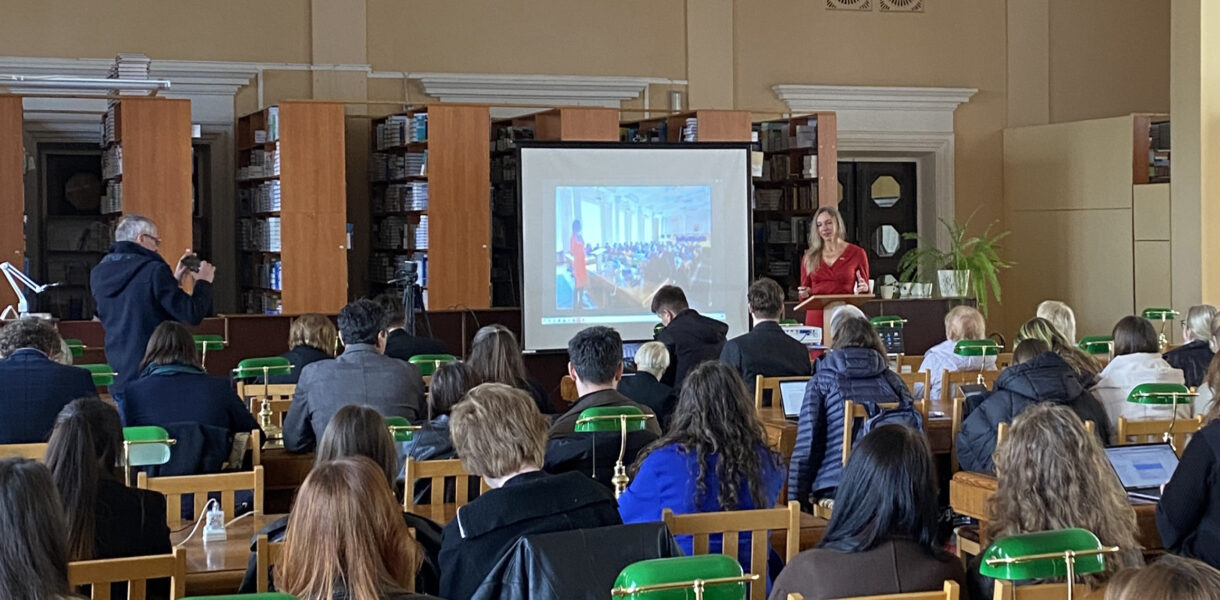
A good sign for Zhytomyr is that a sustainable culture of professional and public discussion of the development of the urban environment is gradually forming in the city. In recent years, the activity of the architectural and urban community has noticeably increased. To a large extent, this happened after the first Urban School event in Zhytomyr.
"After that, new urban communities began to form, independent initiatives, activists, and public discussions appeared. Today, the Urban Spring forum is being organized for the second time, and this is a very good indicator that the city is beginning to form its own culture of urban discussion," Olga Bronstein concludes.


