You can find an article about the aforementioned A-Station project on Arsenalna Street. here, and we move on to the hero of today's story - Khreshchatyk. We note that the purpose of this study is not to criticize, but to analyze the location. What urban and lighting scenarios were implemented, whether they are effective for the city and users of street spaces, what functional and aesthetic qualities does the light have on Khreshchatyk.
The lighting of any space cannot be considered without understanding the broader context, for example, urban planning, architectural, even historical, because all of this is interconnected. Therefore, we went beyond the boundaries of lighting design or lighting technology alone.

Oleksandr Maksymov, founder and head of the Ukrainian lighting brand LOFU
Oleksandr Maksymov, founder and head of the Ukrainian lighting brand LOFU, an electrical engineer-researcher by profession, has been working with light since 2012. The company has undergone a transformation from a lighting manufacturer for industrial and commercial enterprises (Solmix Lighting) to the creation of luminaires designed by Ukrainian artists, interior, facade and gallery lighting. LOFU develops lighting scenarios for enterprises and public street spaces. In 2022–2023, the brand took part in exhibitions abroad: Maison&Objet (Paris), i am u are (Los Angeles) and others. Oleksandr Maksimov's expertise helped to see the holistic current picture of lighting on Khreshchatyk and problem areas that need to be reviewed.

Julian Chaplinsky, Ukrainian architect, urbanist, former chief architect of Lviv and Deputy Minister of the Ministry of Community and Territorial Development
Julian Chaplinsky, a Ukrainian architect, urbanist, former chief architect of Lviv and deputy minister of the Ministry of Community and Territorial Development, shared his vision of Khreshchatyk and spoke about the experience of another Ukrainian city, Lviv, in working with urban spaces.
We were also interested in understanding what initiatives the city authorities have implemented or are planning to maintain and improve the condition of the street.
To begin, let's remember how Khreshchatyk has developed from ancient times to the present.
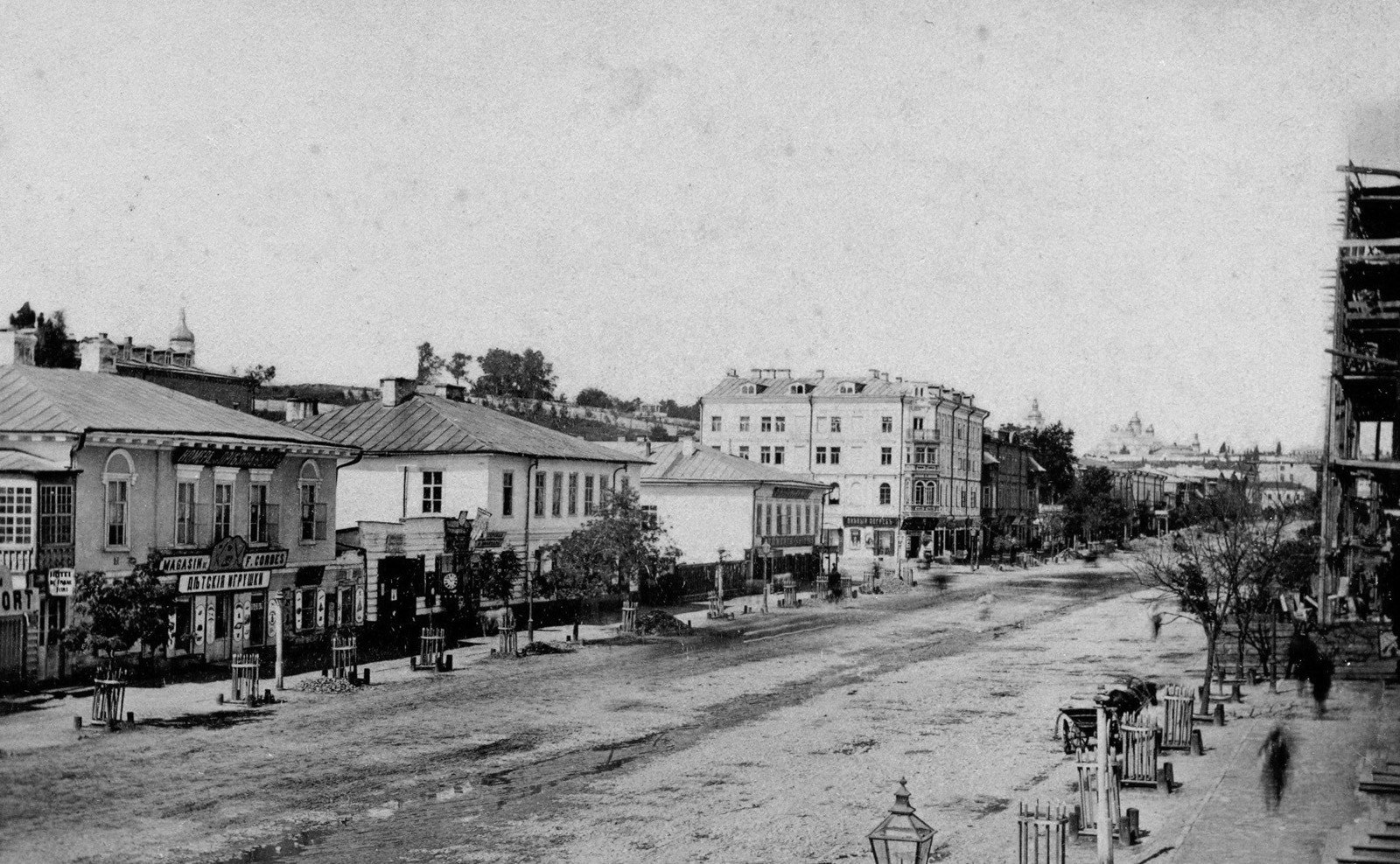
Khreshchatyk around 1870. The white building is now the Central Department Store. Photo: Telegram channel of the Retro Kyiv community
The past that determines the future
Central streets and city collection points are occasionally "designated" for this role. They are there because people have deemed them important.
In the case of Khreshchatyk, the impetus for its development was logistics and the ability to unite. It was and remains a kind of corridor connecting Podil, Old Kyiv and Pechersk. Perhaps this is why the city still does not dare to remove or significantly limit traffic on the street, despite the poor air quality, the discomfort of residents in using the central part of Kyiv, and the research of urban planners on how this could be done.
The area acquired the status of a street in the 1930th century. During the XNUMXth and early XNUMXth centuries, the expanses of Khreshchatyk were actively and densely built up, with two- and three-story tenement houses dominating its ensembles. The street was home to a galaxy of valuable buildings, many of which are now lost, such as the City Duma, the National Hotel, and Ginzburg's House, which was called the first Ukrainian skyscraper. An electric tram ran near the modern European Square (in the XNUMXs, the tram service on Khreshchatyk was replaced by a trolleybus).
In short, Khreshchatyk at that time was the center of the business and cultural life of the capital, with numerous shops, institutions, and offices. The street was not exclusively representative or commercial - ordinary Kyiv residents also lived in the houses.

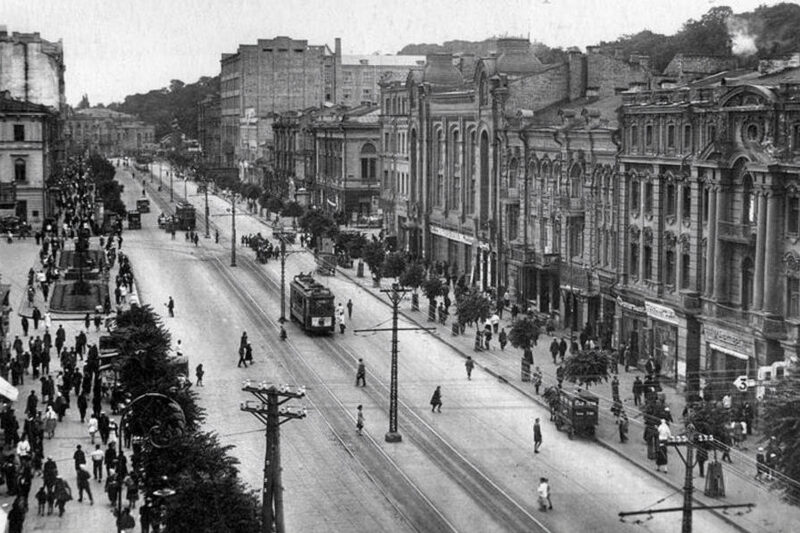
Khreshchatyk in 1927 with a tram line. On the left is the modern Independence Square. Photo: FB community "Retro Kyiv"
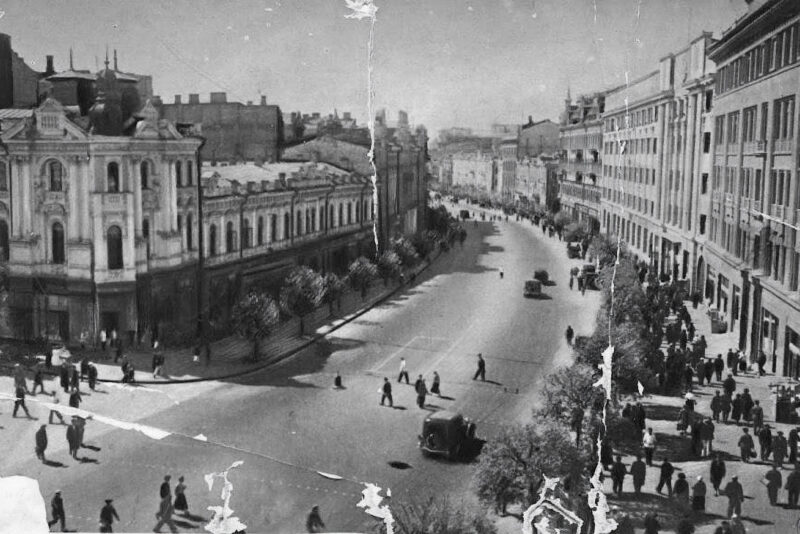
At the corner of Khreshchatyk and Horodetskoho St., 1938. Photo: Retro Kyiv community
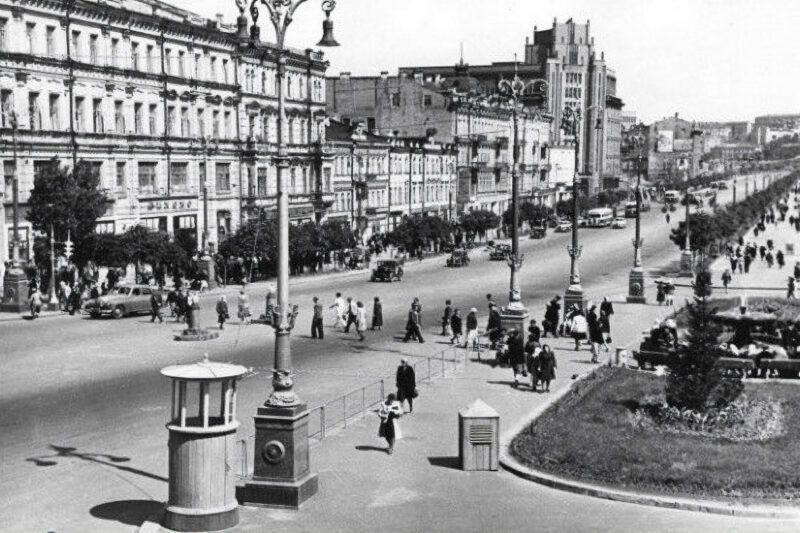
Khreshchatyk in 1948. Photo: Retro Kyiv community
In the publication "Energy. History, Modernity and Future", edited by S. Plachkova, I. Plachkov and a group of scientists, we find information about artificial lighting. Many know-how for the city originated on Khreshchatyk.
Initially, gas lamps were used for Khreshchatyk and the adjacent streets of Oleksandrivska (now M. Hrushevsky), Volodymyrska, Fundukleivska (now B. Khmelnytsky), and Prorizna, as well as the squares and neighborhoods around it. Stationary lighting was installed as far back as 1872, and even then the lanterns on Khreshchatyk worked for more hours than anywhere else in Kyiv.
When electricity was introduced to the city, one of the first illuminated public spaces was the garden, now home to the Valery Lobanovskyi Dynamo Stadium. Energy from the first public power plant was supplied to Khreshchatyk, the city theater, and nearby buildings. Facilities for servicing the city's power grid at the turn of the 19th and 20th centuries were built near the modern Independence Square.
To illuminate the center of Kyiv, electric arc lamps in the form of glass prisms on special cast iron or tram poles were used. The lamps could also be hung on supports with brackets.
In conclusion, we can say that although the views on lighting in the past were far from modern principles of lighting design and focused mainly on quantity, rather than on any complex characteristics, Khreshchatyk was better lit than many other parts of the city. Light sources worked longer, they tried to make them as modern as possible. While the center of Kyiv shone with gas and electricity, kerosene was still burned on the outskirts.
There have been many moments in the history of Khreshchatyk when it underwent significant changes in architecture and layout. The intensive development of the 1941th century and the turbulent beginning of the 1949th century have already been mentioned. Undoubtedly, the tragedy of 1960, when the buildings of Khreshchatyk were mined and blown up, most likely by Soviet underground fighters. The city center then turned into a charred wreck. The further expansion of Khreshchatyk (as a result of which not only the ruins were removed, but also a number of damaged objects that could be restored) and the post-war reconstruction of XNUMX–XNUMX, when Khreshchatyk finally appeared in a new image - solemn, Stalinist-Empire, in the embrace of stone.

Street space of modern Khreshchatyk in the evening. Photo: Yuriy Ferendovych
We can also recall the reconstruction of Independence Square in 2001, when the Globus shopping center was built under and above the square, and the large fountain was transformed into a blue dome - the light lantern of the same shopping center. The Independence Monument, the symbolic Lyadsky Gate, a number of smaller monuments, and fountain complexes appeared on the square.
The underground shopping labyrinths of "Metrograd" between Bessarabskaya Square and Ukrainian Heroes Square (until 2023 - Leo Tolstoy Square) opened the same year.
It is noteworthy that according to the plans, the aforementioned underground meters in the city center were to become parking lots, but were implemented as shopping malls.
Khreshchatyk bears witness to the Revolution of Dignity and places of honor for its fallen soldiers. Fresh reminders of the price we pay for freedom and the future are the memorial to the heroes who died in the war unleashed by Russia.
Now Khreshchatyk is a 1,3-kilometer-long street, “the shortest and widest among the main European ones,” as guidebooks like to say, located in two districts of Kyiv — Shevchenkivskyi and Pecherskyi. It begins with European Square, where M. Hrushevskyi, Tryohsvyatitelska, Volodymyrskyi Uzviz streets and parks on the slopes of the Dnieper adjoin it. Then it crosses Independence Square, Instytutska, Arkhitektora Horodetskoho, Prorizna, Luteranska, B. Khmelnytskyi streets, T. Shevchenko Boulevard and “flows” into Bessarabska Square and Velika Vasylkivska street.
Khreshchatyk has 8 lanes of traffic and 31 cultural heritage sites - buildings of historical, architectural and historical value, one metro station, several underground passages and a whole underground life under the Maidan, including the 21-meter "pipe" and the intricacies of the "Globus".
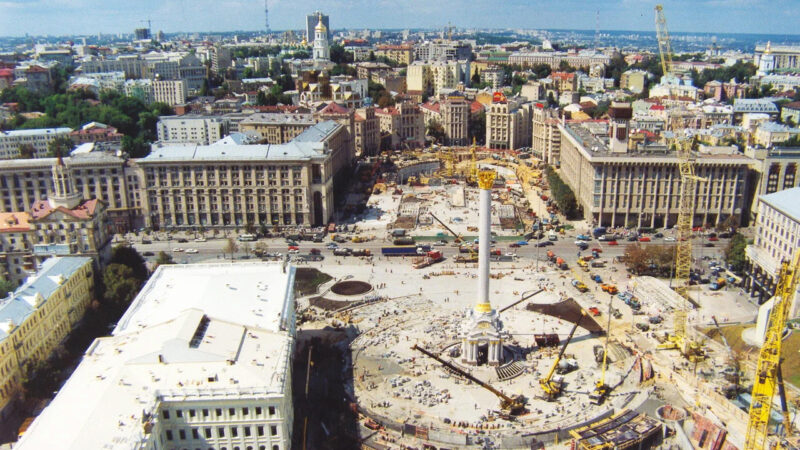
The process of reconstruction of Maidan in 2001 and the state afterwards. Photo: nv.ua and bigkyiv.com.ua
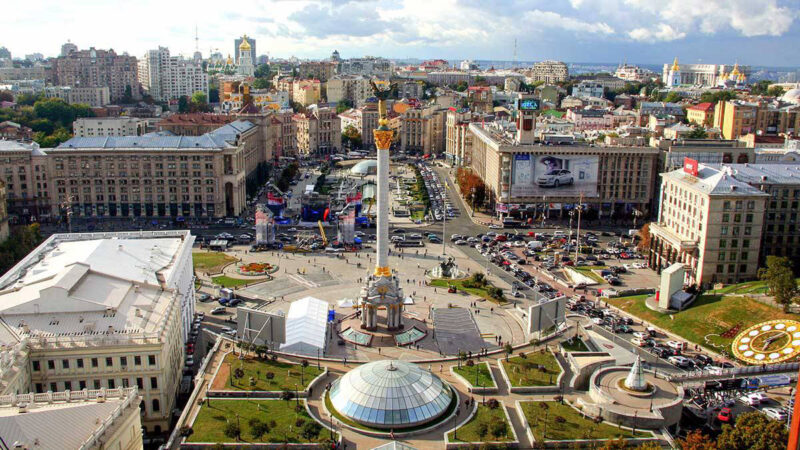
The process of reconstruction of Maidan in 2001 and the state afterwards. Photo: nv.ua and bigkyiv.com.ua
The street spaces of Khreshchatyk are not only affected by large-scale events, reconstructions, and construction. Each intervention, like a "butterfly effect," — a new sign or lighting, kiosk, flowerbed, or crossing — changes perception, navigation parameters, accessibility, and so on.
Transformations of Khreshchatyk that did not happen
The city authorities have repeatedly spoken about the changes that should take place on the street. In 2014, the idea of creating a memorial to the heroes of the Heavenly Hundred - the Museum of the Revolution of Dignity was scaled up to an open architectural competition for a project to renew public spaces in the center of Kyiv called "Territory of Dignity"It envisaged comprehensive works on 70 hectares in the city center, including the Maidan area, adjacent streets and green areas, and the Ukrainian House building.
The competition was preceded by public discussions with active public involvement. During 2014–2015, 149 projects were submitted in four categories:
- "Public space of Maidan and the central core of Kyiv" - 29 projects;
- "Memorialization of the events of the Revolution of Dignity and perpetuation of the memory of the Heroes of the Heavenly Hundred" — 87 projects;
- “International Cultural Center “Ukrainian House on European Square”” — 9 projects;
- "Multifunctional museum complex "Maidan Museum/Museum of Freedom"" — 24 projects.
The winners were determined, and in 2015, the Cabinet of Ministers of Ukraine issued Order No. 1186 “On the Establishment of the State Institution “Memorial Complex of the Heroes of the Heavenly Hundred — Museum of the Revolution of Dignity.” However, none of the projects — neither the memorial itself nor the rest — were ever implemented. The competition website terradignitas.kga.gov.ua is currently not serviced.
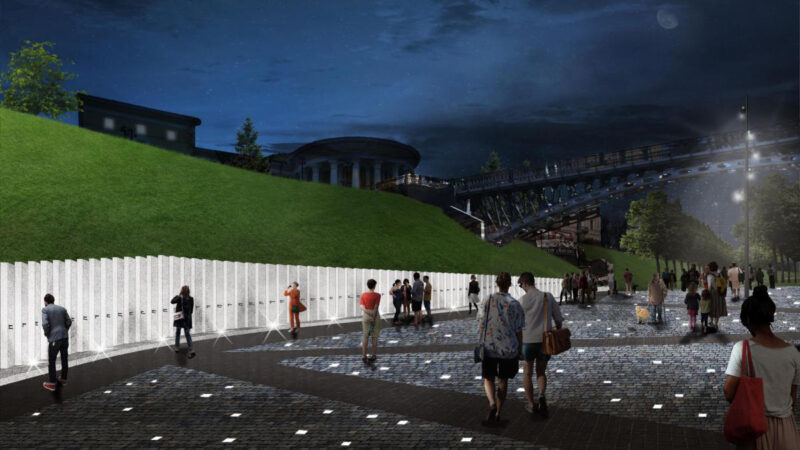
Project of the National Memorial Complex of the Heroes of the Heavenly Hundred - Museum of the Revolution of Dignity (2018). Image: www.maidanmuseum.org
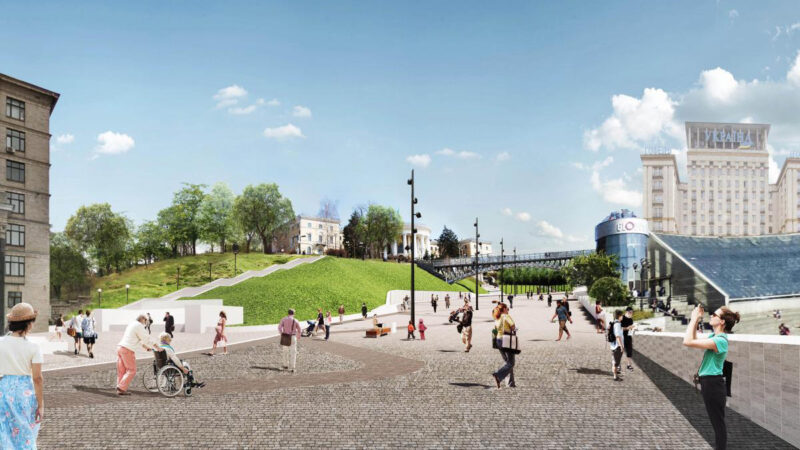
Project of the National Memorial Complex of the Heroes of the Heavenly Hundred - Museum of the Revolution of Dignity (2018). Image: www.maidanmuseum.org
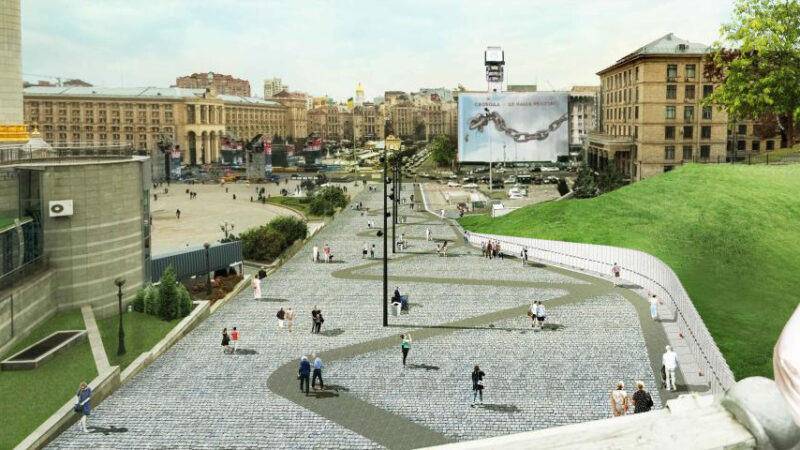
Project of the National Memorial Complex of the Heroes of the Heavenly Hundred - Museum of the Revolution of Dignity (2018). Image: www.maidanmuseum.org
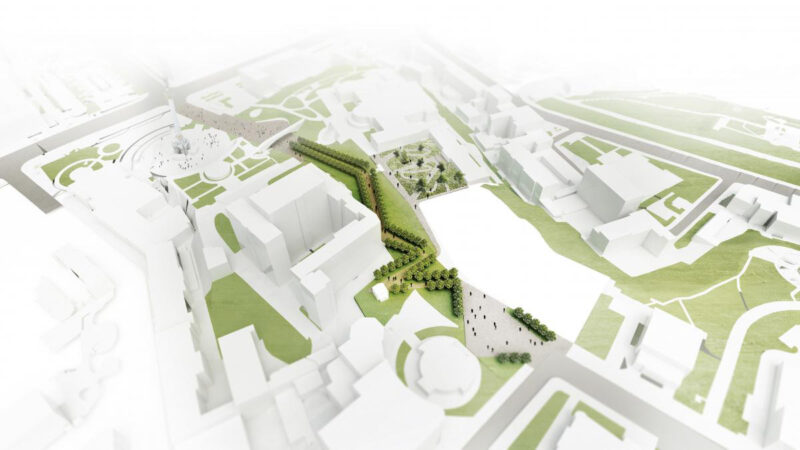
Project of the National Memorial Complex of the Heroes of the Heavenly Hundred - Museum of the Revolution of Dignity (2018). Image: www.maidanmuseum.org
In 2017, two orders of the Cabinet of Ministers on competitions were again issued: “On organizing and conducting an open international competition for the creation of the best draft design for the construction of the National Memorial Complex of the Heroes of the Heavenly Hundred - Museum of the Revolution of Dignity” (No. 390-r) and “On organizing and conducting an international open architectural competition for the best design proposal for the object “National Memorial Complex of the Heroes of the Heavenly Hundred - Museum of the Revolution of Dignity”” (No. 501-r). The development of these initiatives is unknown.
About plans to renovate Khreshchatyk in 2019 publicly declared W. Klitschko.
In 2019, two tenders for the development of design and estimate documentation for the overhaul of Khreshchatyk and Independence Square were completed on Prozorro.
In December 2021, the Kyivavtodor municipal corporation announced a tender for the overhaul of Khreshchatyk, which was won by Onur Construction International with a construction cost of UAH 739 million 500 thousand.
At the beginning of 2022, the Kyiv City State Administration approved the project "Overhaul of Khreshchatyk Street in the Pechersk and Shevchenkivskyi districts of Kyiv" with a duration of 12 months and a total estimated cost of more than 790 million UAH.

On today's Khreshchatyk, there is too much lighting in some places, and not enough in others. Photo: Yuriy Ferendovych
We all know what happened next: a full-scale war began.
This May, Kyiv residents and guests of the city could notice that traffic on the street was temporarily blocked and construction work was underway: a controlled pedestrian crossing was built at the corner of Prorizna, which duplicates the underpass across Khreshchatyk.
We contacted the Kyiv City State Administration, the Department of Urban Planning and Architecture, and the Chief Architect of Kyiv, Oleksandr Svystunov, to obtain information on whether the city will implement the plan for the main street and whether the work was part of the previous project.
We received a response from Tetyana Zaichenko, Deputy Director of the Department of Urban Planning and Architecture. In an official letter, she notes: this executive branch, in accordance with current legislation, provides urban planning conditions and restrictions — one of the main initial data — for the design of construction objects within its powers. According to the electronic document management database of the Department of Urban Planning and Architecture, as well as the City Information and Analytical System for Urban Planning Activities "Urban Planning Cadastre of Kyiv", urban planning conditions and restrictions for the design of a construction object, reconstruction (restoration) Khreshchatyk St. were not providedThere is also no information about registration. master plan diagrams for reconstruction (restoration) Khreshchatyk Street in the city of Kyiv.
In the near future, only current changes are planned for the renovation of Khreshchatyk on certain sections of the street.
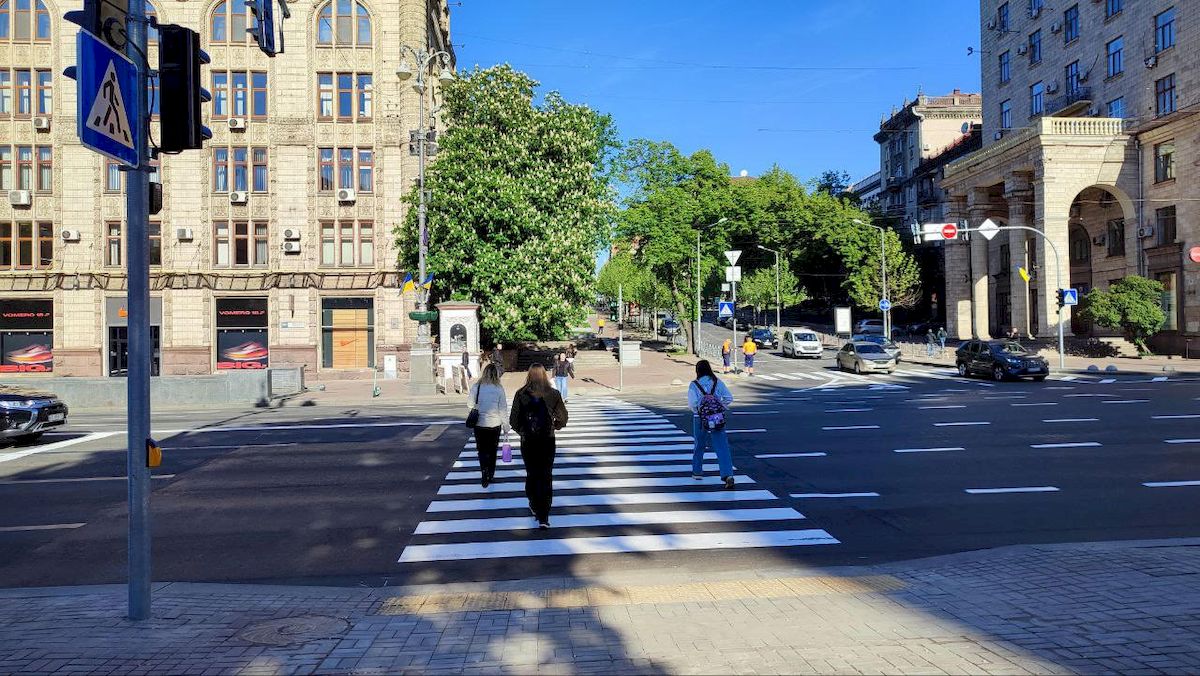
New overpass at the intersection of Khreshchatyk and Prorizna streets. Photo: kyivcity.gov.ua
The Kyivavtodor Municipal Corporation comments: in the period from 2019 to 2020, design and estimate documentation for major repairs was developed, and in 2021, an agreement was signed between the corporation and Onur Construction International LLC for the performance of works on the major repairs of Khreshchatyk Street.
According to the response of the General Director of the Kyivavtodor Commercial Complex Oleksandr Fedorenko, according to the project documentation, it was planned to carry out work on dismantling the existing and installing a new road surface, replacing the pavement surface (to ensure durability, it was planned to use granite paving stones), creating a bicycle infrastructure (options were considered - bicycle lanes on the carriageway and bicycle paths on the sidewalks). Additional ground pedestrian crossings were to appear at the intersection with Prorizna and Mykhailivska streets. It was planned to equip the sidewalks and pedestrian crossings with lowered curbstones and tactile navigation. The complex of works also included the repair of underground crossings (it was planned to arrange two lifts for people with disabilities at the crossing on Independence Square), additional video surveillance cameras, and repair of underground networks (communication collector, rainwater collector, inspection wells of engineering networks).
The landscaping work included modernization of the outdoor lighting network, landscaping, and installation of an irrigation system.
Due to the introduction of martial law in Ukraine, the implementation of major repairs to Khreshchatyk Street was suspended.
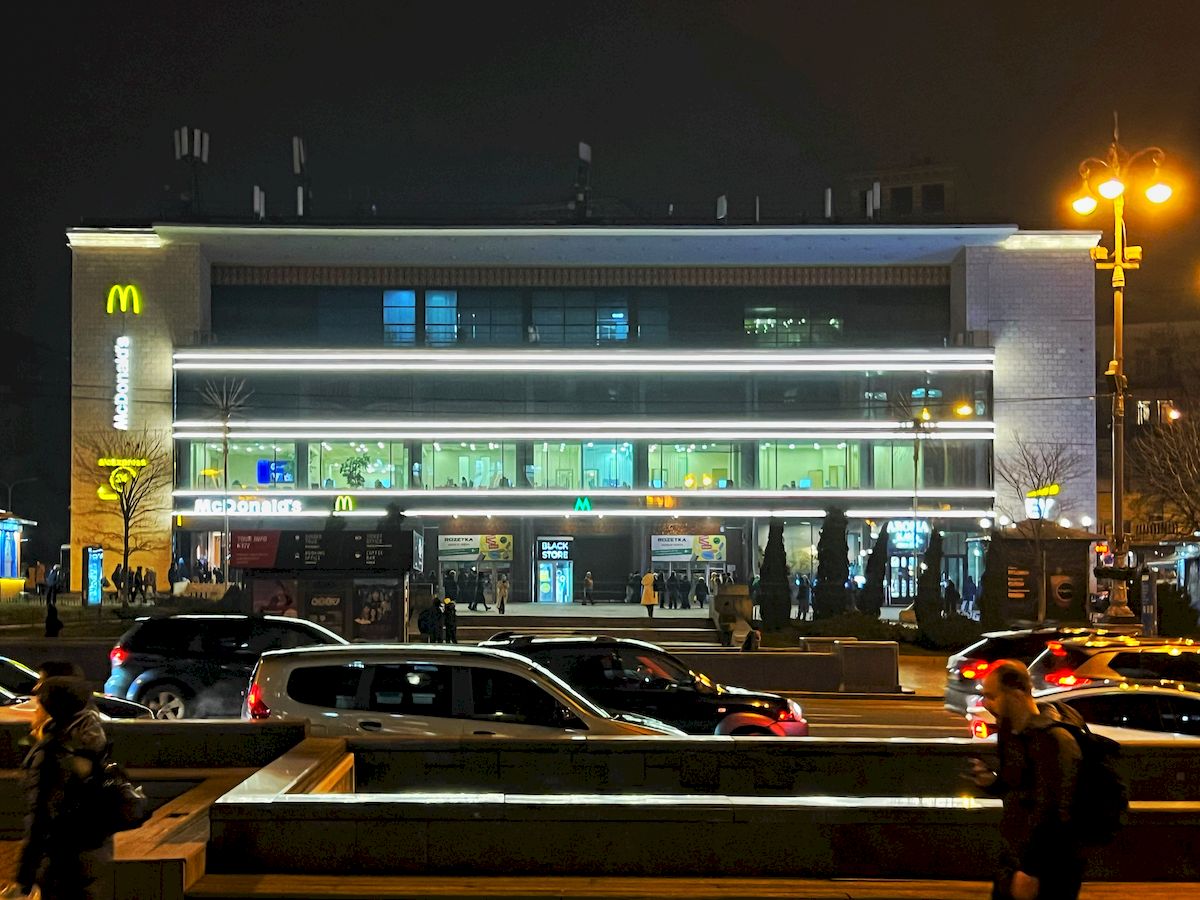
In 2024, the VIHAREV bureau renovated the facade of the Khreschatyk Plaza building, where the central entrance to the Khreschatyk metro station is located. Photo: VIHAREV bureau
At the same time, in order to maintain the proper technical condition of the road surface of the central street of the capital and ensure traffic safety on Khreshchatyk Street, scheduled maintenance road surface in certain areas.
The works are carried out within the framework of the Plan for the current repair of objects of the street and road network and artificial structures of the KP "Road and Operational Department for the Repair and Maintenance of Highways and Structures on Them of the Shevchenkivskyi District" of Kyiv for 2025, approved by the relevant order of the Department of Transport Infrastructure of the executive body of the Kyiv City Council. The plan provides for the repair of an approximate volume of 4000 m2 and a cost of 3,5 million UAH.
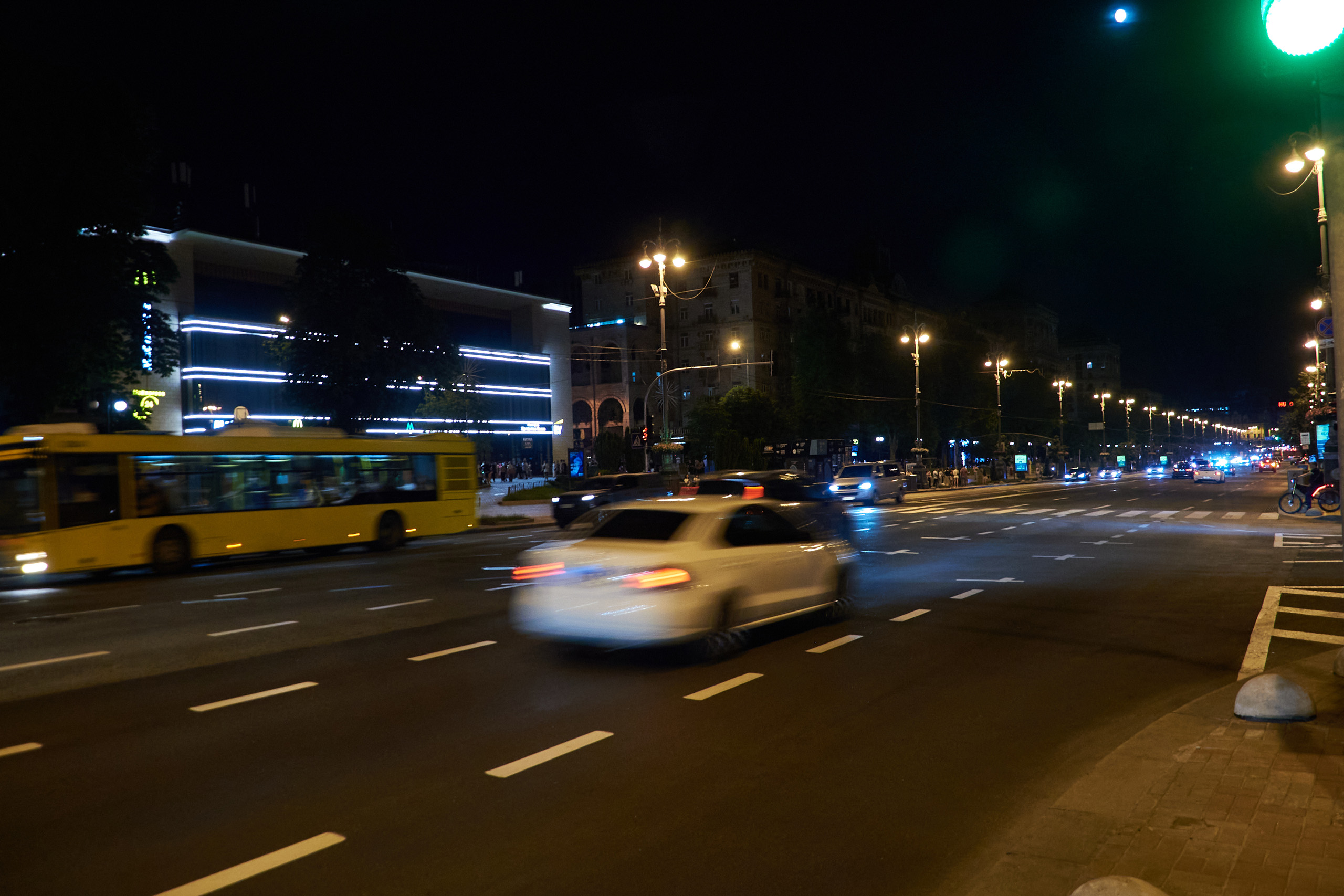
The streets near the metro station at night. Photo: Yuriy Ferendovych
In the period from April to May, current (minor) repairs of the asphalt concrete pavement of the central street have already been carried out. Together with the KP "Center for Traffic Organization", work was carried out to arrange an inclusive intersection at the intersection with Proriznaya Street.
In other words (we are saying this, not the executive branch and Kyivavtodor), Khreshchatyk was not prepared for restoration or reconstruction: urban planning conditions and design restrictions were not studied, and the relevant project documentation was not registered.
There will be no announced major repairs yet. In the near future, only current changes are planned for Khreshchatyk on certain sections of the street.
In our opinion, an important issue for the development of Khreshchatyk is working with architectural and historical monuments. After all, actions with cultural heritage sites require more attention than ordinary construction and are regulated by rules. The protection status affects which scenarios can be chosen.
In 2018, there was discussion about preparing and submitting documentation to UNESCO so that the street could be included in the world heritage list. The initiator of the project was Doctor of Architecture, Vice-President of the National Academy of Architecture and Design Olena Oliynyk. The corresponding intention is enshrined in the text of the city target program "Protection and preservation of the cultural heritage of Kyiv for 2019–2021."
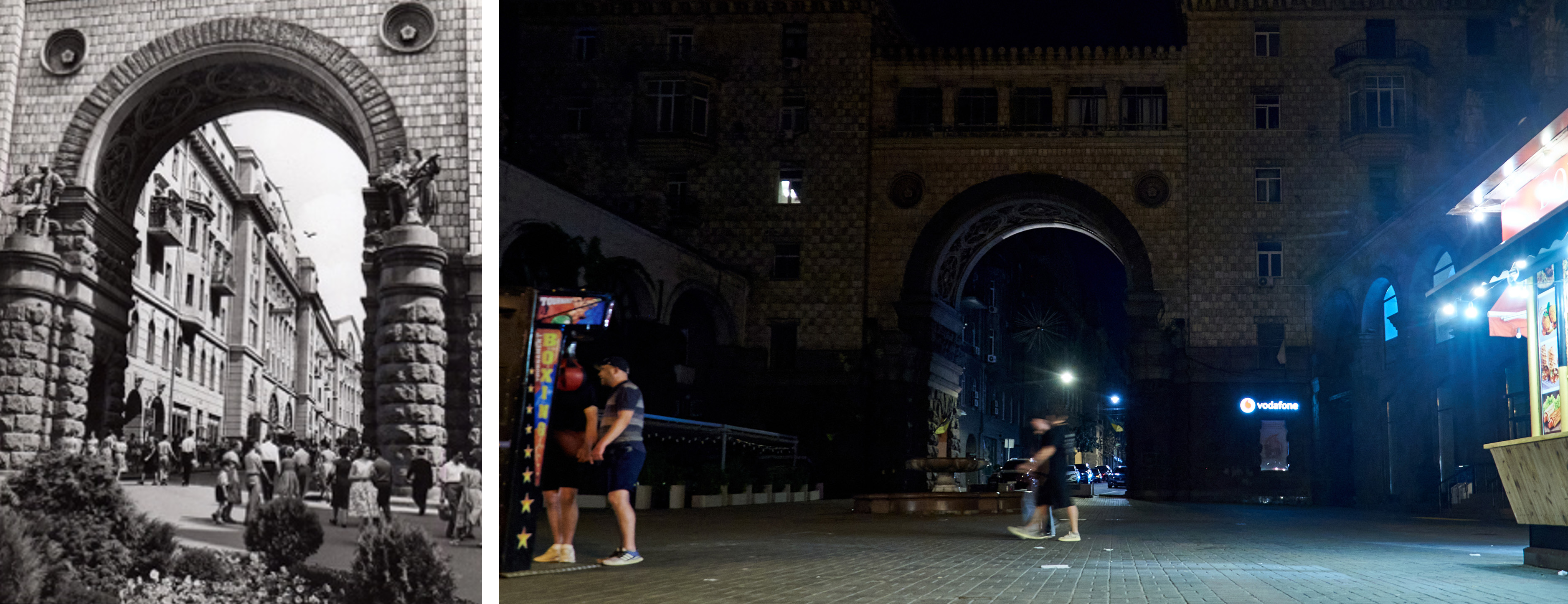
Ceramics and stone of Khreshchatyk monuments. The arch of the Kyiv Passage in an old photo and in our time at night, next to a kiosk and an amusement machine. Photo: Retro Kyiv community and Y. Ferendovych
This idea was revived during the full-scale war. It is not that Russians are particularly afraid of UNESCO, but activity and international publicity are the key to getting the problem noticed. In 2023, the historic center of Odessa was added to the UNESCO World Heritage List as “in danger,” and this protection status has already been granted to St. Sophia of Kiev, the Kiev-Pechersk Lavra, and the historic center of Lviv.
In response to our inquiry to the Kyiv City State Administration about whether they plan to protect Khreshchatyk in this way, the Department of Cultural Heritage Protection noted that according to accounting data, Khreshchatyk Street is included in the State Register of Immovable Monuments of Ukraine in accordance with the order of the Ministry of Culture of Ukraine dated August 14.08.2013, 757 No. 927 as an urban planning monument of local significance "Khreshchatyk Street" (protection number XNUMX-Kv).
According to the written response of the Director of the Department of Cultural Heritage Protection, Marina Solovyova, in accordance with the Law of Ukraine "On the Protection of Cultural Heritage", an object that may have outstanding universal value and meets the criteria defined by the UNESCO World Heritage Committee is nominated central executive body, which forms state policy in the field of cultural heritage protection, i.e. the Ministry of Culture and Information Policy, on the recommendation of the Ukrainian National Committee of the International Council on Monuments and Sites (ICOMOS).
Maryna Solovyova noted that, according to the data of the Department's electronic document management system, the Department did not approve the project for the overhaul of Khreshchatyk Street in the Pechersk and Shevchenkivskyi districts. According to the Law of Ukraine "On the Protection of Cultural Heritage", the establishment of the regime for the use of such an object, as well as the approval of programs and projects of urban planning, architectural and landscape transformations that may affect cultural heritage sites, is within the powers of the Ministry of Culture and Strategic Communications of Ukraine.
With this dossier, we approached the conversation about the street with experts.

Residential buildings No. 13 and 17, listed as architectural monuments. Photo: Alexxx1979 CC BY-SA 3.0 on wikimedia.org
Lighting as part of urban planning and "correct" streets
У article. about the renovation on Arsenalna and the A-Station project, light was called a “descriptor of space” — something that defines this space and makes it possible to read. For professional tasters, a descriptor is a unit for describing aroma and taste. For example, coffee or wine, because each variety has unique notes and properties.
Street lighting is the very unit that allows us to enjoy it. It shapes the image and character of the space that people read on a conscious and subconscious level.
Modern architecture and urbanism convey the idea that artificial light is much more than a tool for seeing buildings and streets at night. Even its utilitarian function is more complex than simply “removing darkness.”
Adequate lighting design in urban spaces improves safety, connectivity, and navigation, stimulates activity and mobility, and shapes patterns of human behavior—from drivers to tourists, ordinary passersby, or park troublemakers. So much so that a space can attract or repel a certain profile of visitors.
Lighting can be used to reconstruct space without "uprooting" its buildings and monuments, networks, paths and trees, and this is exactly what is needed within the framework of streets that live a long, multi-layered life.
Light determines how we perceive locations and everything that is located in them. This force works in both directions: correct lighting scenarios highlight the main thing, delicately muffle and unite what should not be too obvious. Incorrect ones reveal all the flaws of urban planning or architectural imperfections, show objects worse than they are. Lighting strategies in the city are largely responsible for the comfort, health, and well-being of residents, and participate in the formation of urban identity.
In developed societies, the priorities for lighting urban spaces are human-centricity and biodiversity protection, consideration of natural biological rhythms, energy-efficient and sustainable solutions, and combating excessive or irrational use of artificial light (light pollution). Urban planners and lighting designers are increasingly talking about the need for detailed lighting master plans for cities, streets, and locations — this way the approach will be holistic.
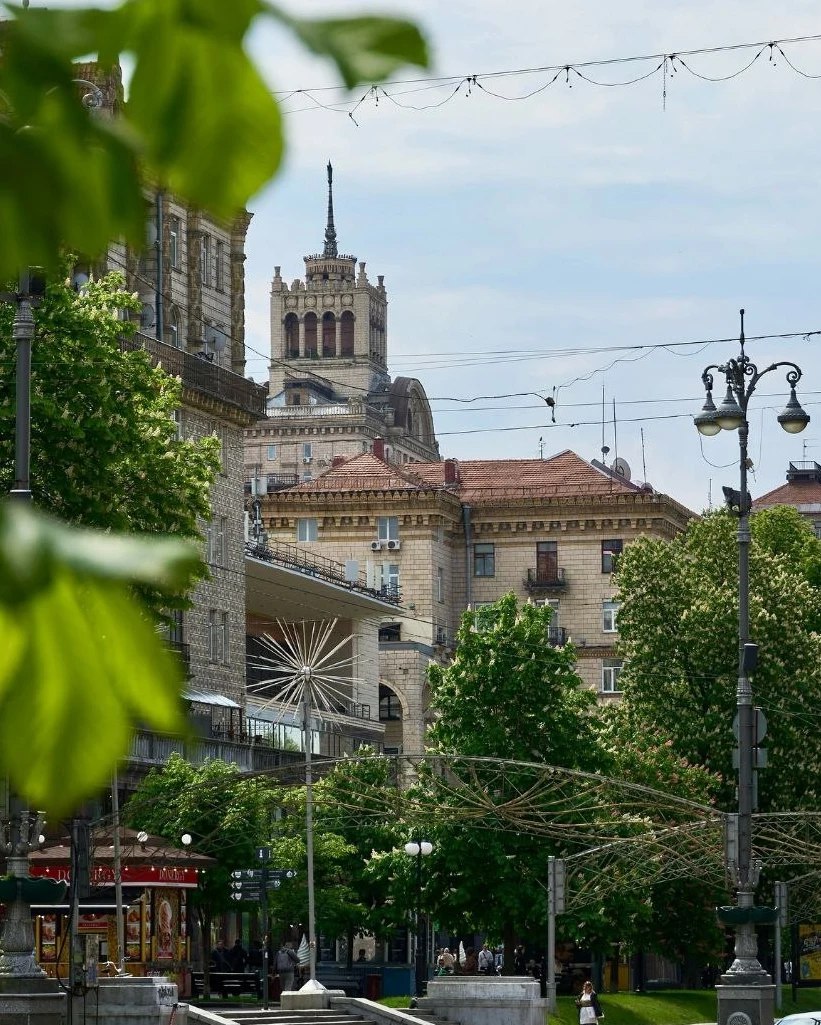
Lanterns on various types of poles and garlands near the Passage. Photo: Instagram mistokyia, author @geoff873
These practices are actively developing in some countries, while in others they lag behind. Management habits, financial capabilities, cultural traditions, and the level of understanding of the issues can influence decisions. Therefore, the lighting of the same location can (and should!) be revised over time.
Khreshchatyk Street lighting and environment. What and how does it work?
Both of our interlocutors say: Khreshchatyk is not like other streets, so taking landmarks from somewhere else is not very advisable.
According to the architect Julian Chaplinsky, today's Khreshchatyk is formed in "Stalinist" architecture and has its own unique profile and scenario.

Julian Chaplinsky
"I wouldn't compare it to the avenues of Barcelona or Vienna. It's obvious that this mass of ceramics and stone has well-composed proportions, they can really be illuminated in different ways. You need to work with local lighting at the level of a sitting person, a standing person, at the level of a motorist so that nothing distracts him while the car is moving. That's why I wouldn't name any streets that I associate with Khreshchatyk," he explains.
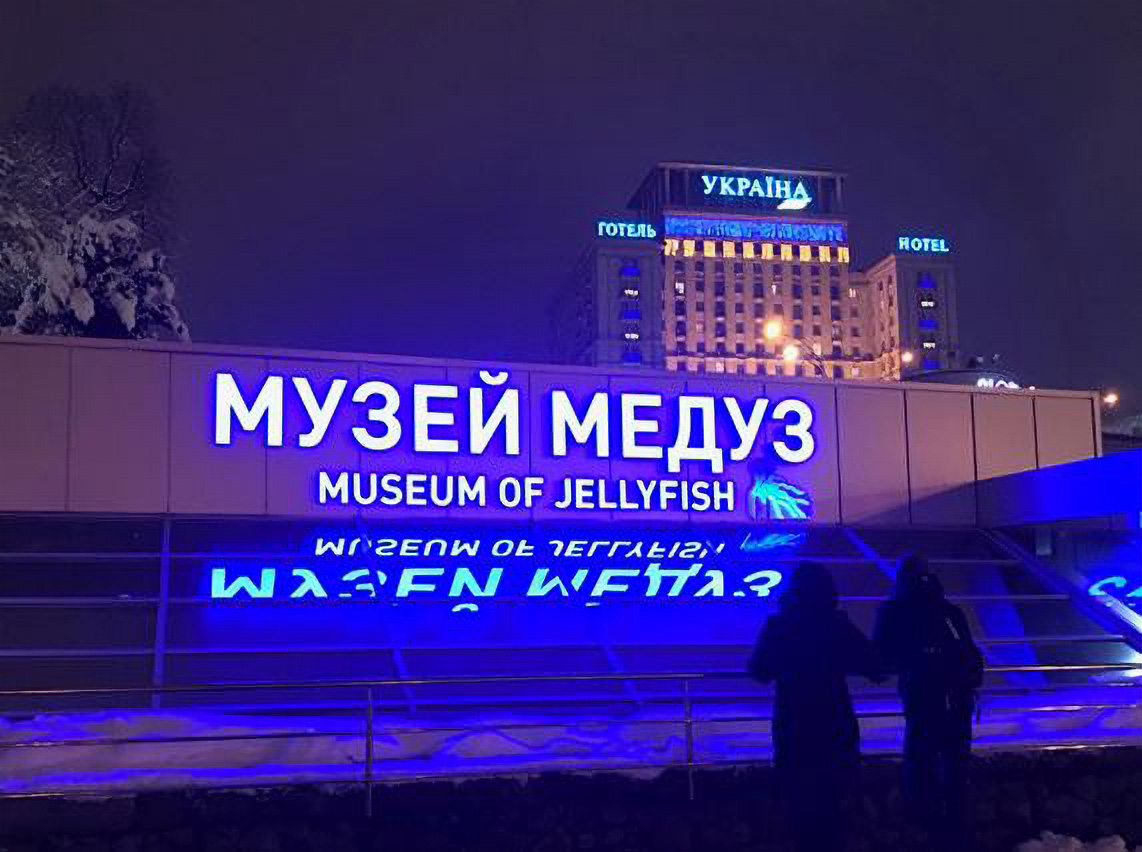
The sign of the Jellyfish Museum on Khreshchatyk near the Nebesna Sotnia alley and the lights of the Ukraina Hotel in the background. Photo: Jellyfish Museum FB page
“Khreshchatyk is a central street, and if a lighting master plan and design codes are developed for it, it could become the basis on which solutions for the city are tested,” — Oleksandr Maksymov
"It is impossible to take references somewhere in Warsaw or Prague. Khreshchatyk is not similar to the streets of Ukrainian cities, except a little to Sumska in Kharkiv, in terms of the scale of development and architecture. I would certainly work with it as my own, not a derivative one," he says. Oleksandr Maksymov, founder of the LOFU lighting brand. — Khreshchatyk is unique in that it was rebuilt and planned, this cannot be said, for example, about Hlybochytska in Kyiv. Or let's look at Mykola Bazhan Avenue. This is a slightly different architecture, right? In this regard, Khreshchatyk is architecturally understandable, proportionate.
The streets in the center of Warsaw were also rebuilt after the war, but in that case the buildings were rebuilt according to the old drawings. There are no new buildings and all this Empire style.
Khreshchatyk is a central street, and if a lighting master plan and design codes are developed for it, it could become the basis on which solutions for the city are tested."

Oleksandr Maksymov
Maksimov notes: today's Khreshchatyk and its lighting can be considered in two contexts. The first is the street as a roadway, illuminated by lamps with sodium bulbs from the 90s, and there is not much to say here. The second is Khreshchatyk as the main street of the country, a historical monument.
"But, unfortunately, in this context, lighting... does not exist. There is a green TSUM, which is lit up during the New Year holidays with thousands of lanterns and light bulbs. There are a million signs and light screens of pharmacies and shops that make Khreshchatyk not look like the central street of the city. The main street of the city with MAFs, each of which has its own colorful sign. With underground passages that sometimes look like a stall, and sometimes like a black hole. With completely unlit recreation areas, among which there are interesting ones, with steps, terraces and benches. And with wide pedestrian zones, in which there is light only from shops," he states.
According to Oleksandr Maksimov, currently there is no unified plan in the context of lighting on Khreshchatyk: "It seems like we illuminated it with everything we could."
“Lighting is chaotic, it’s all different. For commercial establishments — and here we’re primarily talking about the level up to the second floor, because this is the main visual row that a person sees — it’s necessary to define one look, to develop a light design code. I understand that it may be difficult for certain brands to accept this, but in other cities it somehow works out? Even global brands adapt their identity. Architectural lighting should be uniform, without color diversity. Currently, there’s a lot of advertising with screens covering the entire window, which doesn’t really work and is unnecessary for all these stores and pharmacies, because the width of the passage part doesn’t even allow you to see it.
"A lot of lighting is outdated. When you see orange light in the city, it's most likely old, still sodium lamps. They are not energy efficient, their disadvantage is also the color rendering index. This light makes all objects the same, without shades. Such lamps usually do not have a formed direction of light due to the old supports that are used," explains Oleksandr.
“Walking along Khreshchatyk in the evening, I constantly look down at my feet, I feel uncomfortable. I can’t see anything, because the light is here (points to eye level). And there is no light below, and there is no normal road. Khreshchatyk in the dark is a visual motley, a bunch of young people and, unfortunately, marginals, nalyvayki and MAFs, and they are all different. This is the case on all central streets in the world, but somewhere it is controlled, and somewhere it is not. Of course, this is a complex issue that goes beyond lighting, but light can change some things.
Currently, there is no logic in choosing colors and light intensity for the facades of Khreshchatyk. Why did we illuminate the Central Department Store in green? Because these are the colors of a Kyiv cake or chestnut? The Kyiv City State Administration definitely does not need to be illuminated with spotlights brighter than the buildings nearby. Yes, it is an administrative building, but how is it better than the building opposite?
The general problem of Kyiv is light pollution. This is a topic for a separate big conversation. There is too much light, it is super powerful and does not meet the standards. Street lighting should not work like this. There cannot be light at night as during the day, human and not only biorhythms are disrupted.

The lighting of the Central Department Store and the historic lanterns near house number 25 in the foreground. Photo: Oleksandr Lytvyn, www.readingkyiv.net
“Why did we light up the Central Department Store in green? Because these are the colors of a Kyiv cake or a chestnut?” – Oleksandr Maksymov
According to Julian Chaplinsky, a significant problem of Ukrainian cities remains the inconsistency of general lighting with advertising:
“I think that DBN (state building codes. — Ed. note) play the last role in matters of lighting the capital and large Ukrainian cities, because the codes, obviously, determine the minimum number of lux (a unit of measurement of illumination. — Ed. note) for lighting, but do not limit what it should be. The inconsistency of general lighting with advertising and the mess of signs that glow in different ways lead to such an imbalance for the eyes. I don’t really like streets dotted with lights, where the lighting is turned into a colorful circus and everything has to burn, flash and strain. Just as there is sound pollution, there is also light pollution, and they affect the nervous system in very different ways.
"Yes, in New York there are squares with exclusively animated advertising, but this is more about the fact that they are a separate place for advertising consumption. And it does not mean that all the streets of the city have to be the same."
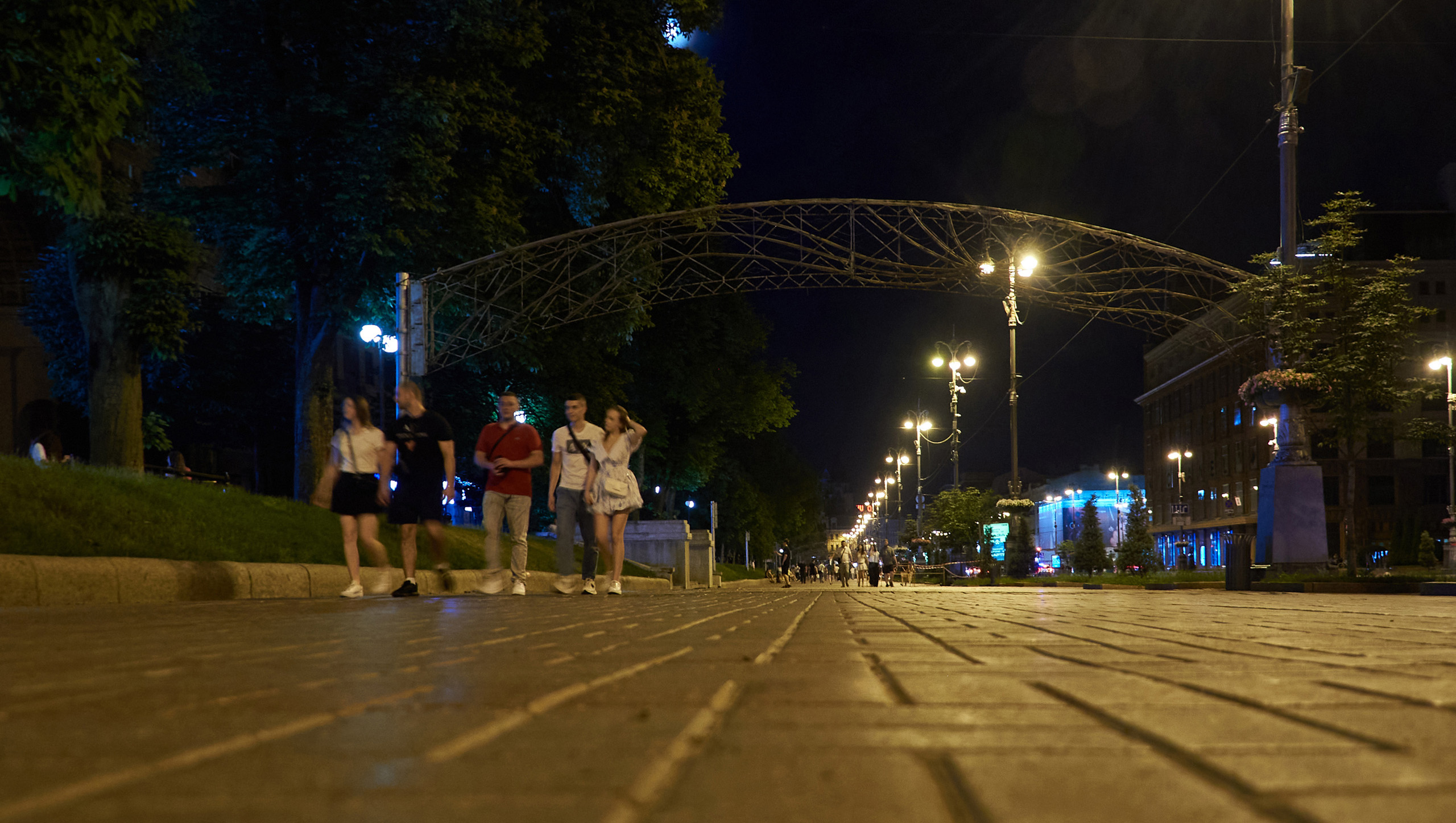
Khreshchatyk at night is a visual variegation, a bunch of young people and, unfortunately, marginalized people, nalyvayki and MAFs. Photo: Yuriy Ferendovych
Julian Chaplinsky: "My opinion is not to overdo it with the idea that light is about beauty. We need to realize that it is primarily a technological thing."
So is there currently enough understanding in the Ukrainian space of what modern street lighting should be like — planned, human-centric, and one that cares about biodiversity? Maybe it's just expensive?
Julian Chaplinsky says: “I think that at a general level it is not at all clear. City mayors are limited by budgets and, of course, a very narrow vision, when lighting is reduced to simply “sticking” lamps along park paths and sidewalks. No one has given a good example of how a bicycle path should be lit in one way, a road in another way, a pedestrian space in another way. Moreover, this light should adapt to the season, the time of day. React calmly to snow, precipitation or their absence. Modern technologies can answer all this. Is it expensive? Yes, it is definitely more expensive than simply installing lamps.
But, fortunately, this movement is already emerging in Ukraine, there are Ukrainian lighting companies that are doing more and more research and experiments in the field of lighting. My opinion is not to overdo it with the fact that light is about beauty. We need to realize that this is primarily a technological thing. It is about safety, about navigation, about various correct sensations of a person visiting an environment. And last but not least, about some lighting effects.
Oleksandr Maksymov believes that Ukraine has enough talented architects, designers, lighting engineers and planners who can develop and implement high-quality ideas. "When we talked about references, in general it is normal to rely on world experience. It is clear that everyone has learned from someone, there is nothing wrong with that. But the main thing in which we need to move to world experience is to make functional, progressive and comfortable solutions."
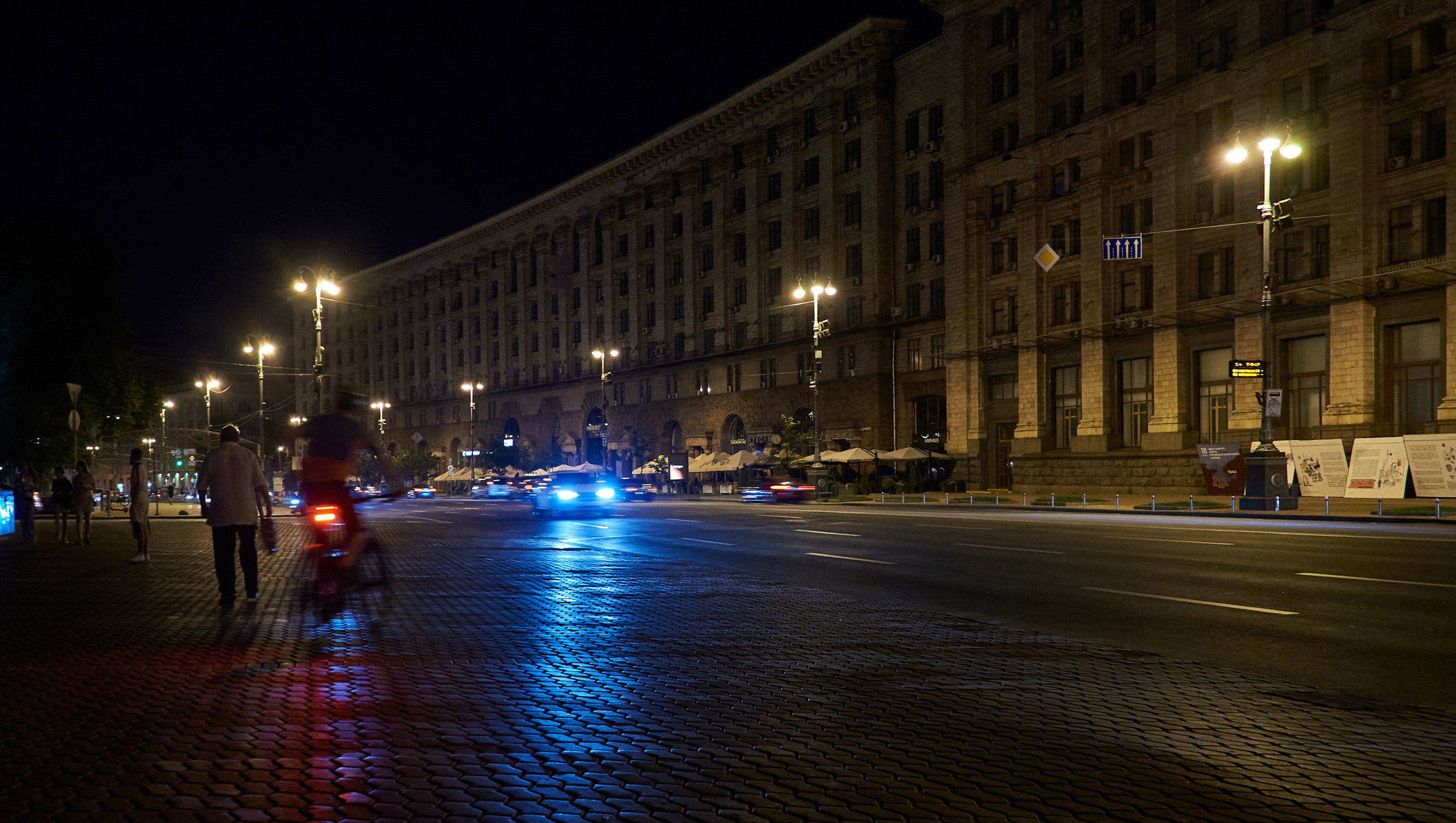
Whether Khreshchatyk is comfortable as a public space for all its users today is an open question. Photo: Yuriy Ferendovych
"Khreshchatyk still needs to be reviewed and understood whether this street is about a highway or whether it is about a gathering center not only for all of Kyiv, but also for the country," — Julian Chaplinsky
What changes would be more appropriate for Khreshchatyk and what lighting strategies could improve the use of the street and enhance its overall image?
Yulian Chaplinsky answers: the choice of approach, how exactly Khreshchatyk will be renovated — whether it will be a major renovation, reconstruction, or, for example, restoration of dominants — will determine many further decisions.
"If this is a major overhaul, then it's what I was talking about earlier: sticking in lamps, casting them from cast iron or other metal. And this is not about urbanism. Khreshchatyk still needs to be reviewed and understood whether this street is about a highway or whether it is about a gathering center not only for all of Kyiv, but also for the country. It seems to me that there is something to be polished there, both in terms of public spaces, landscaping, and transitions between the underground world and the above-ground world. And all of this, of course, should be completed and framed by lighting."
The founder of the LOFU lighting brand, Oleksandr Maksymov, is thinking about possible scenarios for a more expansive Khreshchatyk.
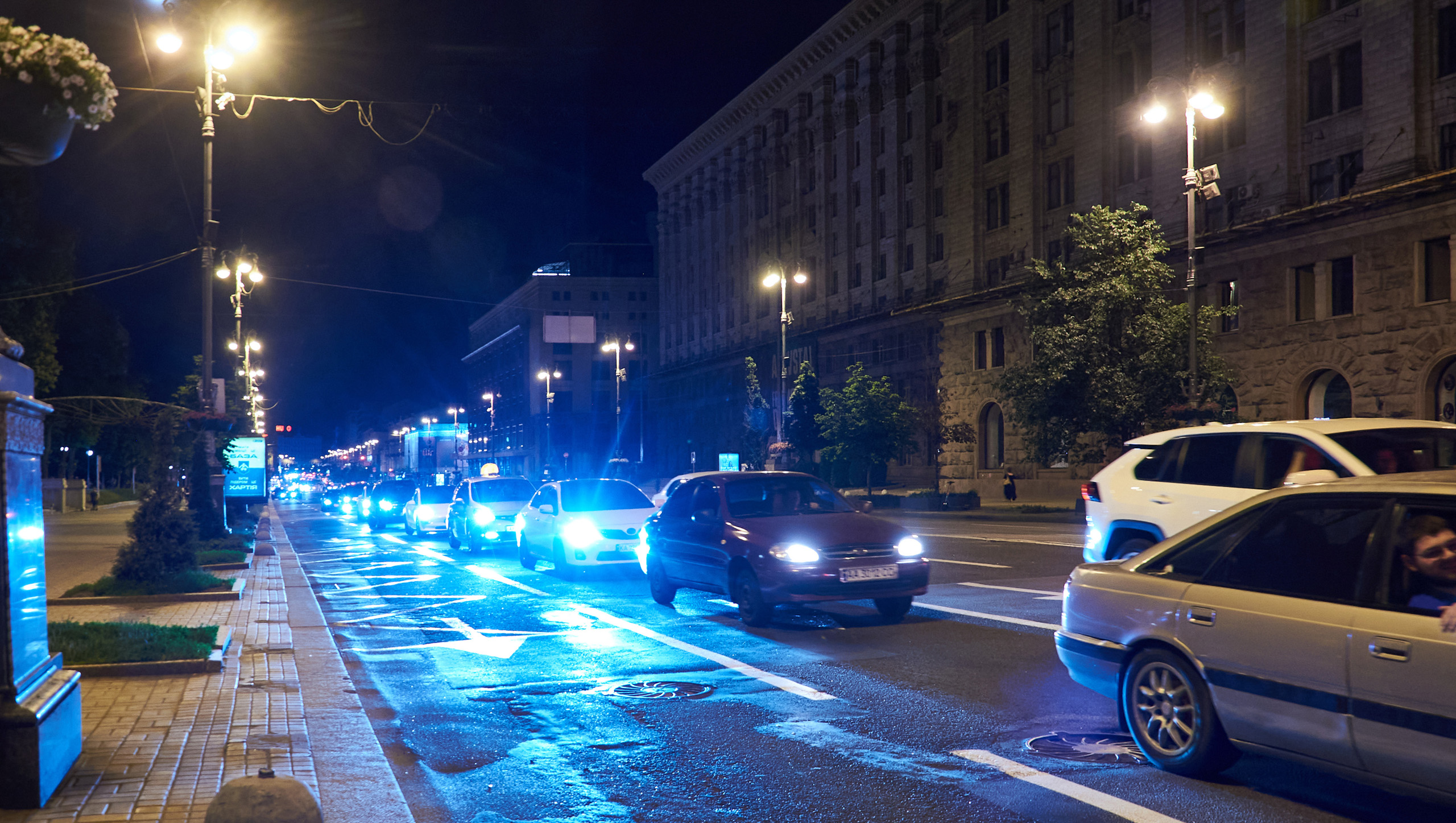
Khreshchatyk is currently a street-road with eight lanes for cars. This is not typical of all the main streets of European capitals. Photo: Yuriy Ferendovych
"Where to start working on lighting? Probably, with the definition for lighting designers and lighting technicians of which objects on Khreshchatyk are cultural heritage, which are historical, important buildings. It is worth developing a lighting concept for them. They should become accents against the background of even street light, with architectural lighting of warm white color, without a variety of colors. Kyiv architecture mostly does not have historical facade colors that should be emphasized, so cultural objects on Khreshchatyk do not require lighting of a different color. Everything is the same as for the rest of the street, but more brightness and saturation. So the street will look like a pearl necklace, in which some pearls are larger than the rest.
I would coordinate the shop windows and signs of shops and establishments on the first floors, using the design code, I have already mentioned this. Going down, you can add lighting for pedestrian areas with low-level lighting - with columns up to one and a half meters high, in order to remove accents. There is already accent lighting on the roads, and to remove light accents from the pedestrian area, I would lower the light, bringing the first and second floors to a normal appearance. Moving through the levels of buildings higher, you can create a soft, unaccented light that simply goes up, not down and not forward.
It is worth remembering that the role of Khreshchatyk is not only to be a business card street or a street for tourists, city walks, and consumption. People live in its houses."
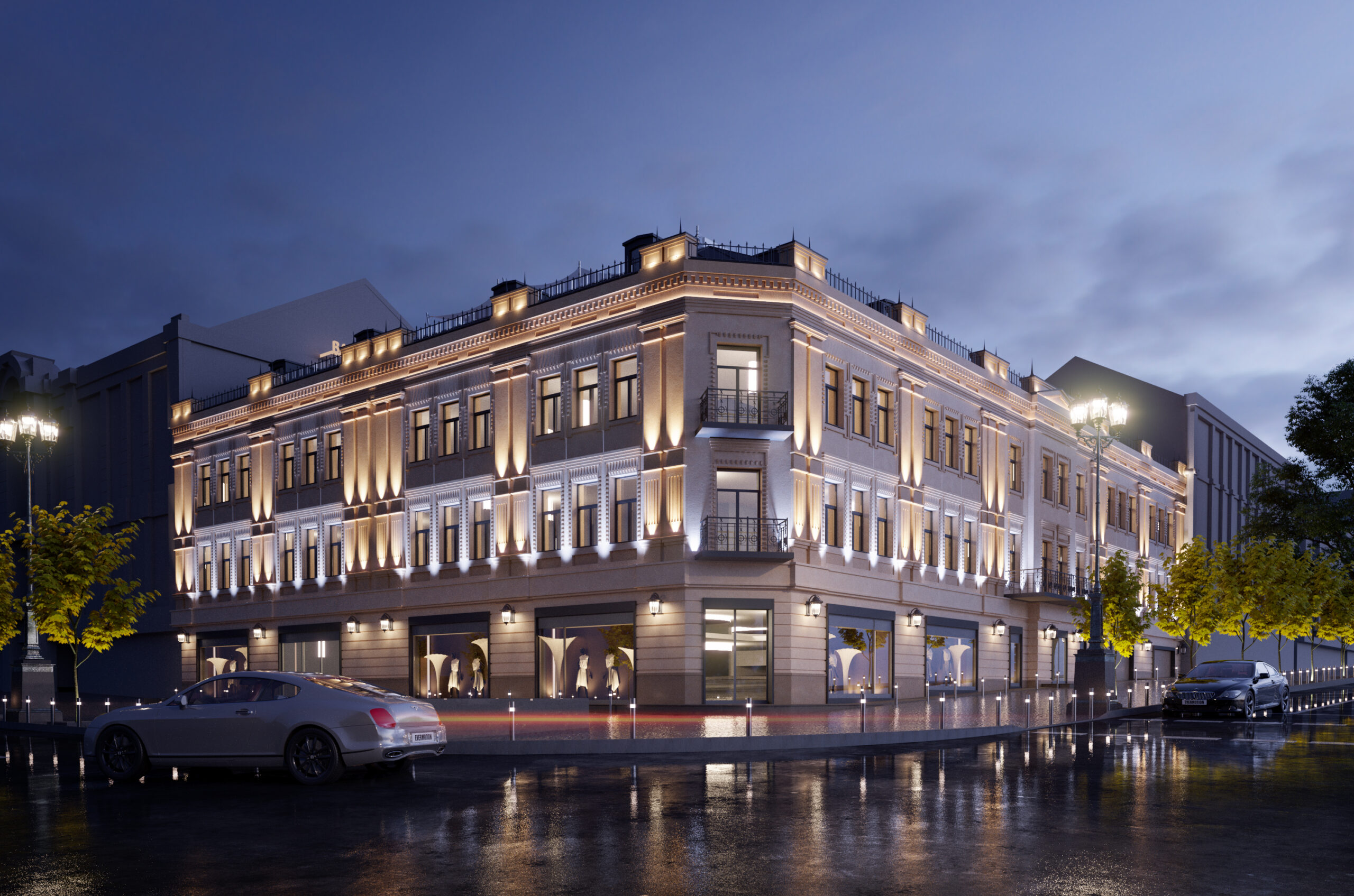
This is what the facades of the Central Gastronomy building (Hotel "Kane" 1874) on Khreshchatyk may look like. The restoration project of the dilapidated monument was developed by the VIHAREV bureau. Image: viharev.pro
Oleksandr Maksymov: "I would start working with the space of Khreshchatyk with the shop windows on the first floors and from the street. The task is to make it as comfortable as possible for pedestrians."
Maksimov suggests "eating the cake" of lighting Khreshchatyk in parts:
"We could develop a plan where the first part is the concept of lighting the pedestrian zone, green spaces, and roads without taking into account the facades. Let's imagine that we turned them off and developed a lighting plan without them. Then we add the light load from the facades, advertising, and the rest. This way we will understand the brightness, how much lighting we want to get for the buildings.
"I would start with the street. The task is to make it as comfortable as possible for pedestrians. A person who has entered a store or cafe is actually no longer a pedestrian on Khreshchatyk. A driver is also not a pedestrian."
According to the specialist, if necessary, a high-quality lighting project for Khreshchatyk with references and renders can be created in 3–4 months.
According to Oleksandr Maksimov, if you make sure that the traffic lights focus on the road, and the pedestrian zone lights do their job separately (after all, at different times of the day, both the road and the sidewalks may be illuminated or not), if the street is illuminated uniformly, according to the chosen standard, with limited variations of lamps, and clear standards for advertising, Khreshchatyk will become much more comfortable for the townspeople and more pleasant for walks. The same in mood as the streets of Prague, Vienna, or Warsaw.
Regarding the lighting of architectural ensembles and dominants — the dominant buildings in the composition of Khreshchatyk, built before and after World War II, during the Soviet era and later, a lighting expert says: the history of the street and the lives of its citizens cannot be stolen.

Illumination of the architecture of Independence Square. Photo: Oleksandr Lytvyn, www.readingkyiv.net
"More than one generation of Kyivans, Ukrainians, walked along the street. Some children ate their first ice cream on Khreshchatyk in one or another architectural ensemble, and now they are adults. We cannot change the past and rebuild the street, so it is not worth "cancelling" certain buildings because of the era in which they were built. This does not mean that each of them should be singled out - I have already mentioned the concept of architectural lighting in the same style.
Let's also remember that light doesn't always accentuate, it hides a lot. It can be used to emphasize or shade, even hide inconsistencies on the facade, draw attention to the shape of the house or change it, and align the "picture".
"So if we want, we can highlight those cultural monuments and heritage that interest us. With modern management systems, this is not a problem," he says.
We asked Oleksandr for his opinion on the street's potential international protection status and heritage work in this case.
"If Khreshchatyk is to be submitted as a heritage site to the UNESCO list, everything must be removed from it first — kiosks, shops, signs — and only then do it. Because if they submit it as it is, its troubles will remain forever. We need to work with it beforehand, and that's more than just washing and sweeping," Maksimov thinks.
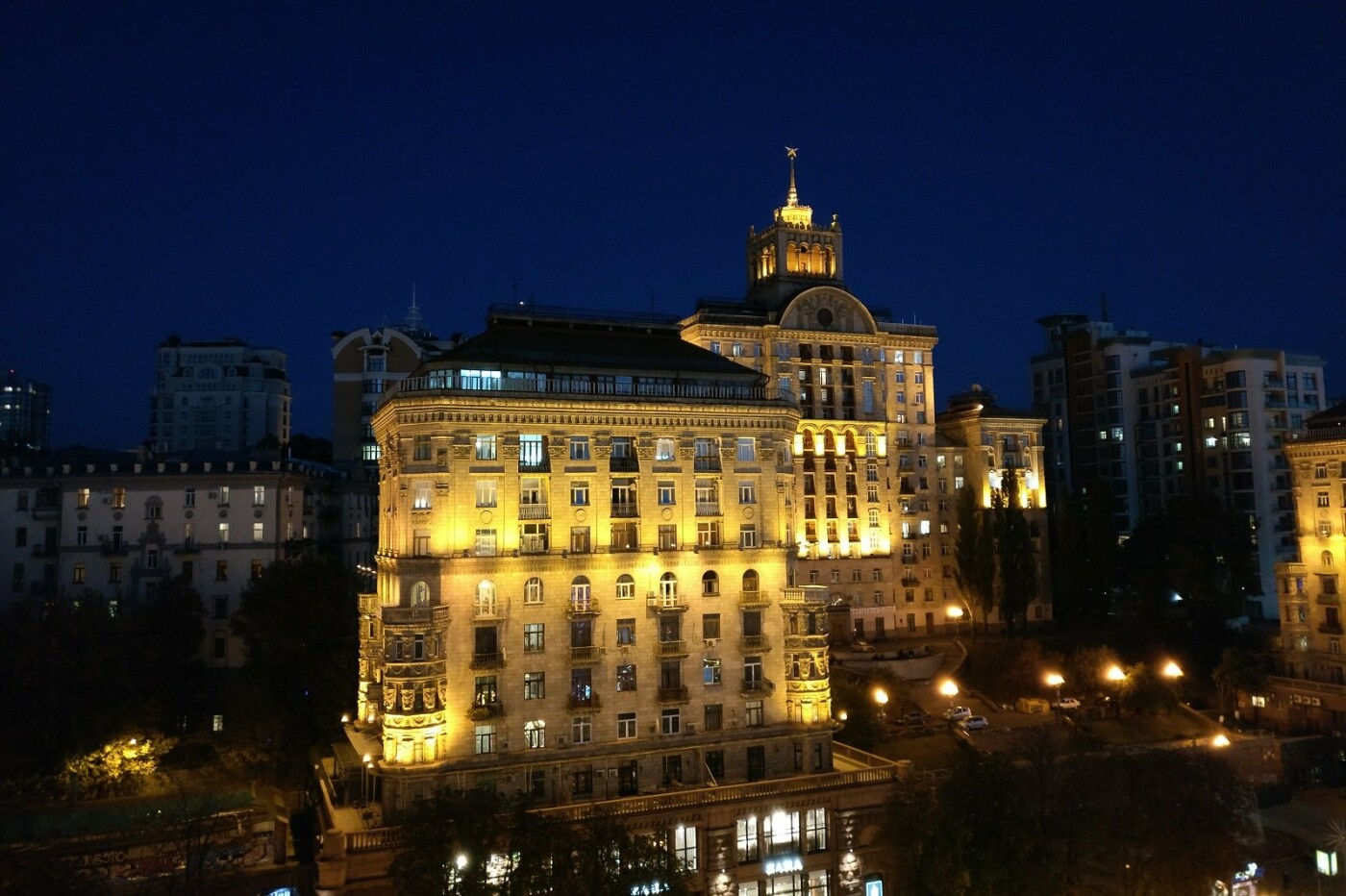
House No. 25 on Khreshchatyk. Photo: rupor.com.ua
Khreshchatyk is not a hotel or an attraction. It is a street with a life of its own.
The founder of LOFU calls the case of the “Ukrainian House” complex, given the modernist style of the building and its location:
“European Square now seems as isolated as possible. There is the “Ukrainian House”, the “Dnipro” hotel with parking in front of the hotel and a security booth, a strange flowerbed. There is a green area nearby, Volodymyrskyi Uzviz and Hrushevskoho streets converge, and on the latter there are again historical buildings. Only the light there is not enough.
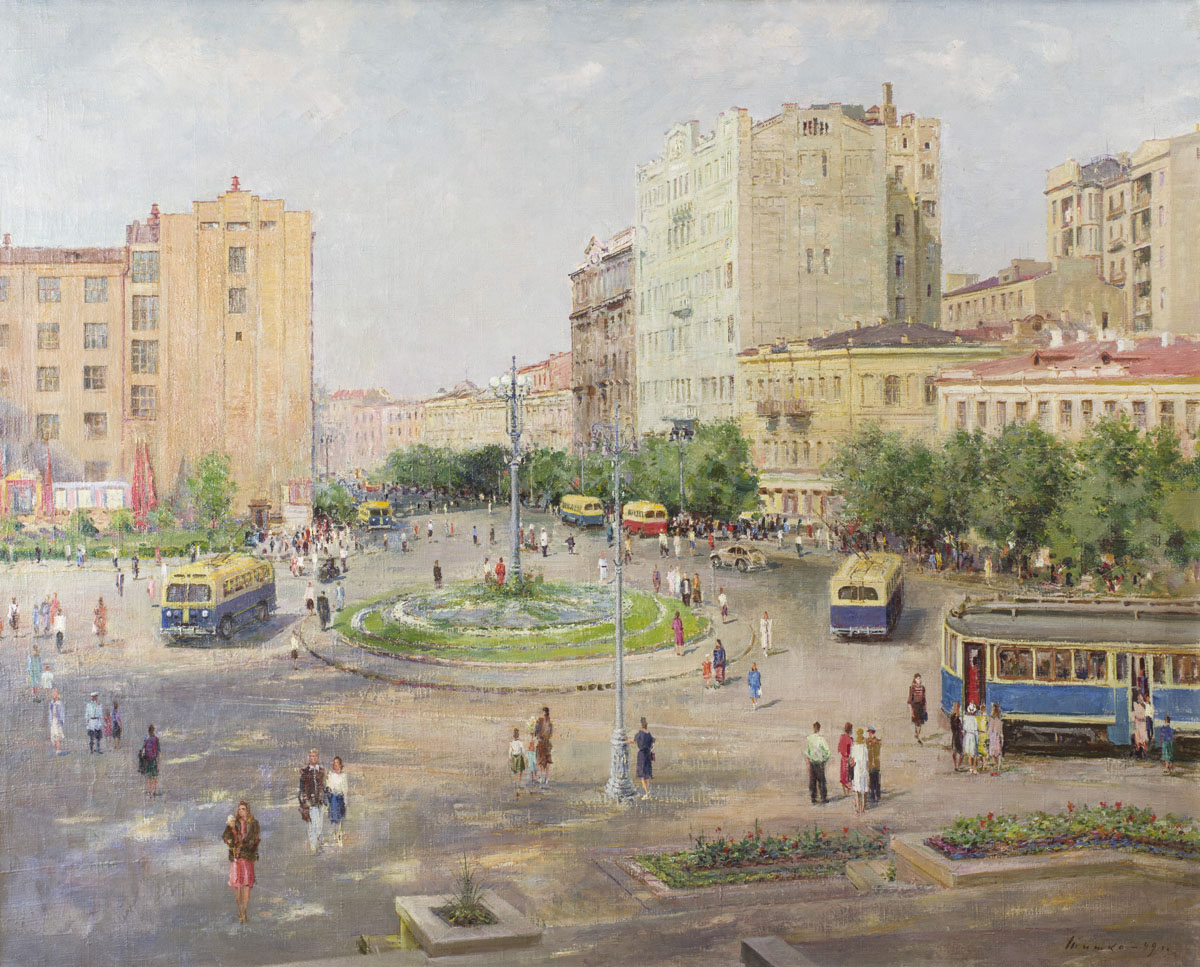
European Square on the canvas of Ukrainian artist Serhiy Shyshko, 1949. Angle towards Khreshchatyk. Photo: nuart.com.ua
It is worth considering whether a parking area in front of the hotel is needed, which attracts attention or not more than the hotel itself. Replace the flowerbed - its composition, highlight not the supports, but the middle. I would highlight the “Ukrainian House” building itself not as an architectural monument, but as an exhibit, because its style is very different from neighboring buildings. It would be good to light the hotel in the same style, the houses opposite - as well. Then this space will not be so eye-catching.
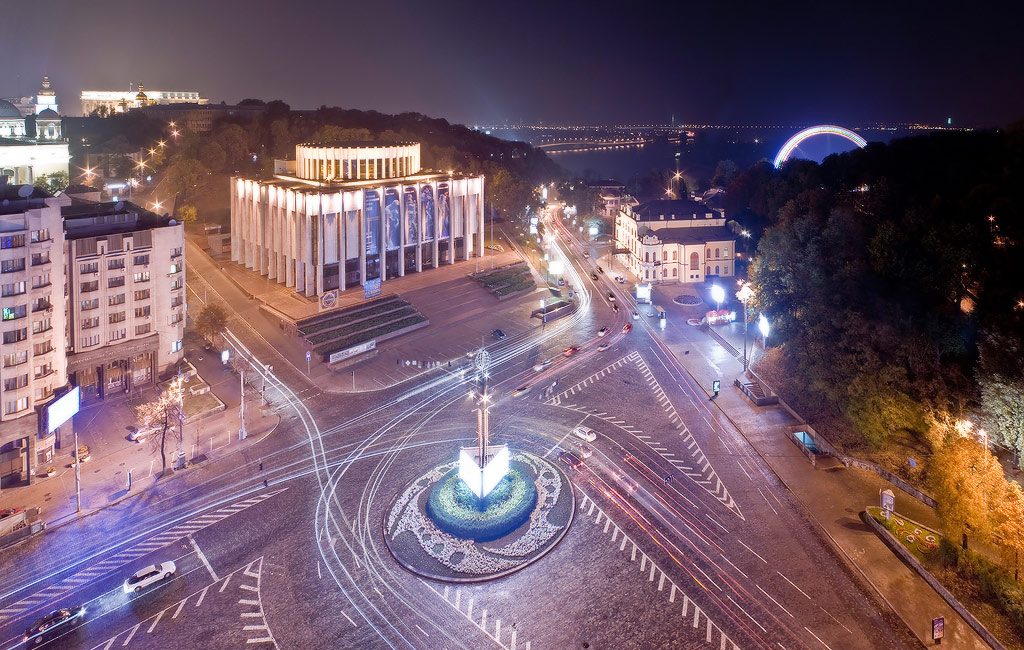
View from above of European Square with the Ukrainian House building. Photo: mistokyia.ua
Maksimov calls another stumbling block the objects on Independence Square that appeared there after the reconstruction in 2001, such as the "dam" of the Globus shopping center:
"It's made of glass, it's strangely shaped. It's on the main square of the country. Unfortunately, they don't "play" with glass and light, but you can try to visually cut off this structure, make it less of an accent."
"You can remove the illumination of monuments from Maidan, which shine from an unclear place and direction. Why not make the illumination of the monument with narrow optics, so that the light is concentrated on the monument, and not on everything else? You can do the same," he states.
In preparing Khreshchatyk for seasonal holidays or celebrations, he advises avoiding excessive decoration with lights:
"I don't support the idea of garlands stretched between poles, something like a "starry sky". Lighting up the street for every holiday is also not very right. If we put up a Christmas tree, then the tree already has its own light, right? Yes, there can be mobile thematic locations, fairs with appropriate lighting - and then the main street light is turned off. When the time comes, the location moves out. Khreshchatyk is not a hotel or an attraction. It is a street that lives its own life.
Theoretically, we can do light shows for the holidays, for example, with DIY projectors. Depending on the ideas, you can turn off all the lights, illuminate the facades, or emphasize only the park pedestrian zone. Lighting control now is not a plug and socket, but a tablet. Any scenarios are easy to think through, set up, and control.”

Unedited photos convey a completely different atmosphere of Khreshchatyk than stock photos. Photo: Yuriy Ferendovych
Moving towards the end of the conversation, Oleksandr Maksymov says: when making decisions about building facilities or renovating urban spaces, we need to think about what it is like for us, Ukrainians, to live in them. Don't wait for great foreign experts to arrive, but do something ourselves.
There are already spaces that we have created that are comfortable and that are performing well. We just need to scale the right experience.
Recalling the lighting scenarios implemented in Lviv, he calls them more delicate and comfortable for residents and guests of the city.
Julian Chaplinsky: "It seems to me that this mysticism and contrast, like in Caravaggio's paintings, is the light code of Lviv. Dynamics and different colors are absolutely not Lviv's format."
Julian Chaplinsky commented on the changes that have been implemented in the city recently:
"I believe that a lot has been done in Lviv. At least the city has abandoned colored lighting of public facilities. There was a case when they very unsuccessfully illuminated the Andrew's Church, the former Bernardine Church. The colors looked inappropriate on this Renaissance-Baroque monument - fortunately, they consulted and later made a monochromatic yellow backlight. A council at the Department of Historical Environment Protection worked on the lighting of each church and cathedral in Lviv, in which various specialists participated. They determined the angles, in which silhouettes the building was read, what was the most important thing in it, what was worth highlighting.
And it seems to me that this mysticism and contrast, like in Caravaggio's paintings, is the light code of Lviv.
It cannot be illuminated, like, for example, the Dnipro — with different colors, with dynamics, so that there is advertising on the facades with LED monitors. This is absolutely not the Lviv format. Such a format may indeed be suitable for a modernist city, but not for a Renaissance and Baroque one.
Lviv has experience in illuminating public spaces, such as the Heavenly Hundred Memorial, the renovated Dvirtseva Square, park reconstructions, and public squares. I think these things were quite successful.”
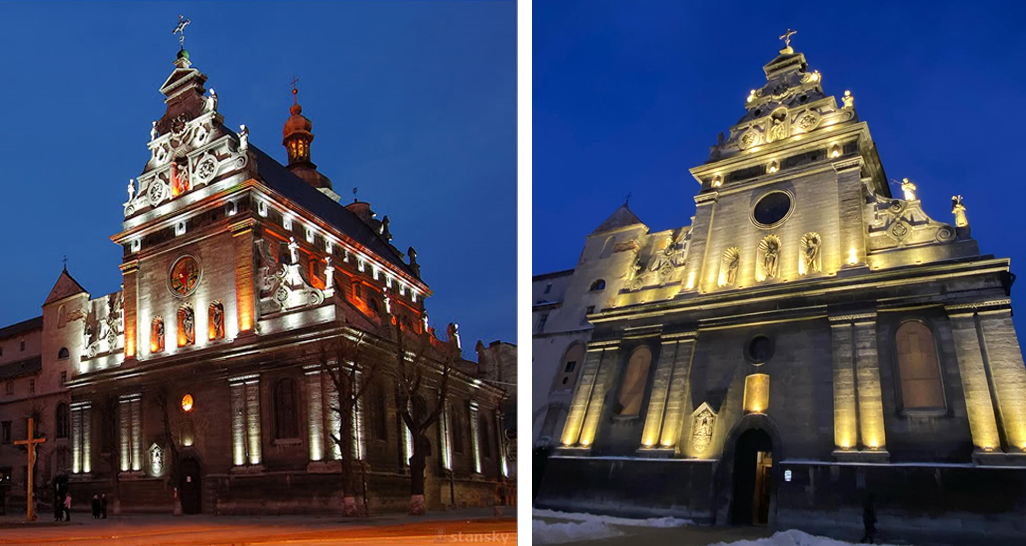
St. Andrew's Church (Bernardine Monastery) in Lviv with the old and updated lighting. Photo: ©Stansky and anastasiya_glotova_lv on Instagram
Speaking about Lviv's policy of working with urban spaces, he explained that the city is currently struggling with visual noise and advertising:
"The city shines in the silhouette of sacred dominants and does not allow other (objects. - Ed. note) to interrupt this dominance. In Lviv, there is still a culture of discussion, workshop meetings, where the opinions of different people, experts are heard and they try to do the best they can. Although this is not described in any decisions of the executive committee, I mean the policy of how to illuminate spaces, but there are rules, a design code about signs, their materials, and this has already made huge progress."
Oleksandr Maksimov: "In Ukraine, many aspects of lighting are still interpreted arbitrarily, at the discretion of contractors or owners of facilities. Therefore, especially in projects of public importance, it is worth increasing the participation of specialized specialists and lighting experts."
Oleksandr Maksimov concludes: “System lighting strategies, design codes and other solutions for lighting public spaces in Ukrainian cities remain a complex topic. In the countries of Central Europe, lighting of public places and architecture has long been subject to clear rules. They are not limited to purely technical characteristics, as in our country, but contain many requirements for visual properties spaces. Modern lighting design raises the question: how to harmonize the impact of urban light on all living things around, how to preserve the health and well-being of users of spaces. In Ukraine, many aspects of lighting are still interpreted freely, at the discretion of contractors, owners of facilities or businesses, and developers. Therefore - and especially in projects of public importance - it is worth increasing the participation of professionals, lighting experts.
When planning the text, we wanted to add a section about how the experience of lighting urban locations abroad was formed - Times Square in the USA, as well as the lighting standards that govern street lighting in Austria. It seemed that through comparisons and contrasts we would better understand what our native Khreshchatyk needs and what is closer to our realities.
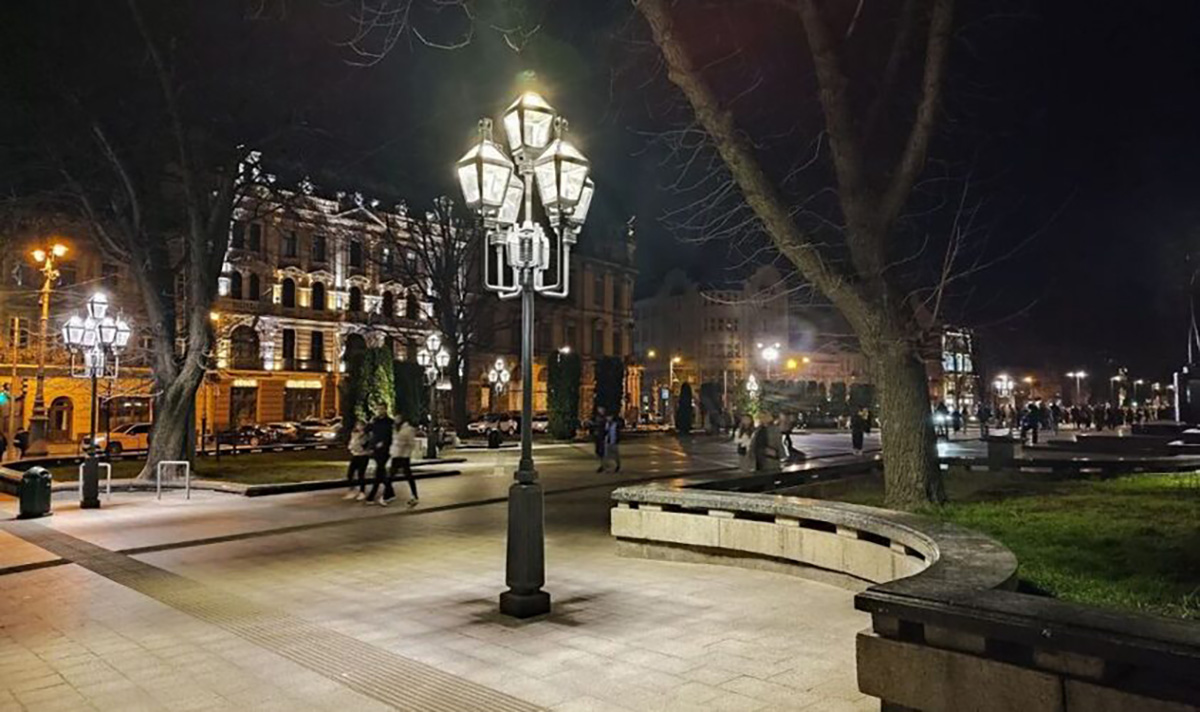
Last year, LKP "Lvivsvitlo" restored 12 historical street lighting poles on the central street of Lviv - Svobody Avenue. Photo: Lviv City Council website city-adm.lviv.ua
Commenting on the topic, experts involuntarily recalled the lights of New York, the streets of Vienna, and Prague. However, they stated: it is not worth chasing references and repeating someone else's path, and we will listen to them.
American and European cases are still important because they offer us… optimism. The realization that the history of a street can be carved in different ways, and most importantly, how it all ends in the end. The same Times Square, over the course of one and a half hundred years, has undergone transformations from a desirable piece of land to a marginal area and transformation into a celebrity - the “crossroads of the world” with the gigantism of LED screens. Modern views on urban spaces force it to reduce its appetites, become energy-efficient, and assess the impact on the ecosystem (for example, on migratory birds, which the light forces to deviate from their route). Billboards from Times Square will not disappear, but will inevitably be more sustainable in the future.
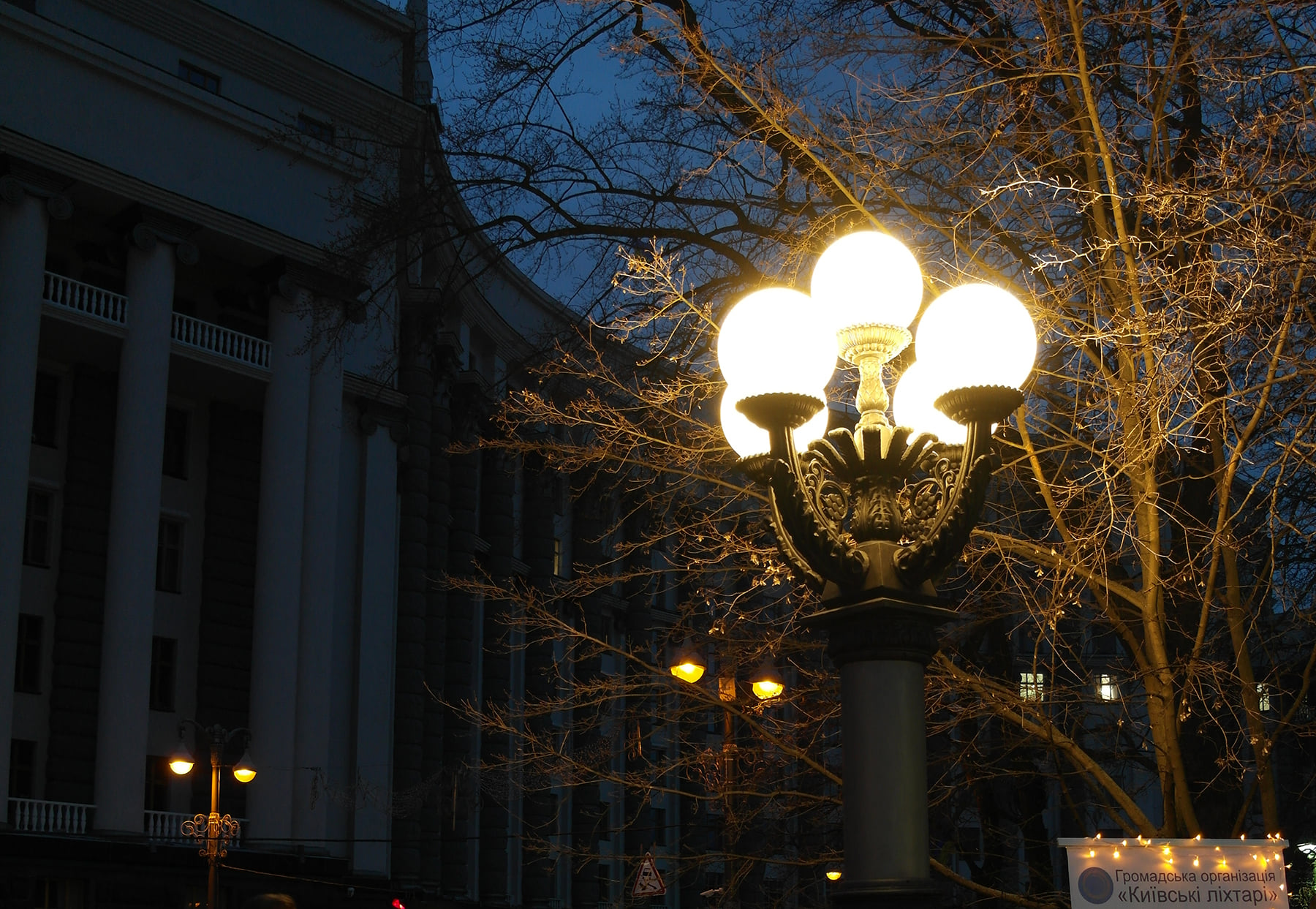
Authentic Kyiv street lantern. Photo: FB page of the NGO "Kyiv Lanterns"
European views on urban lighting have long been more prudent and moderate, partly due to the different scale of cities and the cultivation of traditions, as well as a commitment to the goals of the circular economy and concern for the environment.
Detailed lighting guidelines are not only approved in Austria, laws or standards on street lighting and light pollution control exist in Germany, Croatia, the Czech Republic, Slovenia, France, Italy, Spain, Switzerland. Most of them were adopted in the 2000s–2020s. Here we can learn from the systematic approach and the ability to focus not only on the technical characteristics of light, but also on its safety and participation in the formation of well-being.
On the way to a better Khreshchatyk, one wants to avoid political speculation and lobbying, and annoying mistakes when professional experts, urban planners, and architects are not heard or their recommendations are not taken into account. The case of the NGO "Kyiv Lanterns" in 2021 is mentioned, when the public budget did not support projects to restore historical lanterns on Khreshchatyk and in Mariinsky Park.
Sometimes it seems that the street has become hostage to its own title. As the most important street, a lot of attention, responsibility, deadlines for approval and implementation, and money are tied to it. On the other hand, Khreshchatyk and its locations are difficult to discuss or criticize - because of their status, historical contexts, and the large number of memorable and even sacred objects for Ukrainians.
That is why, wading through numerous pauses and “buts,” it is necessary to talk about Khreshchatyk and other important spaces. The street is waiting for changes postponed due to the war and something else. In any case, this gives some time to understand further actions.