


The park is part of the urban infrastructure
Since the 20s XX century the vast majority of parks in Soviet cities were created as a reduced and simplified copy of the CPKiO named after Gorky - with a centric-axial structure, typical architectural objects, an obligatory fountain and a "girl with an oar". We left most of these stereotyped decisions in the past, but managed to acquire new ones.
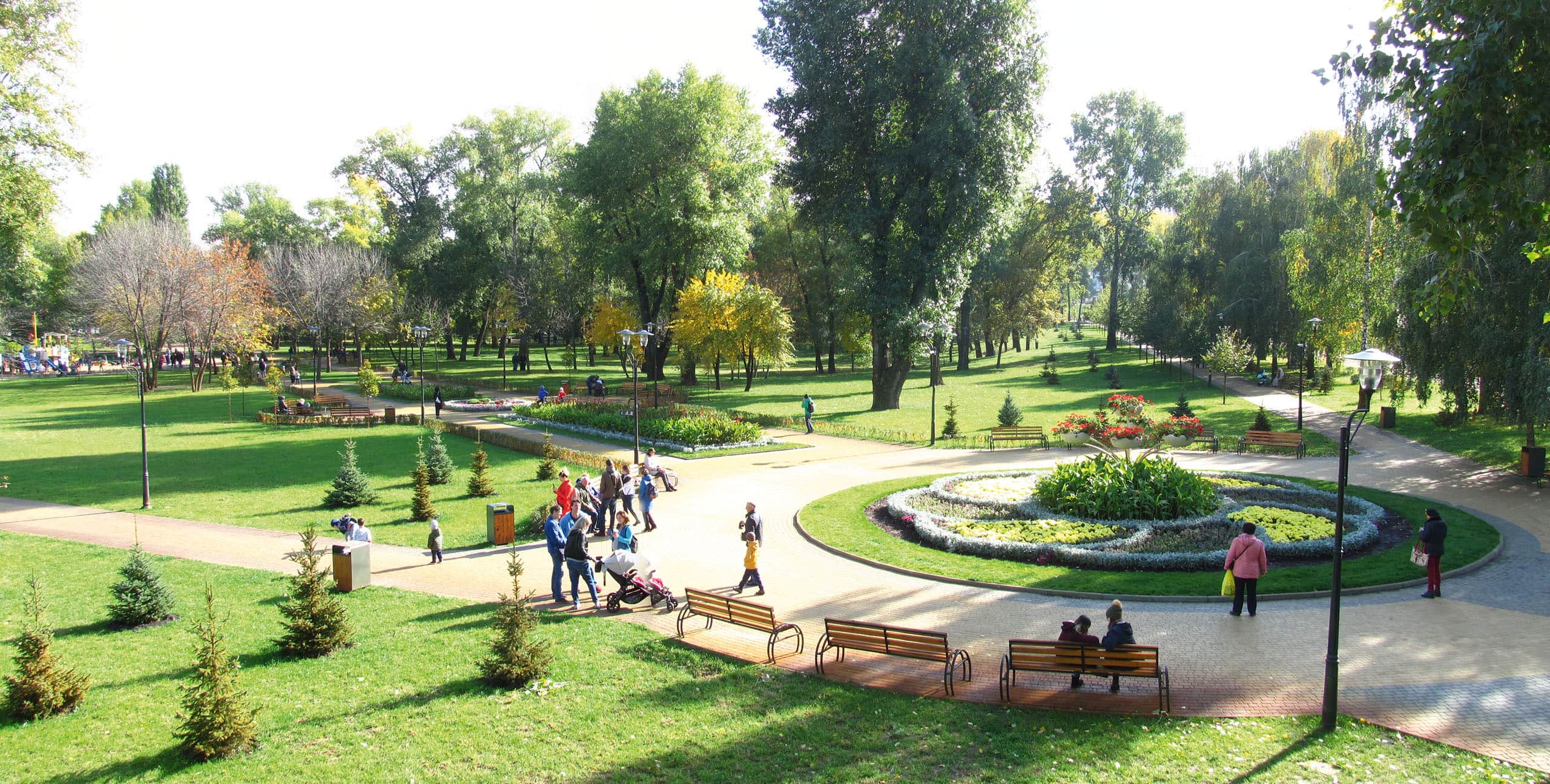
Park "Natalka" on Obolonskaya embankment in Kyiv. Photo: 4art2art
Identical benches, urns, fences, typical playgrounds, typical paving, a typical set of plants, ornamental flower beds made of the same annuals. This uniformity is primarily characteristic of newly created green zones. But typical furniture, lanterns, bridges and fountains also appear in the old parks of Kyiv, leaving their original charm. It is enough to recall the loud scandal when Kyivhorsvet replaced the historic lanterns in Mariinsky Park with cheap mass production.
"Kyoto park probably has the brightest individuality among the new parks in Kyiv. In the rest, we follow the well-worn path of Soviet-era park builders, creating exclusively modernized versions of typical "culture and recreation parks." Park "Natalka" on Obolonskaya Embankment is really functional. It has many useful zones: for sports, jogging, dog walking, and children. This is a basic set of a modern public park, one might say universal. But, as it seems to me, it would not be a problem for him to have some bright, original design idea that would make Natalka not just a good city park, but a special one!" — says Natalya Kunets-Sinyagovskaya.
Natalya Kunets, project manager, plant specialist
The situation in satellite cities is even sadder. In Irpen, Buche, Gostomele, dozens of new park zones have been created over the past five years (which is wonderful!), which are impossible to distinguish one from the other (which is terrible). If the parks look the same, they lose value because they don't offer a choice. A person does not care where they walk, because in the end he will not feel the difference. You can move from park to park, from district to district, but the feeling remains that you are in one and the same place.
What is a modern city park? This is not a garden for a select "pure public", like two centuries ago. And not a demonstration platform for ideological events. Not a collection of unique plants. This is primarily a part of the public infrastructure. From which we demand quality, inclusiveness, multifunctionality and aesthetics.
Typical furniture, lanterns, bridges and fountains leave Kyiv parks with individuality
"Often, customers save money on a landscape and architectural project, but invest millions in expensive plants, which then simply have no one to take care of them. For example, they are planting wallpaper linden trees worth about 70 rubles. UAH for a tree, and no one cuts them. It's like buying a car and not being able to drive it. This is the simplest example of how to senselessly spend millions from the municipal budget. We forget that the park is XXI century. consists not only of trees, and the key to success is, first of all, a project where the relationship between plants and landscape architecture is balanced," says Yuriy Korolchuk.
Yury Korolchuk, director of the TOPIAR landscape bureau
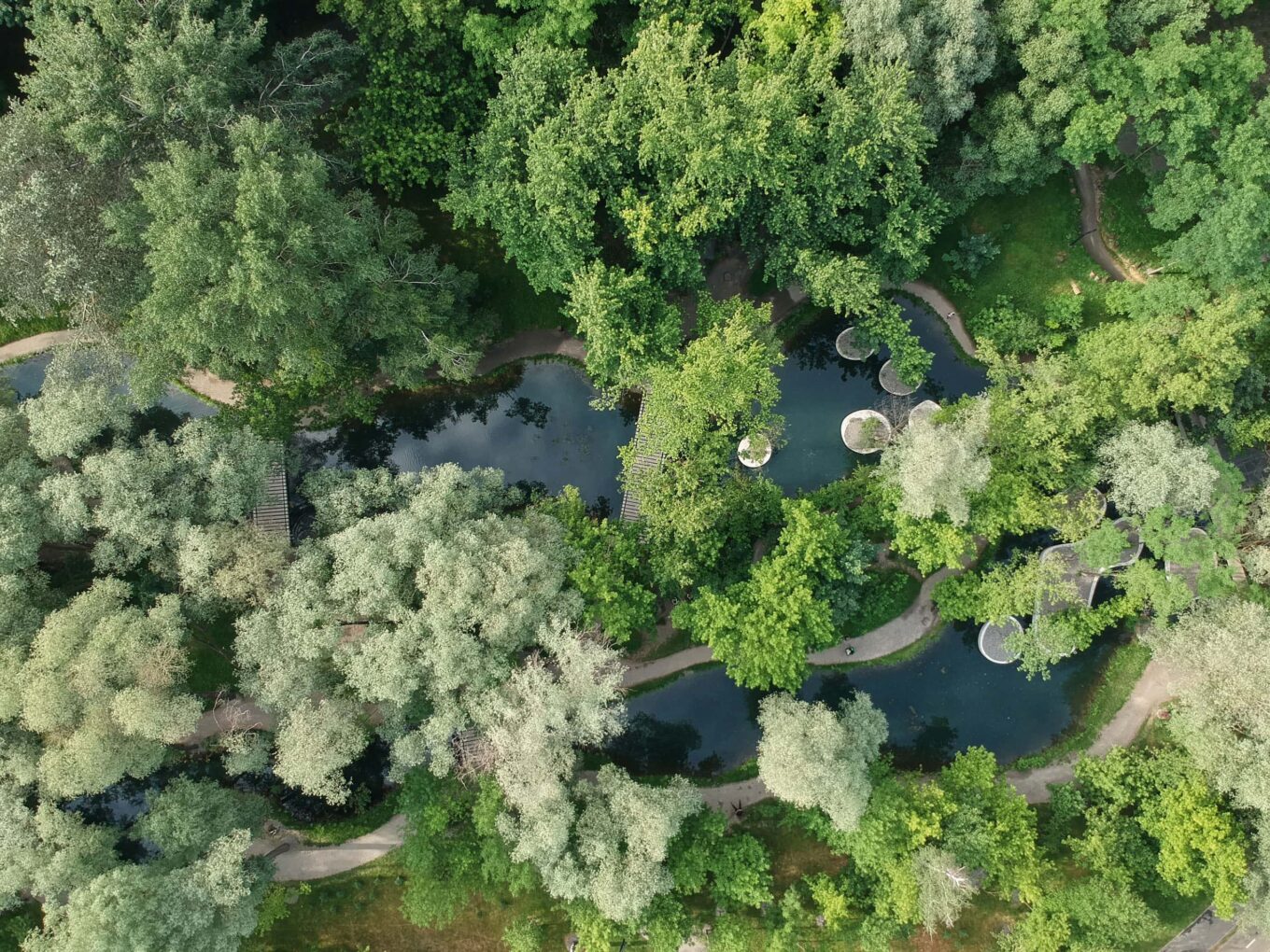
Kharkiv Park Sarzhyn Yar after reconstruction according to the SBM Studio project. Photo: Sergey Sverdelov
Let's consider the main components of a modern park and bold design solutions that make the space comfortable, in demand and at the same time unique.
Inclusiveness and safety
"If we talk about inclusiveness, then there are still few parks in Kyiv that are ideally oriented towards recreation with children. Such, where a family with children could come and spend the whole day. The pandemic has drained us of energy, and we need closer contact with nature. Let's remember what universal design is: safety and comfort for a mother with a baby is safety and comfort for everyone," says Anastasia Bardonova and cites as an example of a family park of the new generation Sarzhyn Yar, a public park in Kharkiv that opened last year after reconstruction according to the project of Olga Kleitman, the founder of SBM Studio, and her team.

Anastasia Bardonova, head of the design department
The designers were inspired by the unique features of the relief — a ravine with a flowing stream and elevation differences open up many opportunities for the implementation of original solutions. "Obvious functional advantages are a beach area, designated places for picnics, competent zoning and safe paths, wide enough so that pedestrians and cyclists do not interfere with each other. And this park is very spacious - people can easily keep a safe distance and at the same time not limit themselves in communicating with nature," Natalya points out. — The creation of quality conditions for recreation of children and youth is a prerequisite for decades to come. If we educate children today in the culture of interaction with nature, then when they grow up, they will direct their efforts to the development of green areas in cities."
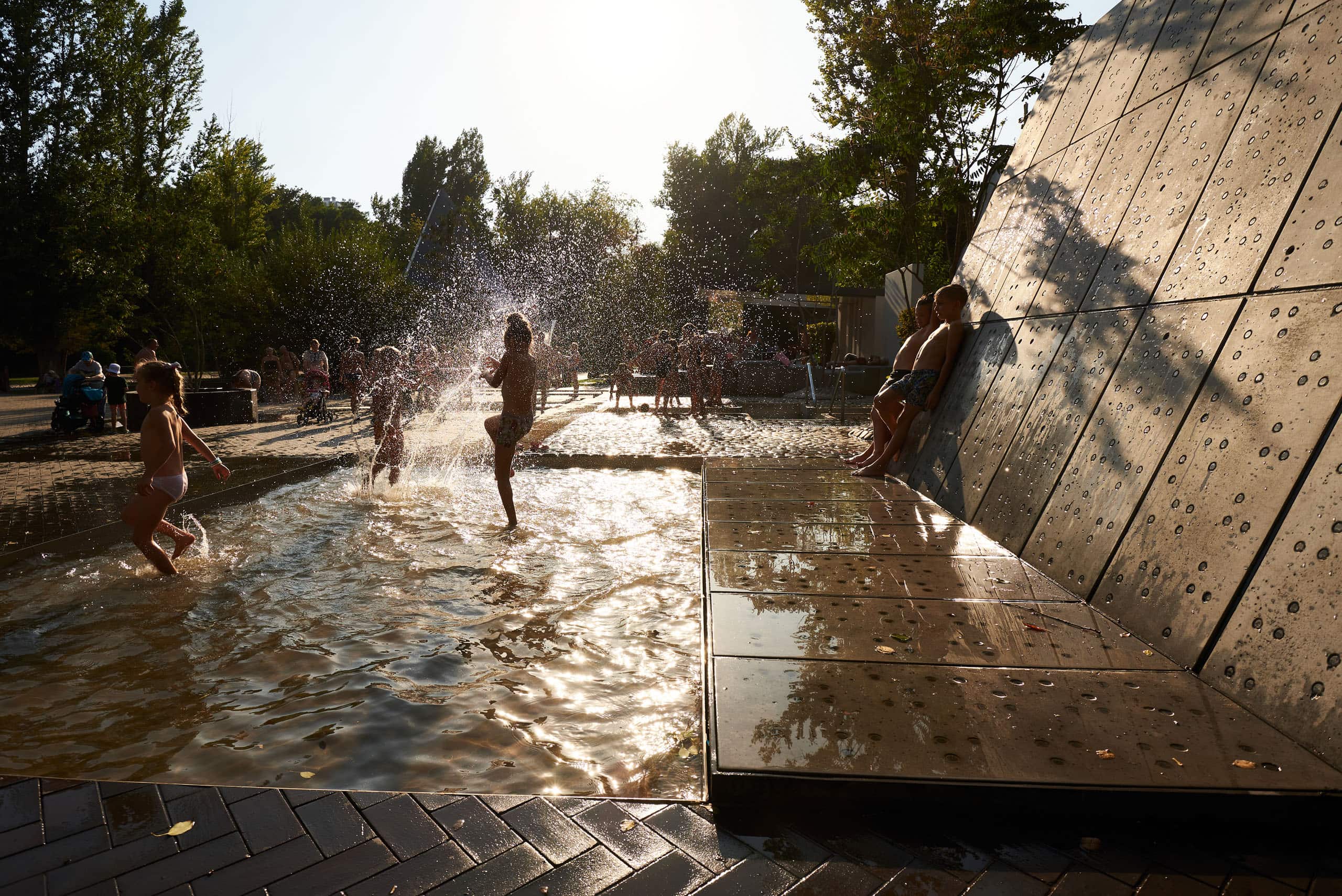
The beach zone in the city limits is one of the successful solutions in Sarzhyn Yar Park, Kharkiv, Ukraine. Photo: Ivan Avdeenko
Free access to toilets and sinks has always been a safety issue, and even more so during the pandemic. And most often, activists' criticism of new parks touches on this topic. Meanwhile, even this utilitarian sanitary object can become a design feature, like the multi-colored toilets designed by architect Chigeru Ban for Tokyo's Yoyogi Fukamata and Haru-no-Ogawa parks. A toilet with walls made of transparent glass, which becomes matte as soon as the door is closed from the inside, is the answer at once to two questions that usually bother a person: is the cabin clean and is it busy? Electrochromic glass with variable light transmission allows you to use the "smart" toilets designed by Siger Ban also as an element of park lighting in the dark. It is impossible not to notice the multicolored luminous small architectural forms.
Game Zone
We forgot that playgrounds should not be boring in the first place. The easiest way is to equip a children's playground in the park with a set of standard ladders and swings. But it seems that even the children are already bored with this same type of equipment. Meanwhile, the task of designing an original parking area for games is a real challenge for a designer. First of all, it is necessary to rely on the peculiarities of the landscape. If there is a natural slope - great! This is an opportunity to make an obstacle course, a climbing wall and a hill descent slide. In the Belgian Beringen park, the slope of the old mine shaft was even adapted for a play area and training base for parkour, and the entire territory of the old mine was transformed into a tourist and educational center.
In one of the schools in the USA (The Grayson School), the Matter Design studio created a play laboratory for teenagers - a training ground with massive abstract sculptures made of concrete, which at the same time allow schoolchildren to learn the laws of physics and mechanics in practice. This is a kind of "experimentarium" under the open sky.
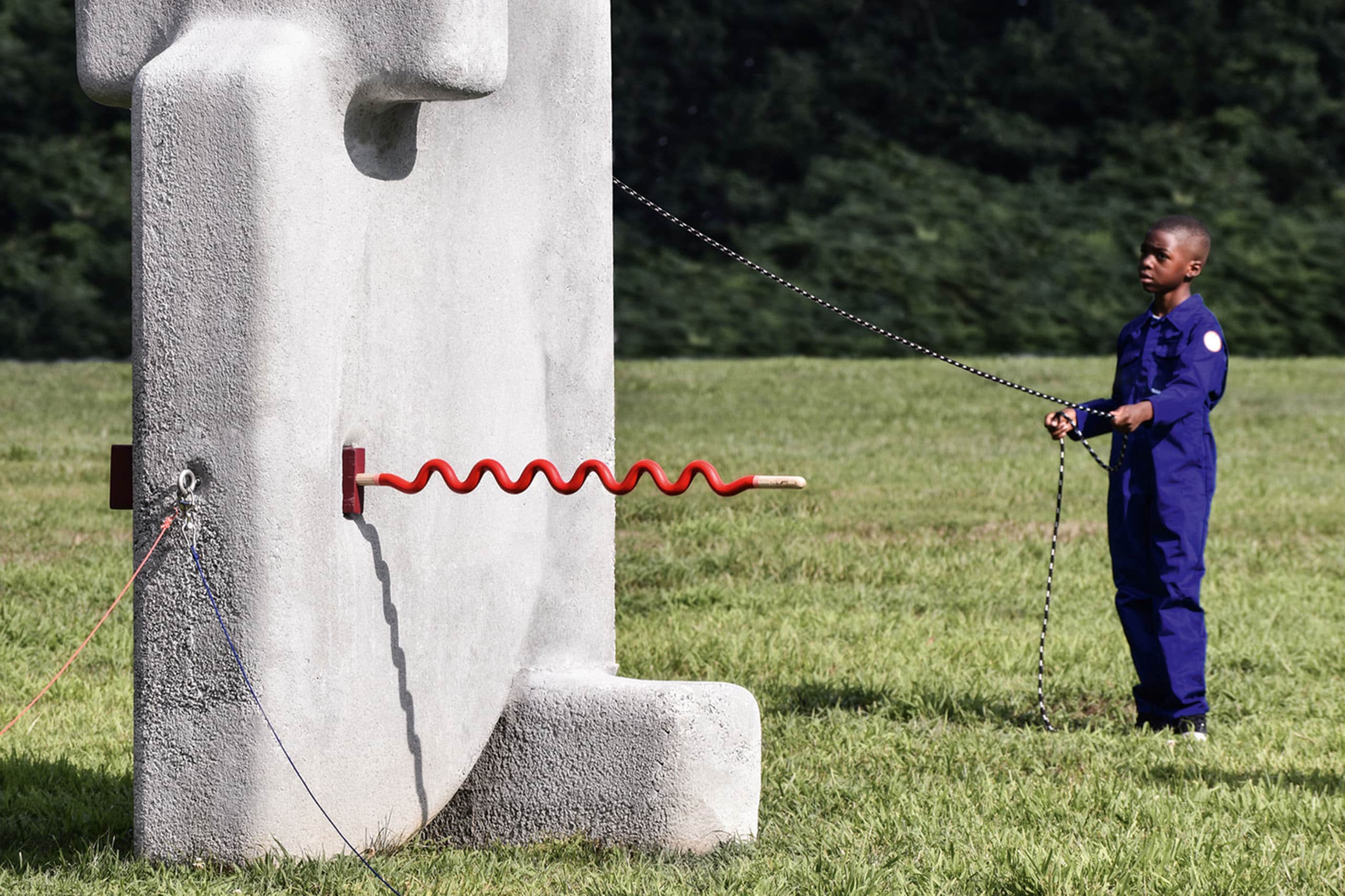
Game laboratory for learning the laws of physics at the Grayson School (USA) by Matter Design. Photo: © Ally O'Rourke-Barrett
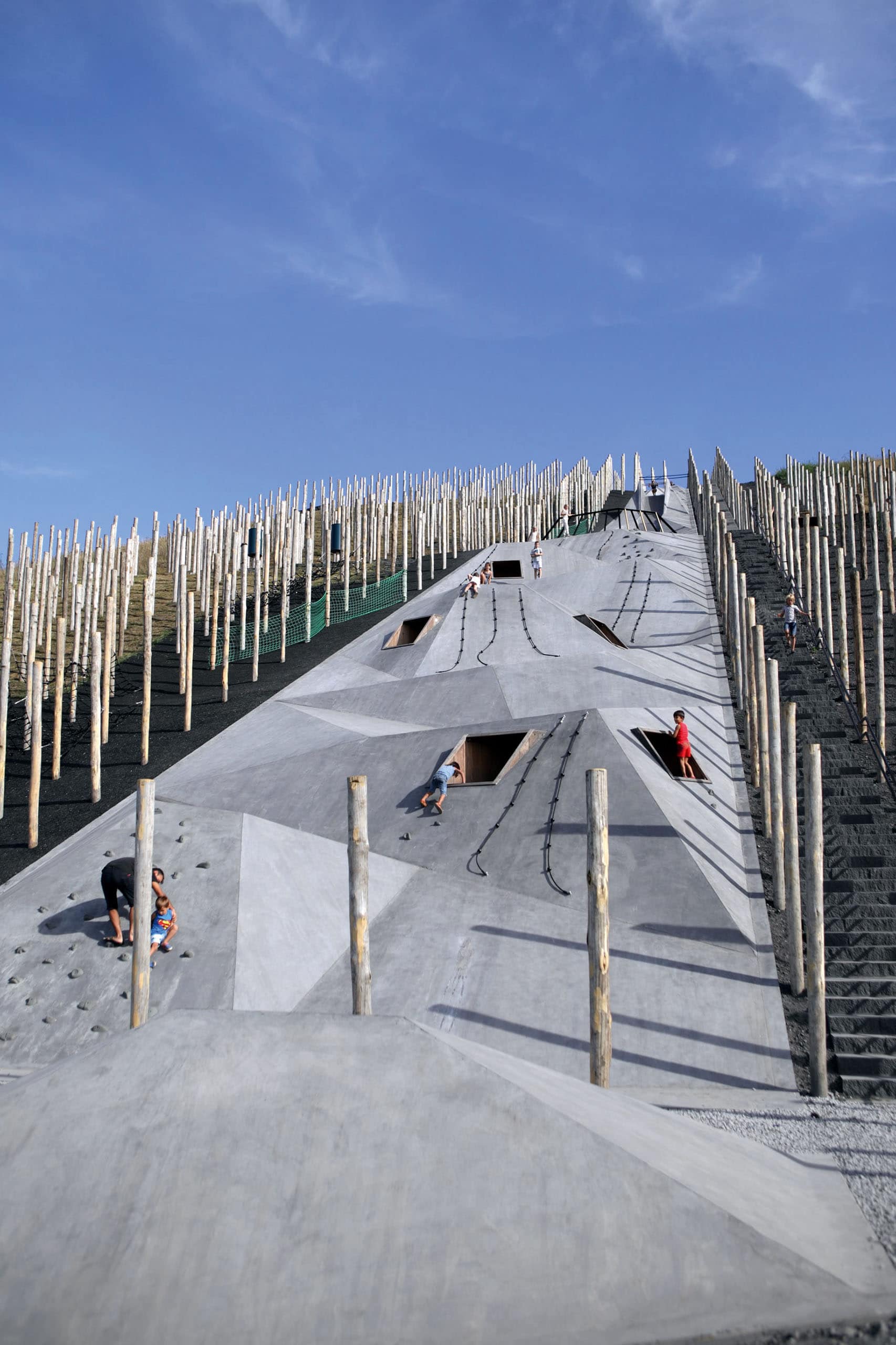
Climbing wall on the site of a former mine, in Beringen, Belgium. Project Carve, OMGEVING. Photo: Benoit Meeus
Even the roof of the parking lot can become a playground or sports ground, which both children and adults can use at the same time. The rides on the roof of the parking lot in Copenhagen, designed by the JAJA Architects studio, have enough safety margin to withstand the weight of an adult.
Not only stationary, but also temporary installations, to the creation of which artists and sculptors can be involved, can give the park space a playful character without any damage to nature. So, in 2018, the New York studio Snarkitecture presented an installation of a hundred huge inflatable balls locked in a giant BOUNCE cage on the Hong Kong embankment. in visitors
First of all, playgrounds should not be boring
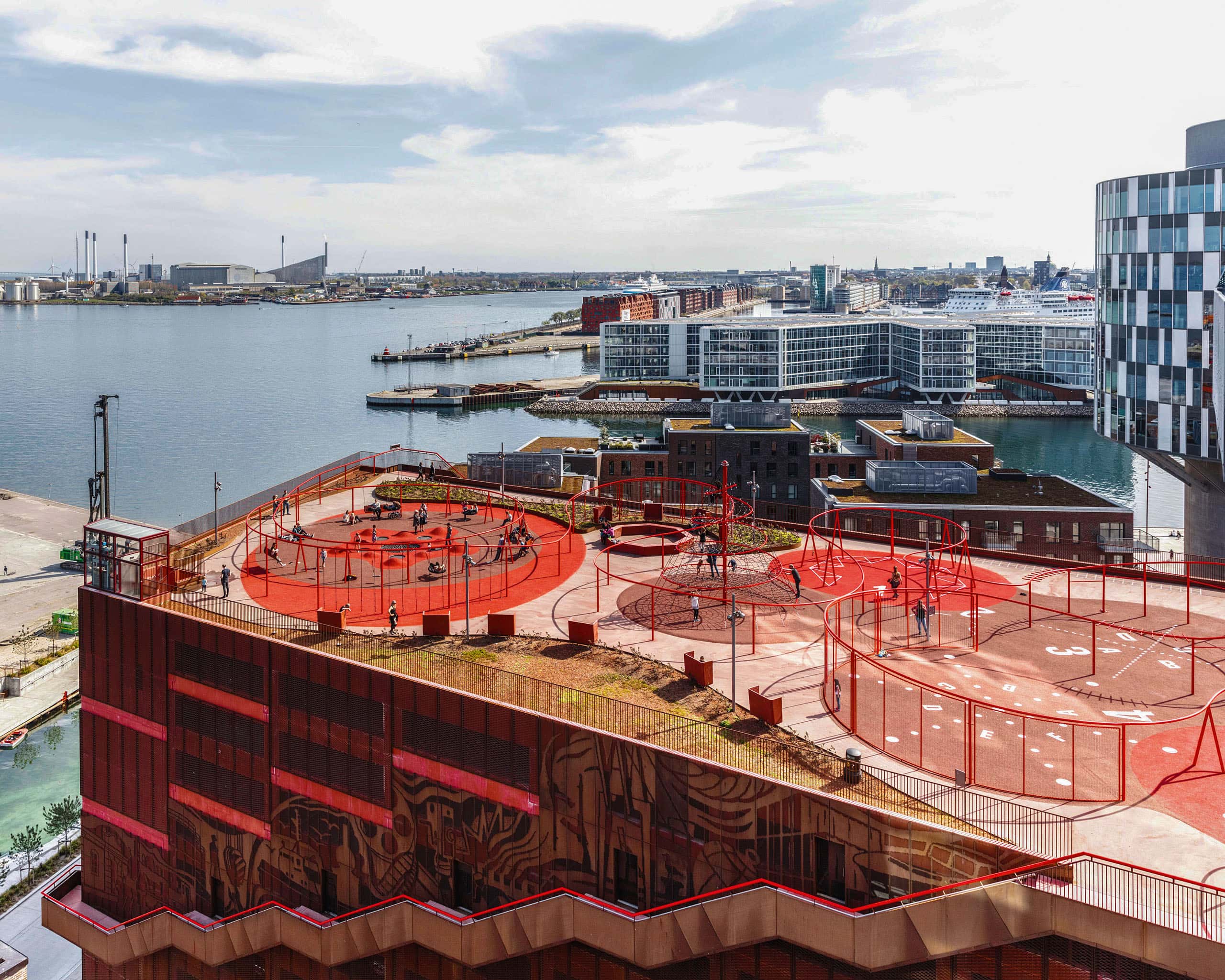
Playground and sports ground on the roof of a parking lot in Copenhagen, Denmark. Project by JAJA Architects. Photo: Rasmus Hjortshøj
Sometimes the line between a game attraction and a work of art exists only conditionally. Hanging rainbow nets by Japanese artist Toshiko Horiuta Makadam is an interactive exhibit at the Woods of Net museum in Hakone, Japan. However, the 80-year-old artist willingly knits these unusual playgrounds to order, and they can be seen not only in parks in Japan, but also in Europe.
Water as a source of ideas
If there is a source of water on the site - a pond, stream, river - then it should be the starting point for the designer. And not only a natural source, for example, the popular street park in Dublin Blessington Street Park (The Basin) is an old water tank transformed into a place for citizens to relax. The water in it does not meet modern requirements for drinking water and is not used for water supply, but plans to build the site encountered resistance from residents, and the regularly shaped pool remained as a pond with a viewing platform and paths around it.
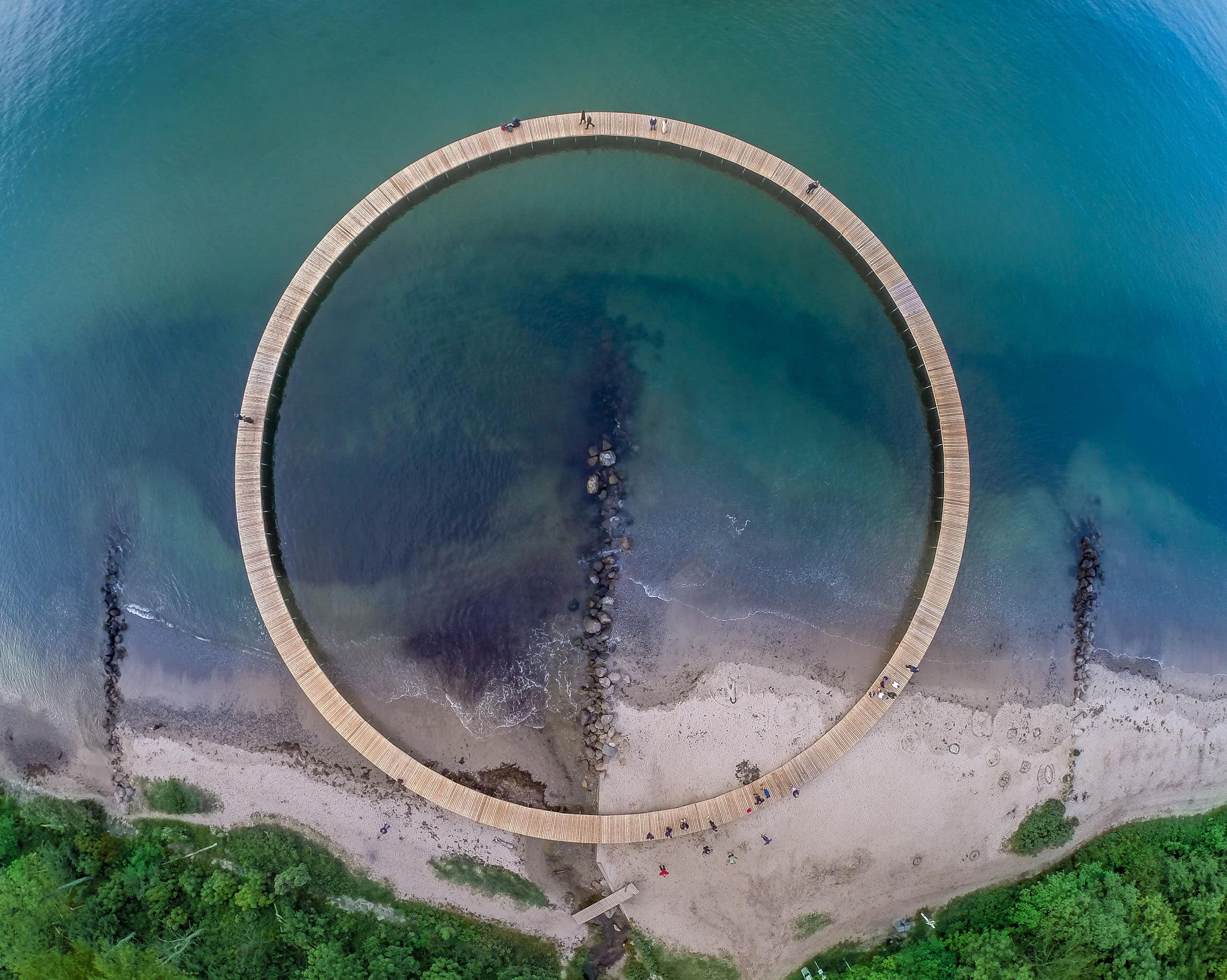
"Endless Bridge" by Gjøde & Partnere Arkitekter, Aarhus, Denmark. © Aarhus I Images
In the new paradigm, fountains in squares and parks are not just decorations, their role is to cool the public space in the summer heat. And it is perfectly normal when artificial reservoirs are initially programmed for children to swim in them - as in the Unity Square in Lithuanian Kaunas or in the new Tainan Spring park, built according to the MVRDV project.
Often it is not about any extra costs. An important idea
Obraestudio landscape architects found a completely unique solution for the center of Bogotá, Colombia. As we remember, Bogotá Mayor Enrique Peñalosa is one of the most progressive mayors in the world. And now the public square in front of the prestigious business center "Santa Barbara" turned into a swamp! But what! Architects, landscape designers and ecologists managed to create a completely unique natural marsh ecosystem in urban conditions. Linear beds with marsh grasses and gravel paths cut through the flat pool with rainwater. The clear geometry of the artificial landscape creates a contrast with the unruly wild greenery.
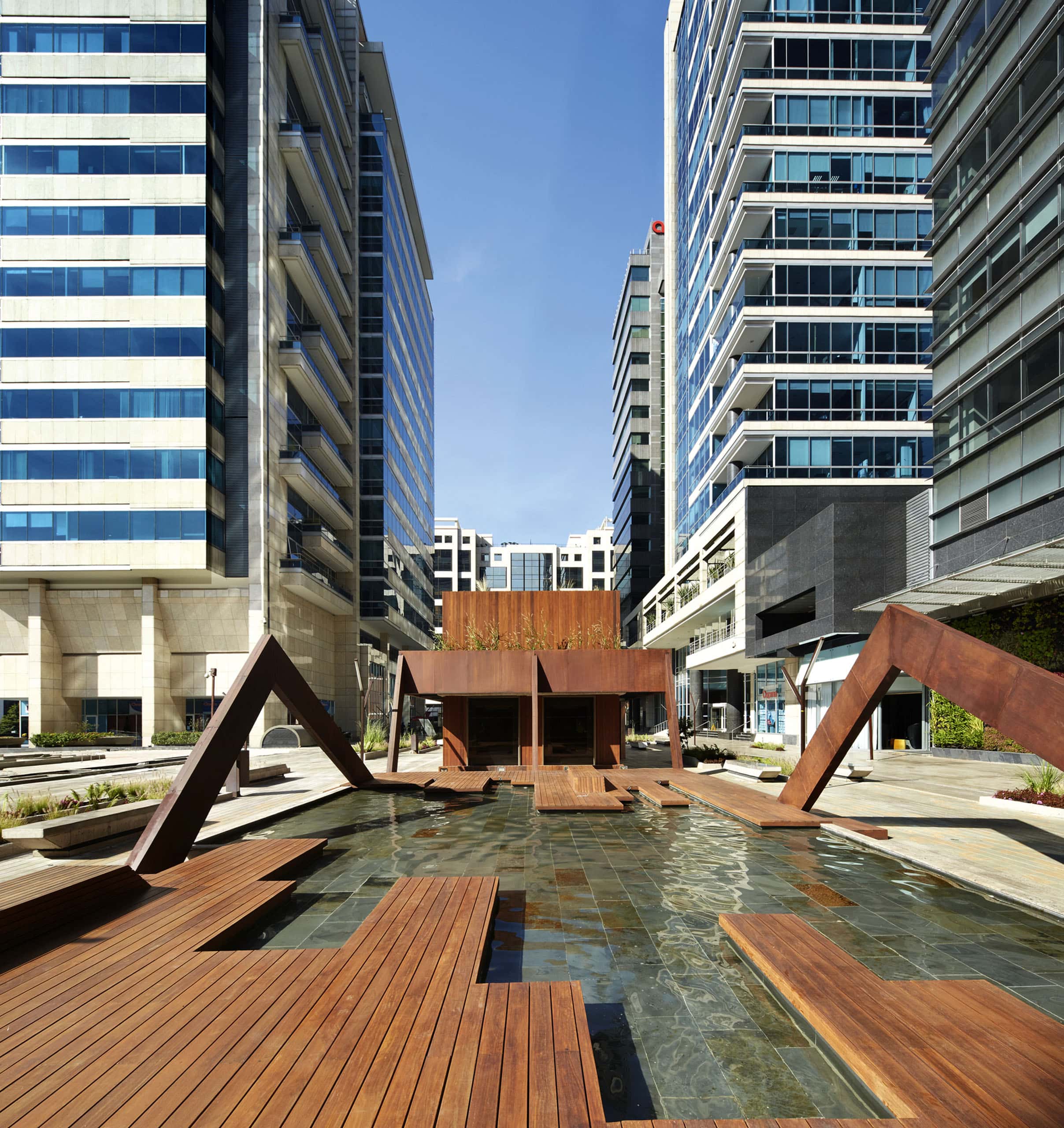
Bogota Park in the business center of Bogotá, Colombia. Obraestudio project. Photo: Andrés Valbuena, Daniel Segura
Landscape architecture turns the swamp into a decoration of the business center

Bogota Park in the business center of Bogotá, Colombia. Obraestudio project. Photo: Andrés Valbuena, Daniel Segura
If the park zone borders on "big water", then this opens up unlimited opportunities, and often it is not about any extra costs. An important idea. The photogenic "Infinite Bridge" in Aarhus is an ordinary wooden deck, which the architects of the Gjøde & Partnere Arkitekter studio closed in a ring, thus achieving a stunning effect. Now this functional sculpture is a key element of the landscape.
Complex relief as a gift of fate
No one disputes that regular parks with parterre lawns, the legacy of the ideas of the great Lenotre, are beautiful and presentable. But today, the actions of the English and French nobles, who in the XNUMXth century, following the fashion of a landscape landscape, destroyed parterres, uprooted alleys, radically reshaped hectares of squares, filled artificial hills, and dug lakes.
A modern park does not argue with the context, landscape, natural conditions, but uses and outplays them. After the Second World War, the reliefs of parks in Berlin and Munich were created from construction scrap and garbage. In Berlin's Friedrichshain Park, a hill about 30 m high was filled in from the debris of the destroyed buildings. Today, we are opening the rivers that were previously walled up under the freeways and turning them into the backbone of the project. The ruins of post-industrial zones can be reinterpreted and turned into workout zones. Differences in height make it possible to create such expressive elements as overpasses and bridges - pedestrian and bicycle. Amphitheaters (fortunately) have already become an integral element of modern landscape projects.
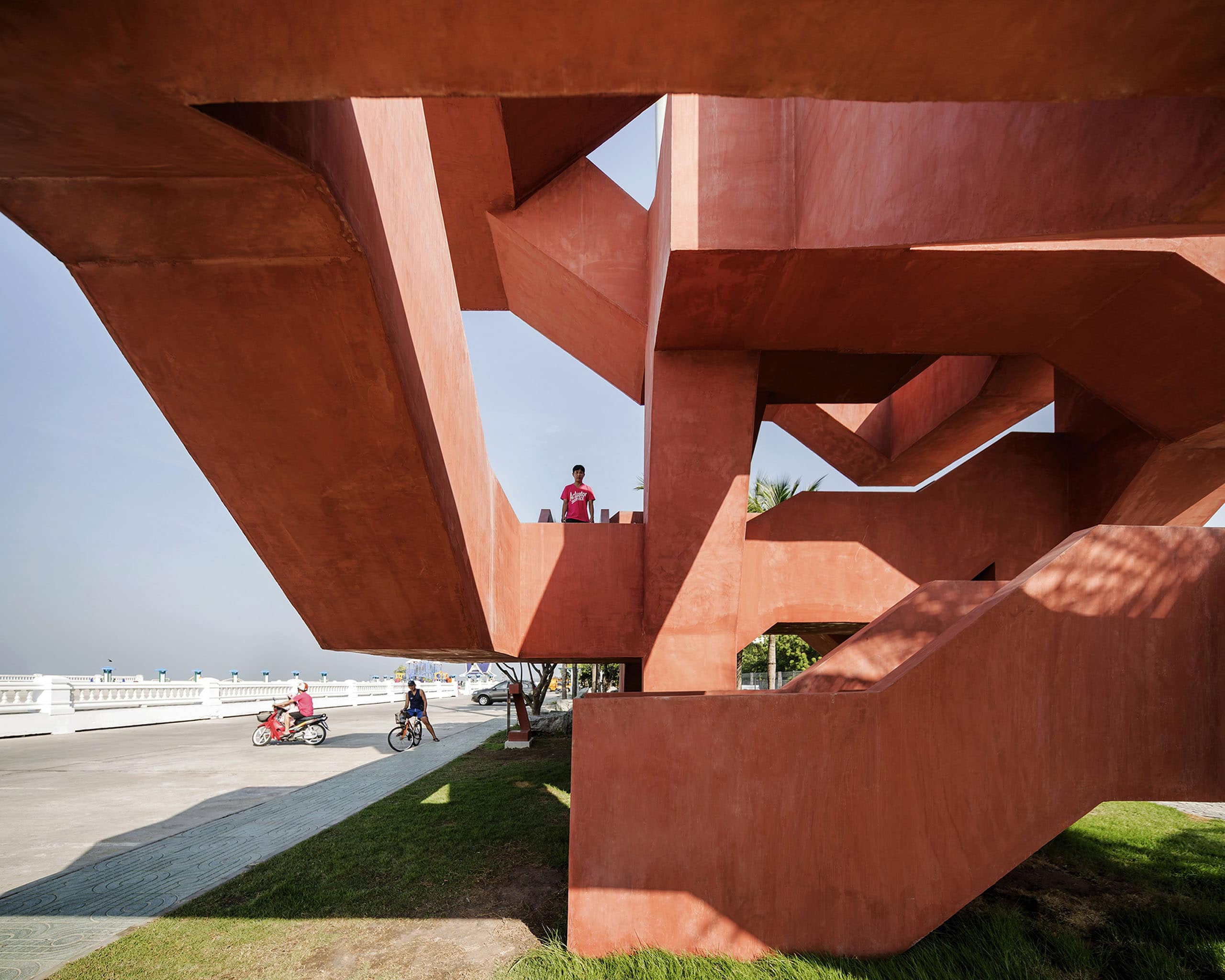
10Cal Tower is an observation tower at Bang Saen Beach Park, Thailand. Supermachine Studio project. Photo: © Wison Tungthunya
Even a completely flat area can be dominated by an observation tower. People have a natural desire to view the surroundings from a high point, and an observation deck, especially if it is an original design solution in itself, will definitely become one of the most popular objects. The best architects in the world are happy to take on such projects. And also for the projects of park pavilions (just mention the Venice Biennale and the Serpentine Gallery in London).
Dog walking areas
For some reason, this functional area, the mandatory presence of which is even legally enshrined, usually falls out of the focus of attention of the customer and the designer. What does such a site usually look like? This is simply a fenced territory, on which several barriers and logs may have been installed. In a word, except for the dogs themselves, you won't see anything interesting there. Meanwhile, the design and architecture of the dog park is a very fashionable and promising direction, which is increasingly attracting the attention of graduates of architectural universities.
The design and architecture of the dog park is a fashionable and promising direction

Johnny Steele Dog Park is a dog walking park in Houston, USA. Photo source: Visit Houston
It will be useful to study the experience of landscape architect Lesla Lowe, the founder of Beargrass Landscape Architecture & Environmental Planning. With enthusiasm and excitement, she develops dog areas that are attractive and safe not only for our four-legged pets, but also take into account the presence of ordinary visitors. Such a design involves a lot of nuances: you need to understand the psychology of dogs, know their habits. It is necessary to provide for a special topography of the site - with hills, stones, sandy and grassy areas. Dogs love splashing in the water, so why not make a small water park for them? It is necessary to ensure that there are no poisonous plants among the plants, and to protect the tree trunks from dog marks. It is necessary to think over fenced areas for small, old or shy dogs - after all, there are also introverts among dogs.
A minimalist touch
Sometimes the natural landscape is perfect by itself, and there is no need for complex architectural excesses and capital investments. There is no point in the radical transformation of Holoseev Park, it is ideal for people who like leisurely walks under the thick shade of ancient trees. It is not necessary to start a large construction with the arrangement of some monumental pavilions: firstly, it will not benefit the trees, secondly, it is expensive, thirdly, the park will be closed for a long time while construction works are underway.
A natural landscape does not need excesses, but design can emphasize its merits
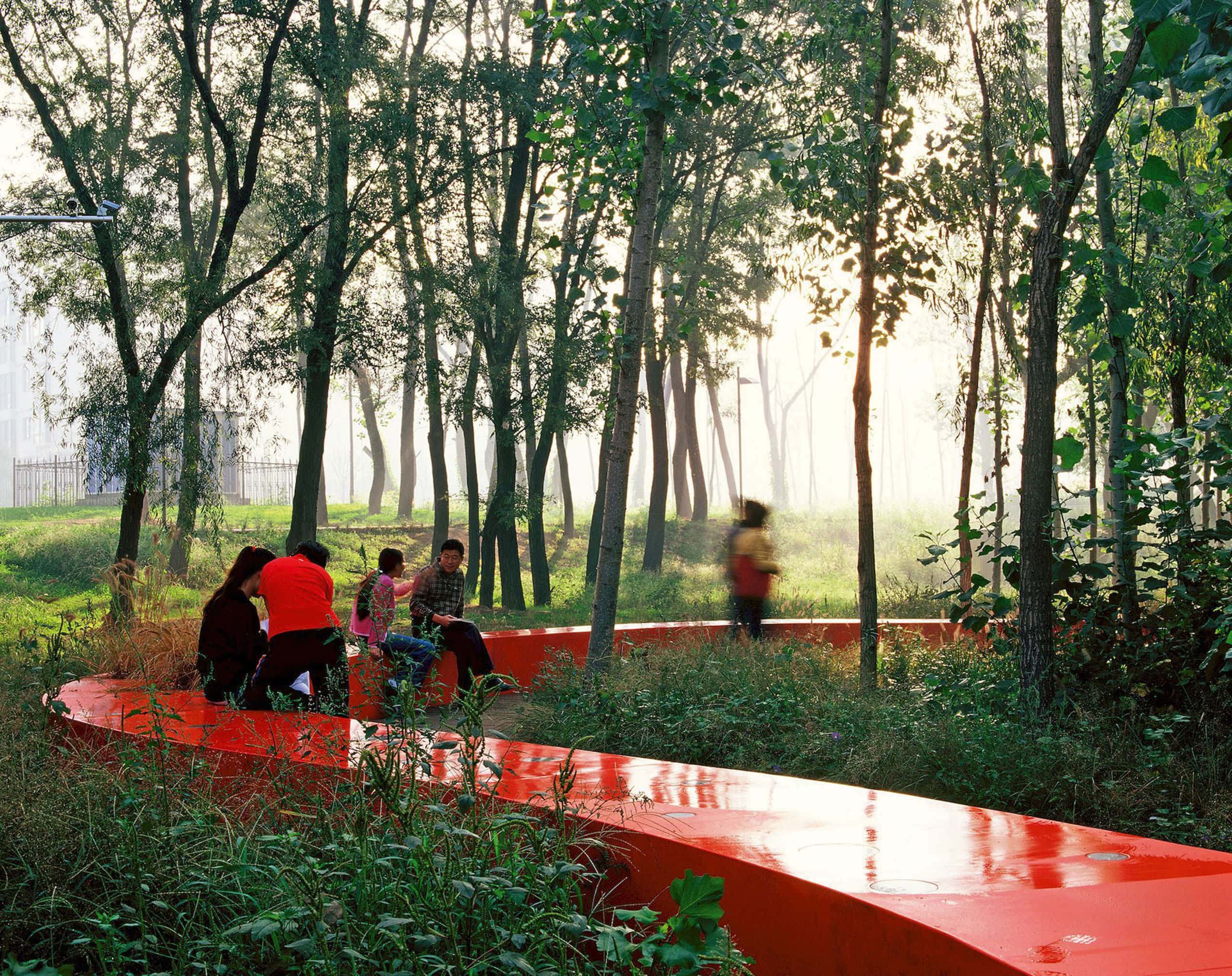
Red Ribbon Park is a public park along the river in Qinhuangdao, China. Turenscape project. Photo source: Turenscape
But if suddenly there is a desire to somehow modernize our green area, then there are very elegant, minimalist solutions, similar to the Turenscape studio project. They magically transformed 20 hectares of abandoned and overgrown territory along the river on the eastern city outskirts of Qinhuangdao (China). Along the entire territory, they laid a bright crimson meandering ribbon-podium made of fiberglass, combined with a wooden floor. People use this element as a bench, a picnic table, as a container for flower crops, and at night as a luminous landmark.
What haven't we mentioned yet?
There is also a lot of interesting things: original designer furniture, static and dynamic sculptures, light and sound installations, rain gardens - all this can distinguish the park from the rest, make it original and memorable.
We need to abandon stereotypes in favor of original, fresh solutions. But at the same time, they try to preserve the identity of historical park zones during their reconstruction. For example, the modernization of Solomensky Park presupposes the preservation of the historical modernist fountain — and this is a very competent step.
A variety of landscape design is one of the ways to expand the scope of the world around us. The role of specialists and journalists is to show how rich the toolkit is for experiments with the landscape of parks and squares. The role of residents is to get the city authorities and utilities to refuse to replicate design projects, even if they seem successful and save budgets.
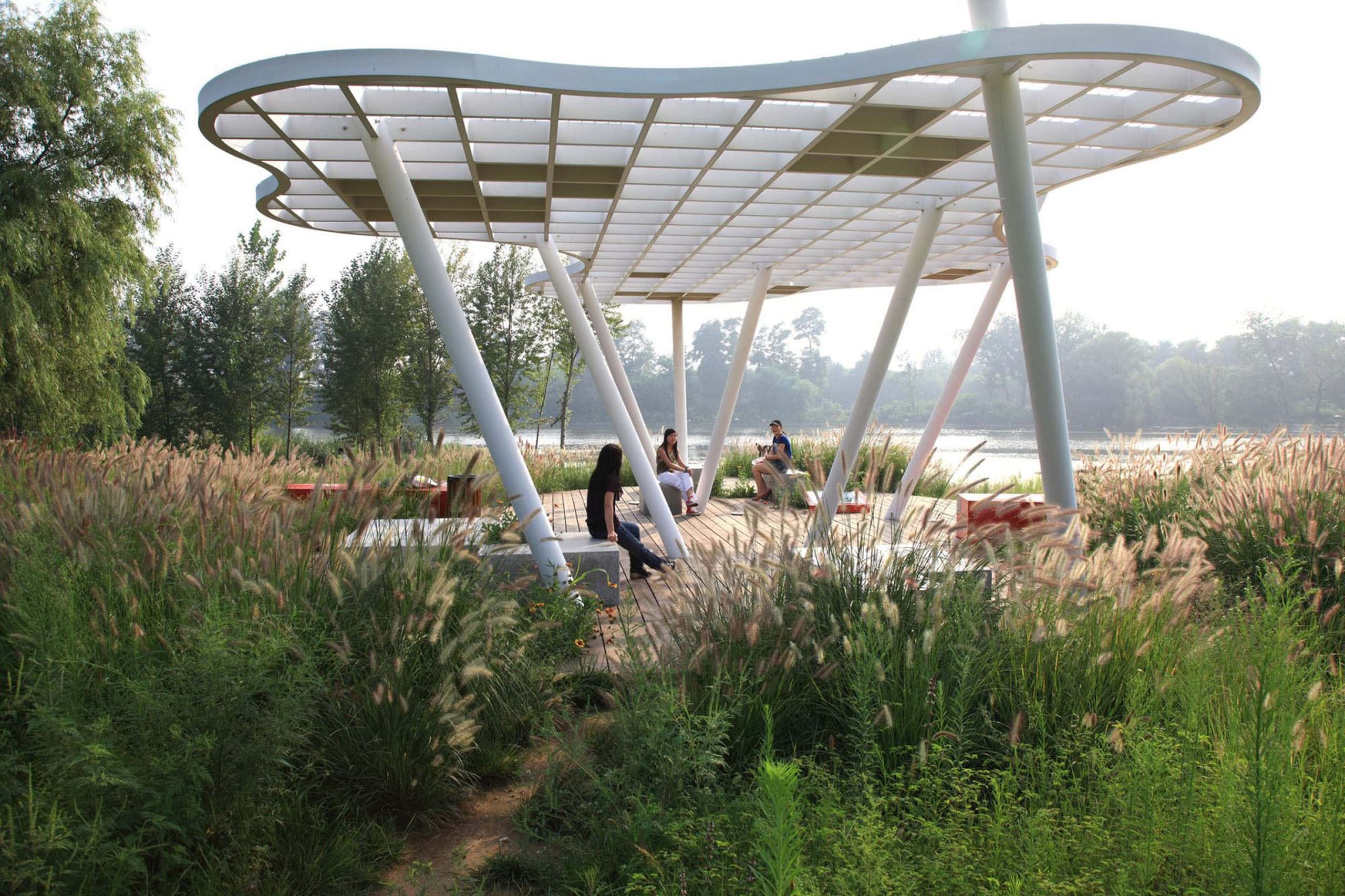
The cloud-shaped pavilion provides protection from the sun on hot days. Red Ribbon Park, Qinhuangdao, China. Turenscape
"Officials will explain that everything is complicated, that the legislative system does not prescribe project documentation norms. And since there are no norms, it is impossible to carry them out officially. Rather, it is possible through tenders — but this process can last an hour. And people need "for yesterday". Even if there are free funds left in the budget and they can direct them to improvement, but they did not have time with the tenders, the hour is over and all the planning has to be started all over again. And an individual project, they say, is long, - warns Yury Korolchuk. - But we have to act. The authorities should involve the residents, and the residents should be involved and express their opinion. And when the project is implemented, one must be ready for the fact that there will always be dissatisfied people. Even we, landscapers, cannot agree among ourselves. Non-negotiability is some kind of our national curse."
It is important to show how rich the toolkit for experiments with park landscapes is
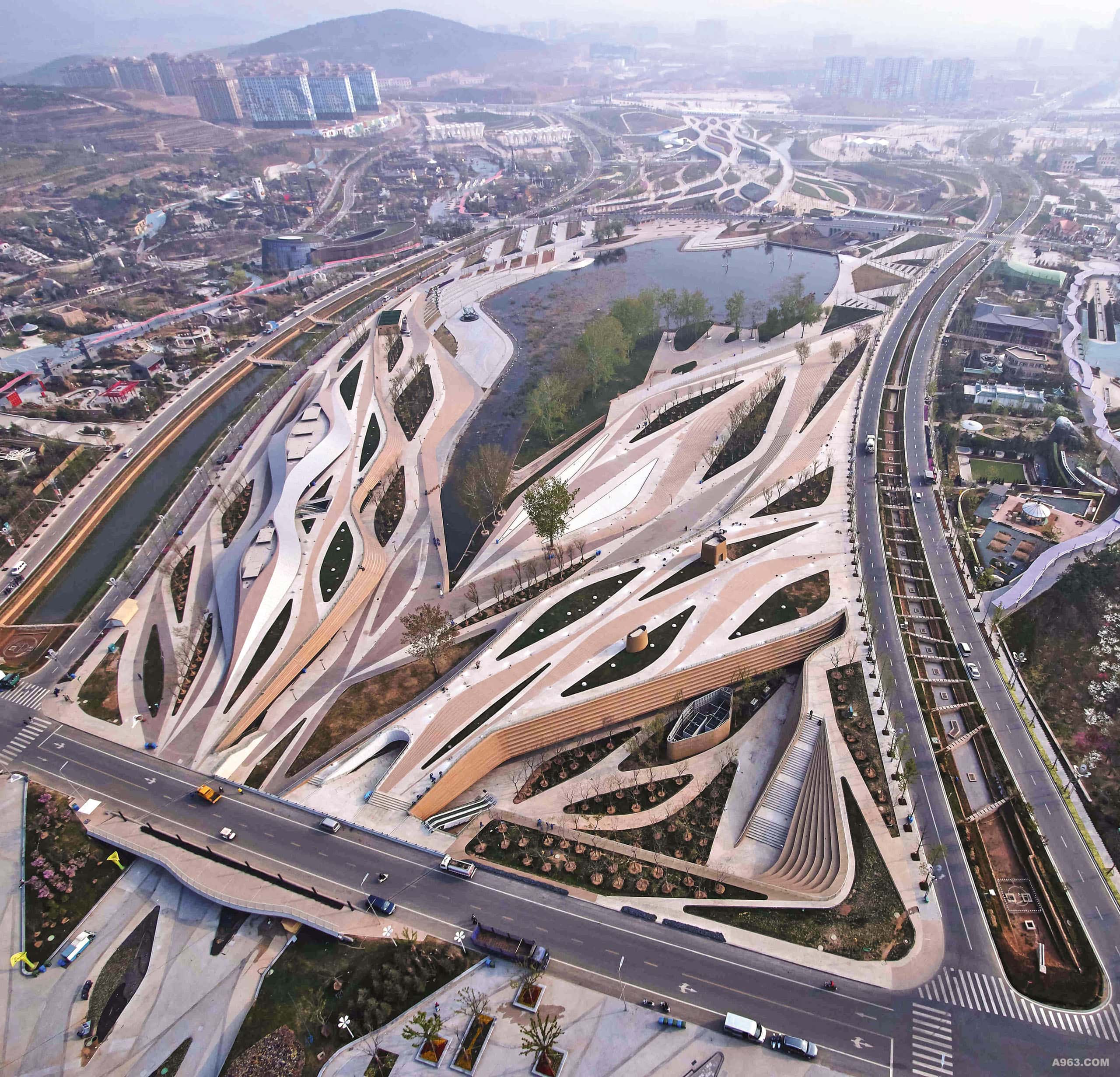
The public park Earthly Pond, built in Qingdao, China, under the HHD_FUN project for the international horticultural exhibition. Photo: © DuoCai Photograph
Actually no. Architects and landscapers all over the world face the fact that they do not always guess the true hopes and desires of people. Recently, the international organization celebrating the most progressive city parks with the Green Flag Award launched a contest on social networks under the tag #perfectparks. The campaign is aimed at counteracting the feeling of isolation during the COVID-19 pandemic and getting to know people's preferences better. The organizers invite people of all ages to draw, photograph or create collages that reflect the features of their personal "ideal park". It's a good idea, isn't it?


