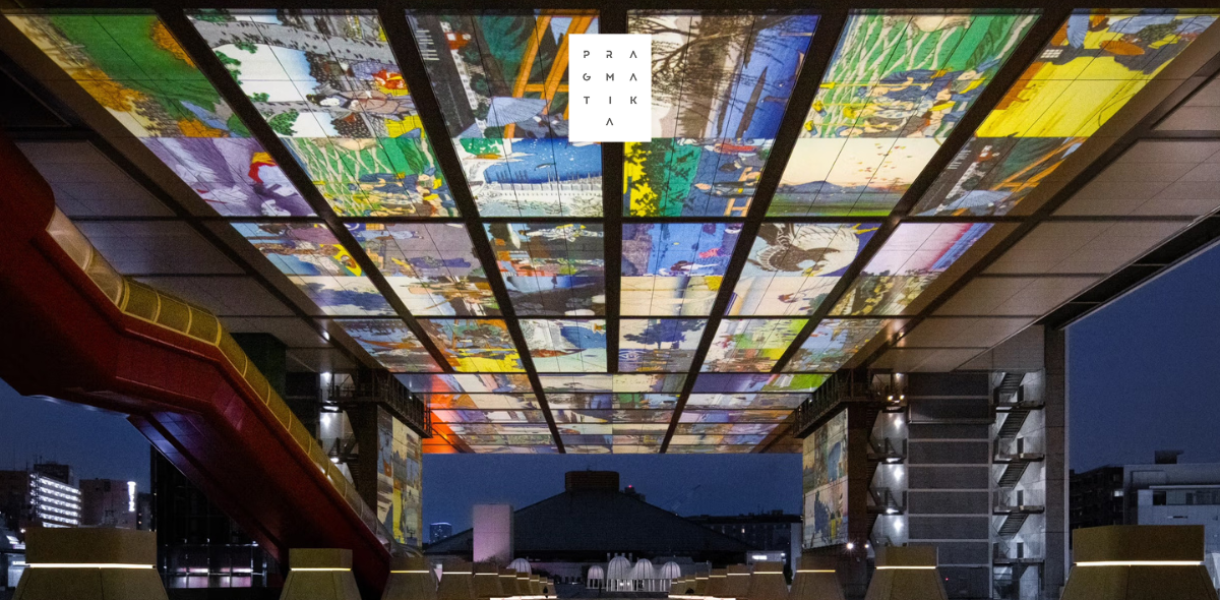
In 2022, the museum was closed for the first major reconstruction.
The new concept was developed by an OMA team led by partner Shohei Shigematsu. It is the studio’s first public project in Japan, a country where foreign architectural practices rarely receive government commissions.
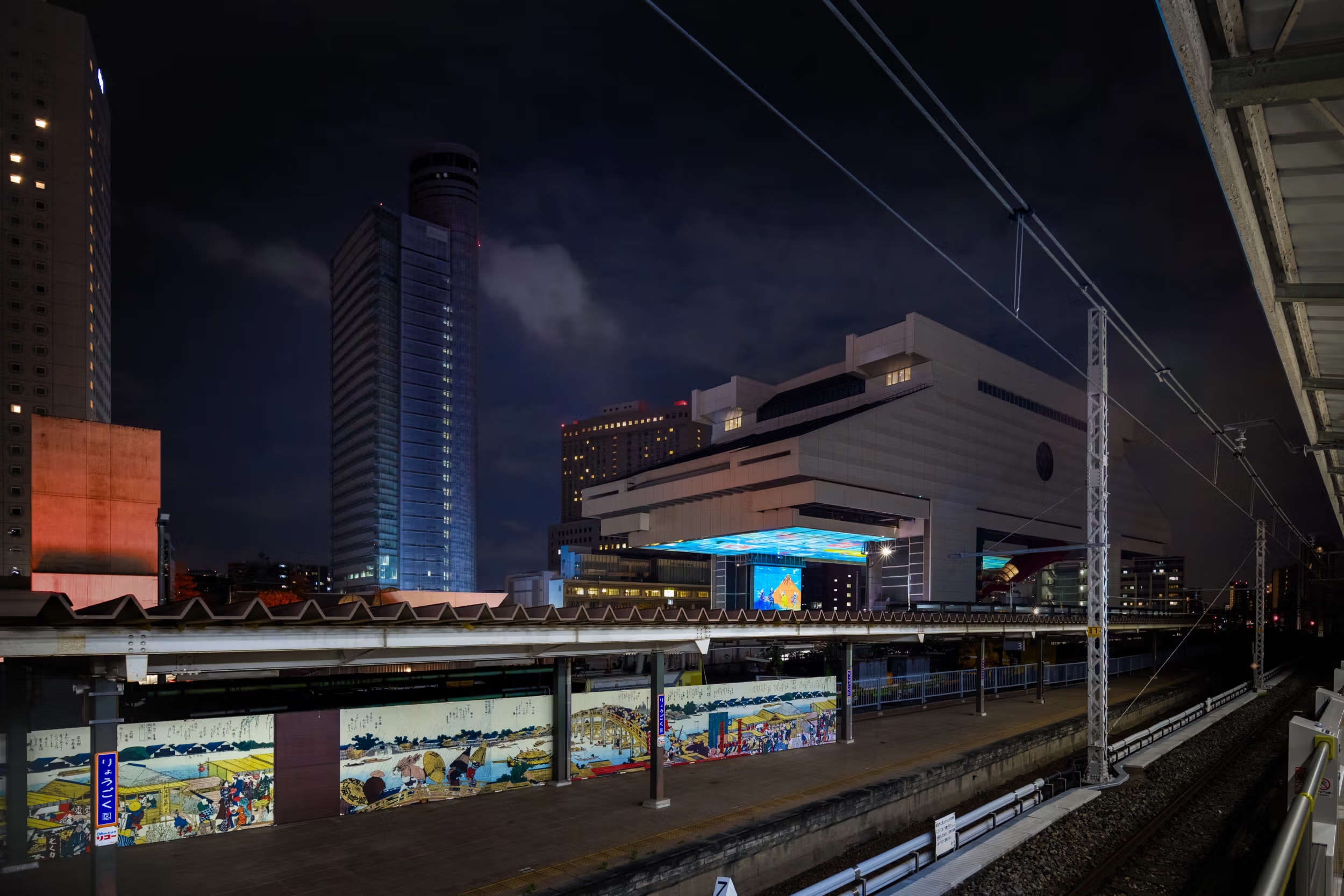
Photo: Vincent Hecht
The project focused not on a radical redesign of the building, but on rethinking the museum’s interaction with the city and visitors. The architects sought to make the museum more open, accessible, and inviting for repeat visits, while preserving the character of Kikutake’s original architecture.
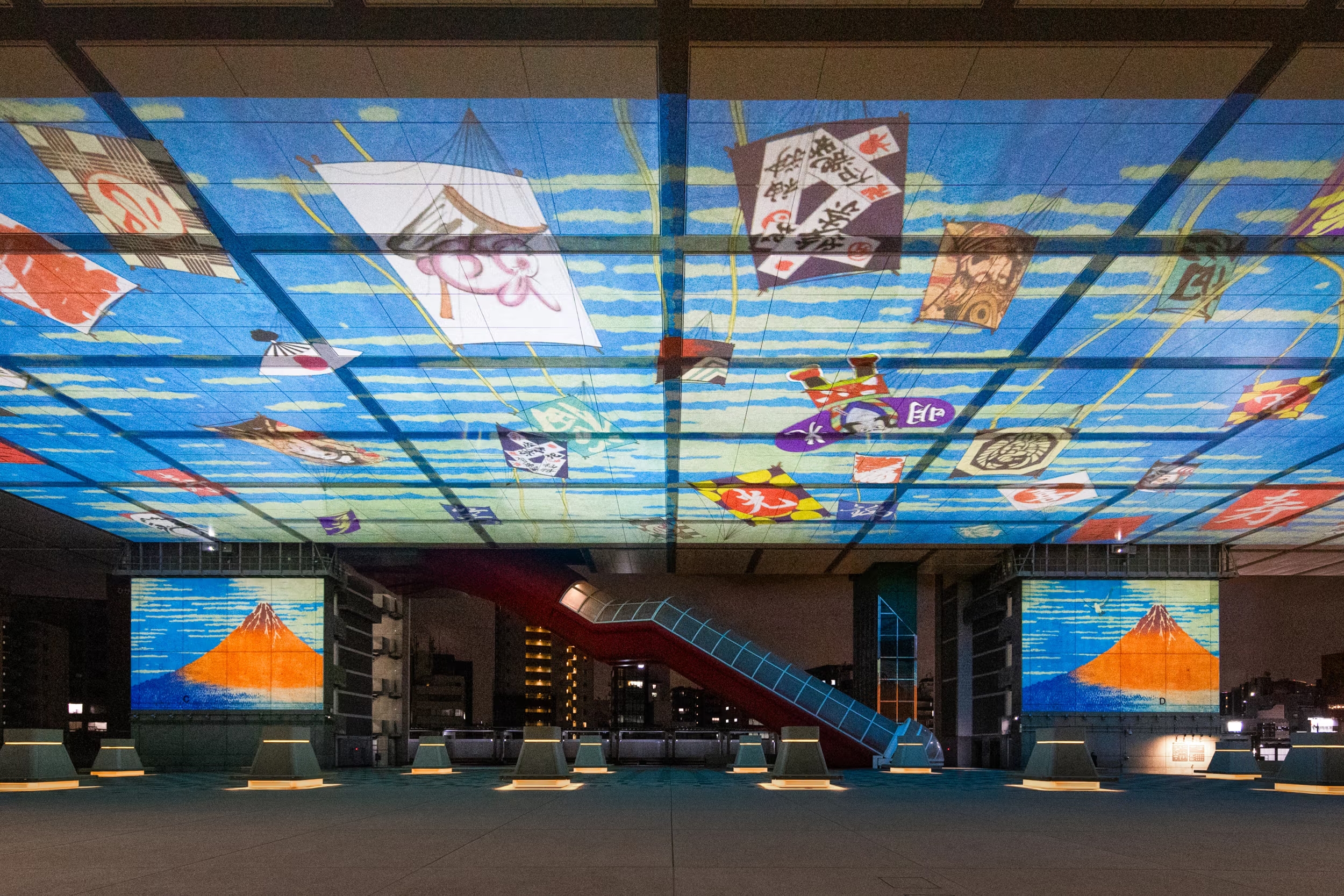
Photo: Vincent Hecht
A key element was the new entrance spaces. The western entrance was designed as a series of gates inspired by traditional Japanese torii gates, while the eastern entrance featured a circular sign that references the museum's logo, based on the eye from a famous ukiyo-e portrait. Both designs integrated LED screens for animated content.

Photo: Vincent Hecht
Large-scale projections have appeared in the exhibition halls on the sixth floor, transforming the exhibition into an immersive space.

Photo: Vincent Hecht
The ceilings display moving images of the sky and the urban environment, creating the effect of immersion in historical Tokyo among models of buildings and neighborhoods from different eras.
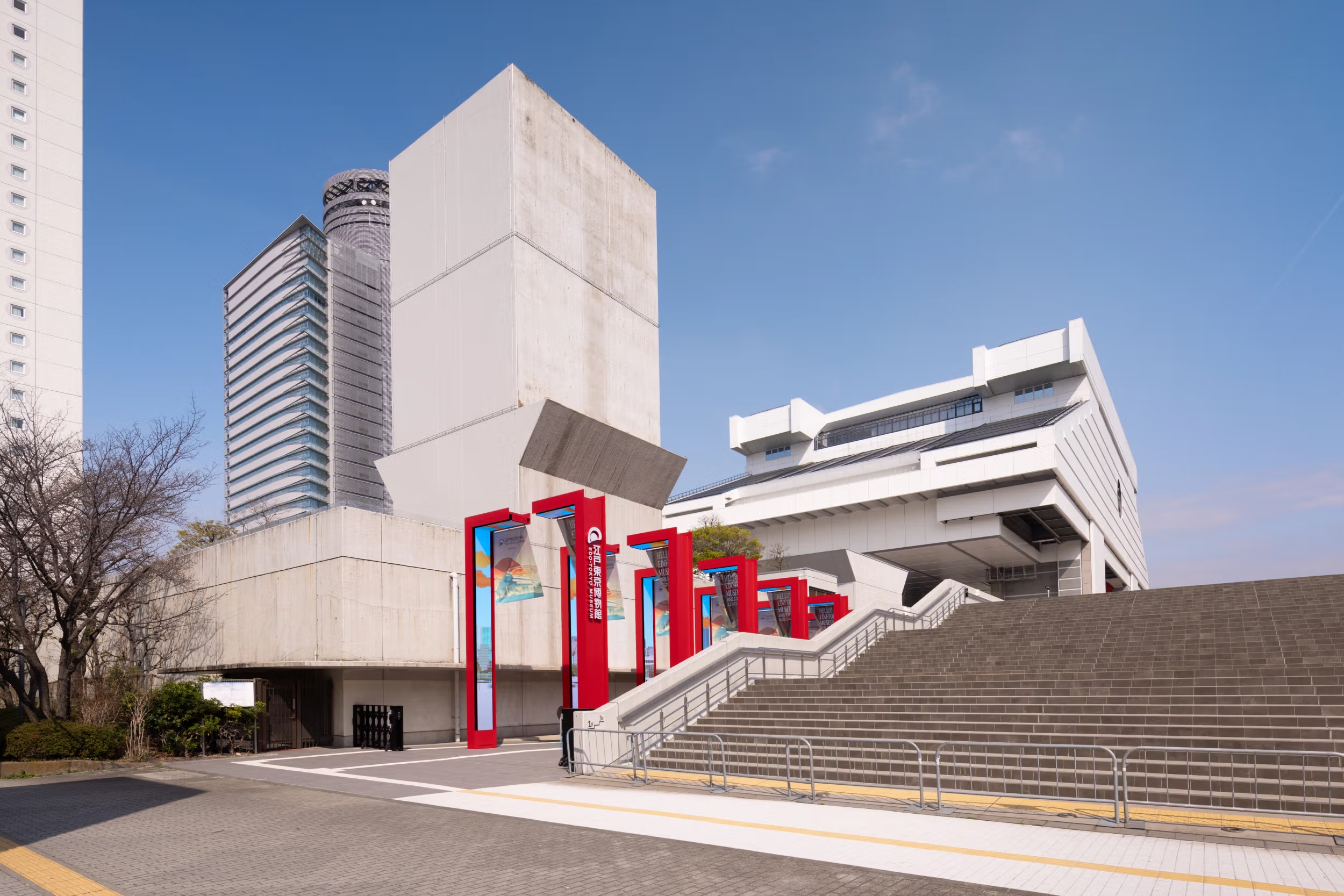
Photo: Vincent Hecht
The architects also activated the open space beneath the museum. Animated images of the sky, vegetation, and works from the museum's collection are now projected onto the lower part of the building and the massive pillars.
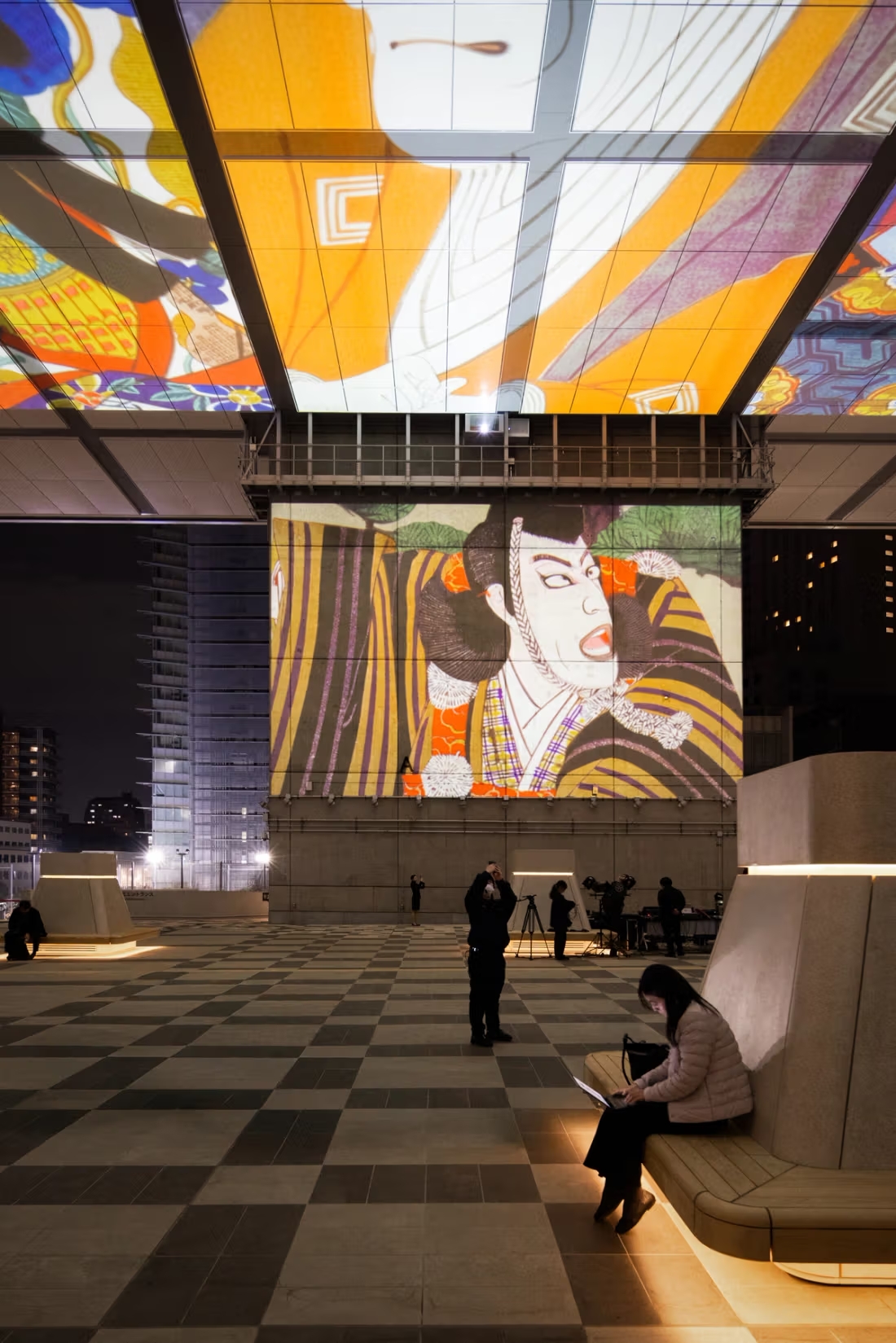
Photo: Vincent Hecht
To this end, the square was equipped with projectors hidden in special structures inspired by the shape of Japanese tsujiandon lanterns from the Edo period. They simultaneously function as street furniture and seating.
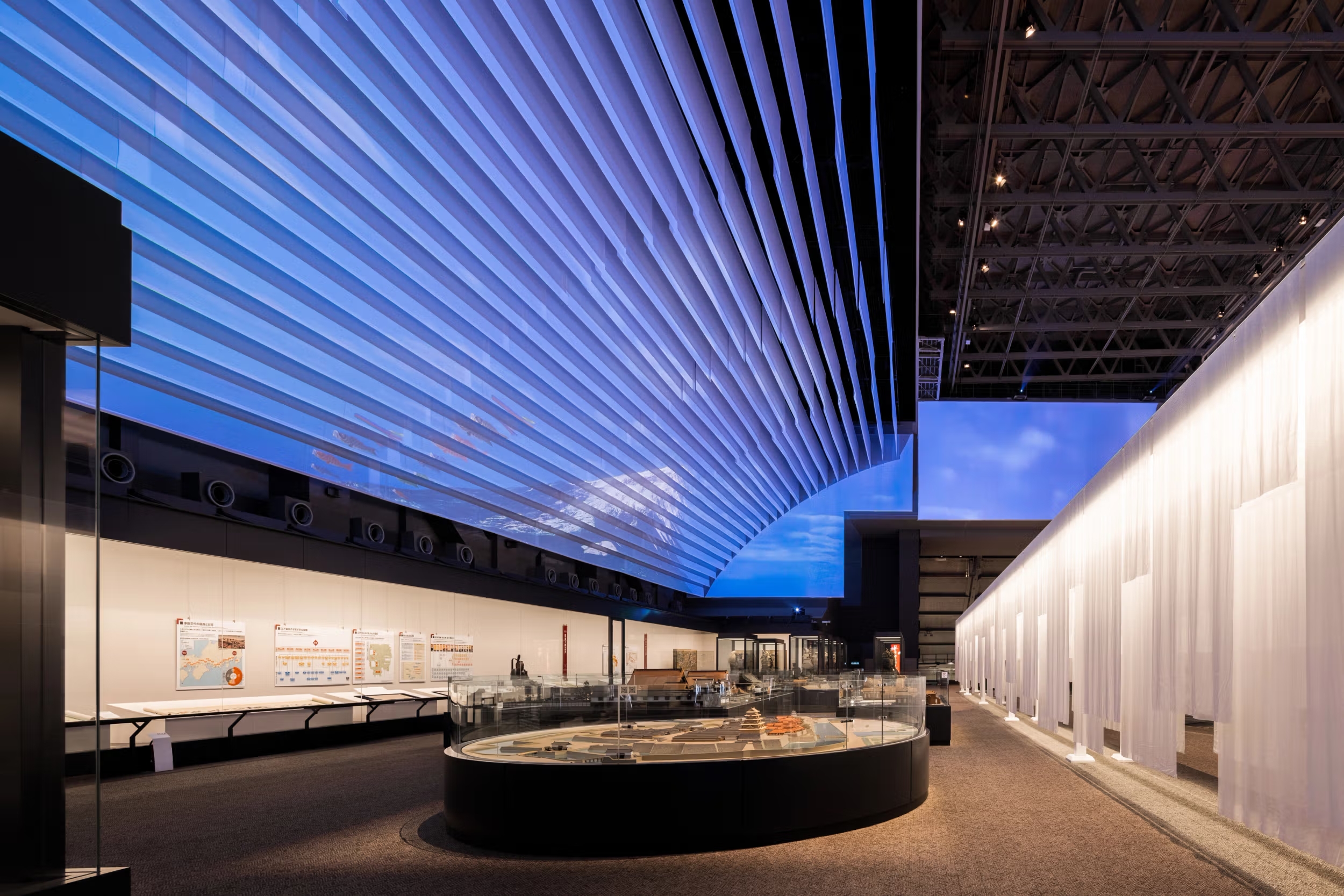
Photo: Vincent Hecht
According to Shohei Shigematsu, the OMA team deliberately chose a “non-architectural” approach: instead of physically transforming the building, the architects worked with light, projections, and space usage scenarios to emphasize the museum’s uniqueness and make it more open to the city.
Let us remind you that OMA completed the expansion The new Museum of Modern Art in New York: the new volume has doubled in size.
See also:
In Portugal, an unfinished shopping mall was transformed into a green campus and office hub
Prix Versailles named the most beautiful museums in the world in 2026
Kengo Kuma created the entrance to a Gothic cathedral in France