
The complex will combine religious space, a library, public functions, and a garden, becoming a platform for interfaith dialogue and reflection on the role of science and ethics in the modern city. About this write Designboom.
Commissioned by the Archdiocese of Milan, the project was unveiled at the historic Chiaravalle Abbey. The architects describe the monastery as a “new public infrastructure” that combines the traditions of monastic life with the culture of research and innovation that today defines the MIND district.
Visualization: Stefano Boeri Architetti
The complex will occupy a plot of 2,7 thousand sq. m, another 1,1 thousand sq. m will be allocated for open public spaces. By 2030, MIND plans to accommodate about 70 thousand people - residents, students, researchers and employees of scientific institutions.
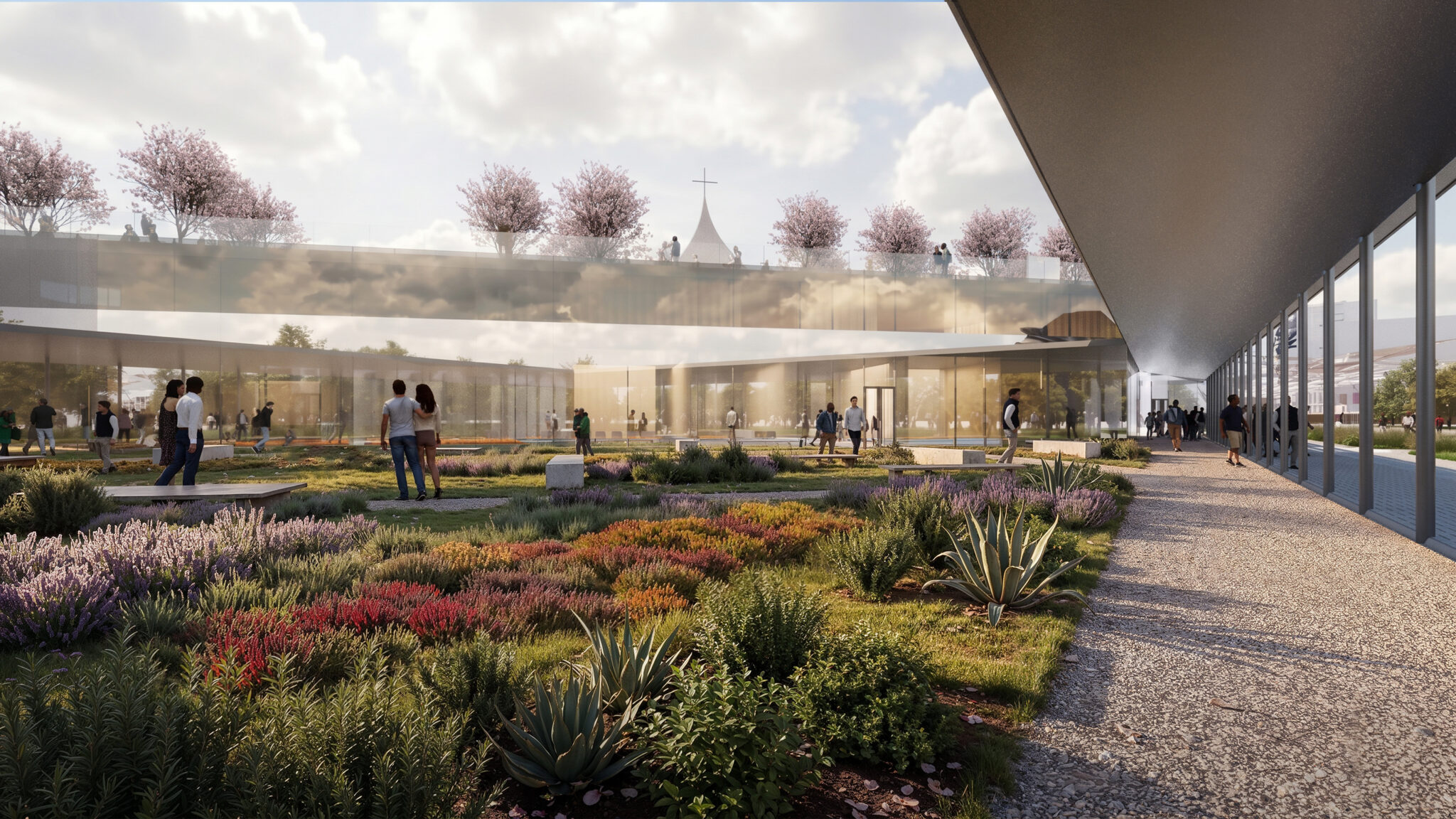
The centerpiece of the project will be a triangular cloister, a modern interpretation of the traditional monastery courtyard. It will be opened to urban traffic and public use. The space will be surrounded by a colonnade, integrated into the main pedestrian routes of the area.
Visualization: Stefano Boeri Architetti
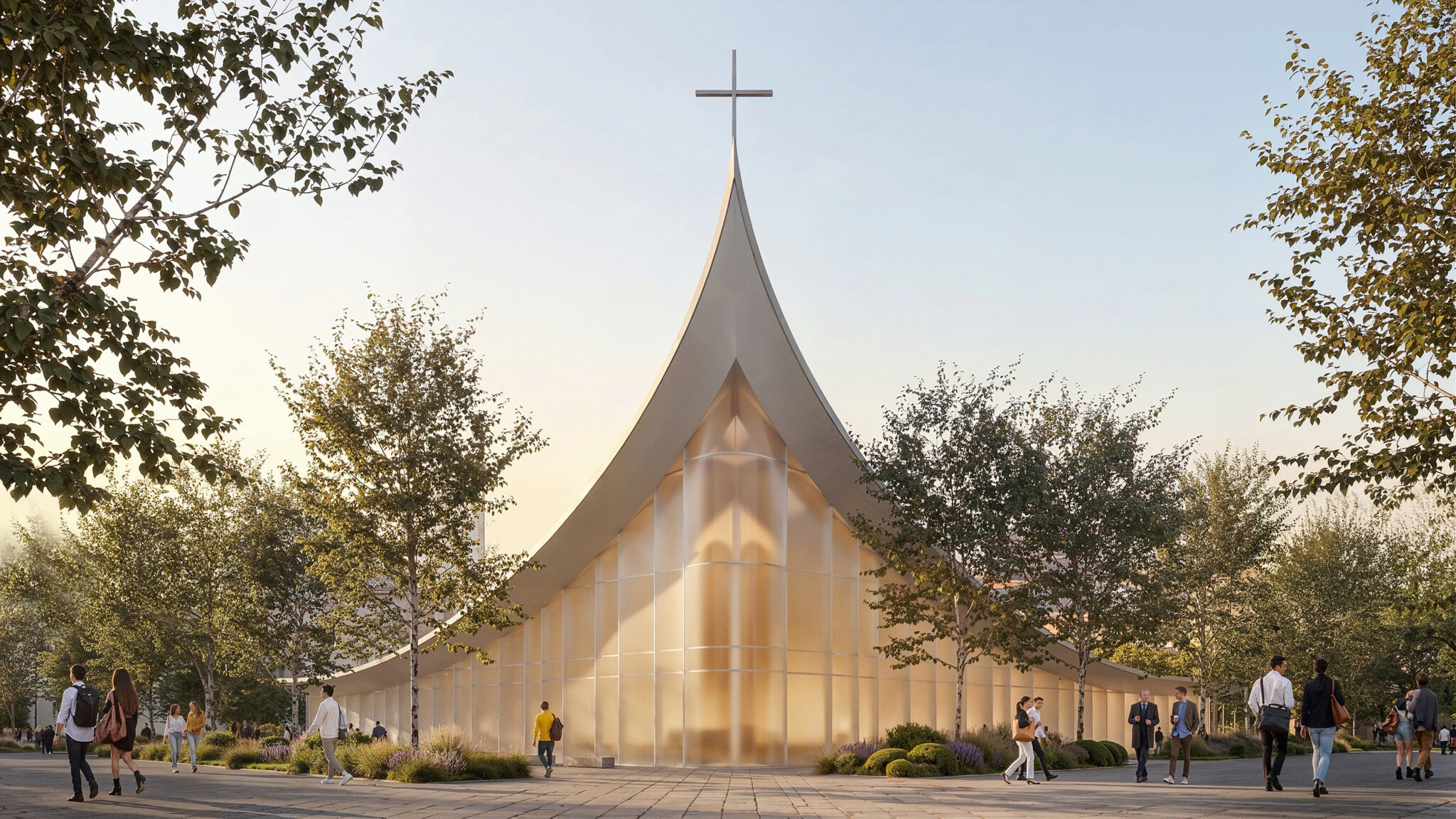
Above the cloister, a triangular church will rise, designed for 300–350 visitors. Its roof with a rising geometry refers to the verticality of the Milan Cathedral. The architects compare the silhouette of the building to a sail that envelops the entire complex.
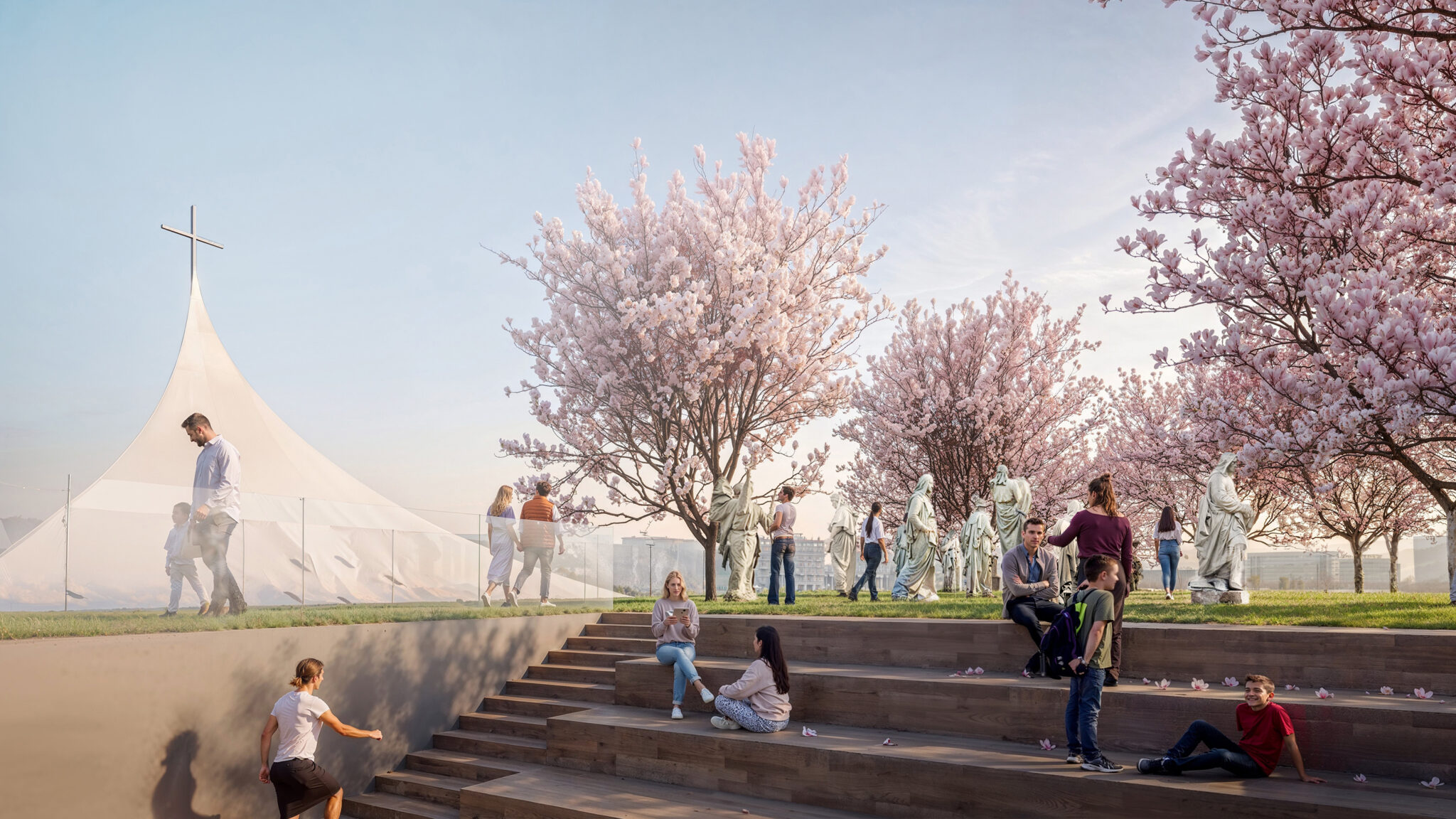
A separate role in the project will be played by the Library of Religions, a transparent pavilion for learning, discussion, and interdisciplinary exchange between theology and science. The space includes reading rooms, multifunctional spaces, and an outdoor amphitheater.
The landscape concept envisages the creation of a “Garden of Religions”, where plants symbolically linked to the monotheistic traditions represented in Milan will be planted. The garden is planned to be maintained in collaboration with religious communities and residents of the city.
Visualization: Stefano Boeri Architetti
Another element will be a sculpture garden on the library's roof. It will house statues from the archival collections of the Veneranda Fabbrica del Duomo, the organization that looks after Milan Cathedral. The sculptures, previously kept in closed collections, will be integrated into an open public space among cherry trees.
According to the Archbishop of Milan, Mario Delpini, the MIND district should become a place where “knowledge, research, talent, business, entertainment, nature and life” come together, and spaces for reflection and spiritual experience remain necessary even in a high-tech environment.
See also:
Herzog & de Meuron's Tour Triangle skyscraper reaches its maximum height in Paris
Ukrainian designer Viktoriya Yakusha seeks softness through memory and material recovery