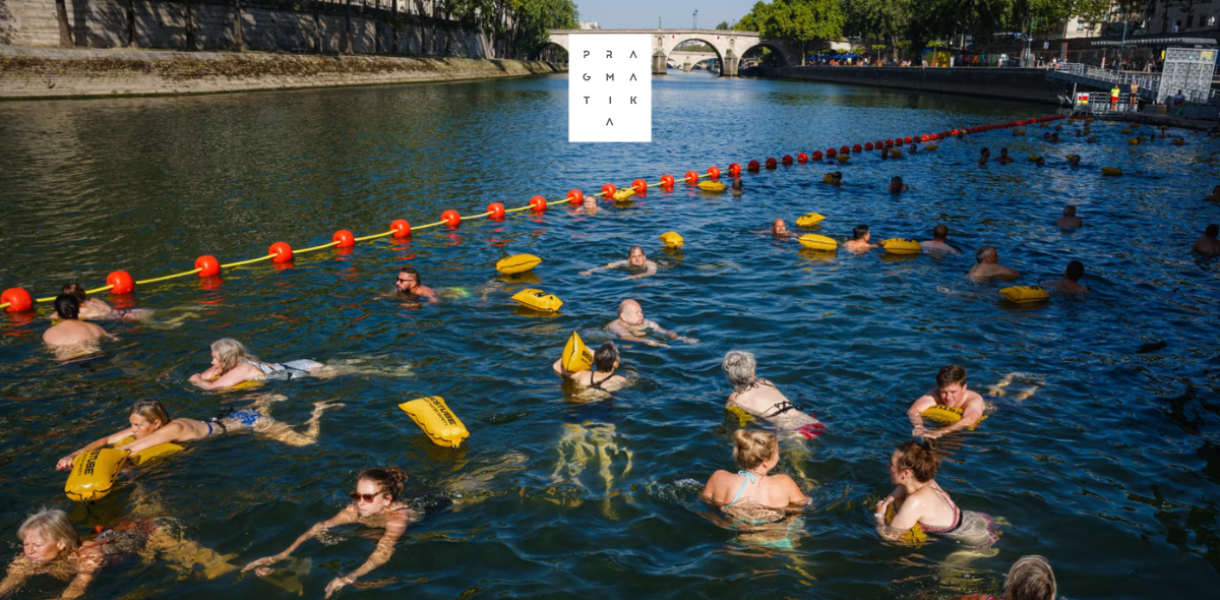
The opening of the bathing season coincided with a new heat wave. At the end of June, temperatures in Paris exceeded 40 °C, the highest in the history of meteorological observations. Against this background, the opportunity to cool off in the Seine has become not only a tourist attraction, but also an important part of the city's infrastructure, write CNN.
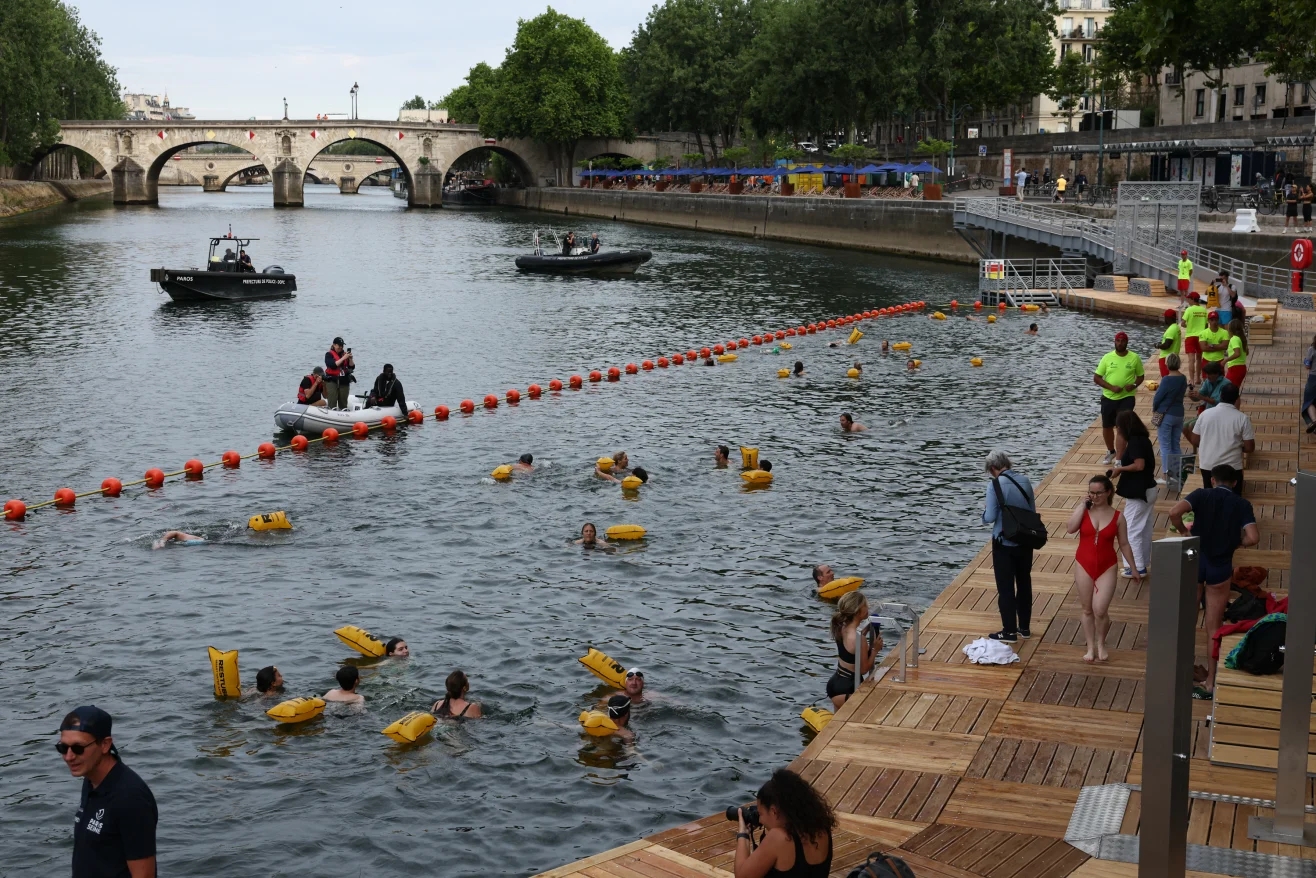
The Seine officially reopened to public swimming in 2025 after more than a century of closure. This summer, with record heat, it is expected that even more people will want to swim. Photo: Tom Nicholson / Getty Images
Although swimming in the Seine may seem like a new tradition to many, it actually has a centuries-old history. As early as the 17th century, Parisians swam directly from the riverbank, and in the 18th century, floating baths began operating on the Seine. In the 19th century, they became popular public spaces with restaurants, cafes, and swimming schools. It was here that some competitions of the 1900 Olympic Games were held.
However, at the beginning of the 20th century, due to numerous accidents and active shipping, the French authorities completely banned swimming in the river. The tradition finally disappeared due to the rapid deterioration of water quality. By the 1970s, more than half of Paris's sewage was discharged into the Seine without treatment, and the river had effectively become biologically dead - only three species of fish remained in it.
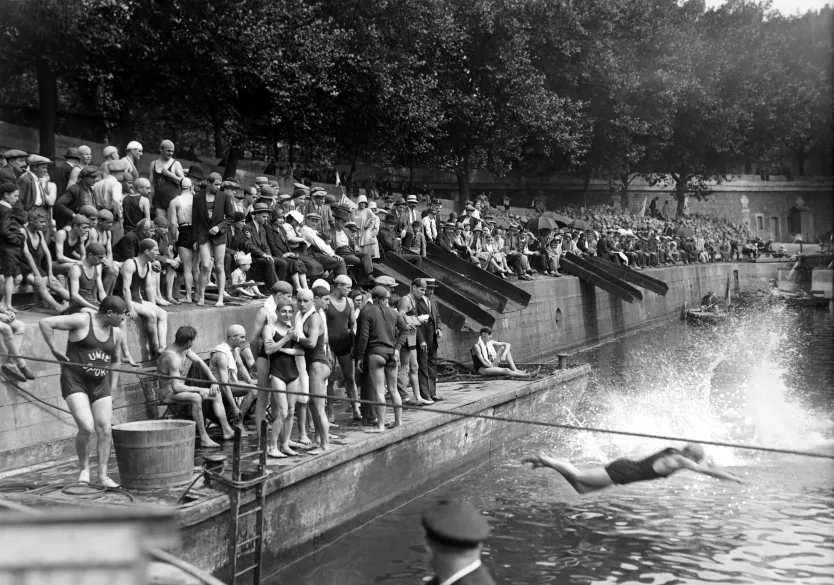
As this 1929 photo shows, Parisians enjoyed bathing in the Seine even before the river became heavily polluted. Photo: Gamma-Keystone / Getty Images
The situation only began to change in the 1980s. In 1988, then-mayor of Paris Jacques Chirac promised to publicly bathe in the Seine to prove its cleanliness, but he never kept his promise. It was only after Paris was awarded the right to host the 2024 Olympics that the city embarked on a massive project to clean up the river, costing over €1 billion.
A key element of the project was a giant underground reservoir near the Gare d’Austerlitz, capable of holding up to 50 cubic metres of rainwater and sewage. During heavy rainfall, it prevents untreated sewage from flowing into the river, after which the water is gradually directed to treatment plants. According to the city authorities, the number of emergency sewage discharges into the Seine has been reduced from around 15 to two per year.
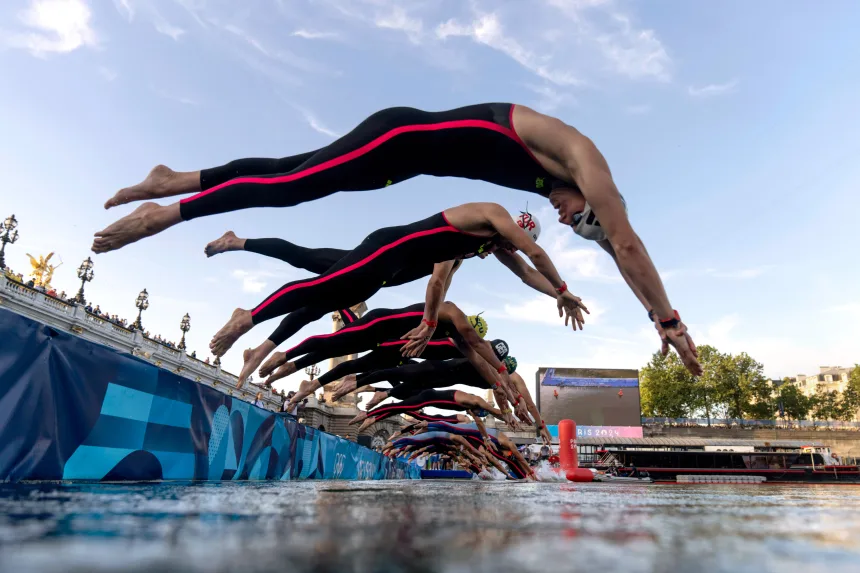
A large-scale project to clean up the Seine was implemented ahead of the 2024 Olympic Games in Paris, during which the river was used to host swimming competitions. Photo: David Goldman / Getty Images
It was thanks to this modernization that the Seine was able to host the Olympic triathlon and marathon swimming competitions in 2024. And in the summer of 2025, the river was officially opened to everyone for the first time in over a hundred years. During the first season, it was visited by about 100 thousand people.
This year, Paris has three swimming areas. Bras Marie, near Notre Dame Cathedral, offers a panoramic view of the historic city center. Grenelle is located near the Eiffel Tower and overlooks the Parisian replica of the Statue of Liberty. The largest site, Bercy, has two pools, one of which is 67 meters long.
The safety of visitors is monitored using a system of colored flags. The water is tested daily for bacteria, including E. coli (E. coli). If water quality deteriorates after heavy rains, swimming is temporarily prohibited until the indicators normalize.
At the end of July, the Grenelle area will also host the European Open Water Swimming and High Diving Championships.
Previously, we told you how Paris abandons cars in favor of bicycles.
Main photo – Dimitar Dilkoff / AFP / Getty Images
See also: