
Streets are for walking
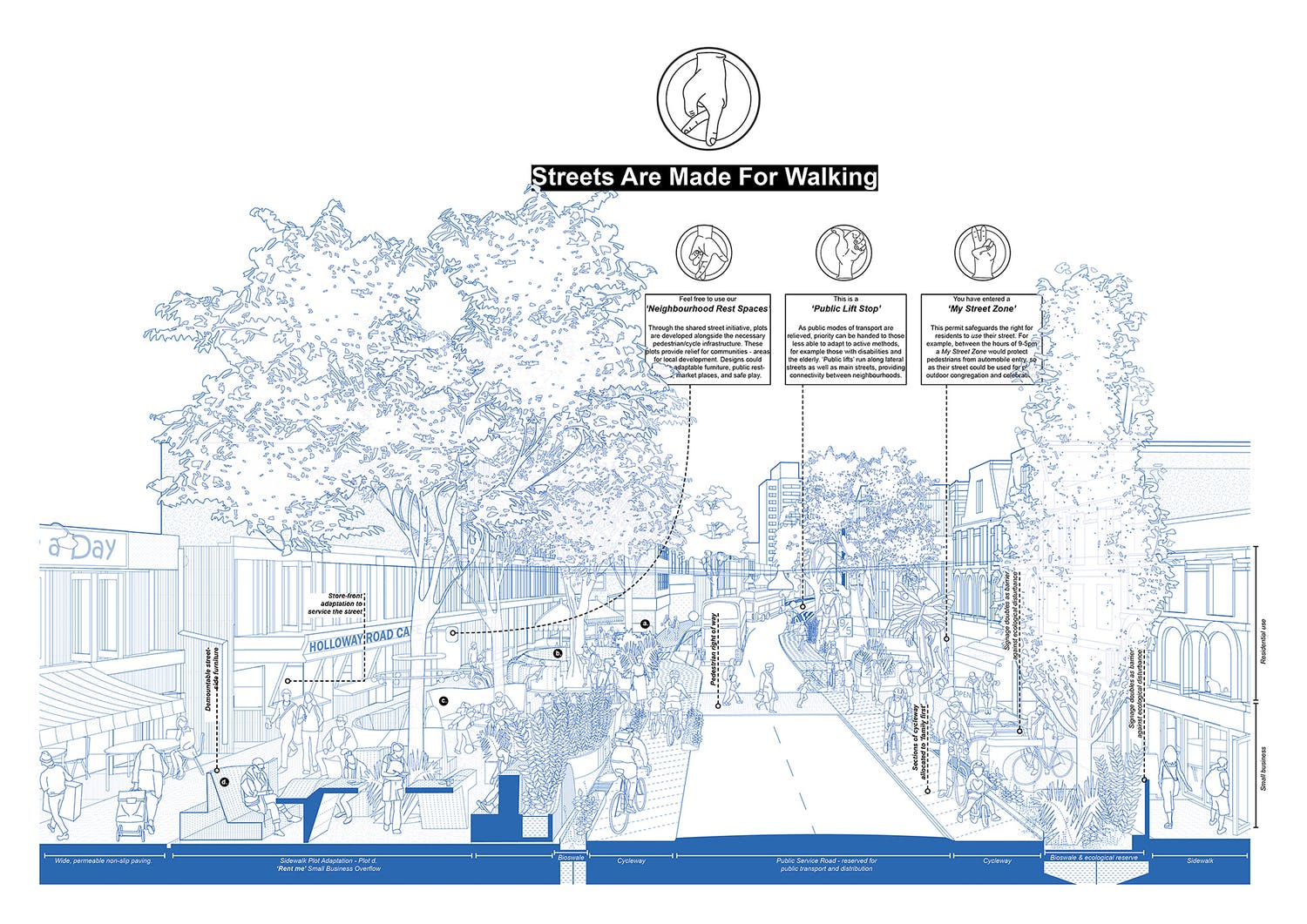
The PeopleMatter team. presented the project of turning the city highway into a green corridor for pedestrians and cyclists. The project is based on the example of Holloway Road - one of the busiest streets in north London, but can be universally used in any of the cities that suffer from car traffic. The developers propose to gradually reduce the number of lanes for vehicles, leaving only two for city buses.
Read more about the project here.
City-village
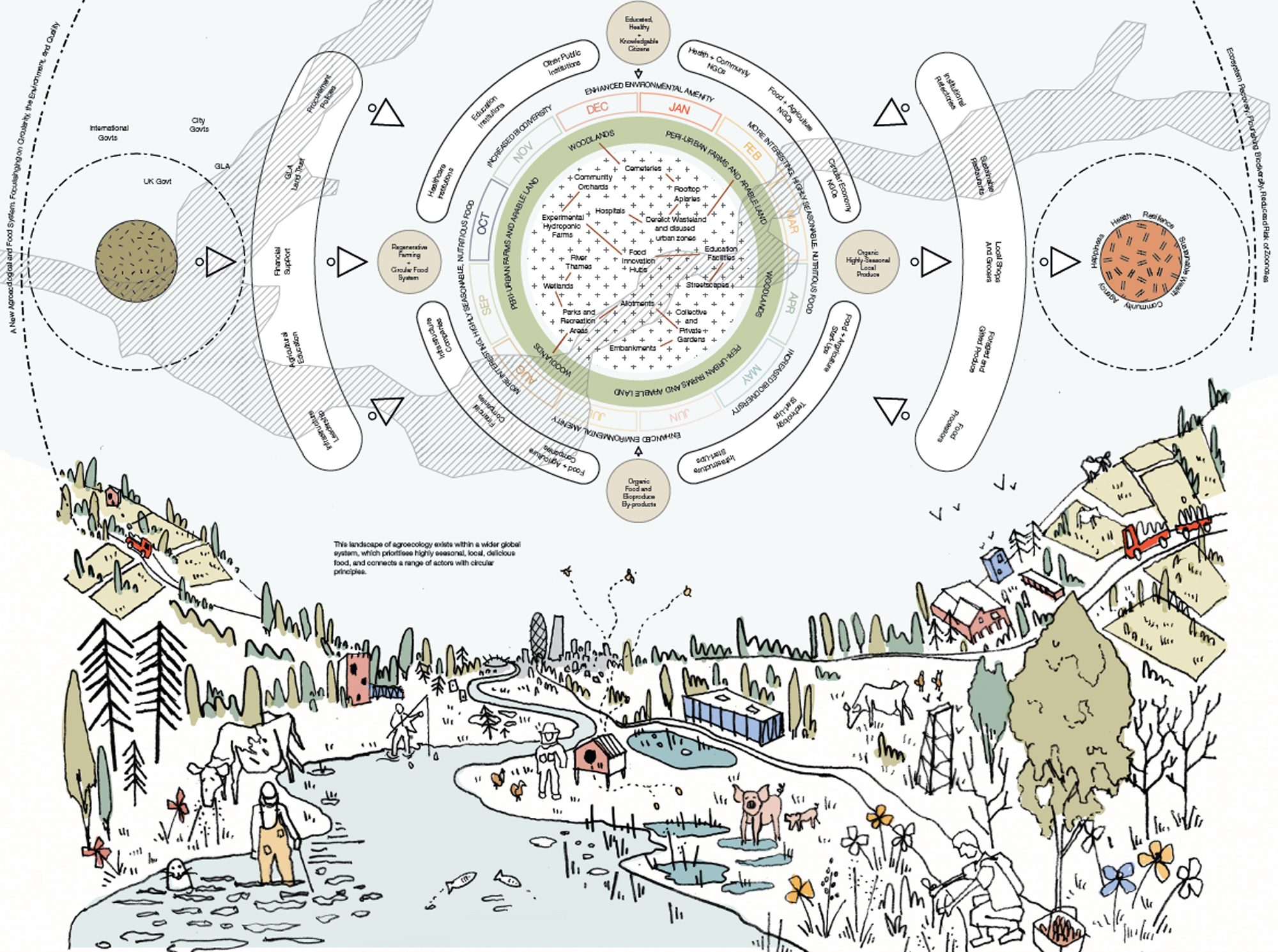
Urbanists Tim Rodber and Dominic Walker suggest reducing the volume of industrial agriculture as much as possible, which harms the planet's ecology. But at the same time, they are turning cities (in particular, Greater London) into a system of urban agricultural farms, placing them literally on any vacant area, both horizontal (rooftops, terraces) and vertical (balconies of office and residential towers). These agricultural farms, which should fully satisfy the needs of citizens for fresh products, are planned to be connected to each other by green biocorridors for pollinating insects - a continuous chain of squares and parks.
Details of the project can be found here and developer site
Offices - housing for the homeless
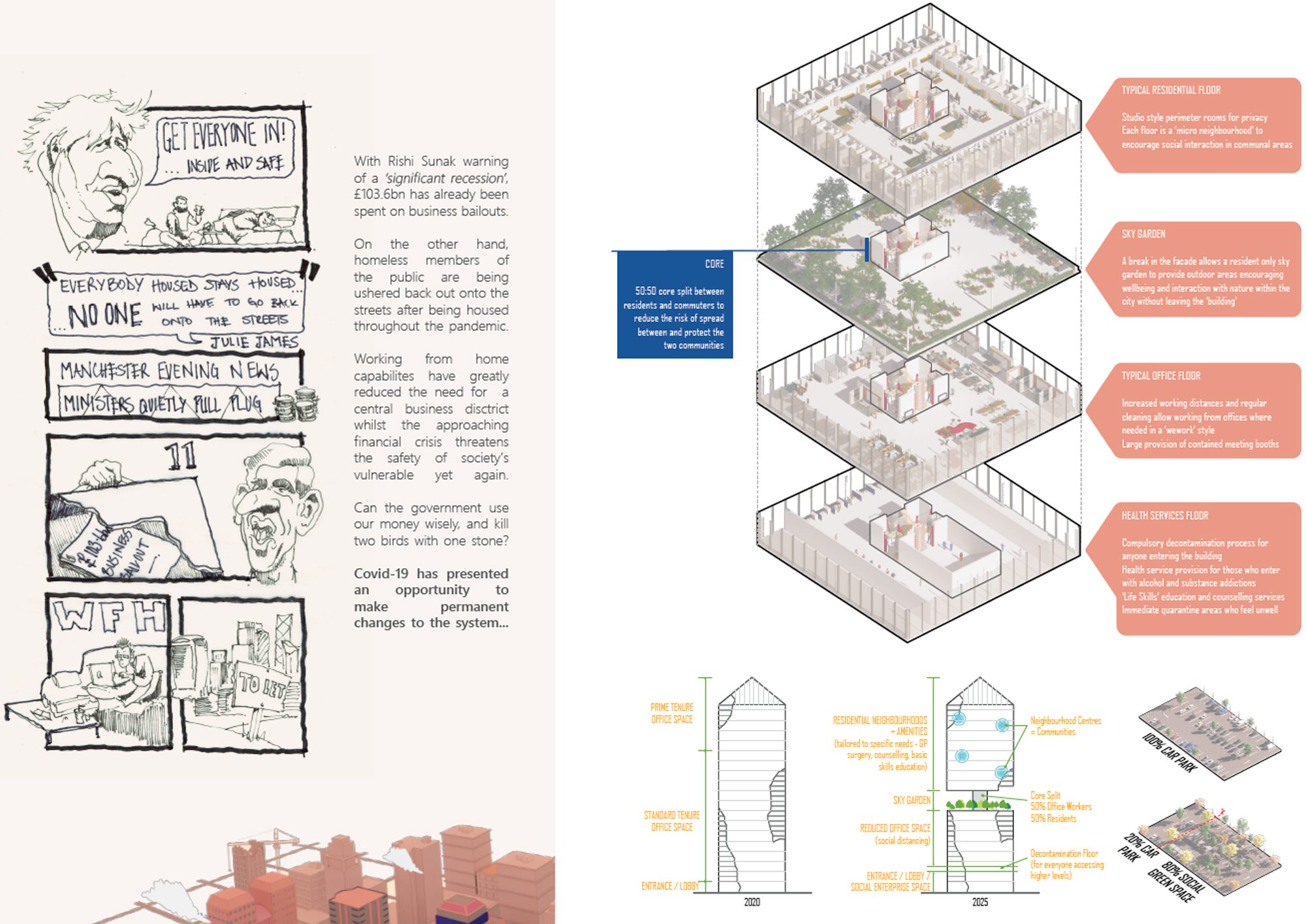
Liverpool students Benjamin Holland, Olivia Dolan and Cathy Williams developed a project to transform an office tower into social housing and hostels with gardens and gardens on the upper floors. It is possible to place communal medical facilities on the lowest levels. "The pandemic has shown us that many people can work from home, and this is a great opportunity to solve the housing crisis," the developers believe.
Read more about the project here.