
About this write Independent.
The excavations are being carried out up to four meters below the square in front of the cathedral. They are part of a project to reconstruct the public space after the massive fire in 2019 that severely damaged Notre Dame. After the restoration of the cathedral opened to visitors at the end of 2024, and now the city government plans to transform the square in front of it into a landscaped public space with trees and shaded areas.
Because of Paris's multi-layered history, any work in the city's historic center requires prior archaeological research. Part of the square in front of the cathedral has been turned into an open excavation site, which the French media has already called "the excavation of the century."
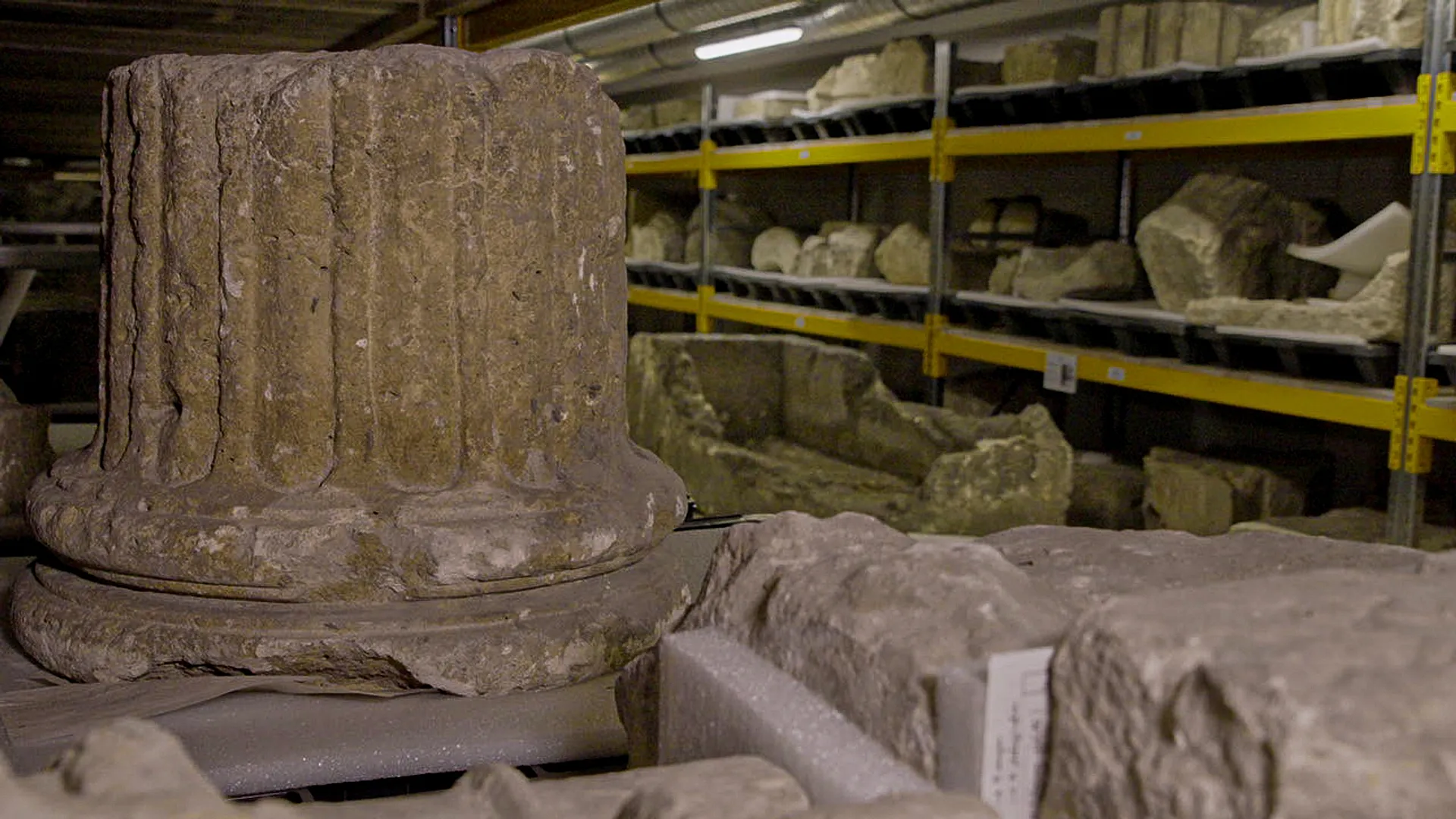
Photo: Nicolas Garriga
According to archaeologists, the first historical layers begin at a depth of about 50 centimeters. On some days, researchers find up to 15 boxes of artifacts. Among the most valuable finds is a 4th-century coin depicting the Roman emperor Constantine the Great, as well as numerous fragments of medieval ceramics.
Of particular interest were fragments of pottery with reddish inscriptions or symbols on the inner surface. Their meaning remains unknown. Archaeologists call these finds among the most mysterious of all those discovered during the excavations.
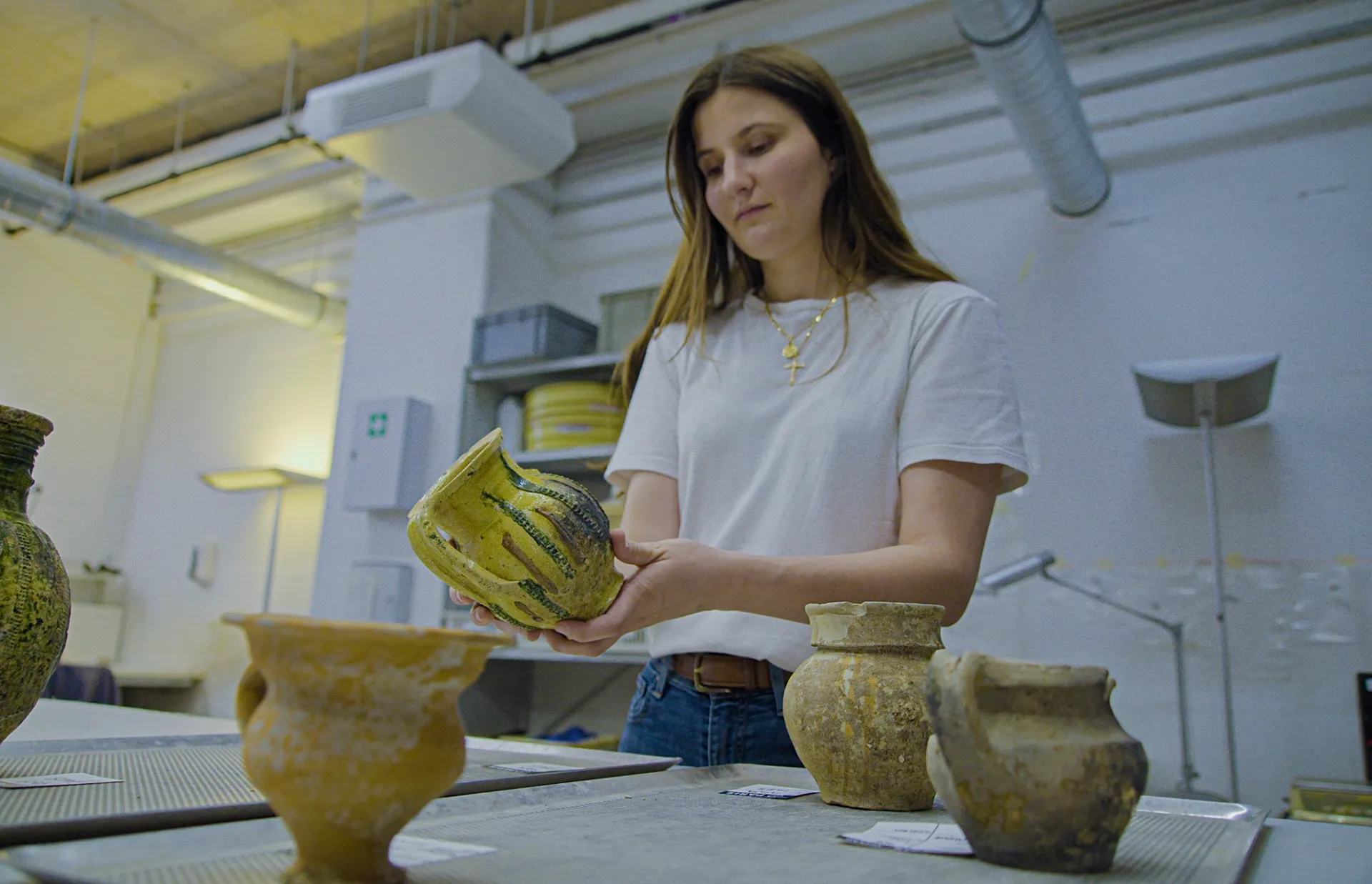
Photo: Nicolas Garriga
The researchers were able to trace the sequence of historical layers beneath the square. Immediately beneath the modern surface are the remains of medieval houses, including their basements. Below are grain pits from the Merovingian and Carolingian periods of the 6th–10th centuries. Even deeper, a Roman quarter of the 4th–5th centuries is revealed, which existed at a time when Paris was known as Lutetia.
Archaeologists have also found examples of the reuse of building materials in the late Roman period. In particular, one of the stone thresholds of a large Roman structure was turned over and used as a road surface.
Some of the best-preserved artifacts come from medieval cesspools and garbage dumps. Thanks to the mild organic environment, jugs, bowls, plates, and other household items have been preserved intact.
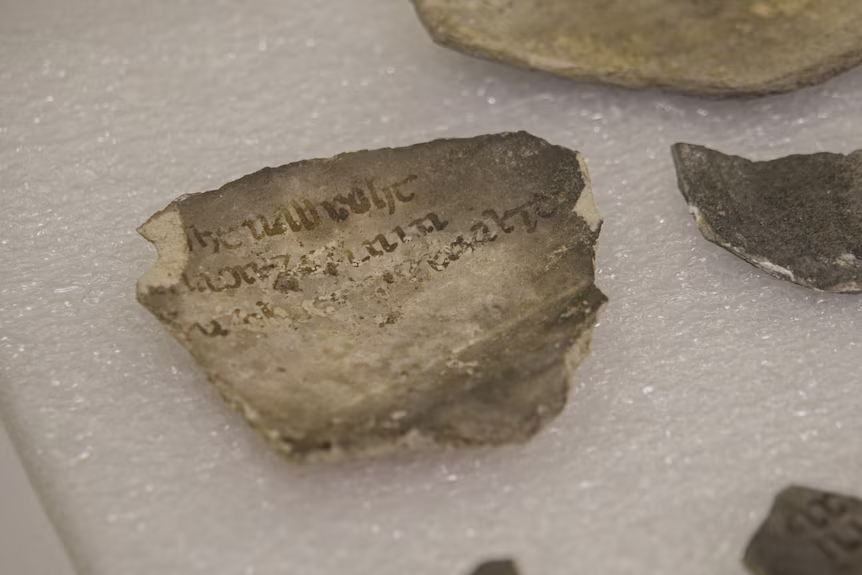
Photo: Nicolas Garriga
All found artifacts are transferred to the municipal archaeological center of Paris for further study and conservation.
The reconstruction of the square in front of Notre Dame is planned to be completed by 2028. The project involves planting about 160 trees, installing cooling areas, and creating a more comfortable public space in an increasingly hot climate.
At the same time, archaeologists hope to be able to delve even deeper than the Roman layers to find traces of the Gauls, the oldest known inhabitants of the territory of modern Paris.
See also:
In Britain, a truck driver found a unique Roman ring that is over 1,700 years old
In Warsaw, a parking lot will be transformed into a green zone