
How, why and from what
The problem of choosing the "right" site for the construction of structures or cities and achieving the strength of buildings is not a new one, it also worried people in ancient times. Of course, they did not have the modern variety of materials for construction, and they did not have access to research of the modern level of accuracy, so most methods were chosen by trial and error. But certain system developments existed even then.
In the work "10 books on architecture", the ancient Roman architect Vitruvius wrote: "When building a city <...> first of all, you need to choose the healthiest area. It should be elevated, not foggy, not frosty, and facing not the hot and cold, but the temperate parts of the world, in addition, it is necessary to avoid the neighborhood of swamps. The author in the first century AD pays attention to many details: from the consideration of seasonal winds in the planning of streets to the quality of clay for the production of bricks. In a sense, modern architecture and construction still do the same thing, only on a deeper level.
As for materials, the secret to the strength of, say, ancient Chinese temple architecture lay in the addition of glutinous boiled rice to the solution. Charles Bridge in Prague was built using eggs in the construction mixture, this fact was confirmed in the research of scientists of the Czech University of Chemical Technology (VŠCHT). An important component used in ancient times to ensure the stability of building materials was lime. The Maya and other peoples of pre-Columbian America mixed it with a number of organic ingredients: plant juice, fats, even beer or cattle blood. Scientists have found compounds characteristic of the local flora in samples of Mayan plaster and stucco from the Copan hillfort, located on the territory of modern Honduras. It is not known whether these experiments were deliberate, but in reality they provided added strength and plasticity to the "concrete" of the time, which had indicators close to those of ancient Rome.

Architecture of the Mayan settlement of Kopan. Photo source: www.britannica.com
We know the Romans themselves as the inventors of the concrete recipe, which is currently lost. Antique concrete decays very slowly over the years, even sea water does not spoil it, but on the contrary, adds quality. Research by scientists from the Berkeley Laboratory and the University of Utah indicates that the likely cause of the strength of the material is the reaction of lime with minerals — tobermorite and phillipsite, which were contained in volcanic ash. The minerals themselves are rare, but the Romans had plenty of ash, and they used what was literally lying under their feet. In those days, effective scripts were invented: yes, an artificial analogue of tobermorite is also used in the modern production of aerated concrete.
Portland cement, invented in 1824 by Joseph Aspin, has been extremely widely used in modern construction. However, this does not mean that humanity has ceased to be interested in new or revived recipes and solutions. On the contrary, it seems very intriguing. The latest cement has a significant drawback: the release of a significant amount of greenhouse gases into the environment. Manufacturing now accounts for at least 8% of all global carbon emissions (for comparison, according to the International Energy Agency's 2020 report, aviation accounts for about 2,8% of total global emissions, which is almost three times less). According to data released by Stanford climatologist Rob Jackson, who also heads the Global Carbon Project, emissions from the world's cement industry are growing faster than most other sources of carbon.

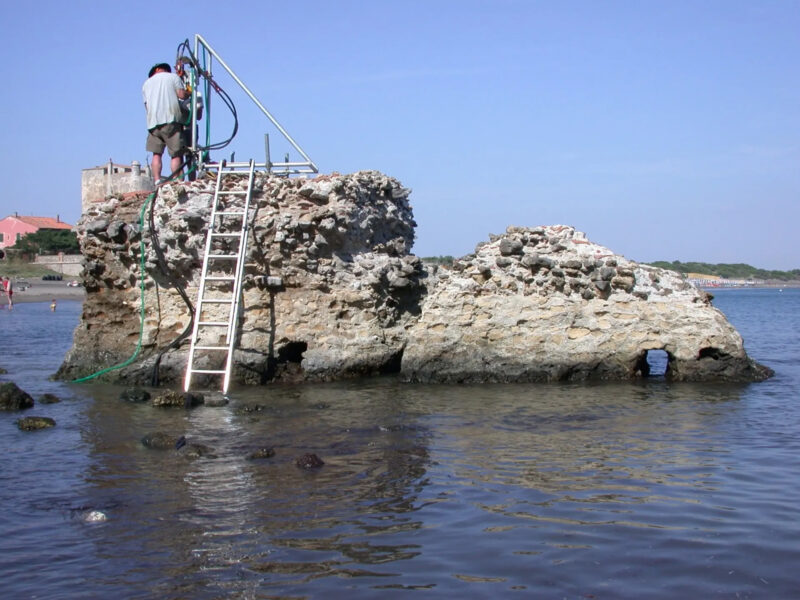
The ancient Roman pier of Portus Cosanus in Orbetello, Italy. Samples prove the long-term strength of antique concrete. Photo source: newatlas.com, © JP Oleson
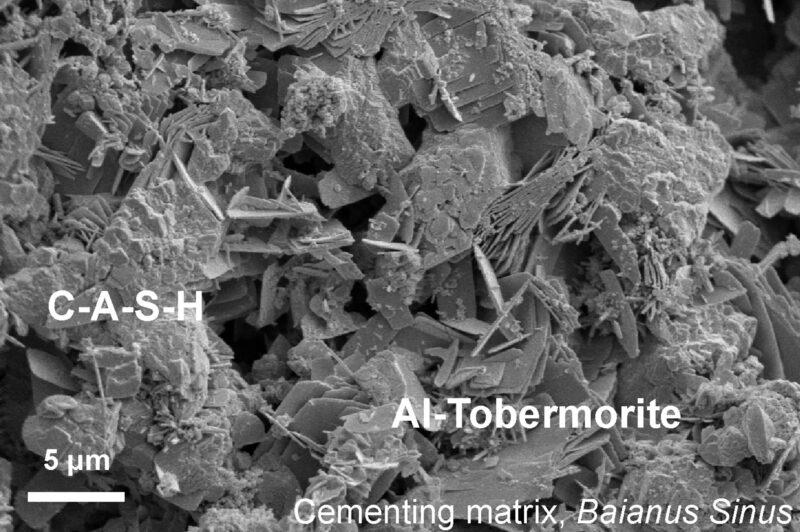
A mixture of volcanic ash, lime, and seawater. Microscopic image showing the growth of altobermorite crystals. Photo source: newatlas.com
Returning to their native lands, Ukrainians also had many rules and requirements for the construction of traditional housing. When planning the construction, they looked closely at the place. Yes, it was not possible to build on paths, places where barns or stables used to be located, snags, swamps, and where rainwater accumulated or a house burned down due to lightning. It was customary to build a new house in the spring and summer, and before starting construction, rye was often sown on the chosen site. If it grew well, the site was considered good. Some of these rules are related to ancient beliefs and superstitions, but most are very practical. For example, the requirements for the season are correlated with the ability to control weather conditions and the quality of the construction process, drying of materials. A remarkable assessment of the condition of the site from the point of view of possible flooding, soil stability, and their biological contamination.

Photo: Dave Goudreau/Unsplash
A test that Turkey did not survive
Ukraine in the war. Settlements, housing, industrial facilities, land, green zones are subjected to enemy attacks. Many peaceful cities have turned into battlefields and are destroyed during the fighting, large areas are contaminated with ammunition. This is a traumatic experience for everyone, because we want to consider our world - a city, a native street, a home - as a strong place that cannot be damaged.
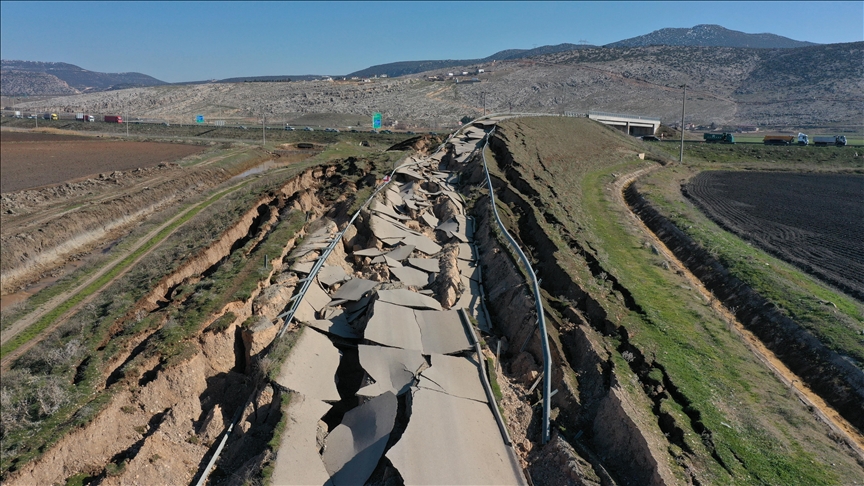
A road in the Turkish province of Karamanmarash, destroyed by an earthquake. Photo source: www.aa.com.tr (Anadolu Ajansı, AA)
However, there are other, no less, and perhaps more inexorable rivals for human habitation. At least they cannot be defeated with weapons. These are the forces of the elements, manifestations of climate change and time, which make the probability of certain events practically guaranteed. Each city is located on a territory that has its own context: features determined by geology and seismicity, relief, factors of natural and man-made origin. These are the "raw data" of the area in which we live and build. The world's population continues to increase, settlements are also increasing, buildings are appearing in areas with less favorable conditions and in seismically active areas. The influence of the elements on human life, despite the development of technology, is increasing.
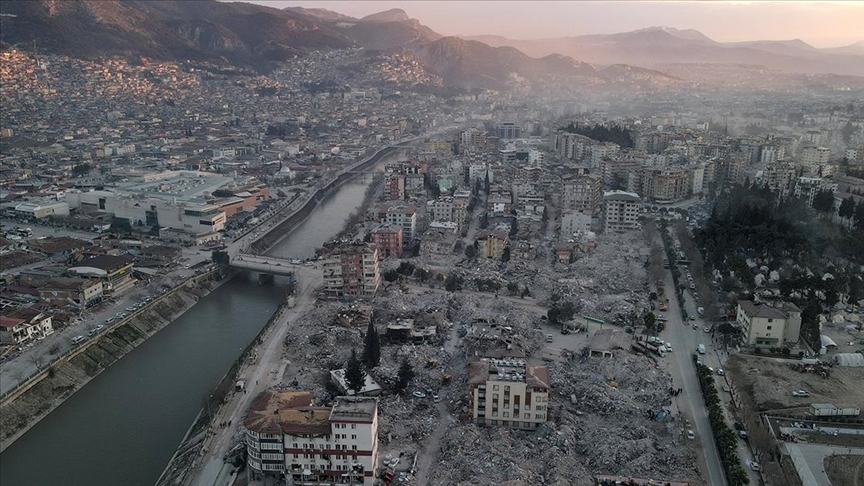
Over 123 years, more than 200 earthquakes with a magnitude of 6 points and above have occurred in Turkey and neighboring regions of other countries. Photo source: www.aa.com.tr (Anadolu Ajansı, AA)
In February 2023, a series of devastating earthquakes occurred in southeastern Turkey and parts of Syria close to the border. The power of the first shock with the epicenter near Gaziantep was 7,8 points on the Richter scale. The next day, several hundred aftershocks of significant intensity occurred, and in the following weeks, several thousand with a smaller amplitude (Reuters, based on the data of scientists, gives a figure of no less than 10 thousand). In Turkey alone, the natural disaster zone covered ten provinces.
As the world's population increases, buildings appear in areas with less favorable conditions, so the impact of the elements on human life is increasing
According to UNICEF, the total number of dead in both countries exceeded 50 people. Many experts say that the number is actually much higher and will change. Millions of people are housed in temporary housing in the affected regions or have been forced to seek accommodation in other cities. For Turkey, this earthquake became the most powerful in a century, surpassing the consequences of the tragic events in the city of Erzincan in 1939, when 33 thousand people died and about 100 thousand were injured.
Turkey is a country with pronounced seismicity, small tremors occur so often in active zones that residents do not always pay attention to them. The place of the last earthquake is located at the junction of the Anatolian, Arabian and African tectonic plates. One could say that this is a manifestation of the elements, which led to terrible consequences. The great power and number of aftershocks, the large area, the cold weather and even the time of day played their dramatic role: on the morning of February 6, when the first shock occurred, most people were sleeping peacefully in their apartments.
However, other circumstances were revealed in this story, which explain the staggering amount of destruction and deaths. Unfortunately, they primarily concern the quality of construction.
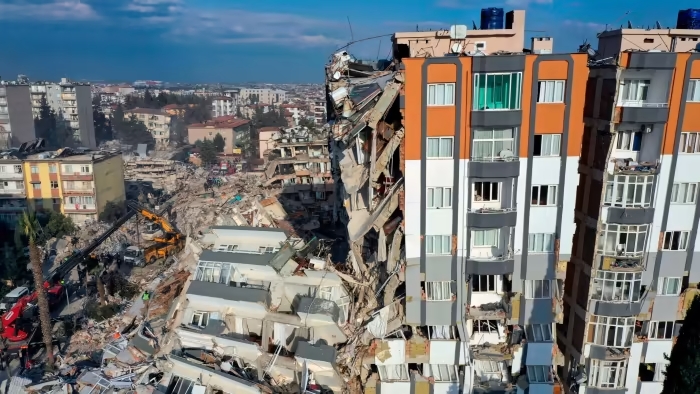
Debris of buildings in Antakya, one of the most affected cities in Turkey. Photo source: © AP
The main seismic zones in Turkey are the Aegean-Marmara, North Anatolian and Central Anatolian zones, many densely populated urban agglomerations are located within their borders, including Istanbul or Izmir, which have millions of people. Countries with a similar seismic profile and experience are expected to implement strict construction control and seismic compliance schemes. The scale of destruction after the Erzincan earthquake at the end of the 30s prompted Turkey to introduce the first strict construction rules. Another large earthquake occurred in Turkey in the city of Izmit in 1999, and there were later ones as well. They should inculcate strict adherence to safety standards in design and construction by appealing to challenges. However, reality did not confirm this.
Without delving into politics, we can only say that construction has become the flagship of economic growth in Turkey in recent decades. The authorities made many bets on this industry, due to both the economic component and the desire for their own high ratings. The centralization of management and the intensive pace of development have led to the fact that control over the granting of permits and compliance with building regulations by departments, state and municipal institutions has become less transparent. Another practice was the so-called amnesties for developers, which were started even before the term of office of the current president and continued thereafter. Amnesty laws allowed structures to be built and put into operation even if they did not meet safety requirements and regulations, with companies allowed to pay a fine and legalize the building. According to the investigation New York Times, about 75 buildings were "amnestied" only in seismically unstable areas of Turkey. Construction amnesty laws were presented as a kind of "pill" against excessive bureaucracy, but in reality it led to a disaster.
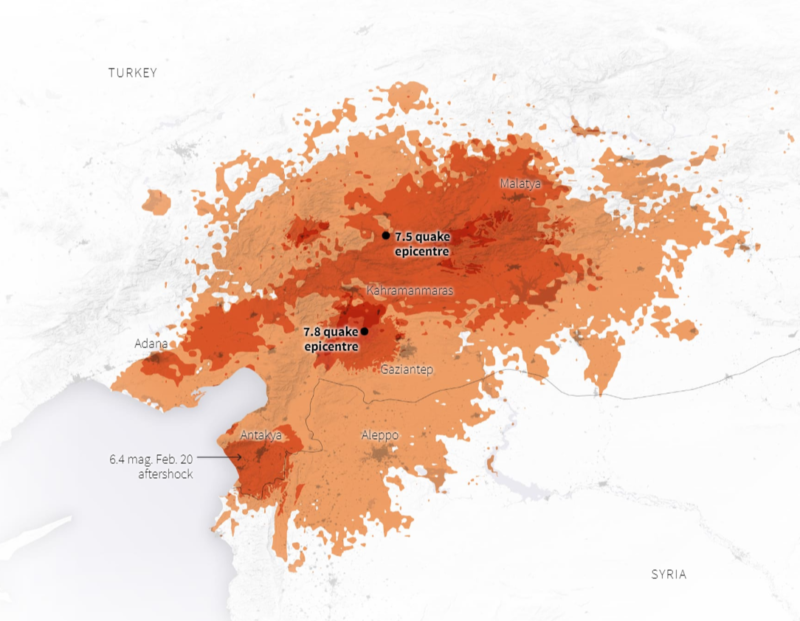
Area and intensity of February earthquakes in Turkey and Syria. Photo source: Reuters (cropped screenshot)
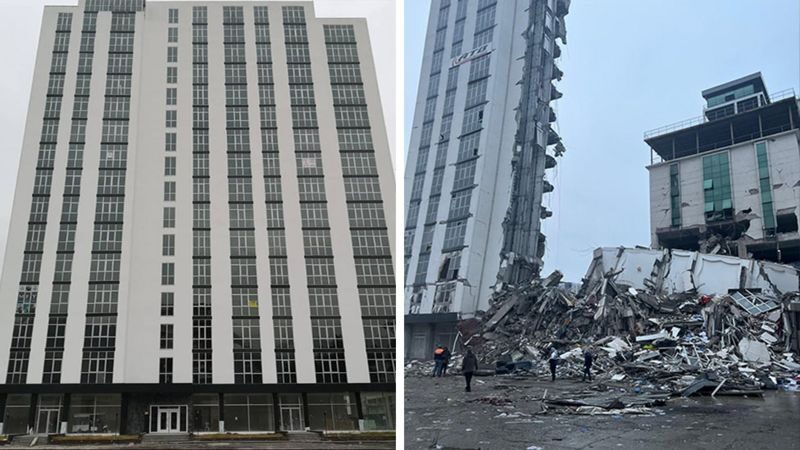
A new high-rise building in the city of Iskenderun before and after the earthquake. Photo source: www.bbc.com
Perhaps this negative experience should be analyzed in Ukraine as well, when developing strategies for post-war reconstruction and control over its implementation.
Construction amnesty laws in Turkey, which were presented as a kind of "pill" against excessive bureaucracy, in reality led to a disaster
An investigation into alleged negligence on the part of contractors and developers is currently underway in Turkey. In a global sense, this activity could not take place without participation, or on the contrary, it took place under conditions of indifference to the problem on the part of state institutions. Therefore, despite the obviousness of the crime, there is a question about the length of the chain of guilty, punished and the source of the problem.
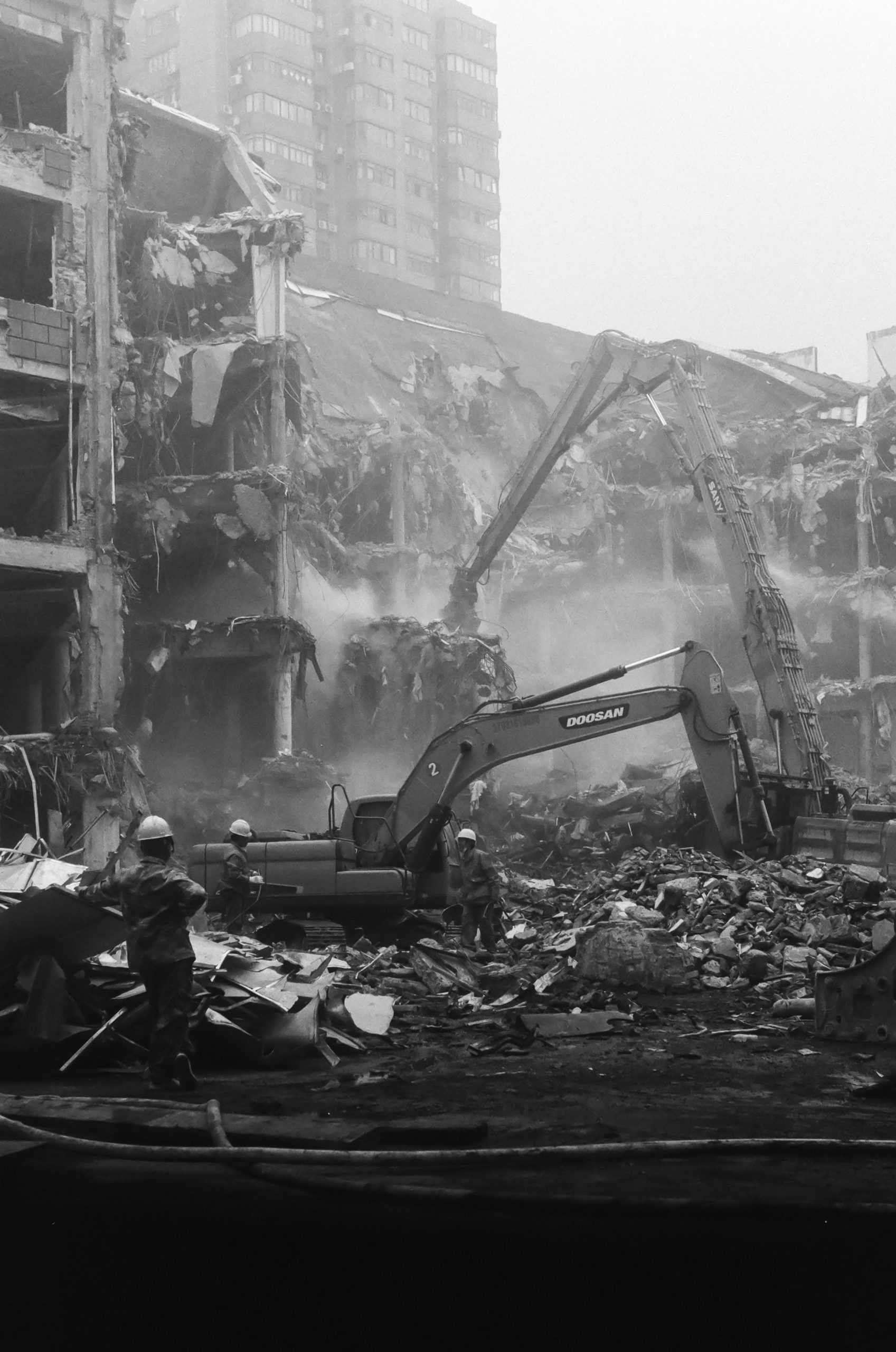
Photo: Derek Lee/Unsplash
Seismic, special territories and construction in Ukraine
In Turkey, there is currently a boom in requests for seismic expertise of buildings, and the real estate market in earthquake-prone regions is in a state of particular revival, with many looking to get rid of potentially dangerous meters. The tragedy, which was widely covered by the world media, made people in many parts of the world think about the safety of their own home and its resistance to the elements. Ukraine is currently struggling with the great challenges of war, but stressors — both natural and man-made — exist in parallel in our reality.
How critical can manifestations of seismicity or other factors of a natural and man-made nature be in Ukraine, and on what standards is our construction based? For help in clarification, we turned to the architect Oleksandr Kumeik.

Oleksandr Kumeiko, architect
PRAGMATICS.MEDIA: Would buildings in Ukrainian cities withstand seismic shocks similar to those that occurred in Turkey and Syria in winter?
Oleksandr Kumeiko: Perhaps I will surprise some of the readers, but according to seismic zoning maps, in Ukraine we have territories with seismicity of 6, 7 and even 8 and 9 points on the scale MSK-64 (The scale evaluates the intensity of shocks based on the reaction of eyewitnesses and external manifestations of destruction, using a 12-point system. Approx. ed.). For these territories, there are certain requirements for both architectural solutions and the structure of buildings. There are documented rules, quite clear and detailed. They concern both the building as a whole and certain nodes. If these standards are taken into account, it is safe to say that the buildings are ready for such seismicity, if not, in such cases, everything depends on fate. The problem lies in the fact that, in my opinion, not all buildings in our country take into account the requirements for shock resistance in full, although they do. In this context, the problem lies not in regulations or lack of information, because the necessary methodology has been developed for this.
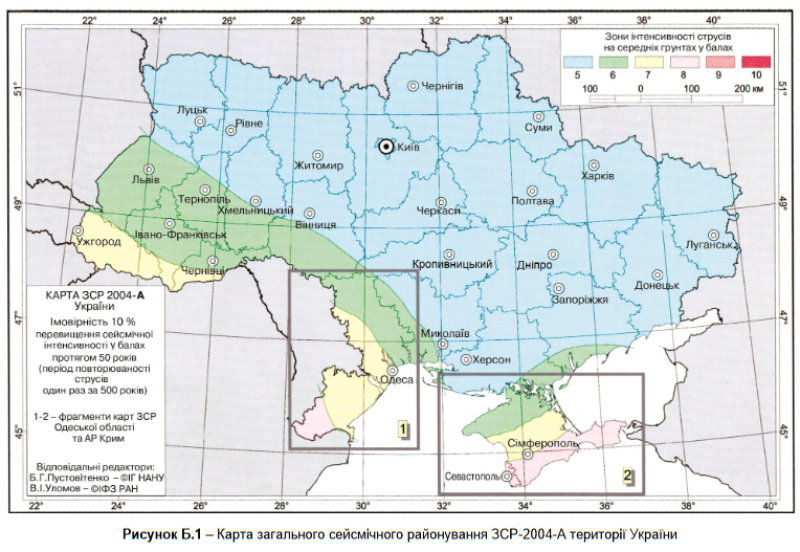
Map of general seismic zoning of Ukraine ZSR-2004-А. Image source: rbc.ua
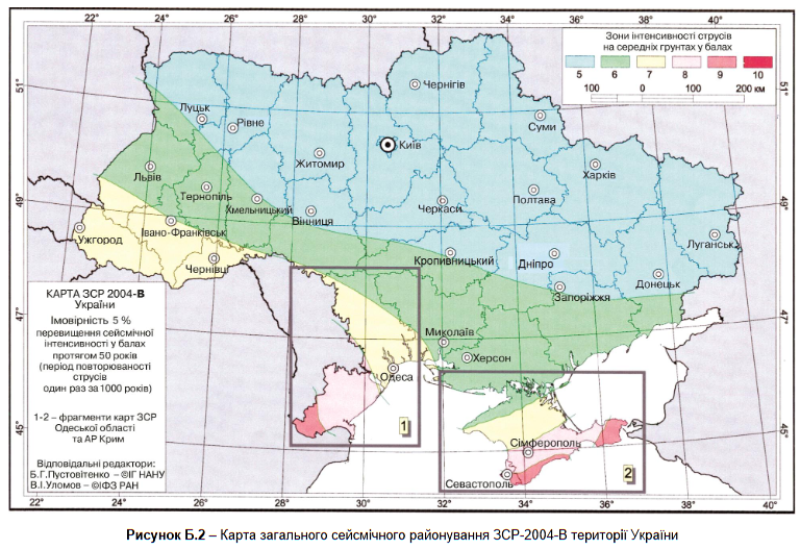
Map of general seismic zoning of Ukraine ZSR-2004-B. Image source: rbc.ua
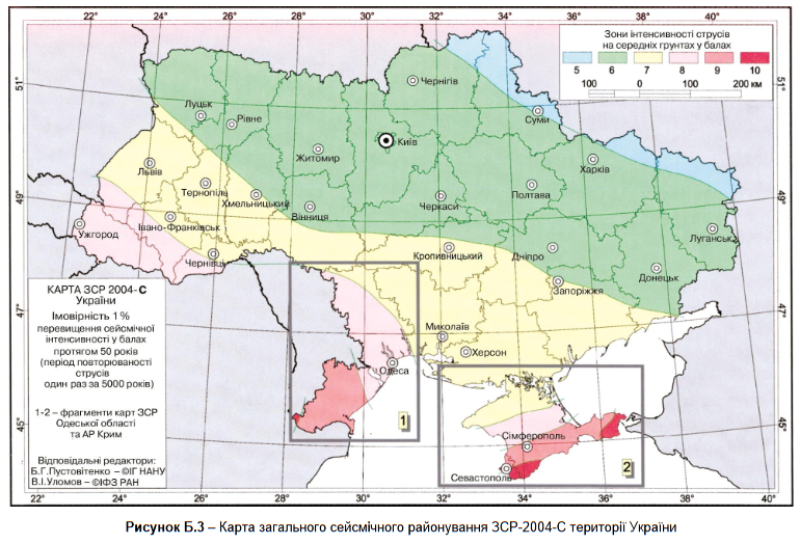
Map of general seismic zoning of Ukraine ZSR-2004-S. Image source: rbc.ua
Set of seismic zoning maps ZSR-2004-A0 with variants A, B and C was developed by the Institute of Geophysics of the National Academy of Sciences of Ukraine and the Crimean Expert Council on Seismic Hazard Assessment and Earthquake Forecasting. On these maps, the zones of predicted magnitude of earthquakes are marked, which with a probability of 90%, 95% and 99% (for maps A, B and C, respectively) will not be exceeded in the next 50 years. These maps give an understanding that the periods with which shocks of the magnitude indicated on the maps or higher can occur for Ukraine are quite significant, this is once every 500, 1000 and 5000 years, respectively.
Oleksandr Kumeiko: "The problem of seismic resistance of buildings in Ukraine does not lie in regulations or lack of information, the necessary methodology for this has been developed"
There are no major faults on the territory of Ukraine, although our country is located in the north of the same seismically active belt, the processes in which caused the Turkish-Syrian earthquake. Most of the territory is located in the 5-7 point intensity area according to MSK-64, which does not predict severe destruction. An active "player" of Ukrainian seismicity is the Vrancha zone at the junction of the Southern and Eastern Carpathians (the territory of Romania).
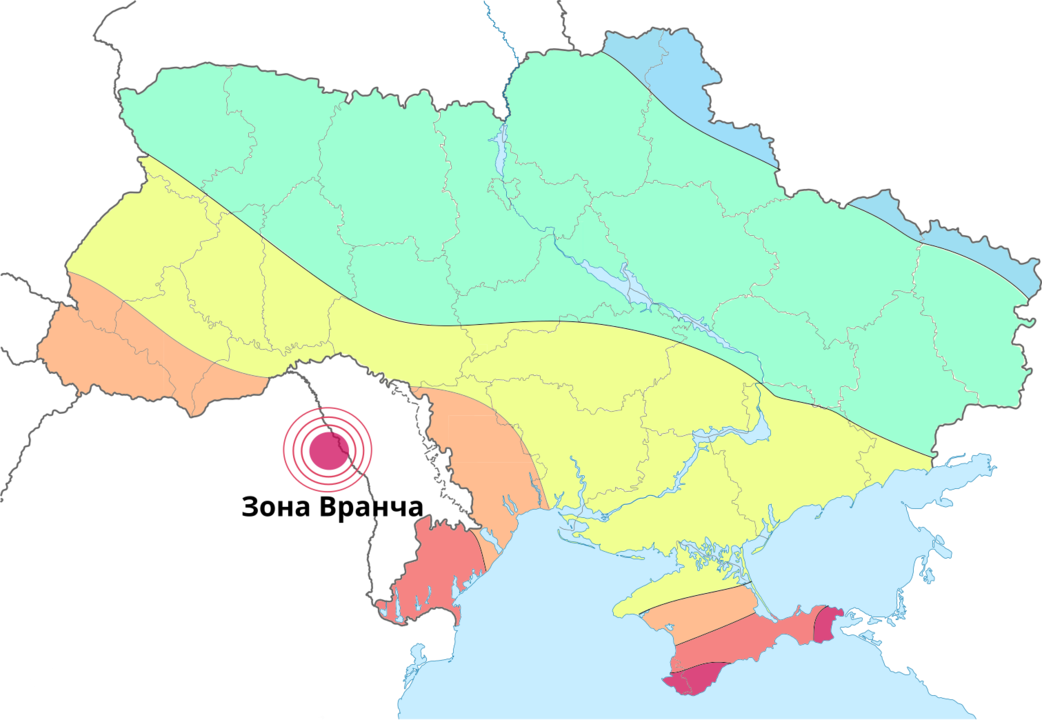
Vrancha seismic zone. Image credit: Dimdimdim, wikimedia.org
The two main seismic regions of our country are Carpathian and Crimean-Black Sea, the southwestern part of Ukraine is directly under the influence of the Vrancha zone, and Transcarpathia and Bukovyna are the most seismically active. The seismicity of the Black Sea region is determined by the epicenters of earthquakes concentrated in the sea area and near the Crimea. There is also a separate source of seismicity not far from the Danube delta, which in synergy with the Vrancha zone can be a rather significant risk factor for Odesa.
Areas with a predicted intensity of seismic events of 6–9 points according to MSK-64 make up about 20% of the territory of Ukraine, areas with a predicted intensity of 7–9 points — 12% of the territory. According to the Institute of Geophysics of the National Academy of Sciences of Ukraine, in general, up to 40% of the territory of Ukraine can be affected by seismic events and up to 70% by the combined impact of earthquakes and floods, landslides and other processes that negatively affect the stability of buildings.
The study "Seismic hazard and protection against earthquakes" of the Institute of Geophysics of the National Academy of Sciences of Ukraine also mentions the impact on safety of intensive mineral extraction. According to scientists, due to active actions on fake territories, often with the use of powerful explosions, irreversible changes in the state of the geological environment occur (Fake territories are places intended for conducting underground mining operations on an industrial scale. — Editor's Note). As a result, dangerous processes of a natural and man-made nature may become more active: landslides, rock collapses, flooding, earthquakes. Thus, several earthquakes occurred near Kryvyi Rih in different years, the establishment of the causes and nature of which requires further research. According to scientists, if intensive development of mineral deposits continues in this region, earthquakes with an intensity of 5 or more points may occur.
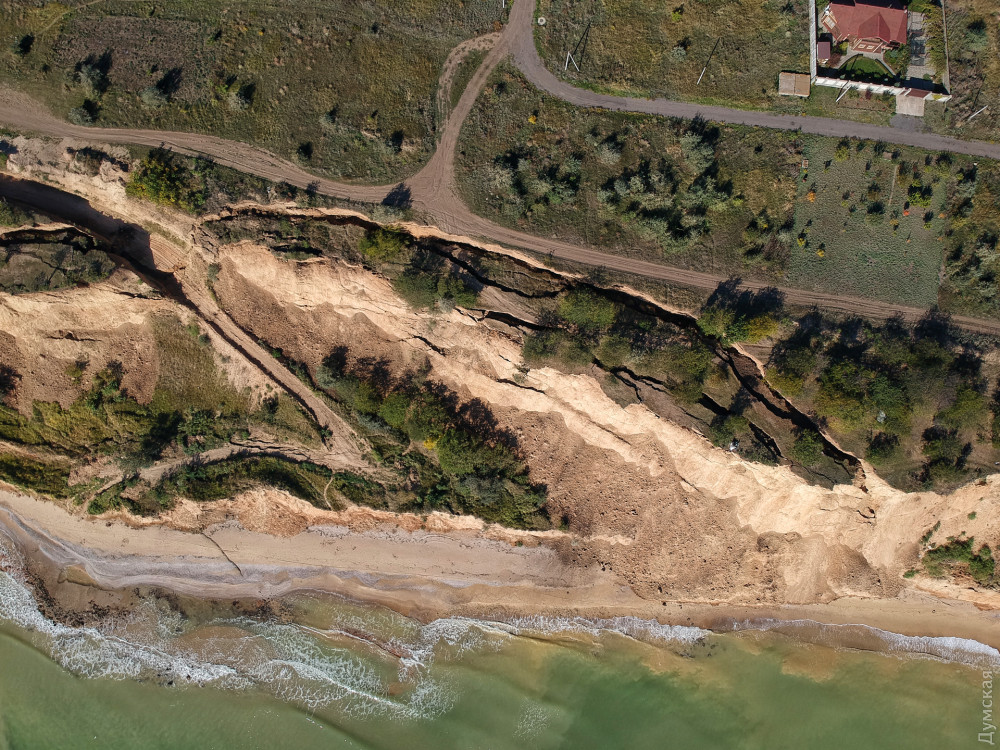
Landslides in the village of Sanzhiyka in Odesa, 2018. Photo source: Dumska
According to the Ministry of Emergency Situations of Ukraine, about 13% of the country's territory is affected by flooding, these are regions near the rivers Dnipro, Dniester, Desna, Southern Bug, and Siverskyi Donets. Both settlements and industrial facilities are located on these territories. More than 60% of the territory of Ukraine is prone to the formation of karsts, in 27% of cases it is open karst — when easily eroded rocks (for example, limestones) lie near the surface, creating the risk of sinkholes and cavities. These processes have a significant impact on modern construction. Landslides are also characteristic of Ukraine - in the Carpathians, Khmelnytskyi region, and in the eastern part of the country. Settlements near the sea coast suffer from them, for example in Odesa and Crimea.
Volodymyr Brunko: "In addition to territories with processes that take place in the subsurface, in Ukraine there are also enough areas with man-made features of a surface nature"

Volodymyr Brunko, Head of the Department of the Ukrainian Zonal Research and Design Institute for Civil Engineering "KyivZNDIEP"
Head of the Department of the Ukrainian Zonal Research and Design Institute for Civil Construction "KyivZNDIEP" Volodymyr Brunko says: in addition to counterfeit territories and territories with processes of a deep nature occurring in the subsoil, in Ukraine there are also enough areas with man-made features of a surface nature - these are banal landfills of past years, landfills of construction waste, production waste, etc. The characteristics of such areas are determined not by zoning, but in the process of on-site exploration, engineering and geological investigations during specific design. In this case, depending on the report from the site of the planned construction, it will be indicated whether there are features or man-made remains of one or another nature.
According to Oleksandr Kumeik, the professional response of architects, designers and engineers to special natural and man-made conditions is a responsible thing.
"In our country, there are many territories with certain features, sometimes imperceptible at first glance. In most settlements, several factors are present at the same time, so their potentials add up. In addition to seismicity, weak soils, karsts, flood zones are widespread in the architect's practice, for example, slopes where landslides can occur. If we consider seismicity, depending on the district, there are requirements for the number of floors and structural solutions of buildings and structures."
The architect emphasizes: man-made load on the territory, namely the density of buildings and saturation with engineering networks, often distort the natural and man-made picture. Under certain conditions, they can also be called dangerous factors.
"Factors the density of buildings and the saturation and condition of engineering networks have the greatest influence on geological conditions and their change, says Oleksandr Kumeiko, it especially affects the water saturation of the site and the level of groundwater. The characteristics of the soils, which are the basis for the foundations of buildings, depend quite strongly on water saturation. In my projects, especially in compressed conditions, usually, in addition to geological surveys, I ask customers to carry out hydrogeological surveys and an assessment of the impact of the construction of the facility on the hydrogeological regime of the surrounding area."
If special factors are professionally taken into account during design, they cease to be "dangerous"
"Special factors exist, and we encounter them in practice," continues the architect. — However, I can assure you that if they are professionally taken into account during design, they cease to be "dangerous". The current regulations provide for solutions, both at the urban planning level and at the object level, which allow for the successful development of territories with existing features. The main document by which the architect can determine the presence of such factors is the actual urban planning documentation. A list of dangerous factors specific to the area is indicated or should be indicated there. Also, at this stage, restrictions or conditions are formed under which it is possible to conduct construction on a particular territory or site. Maps of general seismic zoning of Ukraine, which we talked about above, are constituent parts of DBN B.1.1-12 "Construction in Seismic Areas of Ukraine". Like every architect, I start working on a project by studying the current urban planning documentation and the results of geological investigations, then I develop proposals for the customer regarding the number of floors, the functionality of the object, the layout of the construction site, etc."

Oleksandr Kumeiko, architect
State building standards (SBS) are binding regulations that are used during the design of new, as well as reconstruction of existing buildings and buildings in accordance with their purpose. Seismic zoning maps ZSR-2004-A and ZSR-2004-B are used for the design of residential, civil, industrial and agricultural structures, map C is used for special, potentially dangerous hydraulic facilities. In 2019, to increase the safety of buildings, changes were made to the DBN for residential and public high-rise buildings, as well as stadiums, educational institutions and other objects with a significant class of consequences, the updates contribute to increasing the seismic reliability and strength of the specified architecture.
How are normative indicators and recommendations determined in DBN? Volodymyr Brunko explains: this is the result of theoretical and practical scientific work. With the help of calculations and methods of construction physics, theoretical and construction mechanics, etc., static and dynamic loads of various types and their impact on the material sphere — various structures — are analyzed.
"There are certain rules regarding harmonic oscillations, regarding centers of gravity, etc.," says Volodymyr Brunko. Research is focused on defining calculation models and indicating which of them should be used during design and construction. It is noted in what ways it is possible to design a building from the point of view of constructive schemes. For example, in the context of seismic, it is possible to use schemes related to the pinching of a building in a massif — that is, the reaction of the base of this building. Or the use of certain more technologically advanced solutions, seismic isolation, for example compensators of various types, etc. Seismic is an example of a periodic atypical load that requires appropriate decisions to increase the reliability of the structure. As a rule, this is done by increasing the values of this normative load. Conventionally speaking, in stationary conditions, we take into account a load weighing 1 t per 1 m2, and taking into account seismicity - twice as much."
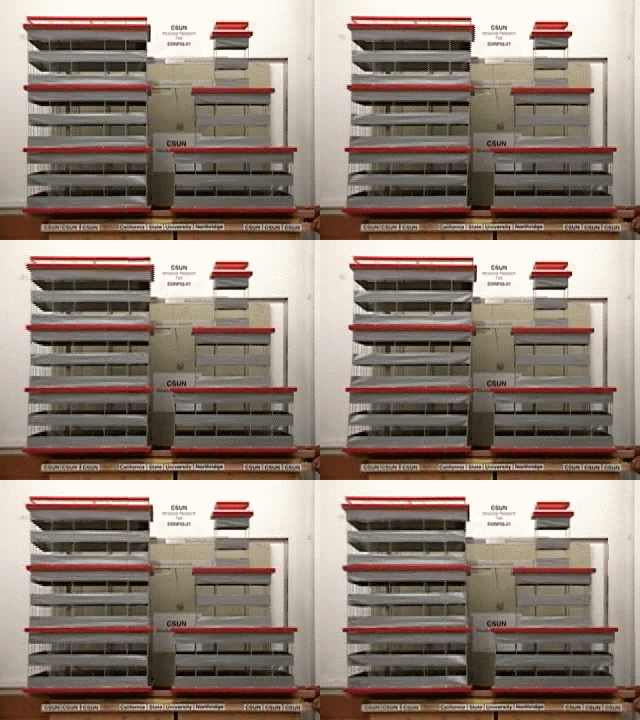
Comparative tests: on the left - a normal building model, on the right - a model damped by the vertical configuration of the building. Visualization author: Valentin Shustov, wikimedia.org
Oleksandr Kumeiko states: when answering the question about the specifics of earthquake-resistant buildings, it is quite difficult to single out a certain specific feature, because during the design it is necessary to take into account a number of requirements related to both project solutions and materials that can be used.
"If we speak in more detail, first of all there are requirements regarding the number of floors and the type of structural scheme of the building, depending on the estimated seismicity of the site and the class of consequences of the responsibility of the object. For example, in an area with a seismicity of 8 points, a twenty-story building can be built, this is the maximum, provided that the walls are made of monolithic reinforced concrete. It is also possible above and with other constructive schemes, but under the condition of agreement of justifications as for the object of experimental construction. Here I indicate the highest floor area using a certain design scheme.
If we take a popular scheme reinforced concrete frame, then the maximum number of floors in this case will be nine floors. And so you can walk through every level of seismicity and every type of frame. Then there are the requirements for planning solutions and floor heights, for the very nodes of the frame and types of materials. When all the requirements are taken into account, you can confidently invest in this building and live or work in it."
"There are recommendations for increasing the seismic resistance of already erected buildings, and they are quite radical and expensive," Oleksandr Kumeiko
The architect continues: "The connection between the height of the building and its resistance to the forces of the elements exists, and is quite direct. The biggest, of course, in terms of seismicity: the higher the building, the lower the level of shock resistance. However, I would like to note that this comparison assumes the same design, architectural and constructive solutions in both cases. Modern materials and technological capabilities make it possible to reduce the impact of both seismicity and other factors, the only question is how much it costs. In Ukraine, norms have been developed for the construction of residential buildings with a nominal height of up to 100 meters inclusive and public buildings up to 150 meters inclusive. If you build higher, it is already considered experimental construction and requires obtaining individual technical conditions".
P.M.: But at the same time, we consider the heavens to be safe.
OK.: Undoubtedly, if during design and construction, all requirements regarding earthquake resistance, etc., are taken into account. There is a definition that I think is very clear: the strengths of skyscrapers are their weaknesses, and their weaknesses are their strengths. For example, a strong point is their monumentality, durability and constant challenge for materials and engineering systems developers. In my opinion, such buildings are drivers of progress in the construction industry. At the same time, the strong side is quite often the cause of social disputes, and the cost of building giants is more often than not economically unreasonable. As for the weak points, it is, of course, the density of the population or workers per 1 m2 of territory. This also includes the necessary number of places for storing personal transport, the possibility of engineering networks of the settlement in which such a building is located, etc. At the same time, even the presence of such "weak" sides cannot stop the ever-growing number of skywalkers in the densely populated regions of Asia. For example, in the same Singapore or Hong Kong, there is simply no free land for construction, and if today's technologies allowed the widespread construction of towers with a height of 1000 meters, they would already be built everywhere in such regions.
P.M.: Is it possible "by eye" to assess the durability or strength of the building? In Turkey, after the sad events, they began to post photos of "vulnerable" high-rise buildings, pointing out their structural features, for example, the smaller first floor.
OK.: Yes, indeed, and I am sometimes asked to make a conclusion based on "look" and measurements "by eye", but this method has nothing to do with reality. Only those who do not have professional experience in this matter make such an assessment. Any assessment can be carried out only after studying the design decisions and making an inspection. Regarding certain features mentioned in the question, of course, this can be a factor that reduces the stability of the building, but it is not decisive or unambiguous, because the seismic resistance of any building is always a complex of measures.
In terms of vulnerability or resilience, we can say that the more symmetrical a building is, the more regular its shape is, the more seismically resistant it is. But even this is not an unequivocal statement, because even for irregular shapes there are solutions that ensure earthquake resistance. Also, do not forget about the concept of seismic isolation - these are structures or structures that provide isolation of the building from ground vibrations during an earthquake. And this is also one of the solutions that can allow you to build a strong "unusual" building.
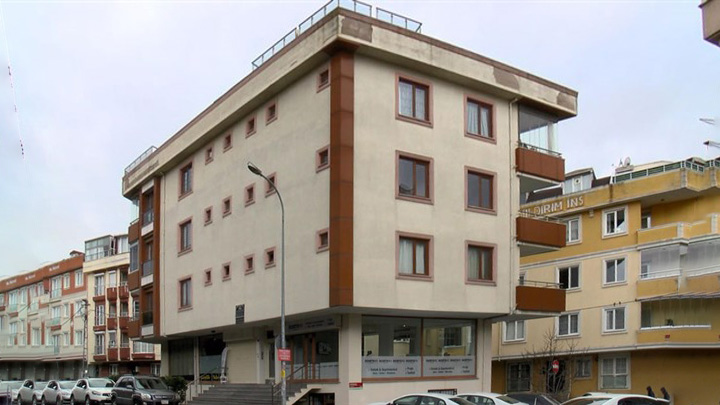
After the earthquake in Turkish social networks, there are many discussions about the safety of existing buildings. For example, about this complex building with commercial premises on the first floor. Photo source: www.birgun.net
P.M.: Certain extreme cases aside, there is also a lot going on in cities on a routine level. Sometimes vibrations from the metro and other transport are felt. Along with the existing buildings, new constructions or reconstructions are often started. Does it affect buildings?
OK.: I noted the influence above building density and the saturation and condition of engineering networks, how this can affect, for example, changes in the groundwater level. Regarding vibrations and interactions similar to them for this, the regulations provide for minimal gaps or security zones between buildings and transport facilities. And if they are taken into account, then, most likely, there will be no such feelings. Of course, dynamic impact is dangerous for any structure, but only if it acts on it directly and with a sufficiently large force. Is traffic exposure dangerous for buildings? Do not think. Even if somewhere you came across a record of a destructive dynamic impact on a building, especially a historical building, most likely it is a combination of many factors at the same time, in particular, the "fatigue" of structures or their destruction caused by other factors.
P.M.: How is the examination of an already existing building carried out for seismic resistance?
OK.: This is a very complex process and quite relative. First, it is necessary to study the project documentation for the building, if it exists. Secondly, an instrumental survey of the building and its nodes is performed, the characteristics of the materials from which the building was built are determined'object After that, the stability of the building is calculated. The results of such an examination are difficult to predict, and they completely depend on the specific building. I would like to note that our regulations contain recommendations for increasing the seismic resistance of already erected buildings, and they are quite radical and expensive. I can say that if the building is not resistant to seismic influences, it will probably be cheaper to demolish it than to restore it.
The resilience of buildings to the possible impact of the elements takes on new contexts during the ongoing war. We see how during shelling or bombing, some buildings are significantly destroyed or "collapsed", while others withstand impacts or fires with less damage and can be rebuilt. Will a seismically resistant building be more resilient to other impacts, such as an explosion? Oleksandr Kumeiko explains: this is true, earthquake resistance gives buildings additional opportunities to resist destruction.
Both during earthquakes and during bombings, the logic of the impact on the building is similar, because in both cases it is about dynamic characteristics
"During hostilities, buildings may be exposed to external influences from shelling and explosions. Of course, there are various weapons, factors with different characteristics, but mostly (unless, of course, you take into account superpowerful bombs or something worse) local effects are exerted on the building, and in most cases they do not lead to its complete destruction. For many years now, as part of the project documentation, we have been performing a calculation for progressive collapse, and this is exactly the calculation that is used to check the resistance of the building to collapse during the action of local destructive factors on it," concludes Kumeiko.
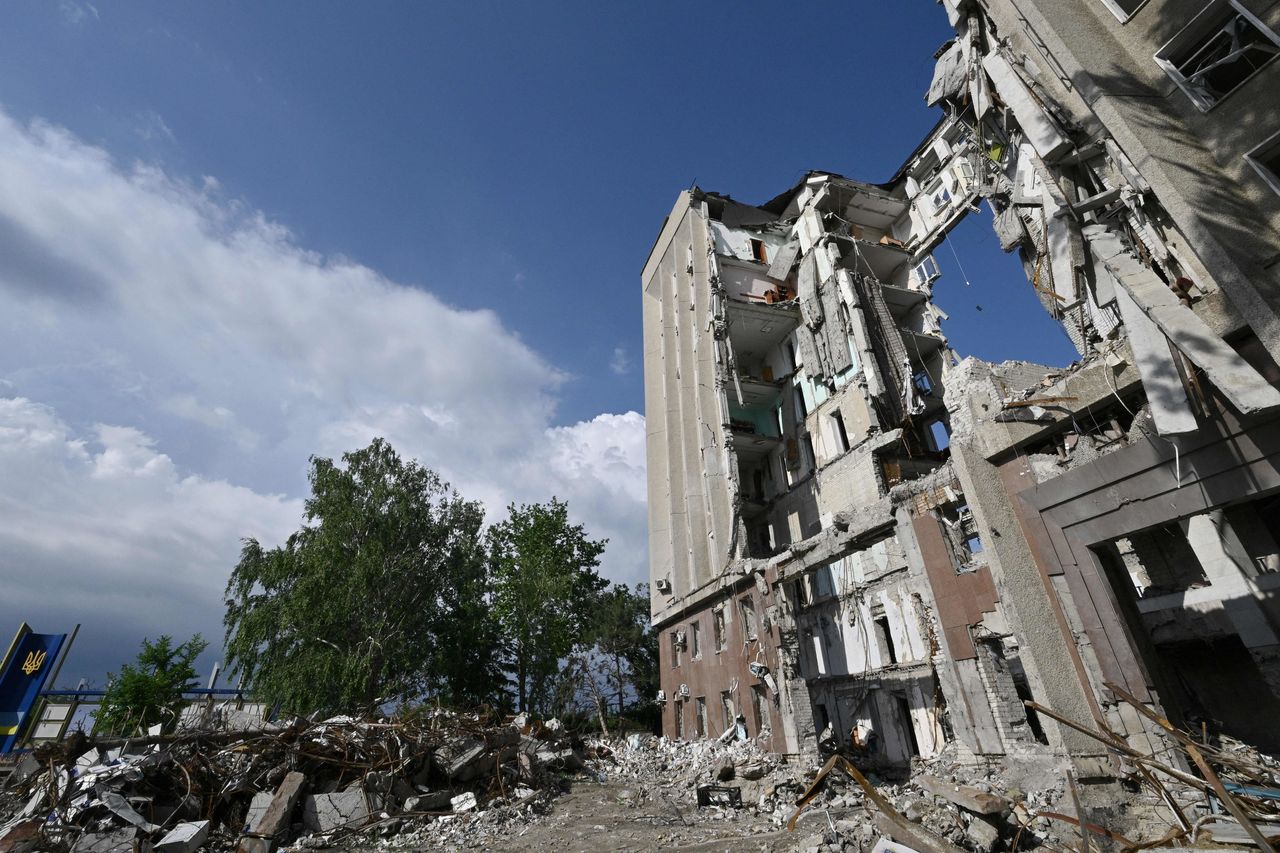
The Mykolaiv VDA building, destroyed by Russian rocket fire.
Photo: Yevhen Savilov / AFP
According to Volodymyr Brunko, both during earthquakes and during bombings, the logic of the impact on the building is similar, because in both cases it is about dynamic characteristics.
"The building in the standard mode, as a rule, works under static loads, where they do not change over time. The dynamic loads are different, this movement is mainly of a horizontal type, and all buildings vibrate in the horizontal plane, they do not bounce. Both during an earthquake and during an explosive load, the wave also has a horizontal type of influence. But there are also differences — in the values of the dynamism coefficients, coverage of the building, etc. During a seismic event, the entire building is guaranteed to be affected at once, and during an explosion, as a rule, the load is point. However, as I have already mentioned, the general logic is preserved, and therefore a structure built taking into account the conditions of seismicity is more reliable from the point of view of explosive load than a structure designed for a normal mode of operation," explains Volodymyr Brunko.

Flood in Prykarpattia, 2020. Image source: www.pravda.com.ua
Climate change as a test of strength
Climate change is a "Pandora's box" that can give humanity many reasons to think about the safety of their own homes. Previously, in stories about climate contexts, the phrase "changes that will be felt by future generations" was often used, which created the effect of a vague distant perspective. It seems that this time has passed faster than desired, and now it is only a question of the scale of these changes in cities and settlements. The environment, reacting to stressors, makes the previously predictable for a person unpredictable. The maps created by scientists are changing, previously defined zones "creep" and begin to behave differently. In Ukraine, they shift from south to north.

Sofya Sadogurska, coordinator of the climate change campaign of the Center for Environmental Initiatives "Ekodia"
According to the climate change campaign coordinator of the Center for Environmental Initiatives "Ekodia» Sofya Sadogurska, scientists build forecasts of the impact of climate change both for the world and for the territory of Ukraine: they are developed for each sector of human activity, usually according to several scenarios:
- a scenario where countries do not reduce greenhouse gas emissions at all, and this is the worst-case scenario that will cause the biggest change;
- a scenario when certain measures to reduce carbon emissions will be implemented and it will be possible to keep the temperature within certain limits;
- the most optimistic scenario required by the Paris Agreement. Limitation of temperature increase within +1,5° C (currently in Ukraine we have almost +1,2° C over the last thirty years).
The scientist says: climate changes occurring in the world not only do not bypass Ukraine, on the contrary, the pace of global warming in our country can manifest itself faster than in some other parts of the world: "One of the most obvious consequences of climate change, which the residents of Ukrainian cities have already experienced in recent decades, are heat waves, periods of high temperatures combined with low air humidity in warm seasons."
Other situations from the future of Ukrainian cities, which we are predicted to face by the end of the century, are the problem of water supply and access to drinking water. It is most relevant for the southern regions, as well as the east of the country. Large rivers that provide drinking water to cities may become shallow by 30%, and small rivers in some regions are at risk of disappearing. We remember the situation when Mykolaiv found itself without a centralized supply of drinking water: the water main was destroyed by Russian shelling. Within the limits of a large city, this is a real collapse, which requires reviewing many scenarios of the lives of its residents and the response of the infrastructure. Let's imagine that there are many settlements with significant water supply restrictions. How many people would want to live in such conditions and where to find new, "normal" ones?
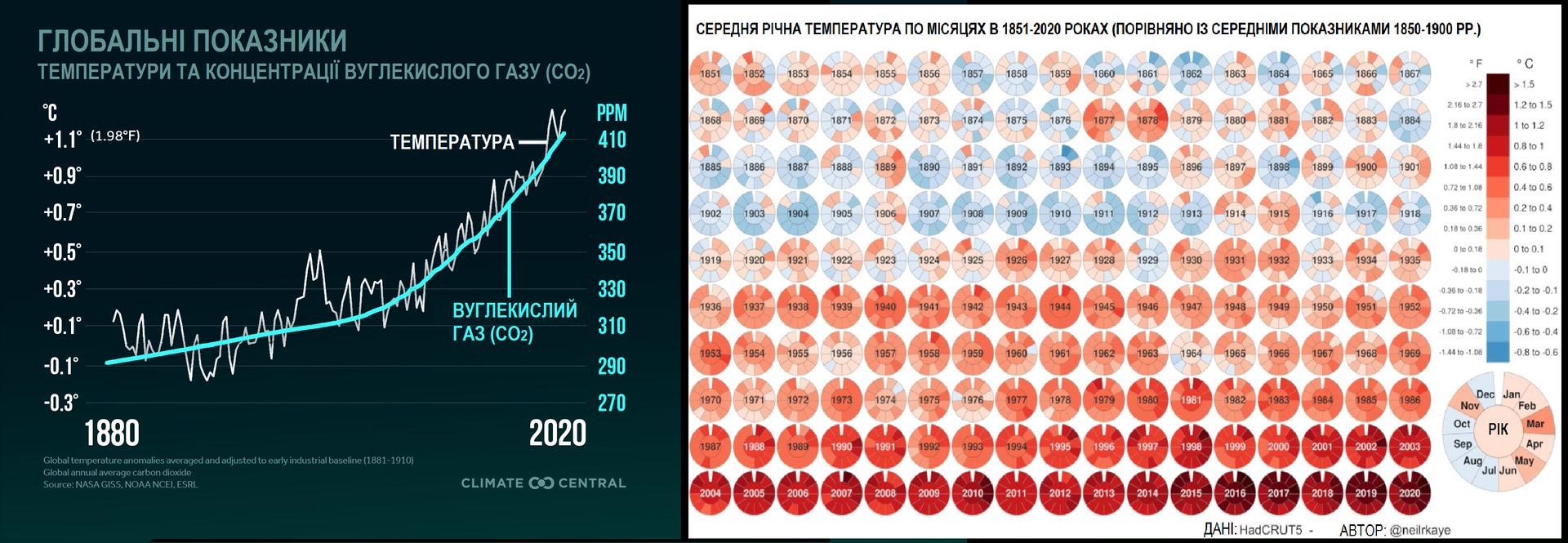
Global indicators of temperature and concentration of carbon dioxide. Image source: ecoaction.org.ua
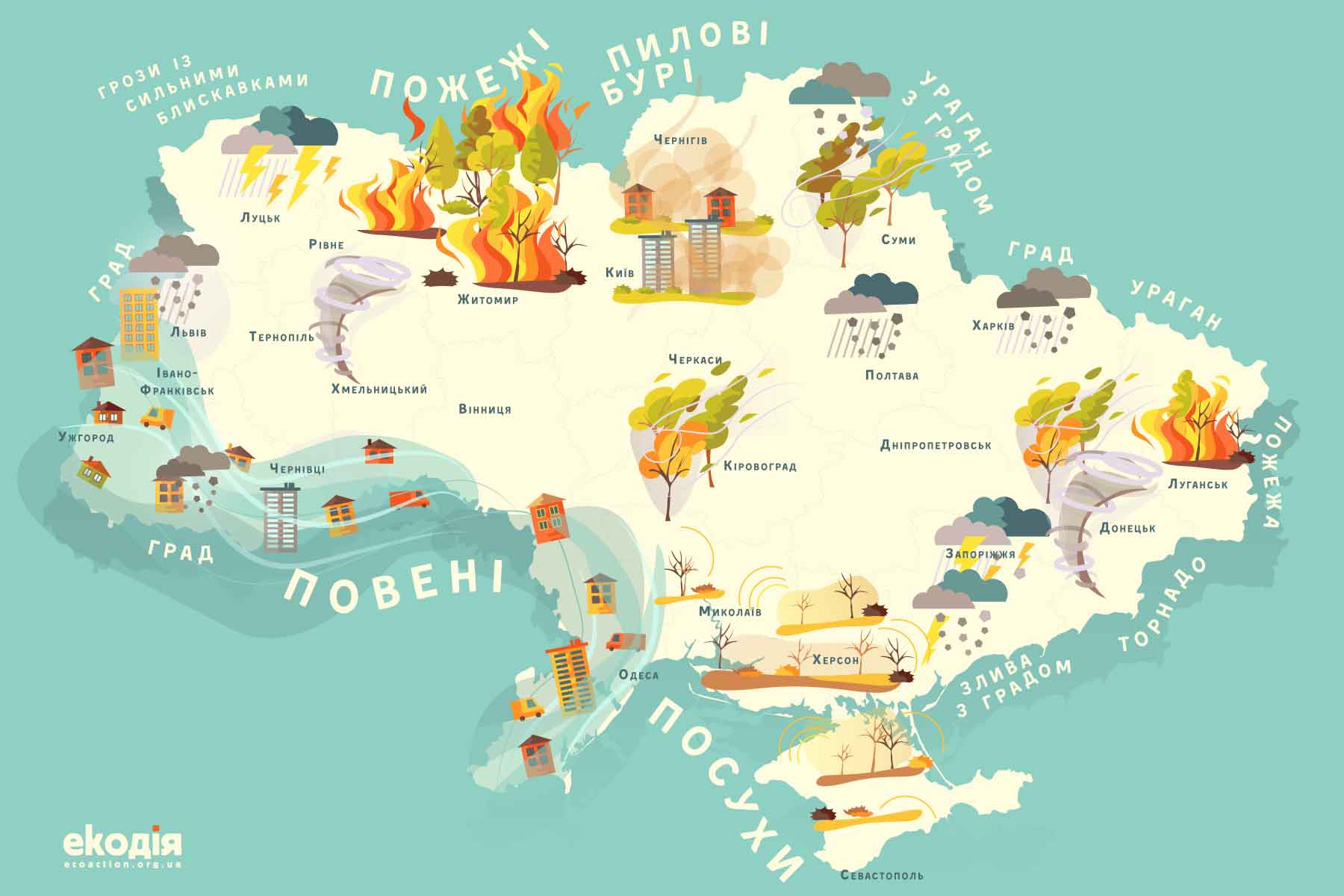
Possible consequences of the climate crisis for Ukraine. Image source: ecoaction.org.ua
The consequences of warming change the balance of systems that seem familiar and understandable to us. When some regions will have problems with water supply and droughts, others will be threatened by floods or local inundation. This can happen to the same city throughout the year, due to changes in the intensity and frequency of precipitation. According to the scientist, first of all such a fate may befall settlements in the north of Ukraine - in Polissia, near the pool Desna, as well as in the Carpathians. Other phenomena, the ground for the appearance of which humanity is already laying today, are hurricanes and dust storms, critical winter and summer temperatures, rising sea levels (will have a significant impact on the coastal areas of the country).
Sofya Sadogurska: "Populations that have already become vulnerable due to the consequences of war should not be even more vulnerable due to unpreparedness for climate change"
Are such scenarios taken into account for Ukrainian cities and to what extent are we preparing for climate change? Sadogurska emphasizes that adaptation to them is an important aspect in planning the reconstruction of the country after the war
"In 2021, Ukraine adopted the Climate Change Adaptation Strategy, which provides that adaptation to climate change is an important part of urban planning and should be reflected in the strategic planning of the development of territorial communities. It is the responsibility of local authorities to have such strategic plans, to involve community representatives, experts and local NGOs in these processes," the expert says.
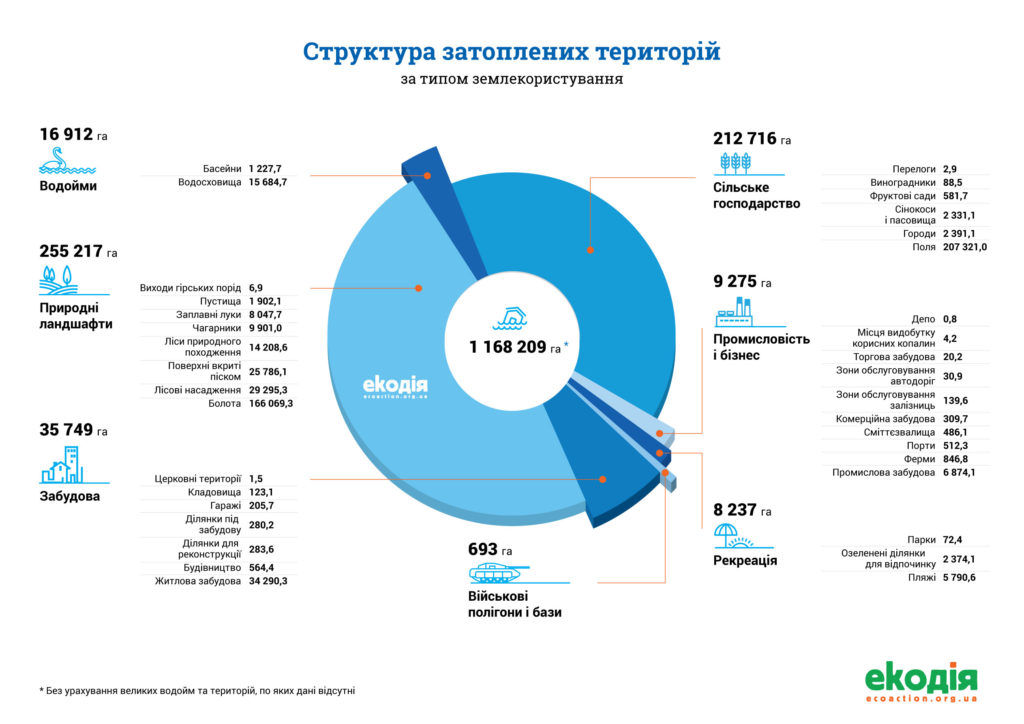
Risks of sea level rise in 2100 for the coastal areas of southern Ukraine as a result of climate change. Image source: ecoaction.org.ua
According to her, now this issue has become even more critical precisely in the context of the reconstruction of communities that suffered from armed aggression. "This is one of the messages that we, scientists, especially emphasize: settlements that have already become vulnerable due to the consequences of war should not be made even more vulnerable due to unpreparedness for climate change. It is very important that all objective risks are taken into account, and the risks from climate change in particular, when the community is being rebuilt."
"Green reconstruction" approaches are also important for foreign donors participating in the reconstruction of Ukraine
Such assessment should be based on scientific data and modeling of changes that will occur in the future. By understanding them, communities will be able to consider which impacts they are most vulnerable to, in order to use this knowledge in planning and building. In the process of reconstruction, this should actually be manifested at many levels, starting from the planning of green and blue zones in cities to the use of nature-oriented and energy-efficient solutions, the choice of materials.

Spring flood in Natalka Park, Kyiv, 2023. Photo: Kostiantyn Sova
"Energy efficiency of buildings, for example, is not only a question of energy conservation, but also of the fact that in such housing at critically low temperatures in winter it is warmer, and in summer at critically high temperatures and heat waves, respectively, it is cooler," explains Sof'I am Sadogurska. — This is, in particular, an important part of the approach called "green reconstruction of Ukraine" and consists in rebuilding better than it was and with minimal impact on nature. The restoration of Ukraine should take place both according to the principle of participation - with the involvement of communities, transparency of processes, and taking into account sustainable approaches, so as not to harm the environment and cities even more. This is also important for foreign donors participating in the reconstruction of Ukraine. Resources allocated for reconstruction should go to projects that take into account the ecological component.
Ukrainian architects, designers, engineers and scientists know a lot about strength. In hopes PRAGMATICS — talk about it without mentioning sad cases or dangers, instead highlighting innovative solutions, ideas and projects for quality reconstruction. The strength and safety of our cities is a guarantee that history will continue.