

Size matters: when is large volume justified?
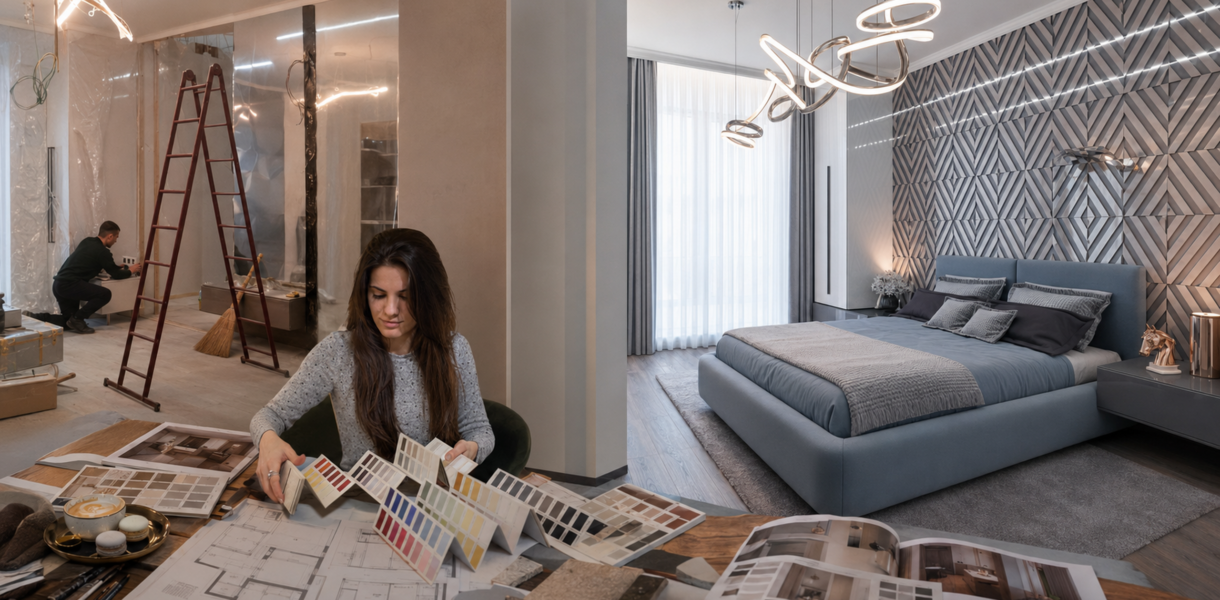
Interior designers rarely receive only one clear wish from clients - more often a list, the items of which sometimes interfere with each other. For example, the volume of purchases for the week ahead, technological features that simplify everyday life, and at the same time - so that all this technology is almost invisible, does not dominate the space. At the same time, according to designer Tetyana Saulyak, the modern client knows exactly what he wants: "People who turn to designers usually clearly understand that they want to get an ergonomic room, designed for their needs and lifestyle - and this is exactly what can be achieved through the right dimensions and functions."
But the larger the equipment, the more difficult it is to remain unnoticed. Hisense RQ760N4IFE is an example of how manufacturers are trying to answer this complex request: 577 liters of volume in the Cross Door format, where the flat facade organically fits into the visual composition of the kitchen. Smart functions add another layer to storage - organization of everyday life: shopping planning, inventory control, family communication.
However, when a buyer is faced with choosing a refrigerator, he does not think too much about the production advantages - rather about his own life. Is such a capacious device really needed, or is it just a number that sounds nice in the characteristics? The doubt is quite logical: a large volume justifies itself only when it corresponds to a person's real lifestyle, and is not an end in itself.
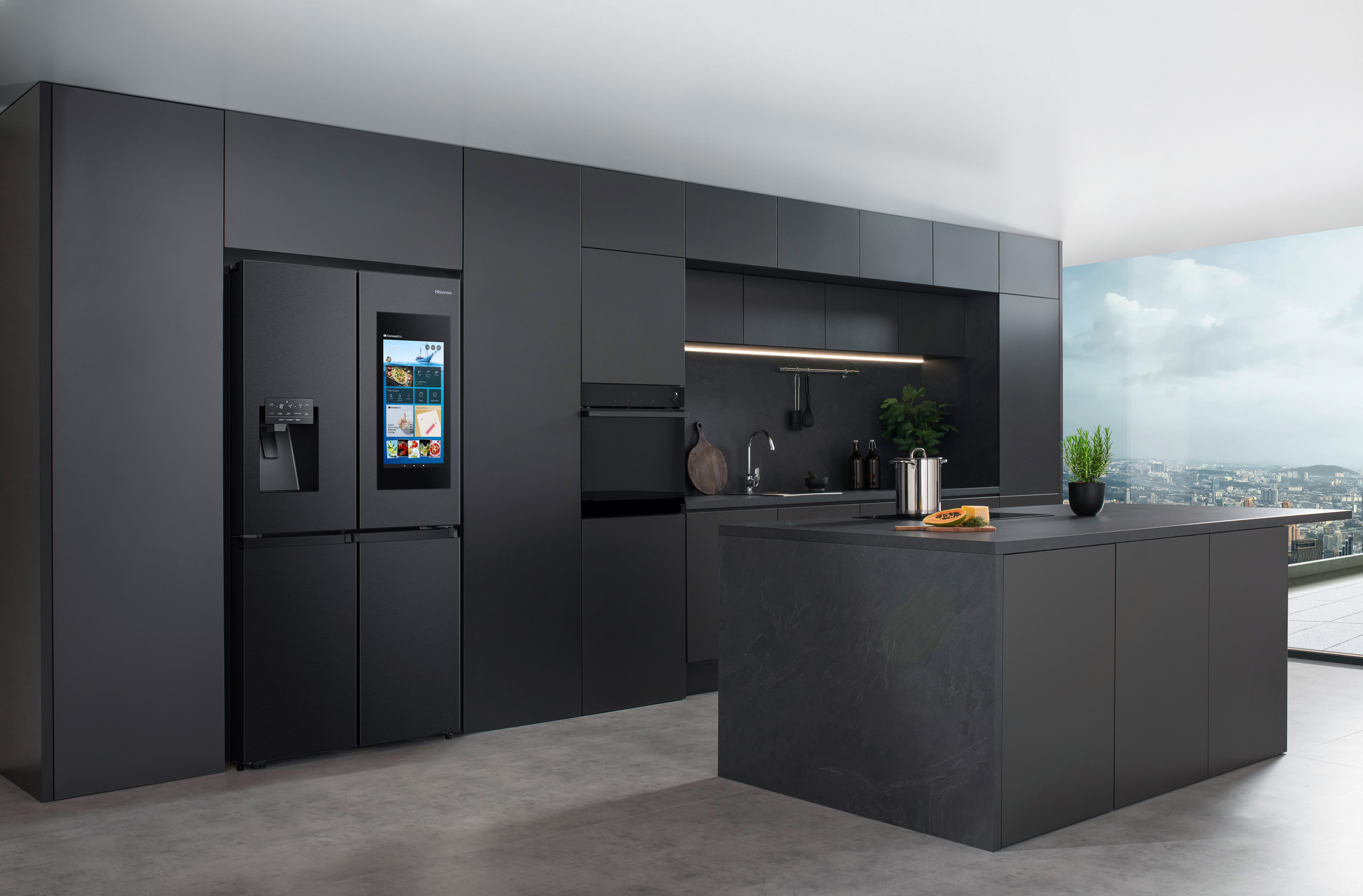
The Hisense RQ760 refrigerator fits seamlessly into both the design and the family's everyday life. Image source: Hisense
For a refrigerator to be used to its full potential, its dimensions must match the lifestyle of its potential buyers. Designer and founder of Lemonme Interior studio Maria Sokhatska outlined the categories that a model with a volume of over 500 liters, such as the Hisense RQ760, would suit: “Most often, refrigerators with an increased volume are chosen by families with children, people who cook at home every day, or those who are used to making large purchases in advance.” Tetyana Saulyak adds that the demand for large refrigerators is growing among various buyers: “More and more often, even when planning small apartments, customers prefer refrigerators with increased dimensions, abandoning compact models built into a standard kitchen module.”
"More and more often, even when planning small apartments, customers prefer refrigerators with larger dimensions," — Tetyana Saulyak

Tetyana Saulyak, designer. Photo source: Tetyana Saulyak's Facebook
But regardless of who buys such equipment, the expectations are the same: that there is no chaos inside, and that the products remain fresh, regardless of whether it is a week's supply of meat, or children's yogurts, or dishes prepared the day before. Therefore, the large volume of the Hisense RQ760 is justified not by itself, but only on condition that its display, compartment format and automated functions eliminate the typical inconveniences of large-sized equipment.
How four doors and flexible zones adapt to the rhythm of the family
Buying a refrigerator with a large volume does not guarantee comfort in everyday life by default. A disorganized space overflowing with products for a week becomes a problem: the necessary things get lost in the depths of the shelves, and the search turns into a daily ritual. The four-door Cross Door format structures the space inside the Hisense RQ760: instead of a single compartment, the device offers several independent zones, which allows you to distribute products by storage temperatures and categories. For a family with children, this means less chaos when unpacking purchases, and for those who cook every day, quick access to what you need. That is, the volume does not work independently, but in conjunction with the structure.
Tetyana Saulyak notes that the popularity of this format is growing due to the changing rhythm of life: "If before people were less busy and could go to the shops almost every day, buying a small amount of products for the coming days, now more and more families prefer to shop on the weekend for a week at a time, which requires significant storage space." According to her observations, instead of two separate built-in cameras, customers still often choose Side-by-Side: with smaller external dimensions, these models provide the same internal volume and allow you to easily place large dishes or packages.
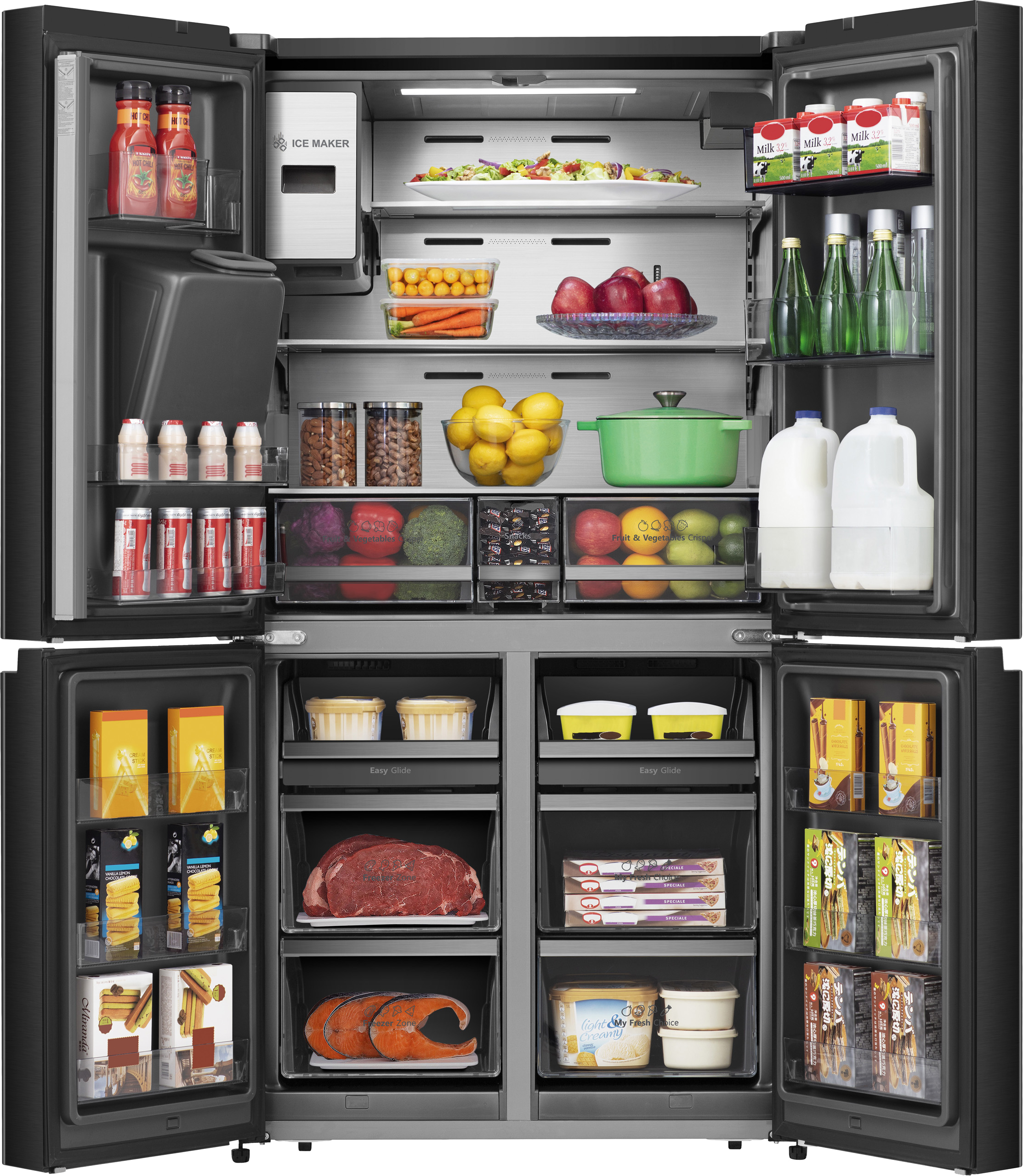
Cross Door Refrigerator: Independent zones instead of a single chamber. Image source: Hisense
The four doors of the Cross Door are not only about organizing products inside, but also about how the appliance is read from the outside. Tetyana Saulyak emphasizes that this is taken into account even at the furniture design stage: “It is necessary to correlate the dividing lines of the refrigerator doors with the lines of the facades, choose the right modularity so that all dimensions look harmonious in the overall composition of the kitchen, and choose fittings in a material that will not conflict with the refrigerator facades.”
Maria Sokhatska describes the approach to such refrigerators in her own practice: "In modern minimalist interiors, on the contrary, we strive to visually reduce the presence of large household appliances. Therefore, even Cross Door refrigerators want to be integrated as calmly as possible, so that they do not dominate the space, but maintain the integrity of the composition." Kateryna Yarova, architect, founder of the IK-architects architectural bureau, looks at this more through ergonomics than style: a technologically complex appliance still remains a physical object in space, and it is the dimensions, depth and direction of door opening that ultimately determine whether it fits organically.
Hisense RQ760: a large refrigerator that doesn't dominate the space, but maintains the integrity of the composition. Image source: Hisense
The same principle — adapting to a person, not dictating to them, also works inside the appliance. The My Fresh Choice zone switches between refrigerator and freezer modes — when receiving guests or seasonal purchases, its purpose can be changed. Kateryna Yarova calls this a good solution precisely because the need for a freezer is not stable: “I like solutions that do not dictate to a person one usage scenario, but can change with their needs.” Tetyana Saulyak adds that this expands the range of users depending on the season and family composition.
Maria Sokhatska looks at this feature more restrainedly: the expert considers it not a decisive argument for purchase, where more attention is paid to capacity, ergonomics and design, but a pleasant bonus for adaptation to different life scenarios. Whether these advantages are decisive or not, Cross Door and My Fresh Choice work as a single solution that gives a large volume a clear internal structure for daily comfort.
Technology that remembers us: are smart functions changing everyday life and the look of the kitchen?
Increasingly, home appliances are taking on decisions that previously had to be made in the head: the oven selects the cooking mode, the coffee machine remembers what kind of coffee a person likes, the hood reacts to smoke. In this logic, the refrigerator has long remained an exception - a device that simply stores, rather than "thinks" for the owner.
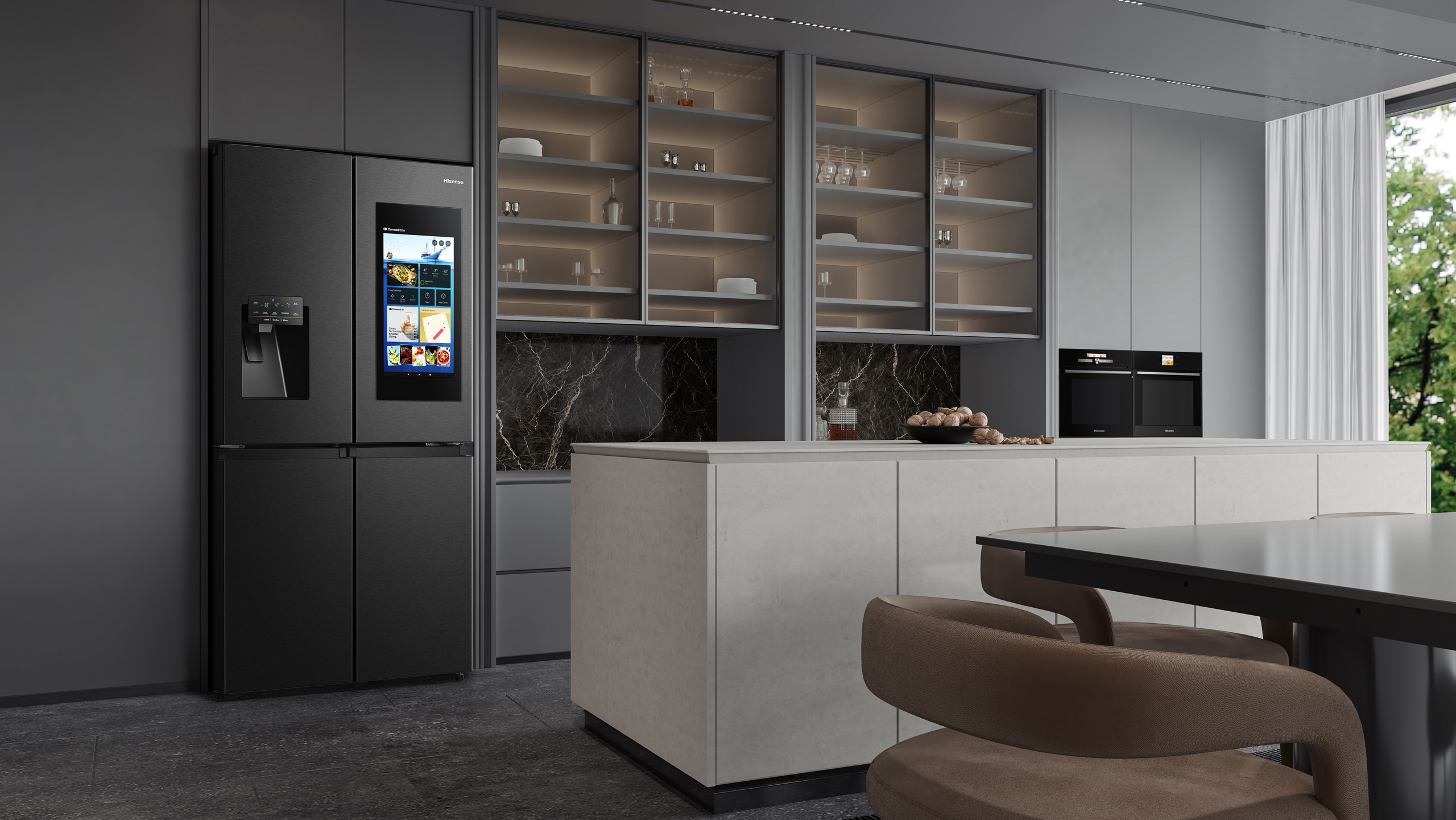
The Smart Kitchen Hub in the Hisense RQ760 is an attempt to change this. The touch screen on the door allows you to keep a shopping list, monitor expiration dates, save recipes and leave messages for the family - for example, to leave a reminder for the children what is for dinner. This is especially appropriate for a capacious model, because a significant amount of products requires careful accounting. In addition to the display, the Hisense RQ760 has the Smart Connectivity function: control via the application allows you to change the temperature regime on the way home, and not from the kitchen threshold.
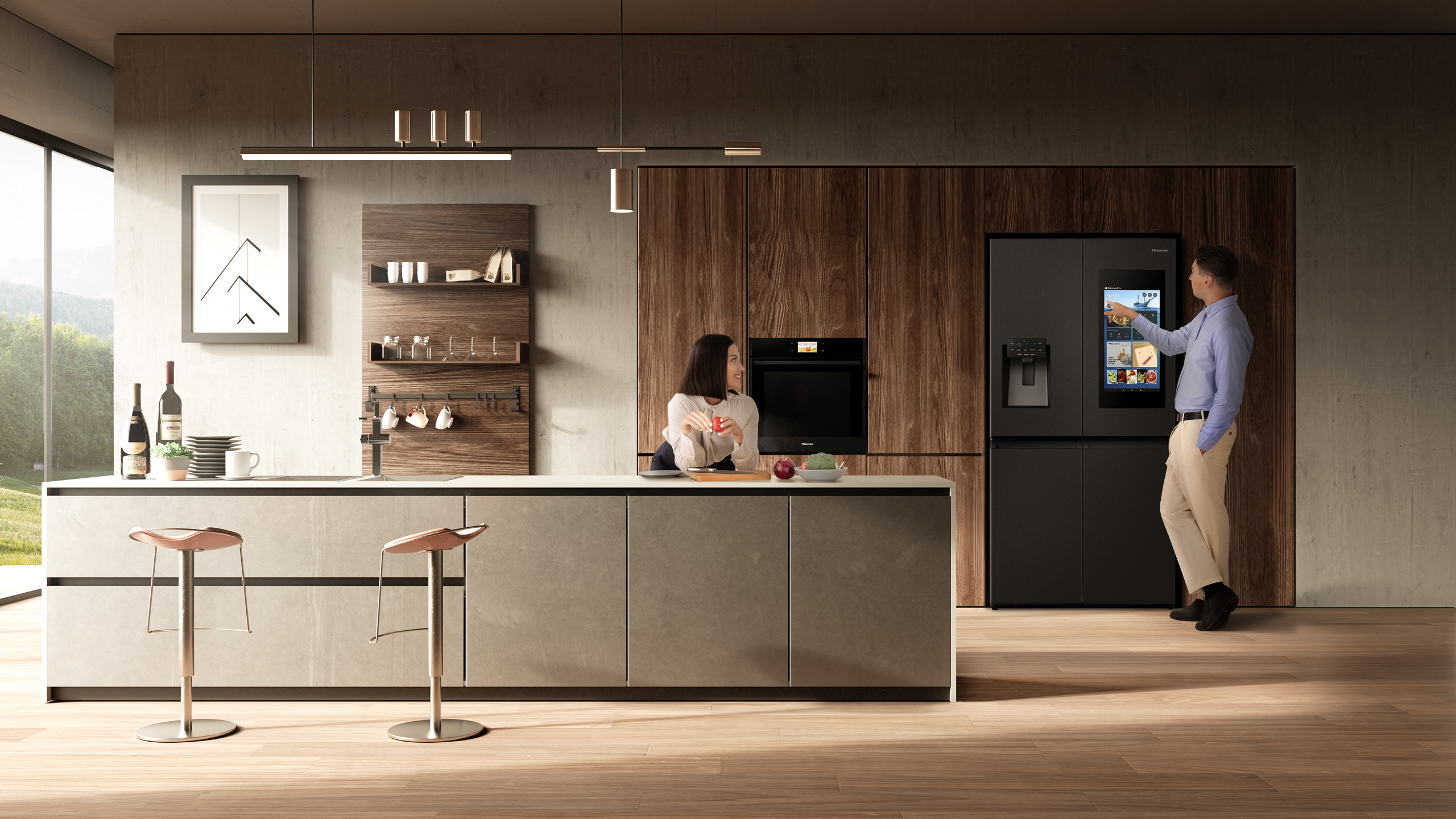
Interaction with the refrigerator display in everyday life. Image source: Hisense
But the list of functions does not answer the main question: does a person really want the refrigerator to “think” for them, or is it more of a technological toy? Here, the designers’ views diverge. Tetyana Saulyak believes that such technological features are of interest to an increasingly wider audience: “Considering the digitalization of the space around us and the increasingly frequent requests for the integration of “smart” switches, lamps, and the ability to control the house from a smartphone, it seems that this will be a very convenient function for a large family.”
However, according to Maria Sokhatska, smart functions are not of interest to everyone: “I see interest in functions such as a display among clients from technical professions, primarily IT. They are generally more willing to integrate smart technologies into everyday life and perceive the refrigerator as another element of the digital ecosystem of the home.” For the designer, such functions are more of an element of the wow effect than an indispensable tool. In real use, people appreciate not the number of options, but how organically they fit into everyday habits. This, and not the mass demand, is the criterion of usefulness, as Kateryna Yarova states: “For me, a good smart function is one that removes one unnecessary household action, rather than creating another.”
“For me, a good smart feature is one that removes one unnecessary household action, rather than creating another,” — Kateryna Yarova

Kateryna Yarova, architect, founder and chief architect of IK-architects. Photo source: Marie Claire UA
Experts also disagree on what smart elements should look like. Maria Sokhatska considers displays to be a visual compromise: ideally, they should blend in with the color of the door, rather than stand out as bright accents. Kateryna Yarova, on the other hand, claims that the display is an active element that should not be hidden: "I generally like the approach when the equipment is not masked at any cost. Either we really hide it, or we acknowledge its presence and make it part of the interior architecture." However, according to the expert, the decisive role is still played by physical parameters: dimensions, depth, configuration, and direction of door opening. However, the technological filling must also be taken into account in order to fulfill the basic design task - to harmoniously fit the appliance into the kitchen space without overloading it.
Premium in the details: where the compromise begins
Premium is easy to sell through volume and technical specifications - this is what attracts a potential buyer to the Hisense RQ760. Another argument is the functions that relieve you of routine actions: a built-in ice maker with cube and crushed ice, a chilled water dispenser, and the Total No Frost system, which eliminates the need for manual defrosting of the chamber. Tetyana Saulyak mentioned the ice maker among the advantages of freestanding appliances - such details are less common in built-in versions.
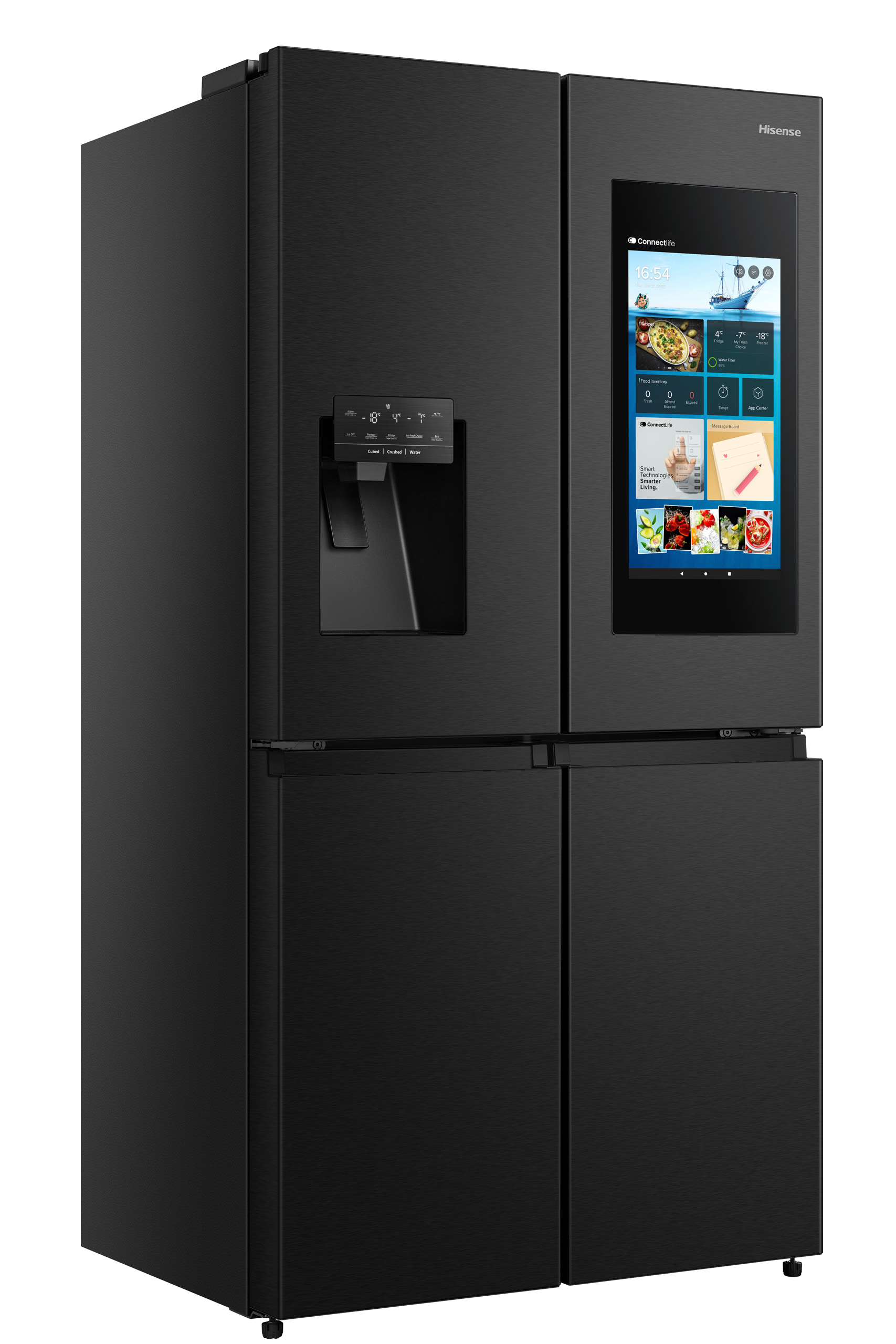
Hisense RQ760 refrigerator with built-in ice maker and dispenser. Image source: Hisense
But the question of whether such equipment will fit into a particular interior remains open. Hisense RQ760 has an expensive look, but, at first glance, this model is suitable only for minimalist or high-tech kitchens. However, Tetyana Saulyak is convinced that the stylistic boundaries of such models are wider: "Modern equipment is certainly not universal, and it is unlikely that it will be able to harmoniously coexist with classic kitchen facades in light colors, but completely minimalist furniture is not a necessity for it, because eclecticism reigns in modern design." For Maria Sokhatskaya, stylistic flexibility also lies in color, which is why she is impressed by the tendency to offer refrigerators not only in stainless steel. In particular, black or graphite models integrate well in kitchens with dark facades, thus preserving the integrity of the space.
However, the main difficulty lies in planning: in order for a large-sized refrigerator to look organic in the kitchen, and not become a separate massive object, it is important to think over the composition of the space in advance. This is when the premium aesthetics and functionality of the model are fully revealed - and this is the task of the designer, who competently fits such a large-scale appliance into the interior.
A kitchen for your lifestyle: why large appliances require precise calculations
A large refrigerator is always more than just choosing a model. It is a decision that should fit into the interior, the way a person moves around the kitchen, how much food they store and how often they cook, and therefore into the architecture of the space itself. The problem is that people rarely think about it right away. "The main mistake is to think about large appliances when the kitchen is already actually designed," says architect Kateryna Yarova. A refrigerator of this format "has dimensions that are not typical for a standard kitchen and four doors, so you need to consider the space for opening them in advance."
Kateryna Yarova describes how her IK-architects office works with large appliances: “We always start not with a specific model of equipment, but with a person: the composition of the family, its habits, lifestyle, frequency of cooking, and even the location of the home itself.” The expert notes that the choice between compact built-in appliances and a large Cross Door depends on the context: in a city apartment with delivery, a built-in model is more convenient, while in a country house with a shopping session once a week, a large Cross Door becomes justified. In private homes, the architect often offers the concept of a back kitchen: the main kitchen remains concise, and a functional “back-up” takes on household processes — and it is there that a large refrigerator finds its place easiest.
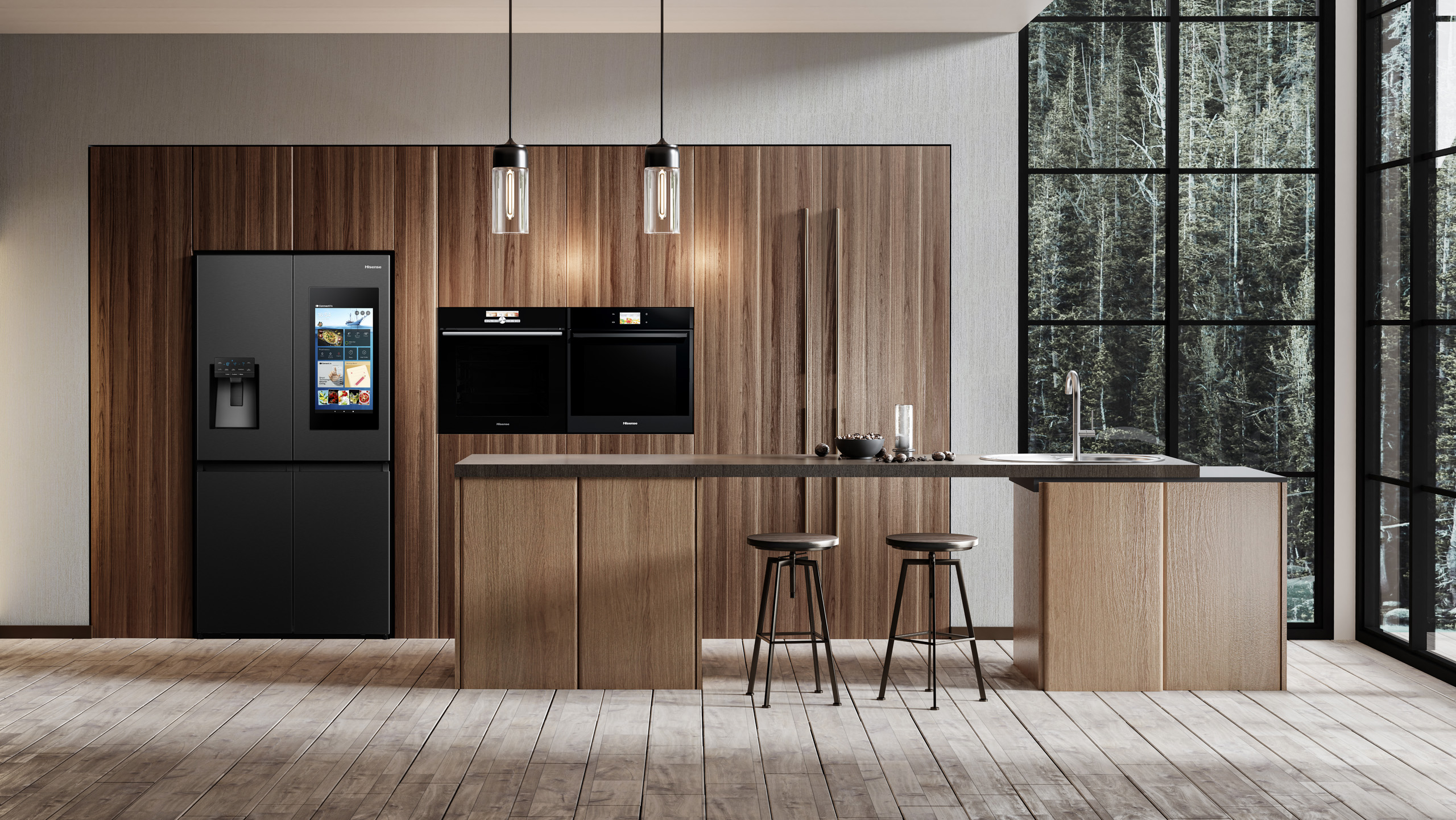
Kitchen with large refrigerator in a country house. Image source: Hisense
Maria Sokhatska looks at it from the perspective of composition: she more often chooses built-in refrigerators and freezers, in some projects even two separate ones. However, according to her, there are interiors where it is more logical to install a separate Side-by-Side or Cross Door model. It is for such cases that the Hisense RQ760 has PureFlat - a flat door with integrated handles, without fittings, protruding forward. Thanks to this, the facade is read as a flat, continuous plane, and the appliance visually approaches the built-in appliances, even when located separately.
Accuracy is important here. “Most of these models have a depth of more than 600 mm, so the doors protrude beyond the plane of the kitchen furniture,” emphasizes Maria Sokhatska on the main problem of the Cross Door format technology for designers. In the case of the RQ760, the depth is 725 mm — this is 12,5 cm more than a standard European countertop. That is, there are two options: either deliberately make the kitchen module deeper for this model, or leave the standard 600 mm — then the doors will protrude slightly beyond the line of the facades, and this should be taken into account even at the stage of planning the composition.

Maria Sokhatska, designer and founder of Lemonme Interior studio. Photo source: Facebook "Interior of the Year"
"Most of these models have a depth of more than 600 mm, so the doors protrude beyond the plane of the kitchen furniture. It is also important to provide technological gaps of several centimeters against overheating," — Maria Sokhatska about Cross Door refrigerators
Indentations also require precise figures, as Maria Sokhatska emphasizes: “It is important to provide technological gaps of several centimeters against overheating to ensure correct operation of the equipment.” For example, for stable operation of the Hisense RQ760, at least 100 mm is required on top, 50 mm on the back, and 50 mm on the sides.
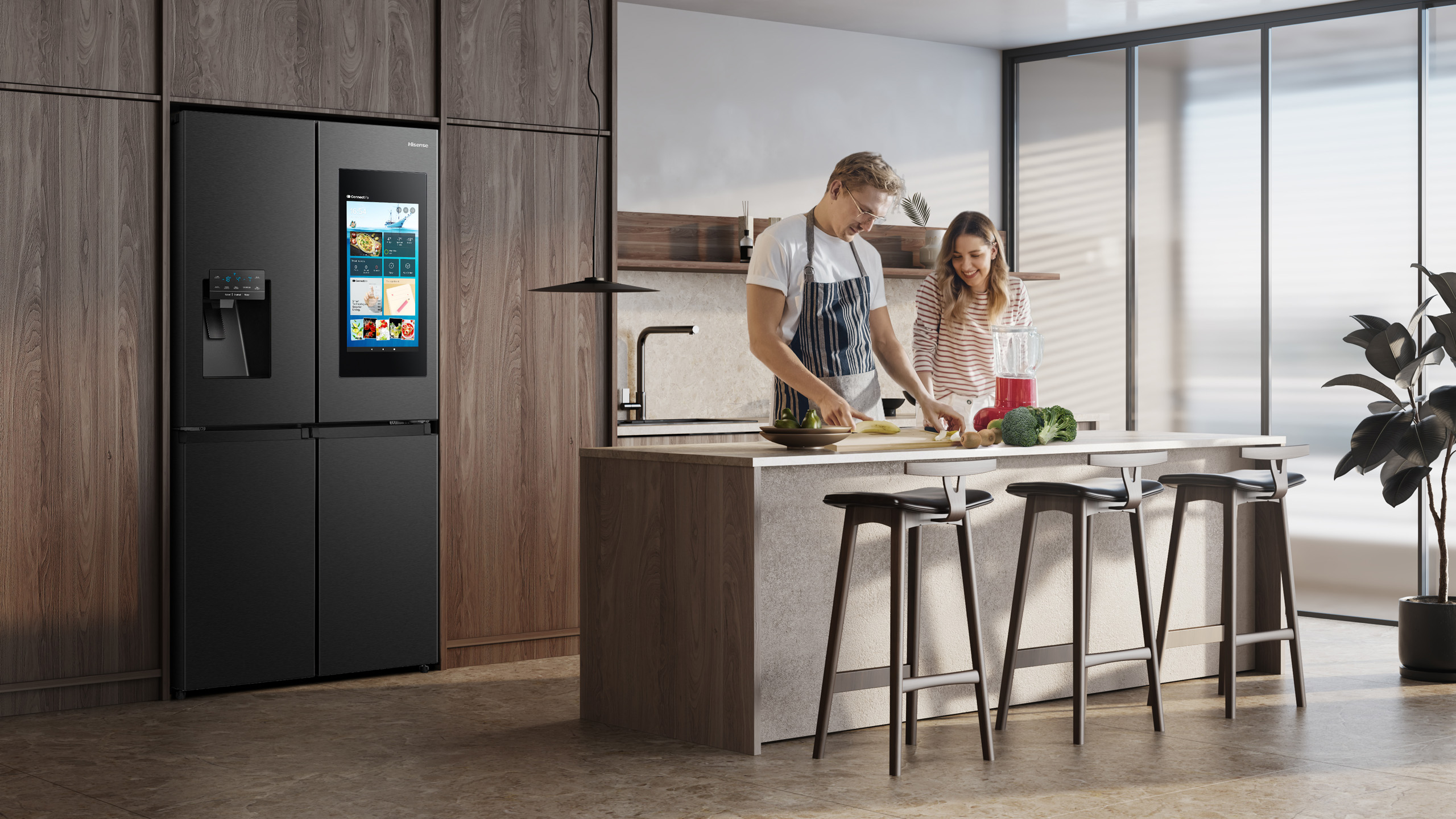
The freestanding refrigerator visually resembles a built-in appliance thanks to PureFlat, a flat door with integrated handles. Image source: Hisense
Tetyana Saulyak adds a nuance about the opening space itself: “You need to pay special attention to the technical characteristics of the selected model, especially when placing it near the wall, because different models require different technical clearances on the sides for opening the door more than 90 degrees, as well as the distance behind the equipment for air circulation.” Here’s the catch: opening 90 degrees is enough to get products, but to pull out the drawers from the freezer, the door must be opened wider. That is, even if the refrigerator is deliberately placed separately, and not built into the furniture row, this does not exempt from the need for accurate calculations.
The practical experience of designers demonstrates: if a large refrigerator is included at the design stage, it becomes a full-fledged element of the kitchen composition, and the space remains neat, ergonomic, and organically shapes the family's daily life.
Technology, architecture and life scenarios becoming a single system
The growing interest in large-format refrigerators is not just a fashion for larger volume, but a sign that household scenarios themselves are changing: people cook differently, shop differently, plan their week differently.
Such a large format justifies itself when it is selected for a specific family life scenario, and not the other way around: first the lifestyle, area and budget, and only then the technology that makes this scenario more convenient. In one project, such a solution is a large Cross Door with flexible storage areas and smart functions, in another - two fully built-in refrigerators, and in the third - a compact model and a separate freezer in the back kitchen.
Such a large format justifies itself when it is selected for a specific family life scenario, and not the other way around: first the lifestyle, area and budget, and only then the technology that makes this scenario more convenient.
But Hisense RQ760 is interesting not for its list of features, but for where the approach to large refrigerators is heading: not "more functions for the sake of functions", but an attempt to make family life a little more predictable. And this is precisely what makes it premium, as Kateryna Yarova sums up: "A premium interior is not an interior filled with expensive equipment. It is a space in which architecture, technology and human everyday scenarios work as one system."
You can learn more about the Hisense RQ760N4IFE refrigerator, which combines large capacity, flexible storage scenarios and smart features, at the brand's official page.


