




You can determine the colors for your ideal palette thanks to two assistants from Sadolin. The first is actually the Sadolin Visualizer App mobile application itself. It can be installed on IOS or Android systems. Among the features is the ability to choose a color from Sadolin paints by turning on the camera and pointing it at the object of interest. Thanks to a special moving brush, you can point to a specific element on the image with your finger, after which the application will determine a special color code and offer you paints from different series. Similar manipulations can be performed with photos already saved on the phone.

The Sadolin Visualizer mobile application tries on the color on the wall with the help of augmented reality technology. Image: Sadolin
The second assistant is the compact Color Sensor color scanning device. Its working principle is the same: you need to apply the scanner to the surface of a wall, furniture or textile, and it will determine the color without fail. The received data will be displayed in the pre-installed Sadolin Professional Expert App. You can save all the information and create your own palette in the future.

A special compact device Color Sensor from Sadolin that scans the color of any surface. Image: Sadolin
Kherson is already different
Some traumatic events affect our psyche in such a way that reality is perceived as distorted and everything has a "different taste". A few years ago, the story of Kherson would have started differently, but we cannot ignore the 256 days of occupation by the Russians and the subsequent daily shelling after liberation. Kherson is first and foremost a city of resistance, dignity and Ukrainian self-awareness, a city whose wounds will have to be patiently and carefully healed.
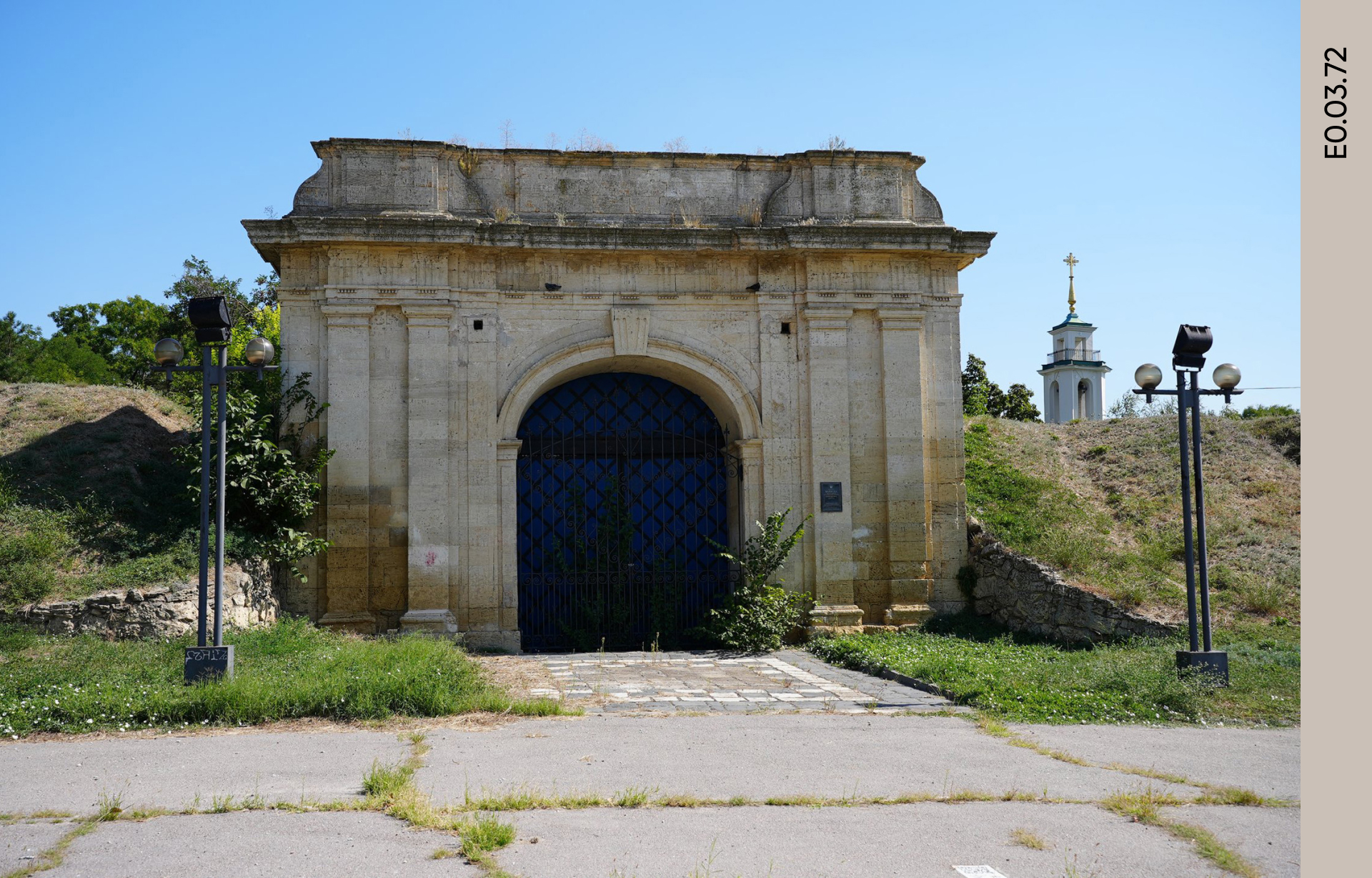
Ochakivska Gate, part of Kherson's defensive fortifications, was built in 1783 as part of the Kherson Fortress complex. An architectural monument of national importance. Photo: Suspilne Kherson
Before the full-scale invasion, we didn't know much about Kherson, but I bet many people had heard that it was founded by the Russian prince Grigory Potemkin, whose grave was located in Catherine Cathedral. "Situated" in the past tense, because after the deoccupation, the Russians took his ashes to their family. There is a certain debate in the media about the true origin of the city and the settlements that preceded it. There is an idea that there was a settlement of Bilchowisie on the site of modern Kherson. However, it is not quite so. A famous explorer of the south Oleksiy Patalakh explains why: "As for the Belikhovychs or the Vilkhovychs, marked on maps of the 1223th and XNUMXth centuries, this is the Bilozerske settlement in the village of Dniprovsky near Kherson. It is marked as a "ruin" on the maps. It existed in ancient times, and in the Middle Ages it was the mainland part (apparently, the customs house and citadel) of the ancient Russian port city of Oleshsia. The main part of the city (in particular, the harbor and port) was located on the modern Great Potemkin Island. The city was destroyed in the first decade of June XNUMX as a result of Jebe-noyon's raid after the battle on Kalka. In the XNUMXth century on the mainland was the trading factory of the Genoese Ilyche. It disappeared, apparently, as a result of the invasion of the lower Dnieper by the Ottoman sultan Bayazid II Veli."

Life was certainly raging near the banks of the Dnieper long before the founding of Kherson. On these lands, Scythians crossed paths with ancient Greek sailors and merchants, and Slavic farmers came into contact with nomadic tribes of Pechenegs and Polovtsians. In the 1735th and 1739th centuries, on an important trade route from the Varangians to the Greeks, in the lower reaches of the Dnieper, the already mentioned settlement of Oleshsha, which was the main seaport of Kyivan Rus, was located. About three centuries ago, Zaporozhian Cossacks wintered on Koshovo Island (modern-day Quarantine Island), and the Cossacks mastered not only the steppe, but also the sea, building flotillas of the famous seagulls. The founding of the city of Kherson was preceded by the Alexander Shanz fortification, which was built during the Russian-Turkish war in 1778–988. Later, the Russian Empire decided to create an outpost at this place to fight the Ottomans. Thus, in XNUMX, the construction of the Kherson fortress and the first base of the Black Sea Fleet began. The city had a port and shipbuilding character. The fortress got its name in honor of the ancient Greek colony of Chersonesos, where Prince Volodymyr was baptized in XNUMX. Archaeological evidence of older settlements was not found on the site of Kherson, but there are plenty of them in the vicinity.

North Gate in the Kherson Fortress Park. Photo: Suspilne Kherson
A small part of the fortress has been preserved to this day: several hundred meters of fortress ramparts, Ochakivska and Moskovska (North) gates, the building of the Admiralty Arsenal, a powder cellar and the Catherine Cathedral complex. The fortress is a place dear to the heart of Oleksiy Patalakh: "Currently it is an ordinary park with a "scoop" aesthetic, but subject to the restoration of the 3rd bastion at the Ochakivska Gate, the 8th and 9th bastions at the Petersburg Gate (with the reconstruction of another powder cellar at the 8th bastion and clearing the underground mine passage on the curtain between the bastions), the fortress well and the arsenal complex, we can get an interesting tourist attraction." Mr. Oleksiy considers the old city cemetery to be an ideal place to get to know the history of Kherson: "The oldest of the dated burials dates back to 1781. The object is abandoned, the monuments need thorough restoration. But under the condition of a proper approach to the matter, the object can become Kherson's "Lychakov".
However, the route to get to know Kherson will never be the same as it was before the war and the bombings. Museum expert, architectural historian and member of ICOMOS Ukraine Serhii Dyachenko said that his city and its inhabitants had changed a lot: “The first event was a quick occupation, which, like the invasion itself, was stressful. And if for the majority of the country this stress and resistance took place at least in a free territory, then for the Kherson people it was also accompanied by an apocalyptic feeling of a lost city, on which freaks with tricolors roam freely. The second event is a sense of community, which prompted us to repeatedly oppose the occupation and its slogans about "Russian city", "Russia forever" and "common values". The third event is the liberation of the city on November 11, 2022, which showed that good always triumphs over evil. The fourth event is the theft of collections of Kherson museums, libraries and archives. It prompted reflection on what is actually valuable and what is unimportant to residents. The fifth is the undermining of the Kakhovskaya Dam. Every Kherson resident has heard about a possible catastrophe since childhood - it is some kind of local mythology. But it was impossible to even imagine that this could actually happen. And finally, the last thing is the terrible shelling of the city from the day of liberation until today, when your home, your native places, places where you worked or drank coffee are being lost every day before your eyes, when significant monuments of cultural heritage are being destroyed."
The route to get to know Kherson will never be the same as it was before the war and bombings
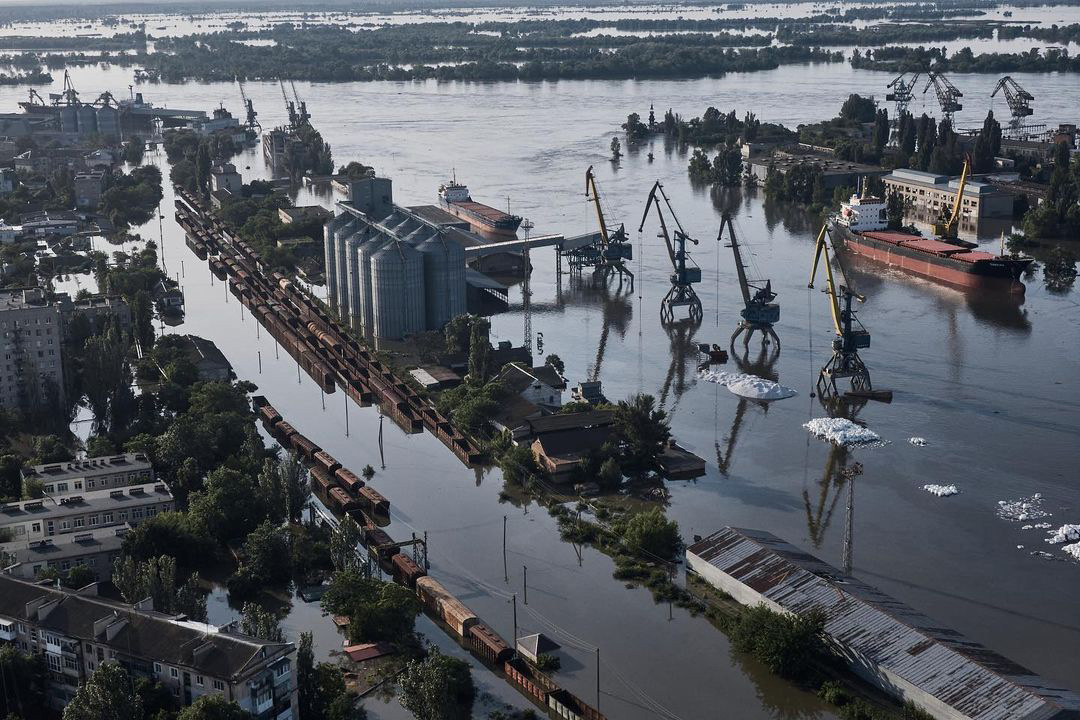
Consequences of blowing up the Kakhovskaya dam. Whole districts of Kherson were under water. June 7, 2023. Photo: Konstantin and Vlada Liberovy
The historical center of Kherson has preserved many examples of exquisite architecture from the imperial times, which under normal conditions could be turned into tourist magnets for the city. However, as Serhiy Dyachenko points out, the format of values has now changed, and many objects have gained importance that they did not have before the war: "For example, the Regional Palace of Culture, which during the time of the Ukrainian People's Republic was a Ukrainian theater and a place of extremely important events, and for the last twenty years has been a symbol corruption of Kherson authorities. The attitude towards Freedom Square, which for a long time was a symbol of Soviet Kherson, has changed, and now it has become a symbol of resistance to the Russian occupation. Yes, there was also the Kherson Maidan on it, but it was also a resistance against the authorities. Now it has a completely different connotation. Kherson will not be the same as it was, but what is more important for me is that it should not be the same as it was."

Kherson residents celebrate the liberation of the city from Russia on Freedom Square. Photo: Taras Ibragimov
Honey stone
The most valuable historical and architectural part of the city is located near the bank of the Dnieper, which is most vulnerable to shelling. According to Serhiy Dyachenko's calculations, about 60 valuable monuments were damaged above the average level. The problem is not only the daily shelling, but also the inadequate maintenance of buildings during hostilities. However, most buildings retain their structural skeleton, so you and I can explore their color palette.
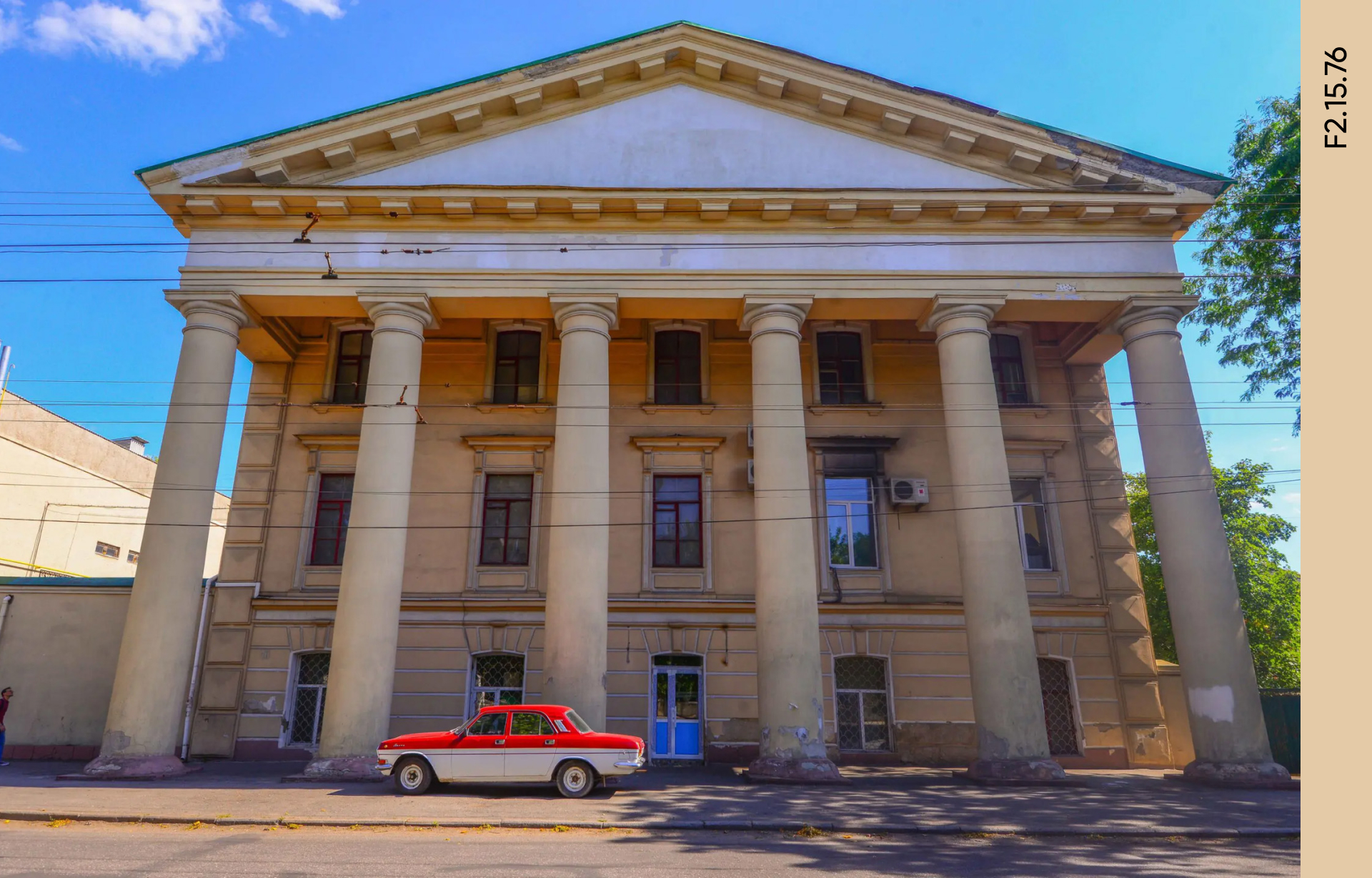
The Admiralty Arsenal is one of the earliest buildings of the former fortress on the territory of Kherson. Photo: Semyon Shirochyn
"I see Kherson in honey color. This is the color of the Ingulets limestone, from which the buildings of the Kherson fortress and the old quarters of the city, as well as the oldest tombstones of the necropolis, are built. By the way, the Ingulets limestone is called "honey stone", - says Oleksiy Patalakh. The defining color for Kherson is emotionally connected with the heat of the sun and the color of the steppe, the color of ancient monuments around the city. It is also the color of his first buildings: St. Catherine's Cathedral and the Perekop Arsenal with its monumental colonnade. The most distinctive building of the imperial era, built back in 1905, is made in this color - it is the building of the City Duma, which now serves as an art museum. The building of the Museum of Local History on Sobornii Street is also presented in sandy color with ocher accents. It was built in 1894 according to the project of the architect Vladyslav Dombrovskyi for the District Court.
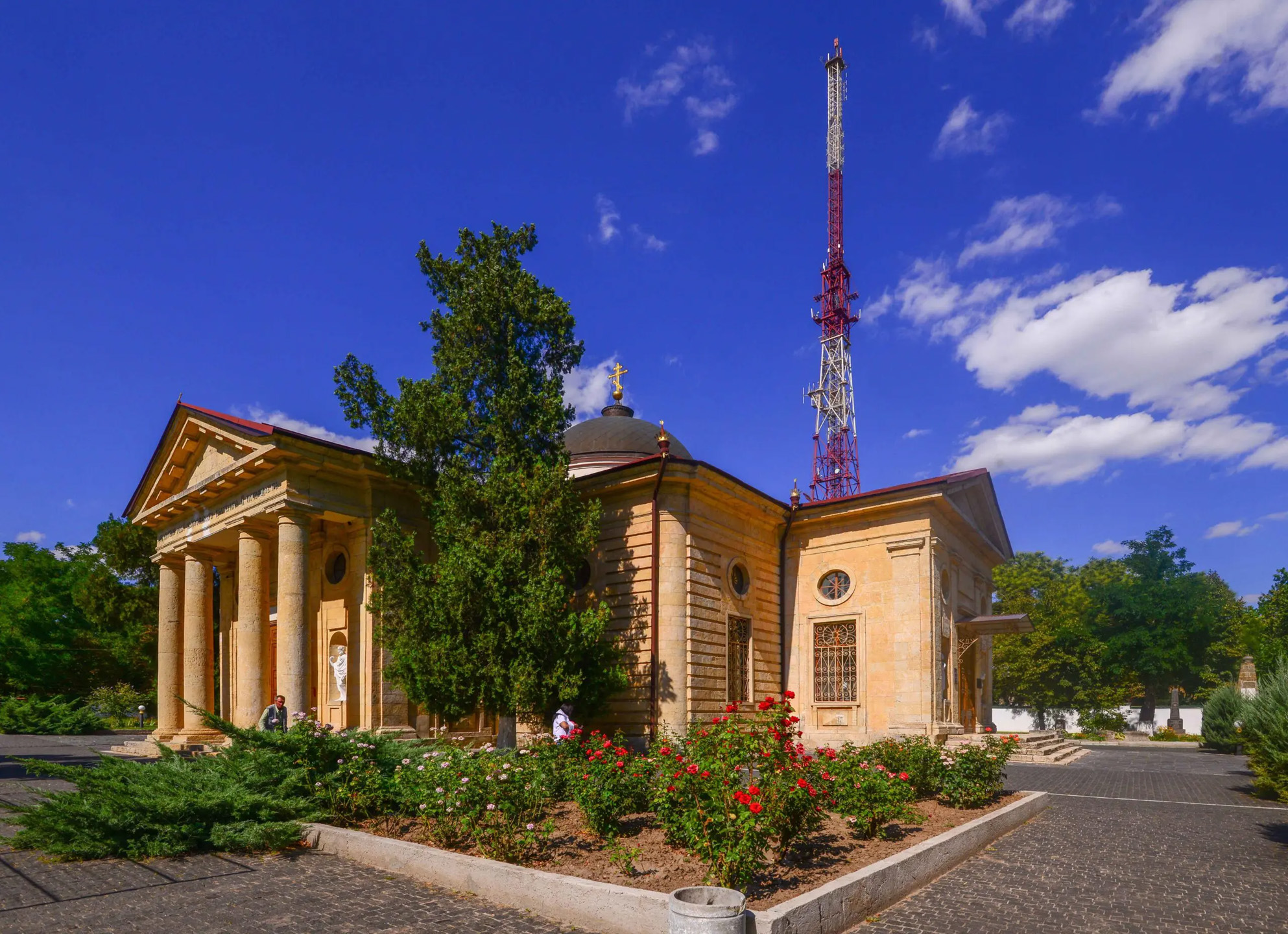
St. Catherine's Cathedral in Kherson - according to one version, the work of the famous architect I. E. Starov, an outstanding landmark of the 18th century. Photo: Semyon Shirochyn
The classic building of the city RATS on Torgovaya Street also deserves special attention. It was built according to the project of Odessa architects Mykola Tolvinskyi and Felix Gonsiorovskyi in 1896-1897. The almost sandy-white facade is decorated with a four-column portico in the ancient Greek style. The city also has good examples of manor buildings, including the famous house with Atlanteans at 8 Suvorova Street. It continues the tradition of a warm sunny palette, complementing it with rich ocher plasterwork with accented white figures of Atlanteans holding a balcony on their shoulders.
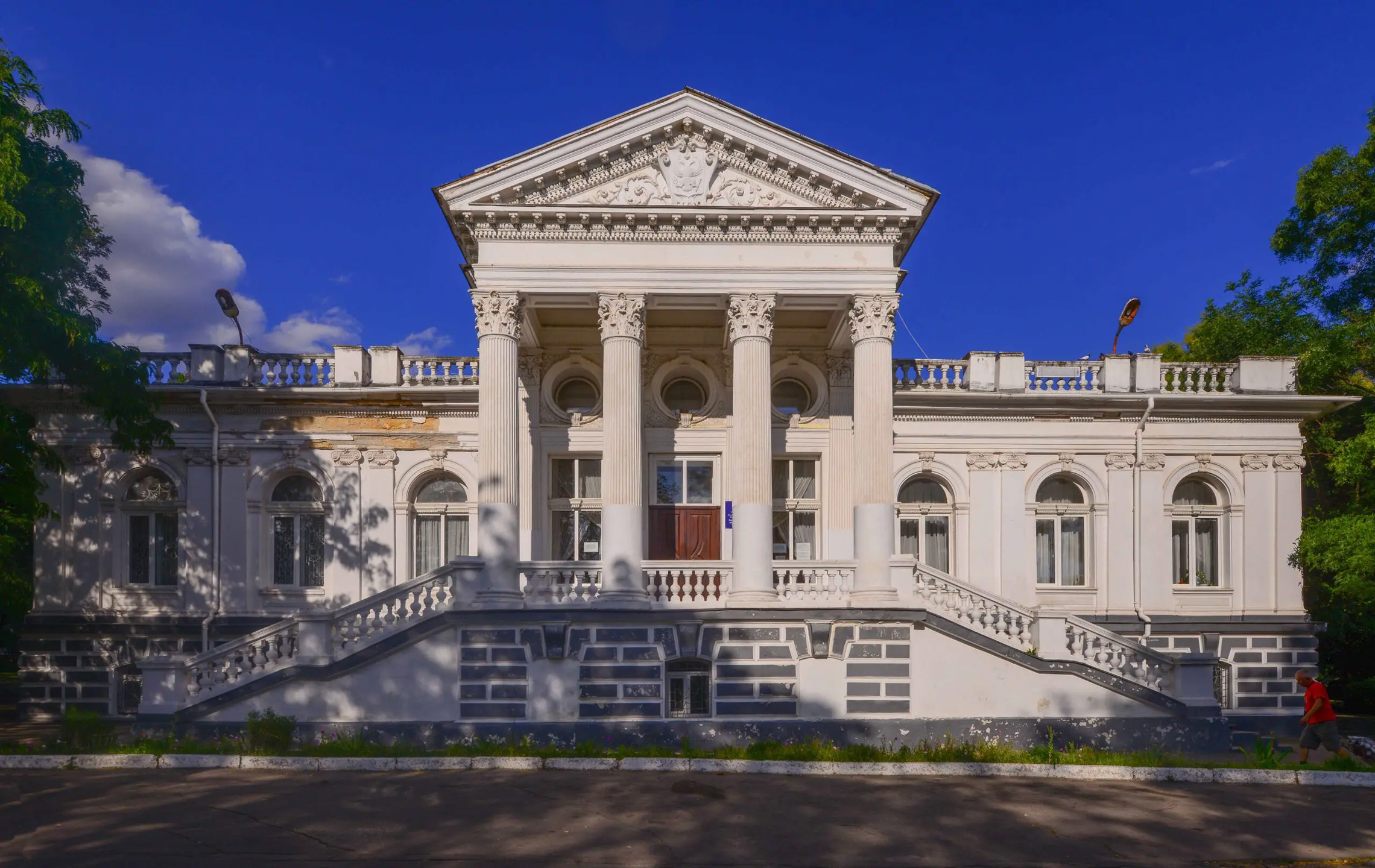
The building of the Central RATS was erected in 1896 for the Kherson Public Library. Construction was carried out on donations from Kherson residents, part of the funds was allocated by the city administration. Photo: Semyon Shirochyn
Another of the most beautiful old buildings is located in the center of Kherson on Starobryadnytskyi Street - the house of Peruvian merchants. At the end of the 19th and the beginning of the 20th centuries. Kherson was an important transport hub with a seaport. He received many different delegations and ships from different parts of the world, in particular from distant Peru. The architecture of the building is distinguished by unusual elements and solutions. It has the shape of a streamlined ship, which is decorated with South American drawings and writings. These elements form, as it were, a variegated canvas, embroidered with gold threads. The facade was damaged. However, it has already been reconstructed from modern materials, so it can be restored again.
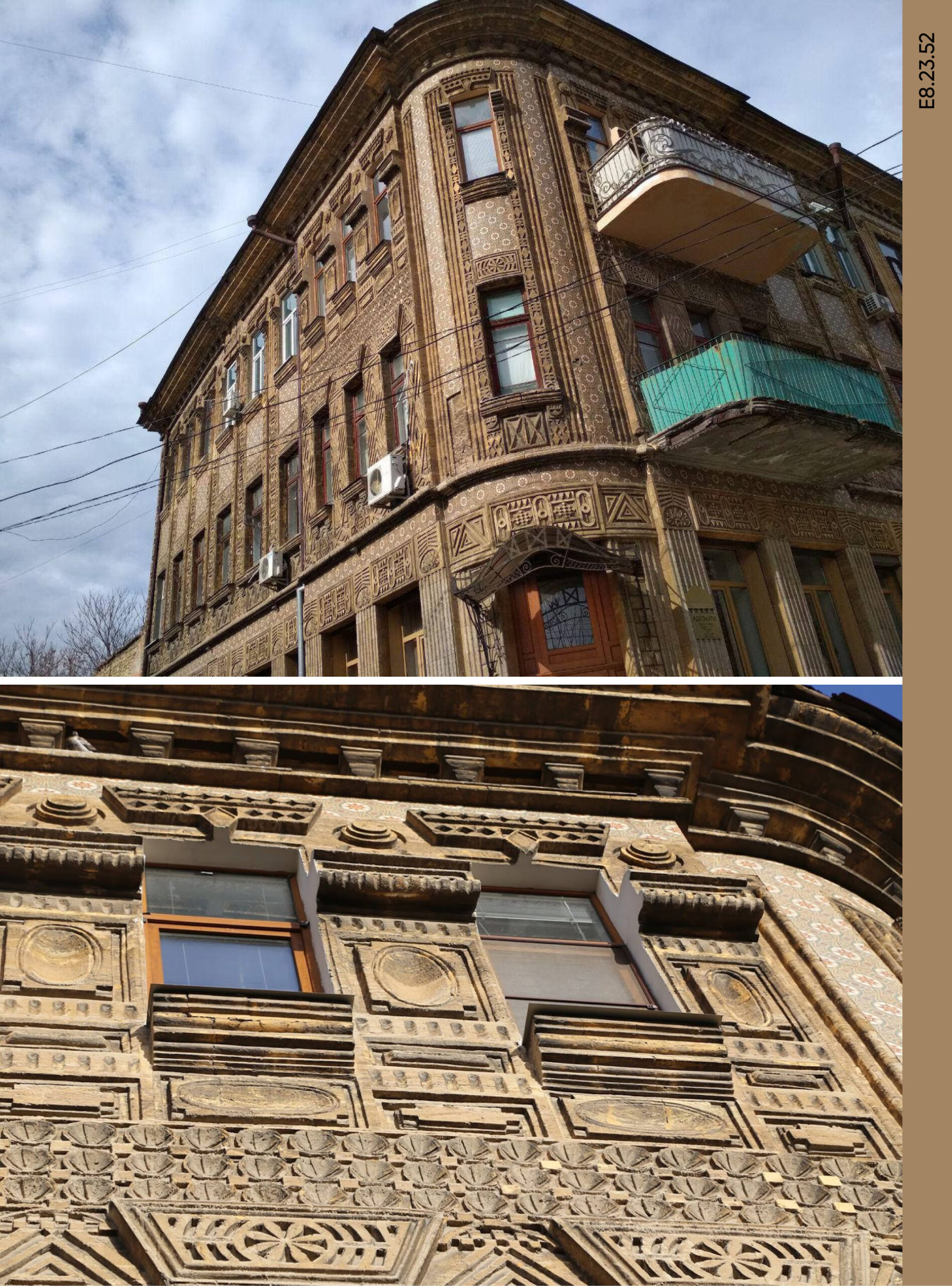
The House of Peruvian Merchants at 20 Starobryadnytskyi Street is located near the Central RATS. Photo: open sources
According to Serhiy Dyachenko, interesting and somewhat hidden "pearls" of Kherson can be the works of only one architect of the beginning of the 20th century - David Bunzelman: "These are about XNUMX iconic objects for the face of the city, in which this extraordinary architect tried to explore and reflect the features of the city. And I would suggest visitors to the city to do just that. Among them are the "Europeyskyi" hotel, the building of the commercial court, the regional treasury, etc.
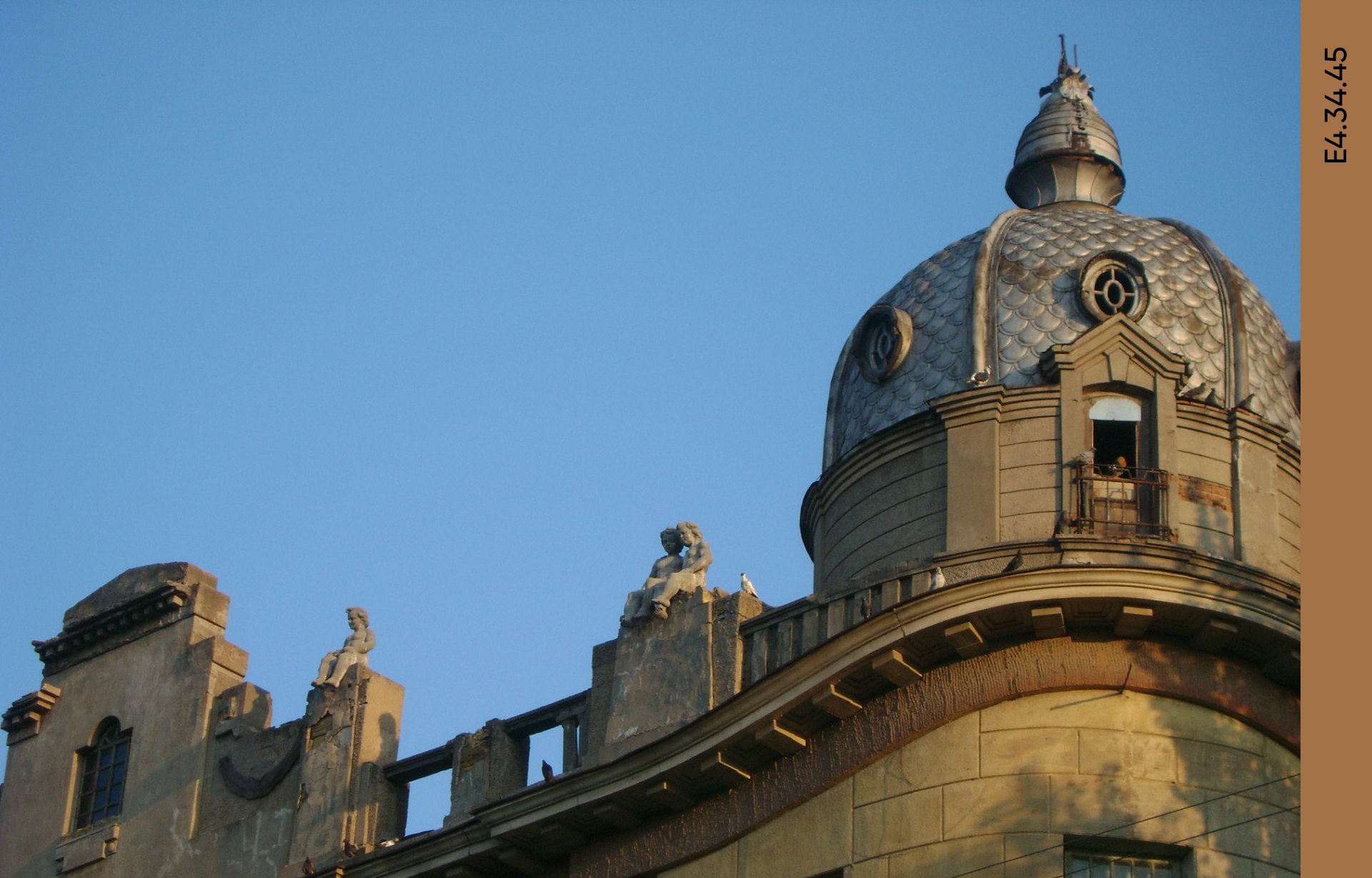
The building of the "European" hotel. It was built in 1915 at the corner of Katerynynska Street (now Soborna Street) and Richelievska Street. Photo: open sources
After the liquidation of the Kherson province in 1922, the pace of construction in the city decreased significantly, so there is quite a bit of the architectural heritage of constructivism here. In the 1930s, the building of the marine station and the fire brigade was erected, the authors of which are unknown. Another constructivist building, the port elevator, was designed by the American engineers Albert Kahn Associates. After the Second World War, the sea station was rebuilt, changing its original appearance. In what condition he is now, it is difficult to say because of the constant shelling.
"I see Kherson in honey color. This is the color of the Ingulets limestone, from which the buildings of the Kherson fortress and the old quarters of the city, as well as the oldest tombstones of the necropolis, are built," - Oleksiy Patalakh
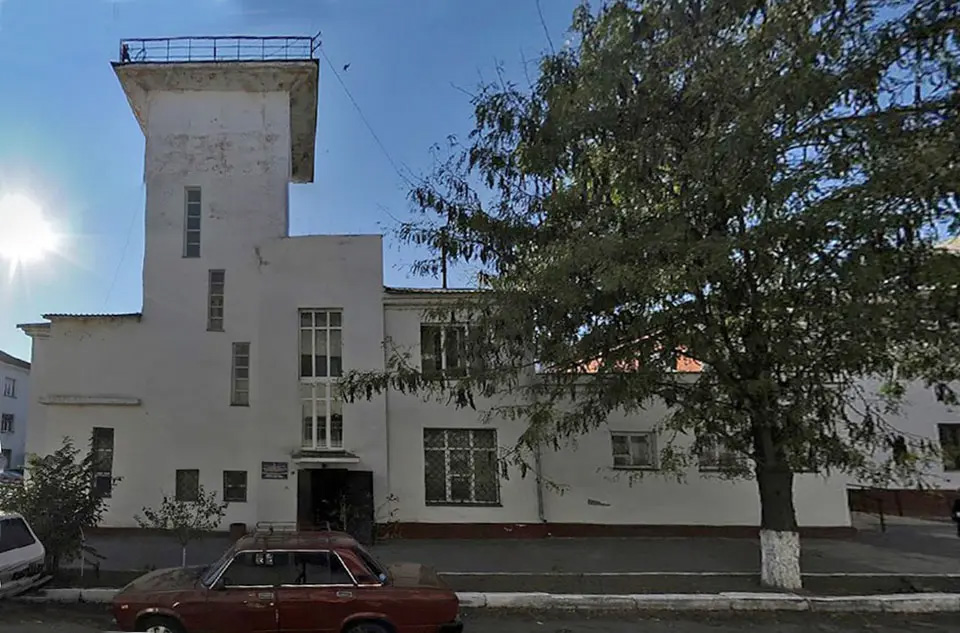
Fire brigade building. What it looks like now is unknown. Photo: Serhiy Dyachenko
After Kherson became the administrative center of the region of the same name in 1944, the city began to actively rebuild buildings destroyed or damaged during the war. Thus, in 1949, the building of the Kherson Maritime School (now a college) was restored according to the project of architect Georgy Skolozubov and engineer Vasyl Peshkov. The building was repainted several times, but the last color of the facade was a cold blue shade. On July 2, 2024, the Russians destroyed it for the second time during a massive shelling of the central part of the city. In the post-war period, the buildings of the unfinished ensemble were also built on Svobody Square: the City Council building (1 Svobody Square), the administrative building (47 Nezalezhnosti Ave.) and the Ukraina cinema (45 Nezalezhnosti Ave.).
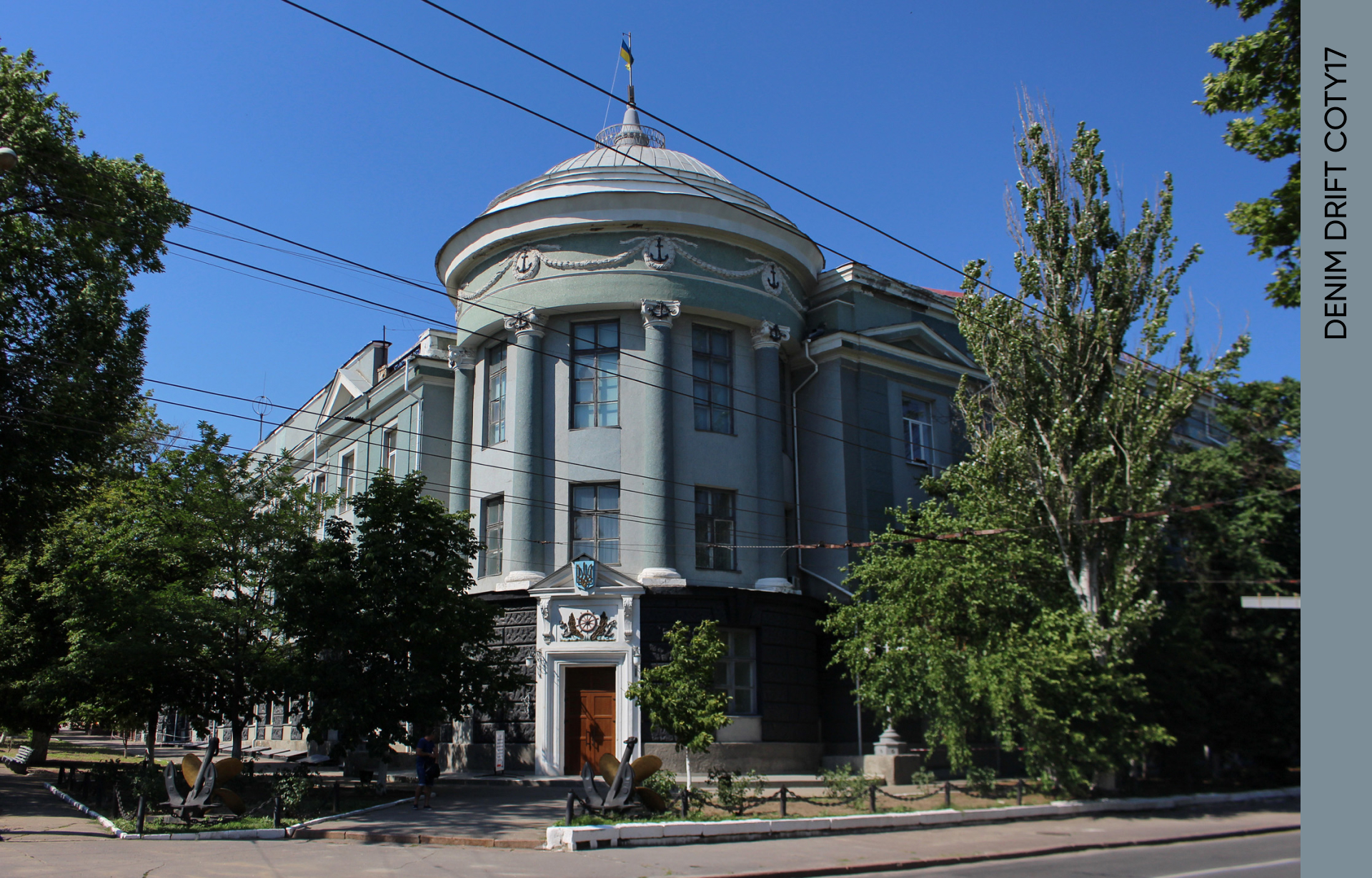
The building of the Kherson Maritime College before the shelling by Russia. Photo: open sources
The warm color range of architecture was somewhat diluted by the age of modernism. In 1970, according to the project of Hryhoriy Sokolovskyi and Halyna Skrypchenko, the Jubilee movie concert hall was built near the former Kherson fortress. The building of a unique shape harmoniously fit into the square and is considered a hallmark of the city. Unfortunately, the steel ribs on the facade were damaged after another shelling, and the issue of restoration cannot be discussed yet. Another damaged modernist building stood out for its shape - the Frigate Hotel building, which resembles a ship. Its project was developed by architects Marchenko and Mykhaylenko and engineer Fertman in 1979. The shiplikeness of the building is given by its elongated silhouette, round porthole windows in two rows and "sails" above the vertical volume. The interiors of the hotel contained granite, marble, artistic parquet, ceramic tiles and mosaics.
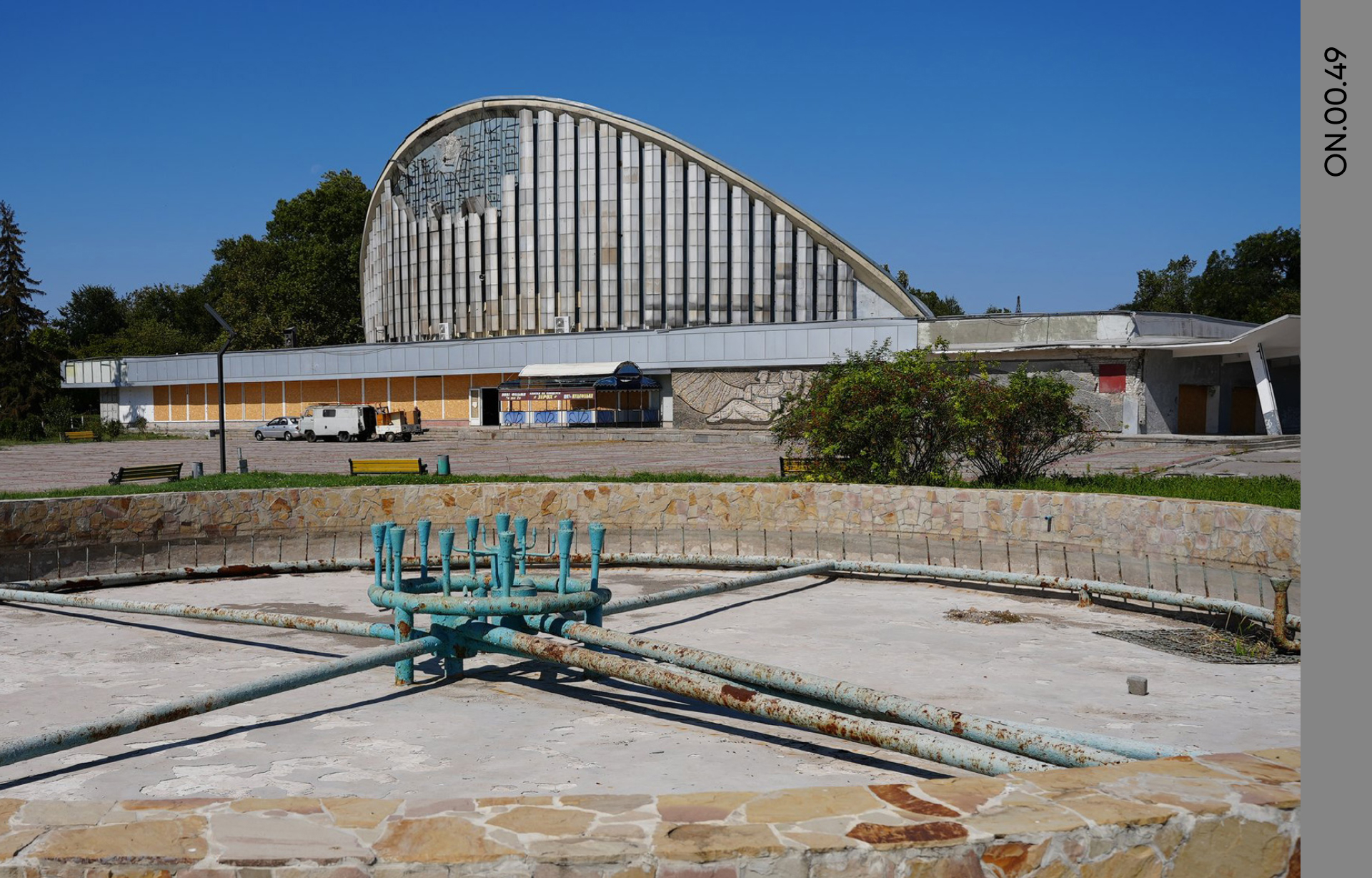
The Jubilee movie concert hall with blocked windows and damaged facade and roof. It came under fire from Russian troops in February 2023. Photo: Suspilne Kherson
Kherson's palette is also about the abundance of greenery from early spring to late autumn, because 40 percent of the city is occupied by parks and squares. Now the reality is that greenery is reclaiming classic human territories: grass grows on some roads and sidewalks.
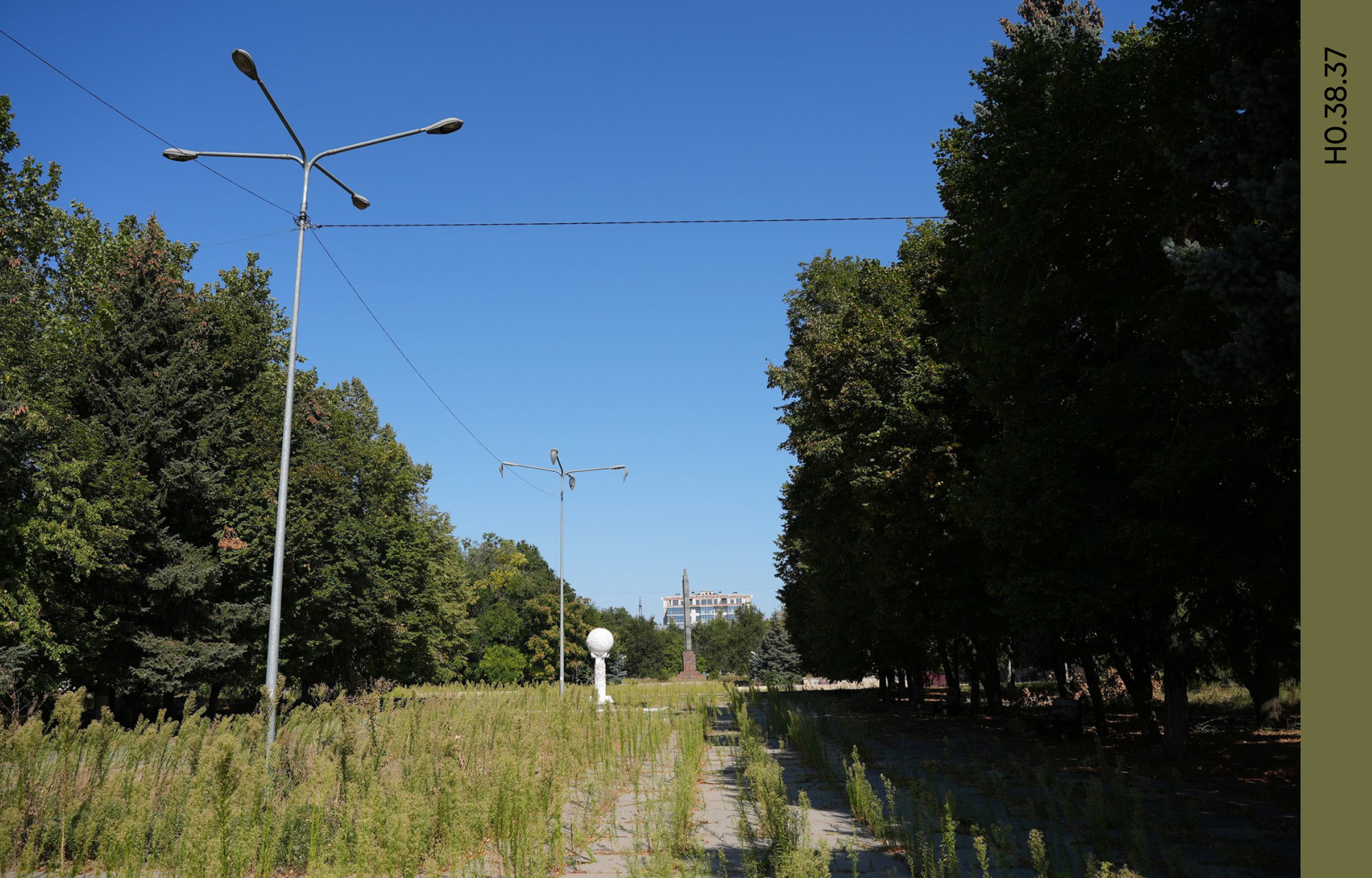
One of the central alleys of the park, where the people of Kherson liked to relax under linden trees on hot days, has become overgrown with grass. You can't see the flower beds, the grass breaks through the tiles. Kherson, Kherson Fortress Park, September 2023. Photo: Kherson Society
Rules of reincarnation
For the majority of Kherson residents (60%), the Kherson of the future is a different city. The main idea of recovery is not a return to what was before the war, but a rebirth with the correction of the problems of the past. Serhiy Dyachenko explains: "Unfortunately, the hands of the city's activists are tied, there is no necessary interaction and no opportunity to influence the processes of budget distribution or the development of the city's regeneration concept. Once again, I will emphasize the point that it is not about rebuilding destroyed housing, businesses, medical centers, educational and cultural institutions. If it is simply rebuilt, it will not mean reanimation of the city: it was sick, and will be even more sick if it does not change. A completely new concept is needed, the concept of a cultural city for life. In my opinion, the basis of this concept should be two most important components: the return of the river to the city, as well as the development of a mechanism for the total restoration of not only individual monuments, but also complexes with the entire structure of the historical center, together with a mechanism for the future protection of this recreated appearance."
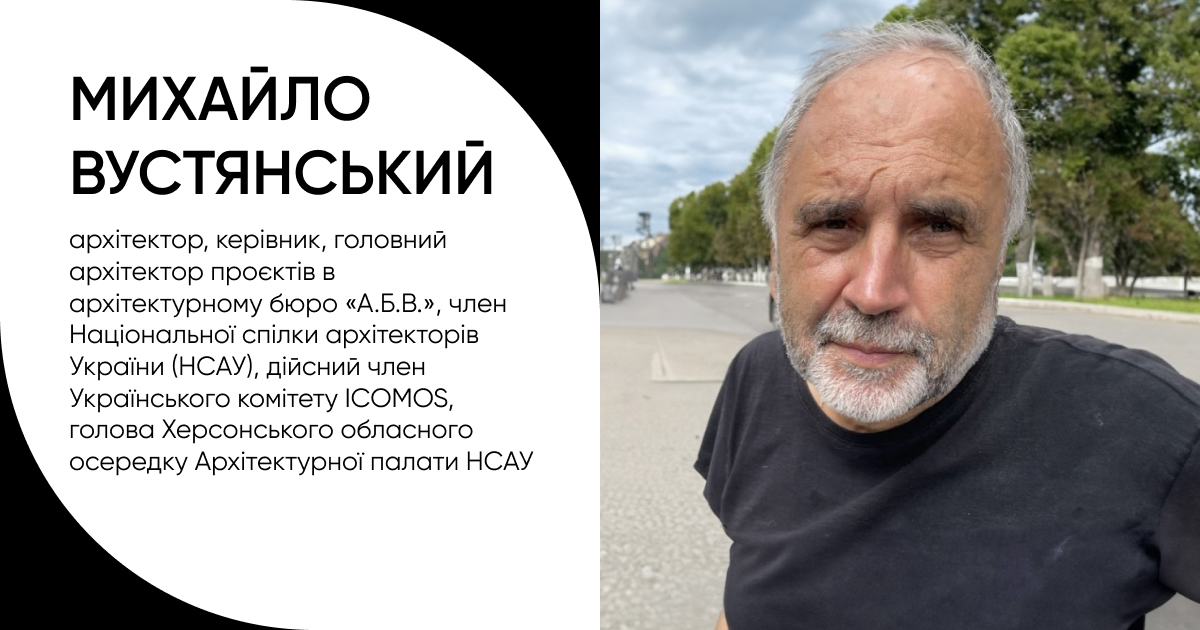
Architect and head of the Kherson regional branch of the Architectural Chamber of NSAU Mykhailo Vustyanskyi gave us a detailed vision of the post-war reconstruction of Kherson and the creation of a design code for its historical buildings. In his opinion, an effective solution will be the creation of general regulatory documents, which will not only be of a recommendatory nature, but will also provide for punishment for violations of these rules by city residents. "In the context of urban planning. This is the definition of the development vector of the city-forming structure of Kherson. Determining the places of development of certain territories and reservations for a possible change in the status of the lands, with the provision of the possibility of their further development. Creating a comfortable environment for living in close proximity to places of work, service and recreation to reduce the burden on the city's transport infrastructure. An increase in the current planning structure of the city of recreational areas (an urgent need due to the loss of suburban recreation areas due to flooding and mining), as well as pedestrian spaces, service, leisure and recreation areas, reducing the time of access to them, streamlining the transport scheme with an increased emphasis on public transport and, taking into account the compactness of the city, the creation of a network of bicycle routes."
The main idea of recovery is not a return to what was before the war, but a rebirth with the correction of the problems of the past
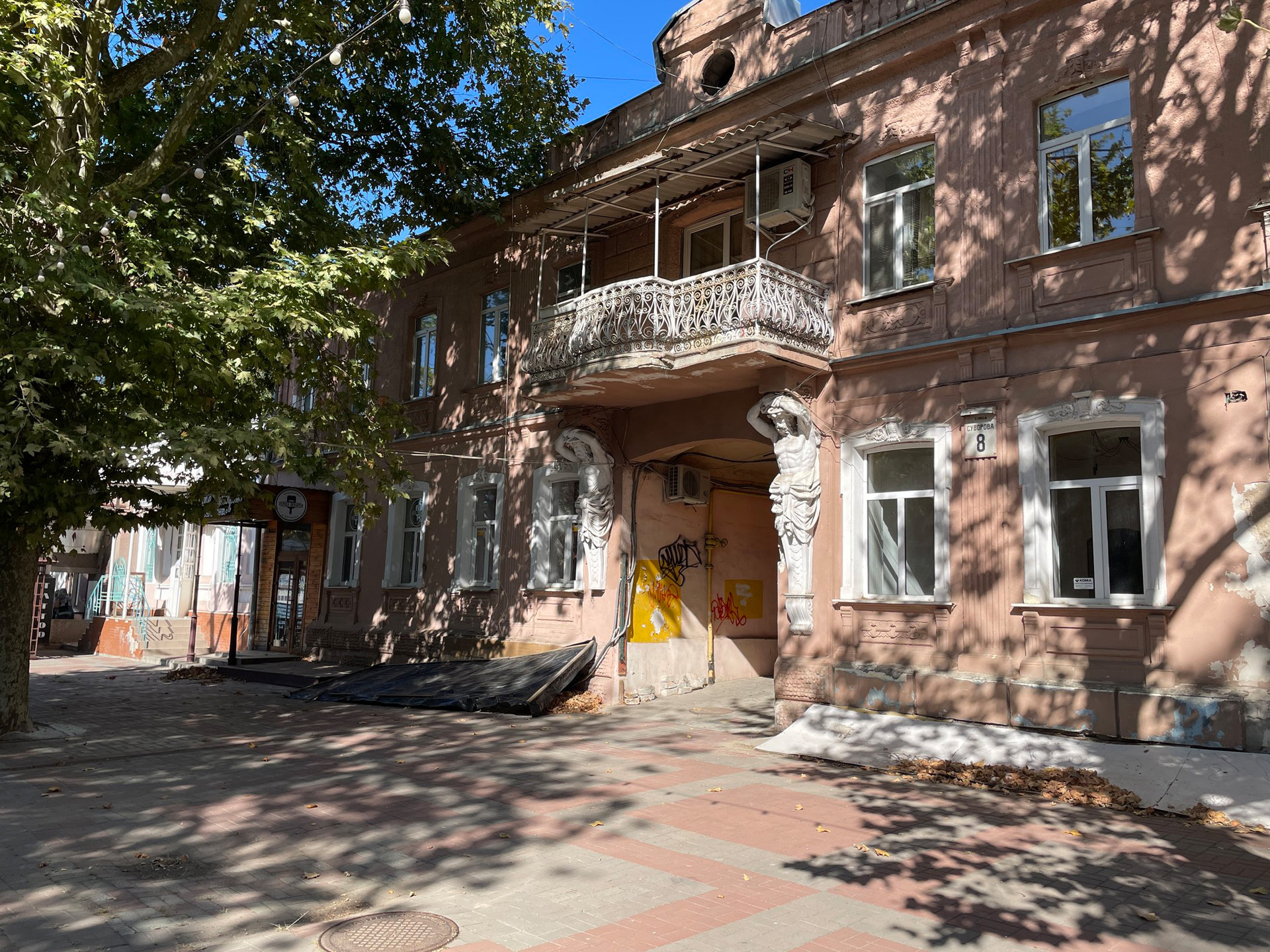
This is what the building with the Atlanteans in Kherson looks like now - one of the few buildings that managed to preserve its ancient architecture. Photo: Suspilne Kherson
"Interference in the historical space should be minimal, the central part of the city has already suffered significant losses during flooding, shelling and bombing. The construction should not globally transform and significantly change the existing character of the building blocks. What is possible to restore in its original form, of course, it is better to restore. This applies to architectural monuments. In case of significant damage, you should not spend money on restoring the remains, it is better to create a new one in their place. The problem that arose as a result of the explosion of the Kakhovskaya HPP dam is particularly relevant. Restoration of flooded houses with weak foundations and walls built on clay mortar is not rational, in my opinion, - continues Mykhailo Vustyanskyi. — In addition to this, there are problems with fungus and mold... It is better to proceed in the way of complex reconstruction of the quarters. It is necessary at the state level to develop and adopt a program of complex reconstruction of the blocks of the flooded zone and to build new comfortable housing for the victims. Do not leave the victims alone with the problem, but give the opportunity, as an option, to get new housing as soon as possible instead of monetary compensation. It is possible to build new housing even by taking reusable building materials from emergency and destroyed structures, which corresponds to the concept of sustainable construction.

Broken windows in the houses of one of the sleeping areas of Kherson. Photo: Kateryna Hliznitsova
An exception to the changes in the historical quarters may be the relocation of the sea port, which cuts off the city center from the river. The fact is that Kherson, a city on the Dnieper, actually has almost no access to it. The city embankment is open for walking only in three small sections. Therefore, the territory of the port can be turned into a multifunctional public-residential-recreational space with the extension of the embankment to the building of the river station, and possibly further along the Koshova River, combining it with the recreation area of the Korabel microdistrict, as explained by Mr. Mykhailo. In addition, all architectural and urban planning transformations must take into account the requirements for inclusiveness. This will be associated with an increase in the number of people with disabilities as a result of hostilities.
Mykhailo Vustyansky sums up: "The rules should provide for certain restrictions, while at the same time giving the opportunity to residents and businesses of a certain territory to participate in the creation of individual spaces, which should harmoniously flow into the existing environment, not violating the general concept of the city or quarter, but complementing it."


