


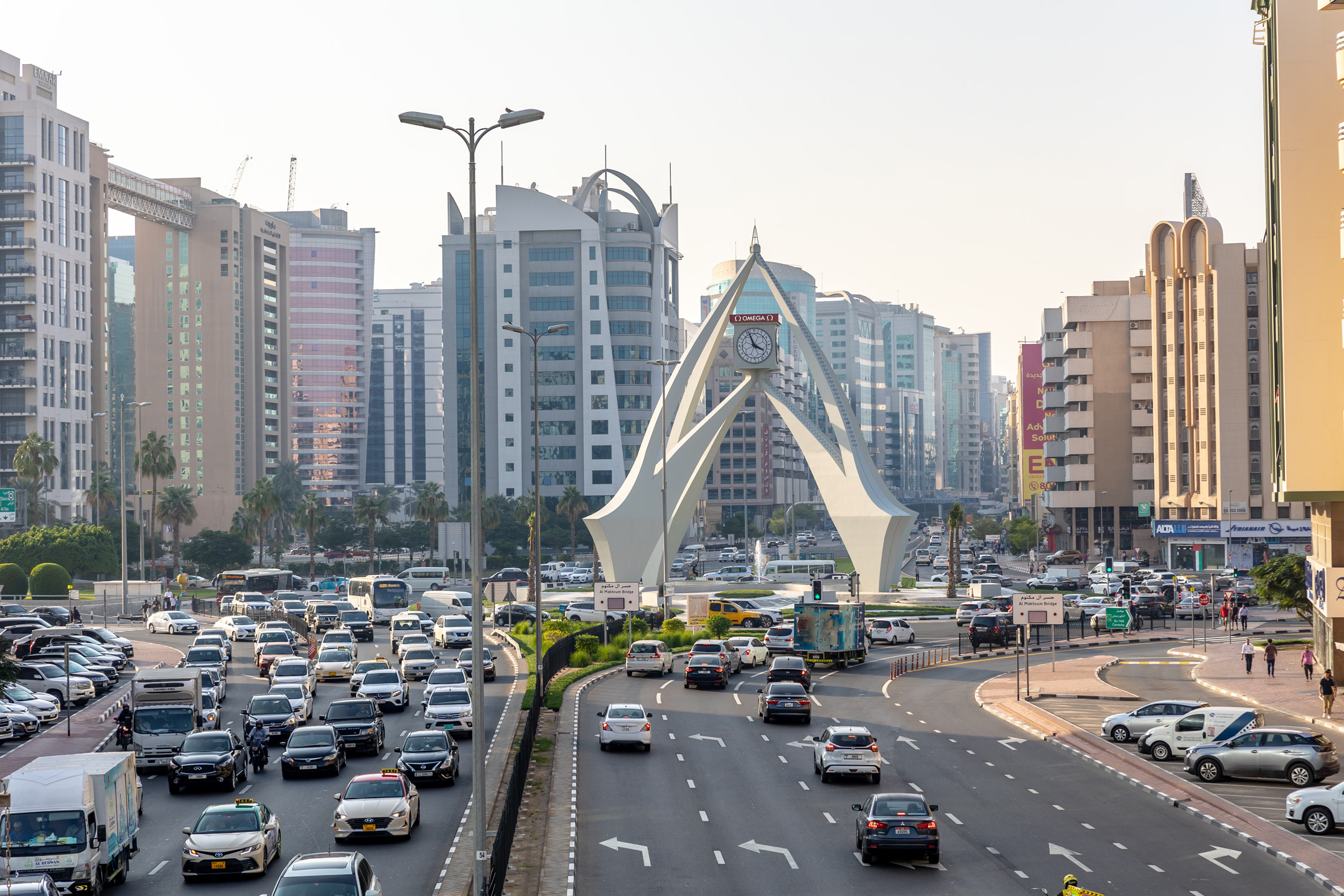
Deira Clocktower is a symbol of the city of Dubai
Sustainable development and sustainability as a characteristic of activity today is not just a moral tuning fork, which would be nice to listen to. This is an urgent requirement for the method of production and consumption — unless, of course, humanity has decided to end its annals in the 21st century.
Light is a special architectural and artistic tool that affects the viewer primarily not cognitively, through awareness, but through emotions and subconsciousness. To understand exactly how sustainable principles can be implemented in light projects or with their support, we turned to the architect of light Mykola Kabluky.
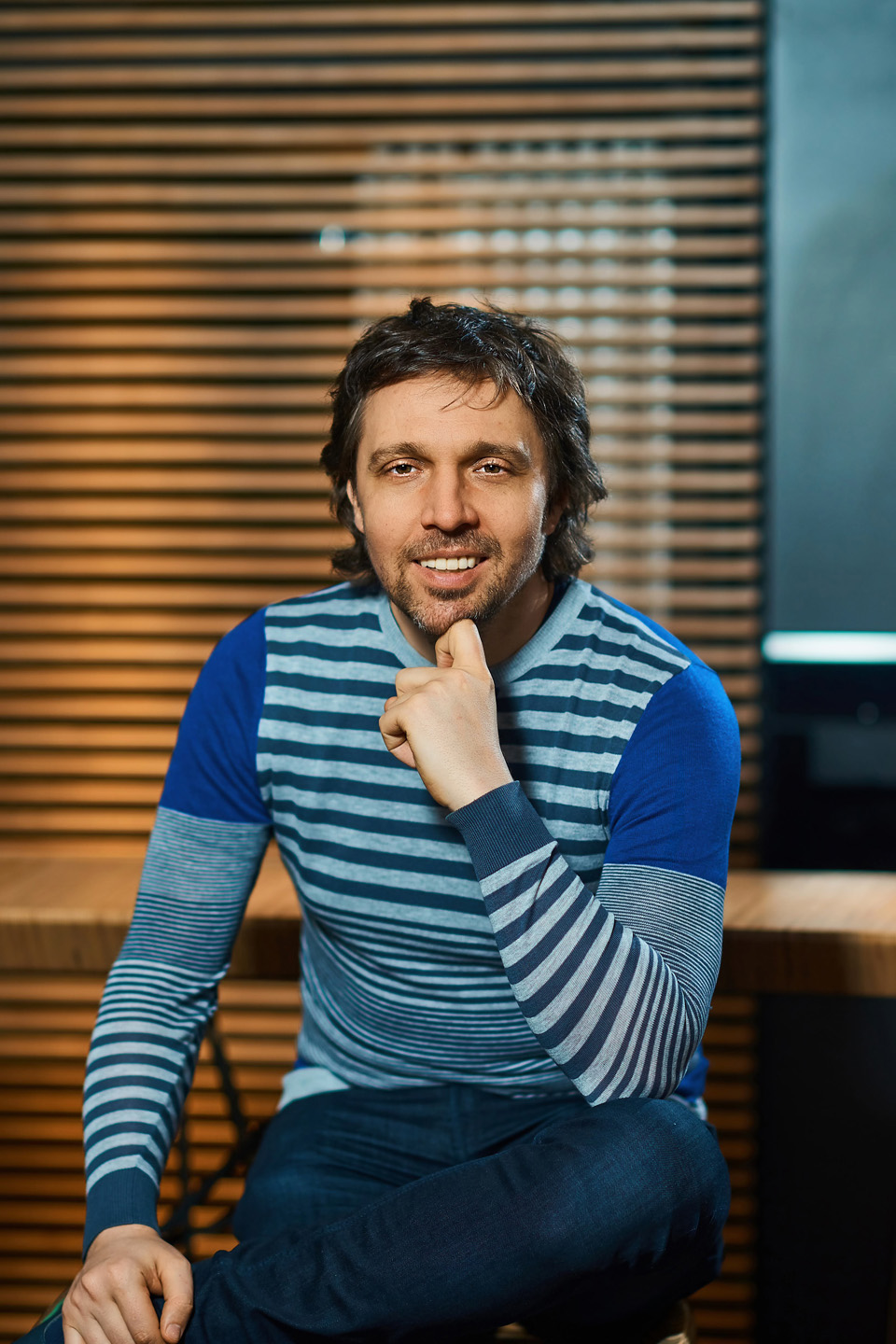
Mykola Kabluka, founder and art director of the Expolight company and the Kabluka Light & Digital Sculptures brand
At the end of last year, light designers Kabluka Light & Digital Sculptures, in collaboration with Dubai Municipality and international marketing agency Nuevo Design, created an interactive installation for the Deira Clock Tower during the global event of the year - the UN Climate Change Conference COP28. The project envisaged revitalization and the search for new meanings for the historical monument built in 1965. Deira Clocktower is one of the symbols of the city of Dubai.

Mykola Kabluka and his team turned the Deira Clocktower, a symbol of the city of Dubai, into a blooming coral
PRAGMATIKA.MEDIA: Is light as a material always tangential to the values of sustainable development? For example, the lights of big cities harm the ecosystem. The project implemented by you in Dubai draws attention to the environment, although the Emirates are generally not perceived in the world as a very sustainable country.
Mykola Khabluka: The current trend in lighting installations is to avoid light pollution. Don't light up the sky over megacities, don't waste energy, especially lighting. We also follow these principles. The created installations did not harm anyone, it is a projection, not a light directed into the sky. Of course, the concept of Dubai is far from sustainable, but the fact that they are taking steps in this direction is very good. Currently, this is no longer a city in which "we spare nothing, including energy for all kinds of wow-things." Now Dubai is attracting the attention of the world, its culture is being formed here. And I am very impressed that things are laid down and declared that contribute to the education of people. By the way, part of our project for the COP28 Conference was located in the Expo City Dubai pavilion, a building once built for the World Expo. All key guests of the event performed there. It's good that such spaces find a second life, a permanent function is created for pavilions that were previously built for other needs.
Mykola Kabluka: "The language used by public art is very clear. It is a powerful channel for advancing narratives. Institutions or cities that understand this use such opportunities very successfully"
PM: Today the world is going through many crises, it seems that we need to rethink the scenarios of the future. How do you think light sculptures and installations can promote the values of sustainable development in the world? What is the special power of light?
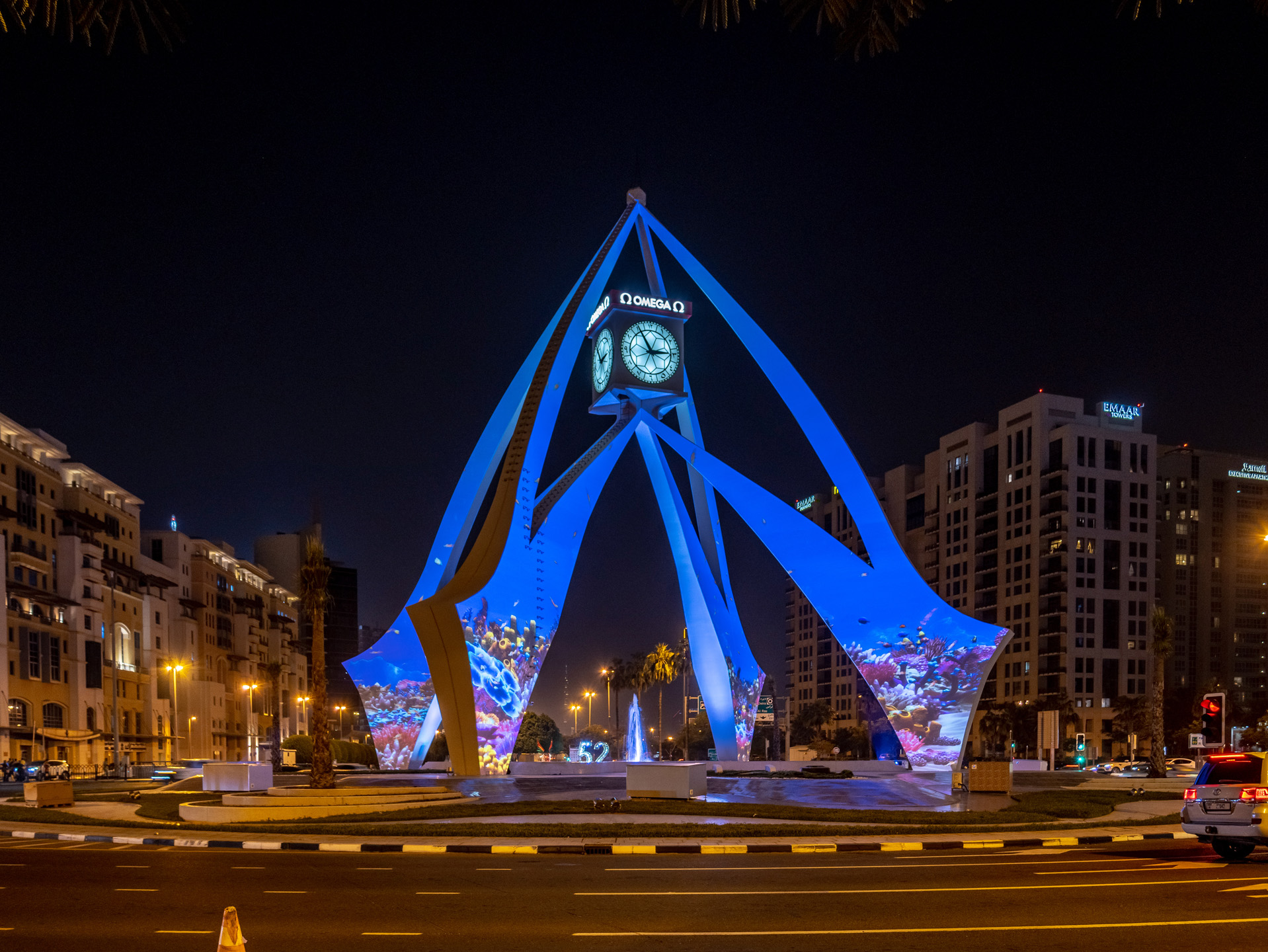
The master aimed to show the townspeople a thing they had long been accustomed to in a new light
M.K .: In my opinion, the language used by public art, public art, is very clear. It is a powerful channel for advancing narratives. Those institutions or cities that understand this use such opportunities very successfully. A good illustration of this thesis is a project in Dubai. We were invited to a tender to create a facility for the COP28 congress dedicated to climate issues, in which world leaders participated. The project was overseen by the Dubai Municipality and the Sheikh himself. The task of the city was to draw attention to the event and acute issues. And not just to tell with the help of a digital banner, but to attract people to interaction. The idea of Kabluka Light & Digital Sculptures was to do this through communication, game effects. When you are not watching the show as a spectator, but you can influence it in a certain way. The object offers an unusual model of interaction for such public installations and thereby keeps people's attention.
PM: Tell our readers more about what this installation was like and how exactly people could interact with it?
M.K .: The world has a global problem of coral bleaching. They lose their color and die, because of this the entire ecosystem dies, sea creatures, fish leave it. We created a large light installation of a coral reef and superimposed it on the Dubai Clocktower. At the beginning, thanks to the projection, the coral is depicted as dead. To the installation, we added a text dedicated to this issue and a call to participate in saving nature by choosing a certain set of actions. Spectators could view the installation, read the explanation and mark in a special application what good they plan to do. For example, use secondary plastic, use electric transport, save water, etc.
The reward for this choice is the opportunity to create one of three animals that are on the verge of extinction. With the help of his own phone, the user chooses it, personalizes it, colors it, chooses the way of movement and can bring it to life. Next, the animal "flies" to the tower, which we turned into a coral. As the number of these activations increases, the coral revives and regenerates.
Thus, it is not only entertainment, something that evokes emotions of delight, but also engagement. A person who has read a list of actions remembers which contribution will be useful.
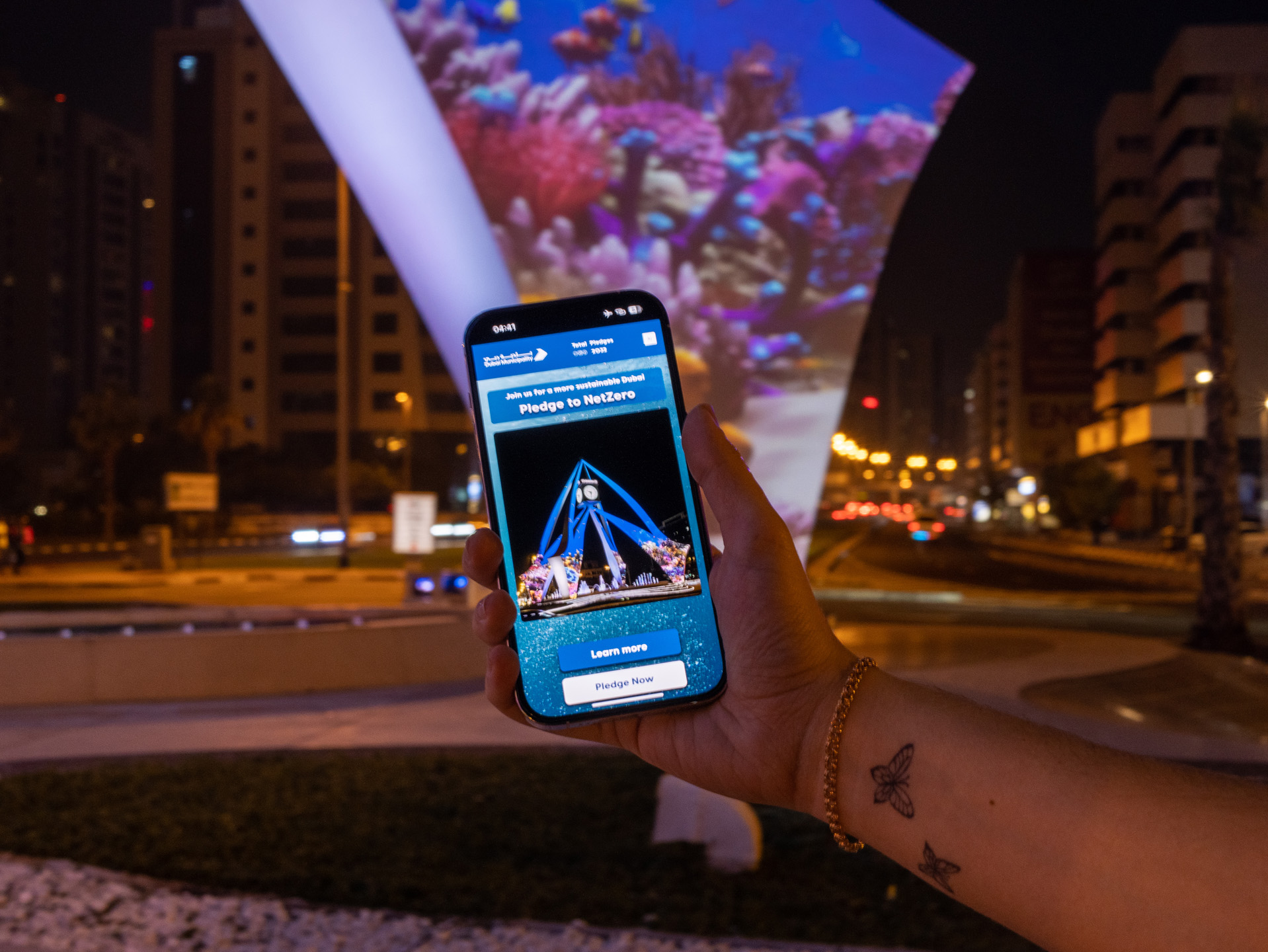
Mykola Kabluka's team offered the viewers in a special application to choose eco-conscious actions, receiving the opportunity as a reward to create an animal whose species is in danger of extinction and "launch" it to swim to the coral
Mykola Kabluka: "Dubai surprises with bright technological innovations, but different ones. Interacting with the installation through a smartphone, useful ideas are woven in - this is new"
PM: What was the reaction of residents and visitors to the city?
M.K .: First of all, people are fascinated when something created on their own phone is scaled to a huge urban object. Every reward for your correct choice counts. When the number of activations approached 10 thousand, the "coral" blossomed and became colorful. Dubai surprises with bright technological innovations, but different. Usually, everything works in a mode where you can come and see the fountains near the Burj Khalifa or some media show on the tower itself at a certain time according to the schedule. Interaction through a smartphone and its visibility, interwoven useful ideas, as in our case, is new. The clock tower is located in the center of Dubai at the roundabout, many visitors watched the installation every day. The campaign lasted two weeks, according to the settings, no more than two activations could be made from one device per evening. People were interested, they saw new things for themselves and joined joint actions, and over time this interest did not decrease, on the contrary.
Everything worked even stronger than we hoped. The project was well supported by the mass media, all parties were very satisfied.
In addition to the task of "highlighting" the issue of environmental protection within the framework of COP28, the goal of the project was to give new life to one of the city's symbols. The Deira Clock Tower, or the Dubai Clock Tower, is a cultural landmark, witnessing the beginning of the era of Dubai, it was built during the Sheikh's youth.
"The projects we create and implement are often a big risk: will it work? Because the most interesting thing is to do something that hasn't happened yet," — Mykola Kabluka
PM: You mentioned that part of the installation was placed in the Expo C pavilionITY Dubai.
M.K .: Yes, we implemented the second part of the installation there. The UAE has a large program to collect marine plastic, special boats and equipment are used, and the plastic is then processed. We proposed to 3D print shapes from this plastic collected in the sea as a message that we should take care of nature and take some action. Printed arch designs were placed near the round table area. 3D screens were built into the arches, where a digital double of the installation from the clock tower was displayed. Visitors from the Expo interacted with visitors to the Deira Clocktower via large touch screens and web cameras. It was also possible to listen to a story about one of the eco-initiatives implemented in the country.
PM: How do you personally assess the result?
M.K .: The projects we create and implement are often a big risk: will it work? Because the most interesting thing is to do something new that hasn't been done before. Even at the technological level or in such a combination, no one has tried anything like this before us, we are pioneers. Therefore, the Dubai project brought great satisfaction. For some, Dubai is still associated with oligarchs who spend stupid money and live in pompous hotels. I interact more with progressive youth who are doing something useful for the world. Today, the global IT community and teams of many companies are concentrated here. I perceive the city through the prism of just such people who work on global projects. And many of our subsequent projects are related to this. Therefore, I am pleased that the work with the Dubai Clocktower has influenced, in particular, the change of associations regarding Dubai. It is designed for a new audience, for instilling the idea that this city now has a lot of art, creative people, and brave modern entrepreneurs.

Residents of Dubai are convinced that even if you see a certain object every day for years, this is not a reason to think that it will never be different. According to Mykola Kabluka, the effect of unexpectedness was supposed to strengthen the educational and educational effects of the environmental action
The project for the Dubai Clocktower influenced, in particular, the change of associations regarding the modern image of Dubai
PM: If we move from the East to, for example, Europe, can we talk about other projects where the sustainable approach is well demonstrated?
M.K .: So, moving on to sustainable societies that have already developed, you can cite an interesting example. Last fall, our team took part in the Gleis//Garten project in Vienna, which was implemented by British architects. This is the transformation of one of the oldest tram depots into a public garden. The context of the project: the reconstruction of industrial enterprises took place earlier in the central part of Vienna. A lot of residential complexes appeared, a university is being built nearby, but over time, residents began to lack green spaces, places for walking and socializing. To overcome this problem, the city administration decided to turn one of the old tram depots in the city center into a garden.
The name Gleis//Garten is easy to explain - it is a laid rail line and a garden. The idea of the project was to preserve the history, but give the place a new function. Therefore, the specialists who were responsible for the material part of the project kept absolutely all the old elements of the depot, even the ceiling was not replaced. 200-year-old oak structures look like the vault of a church. Everything has been preserved: the place where traffic stopped, inspection pits for the repair of trams. The place resembles a huge greenhouse, which is pleasant to visit in the summer, and especially on gloomy gray days when people do not have enough sun. Large windows were cut in the ceiling to let in more daylight. Through them, age-old olive trees, 12-meter palm trees and tropical trees were lowered into the former industrial building. They were rooted in the pits left over from tram maintenance, and capillary irrigation systems were installed there.

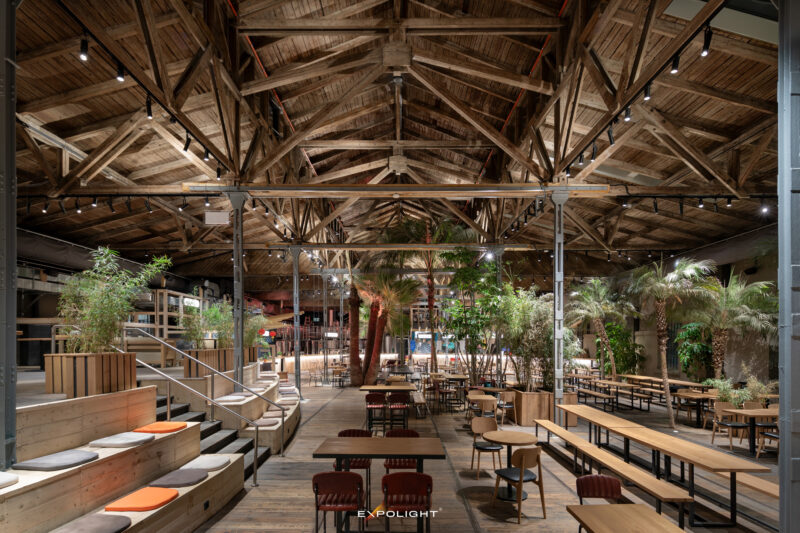
Gleis//Garten is a tropical garden in an old tram depot in the center of Vienna. Until recently, residents avoided this place, but now they try not to pass by
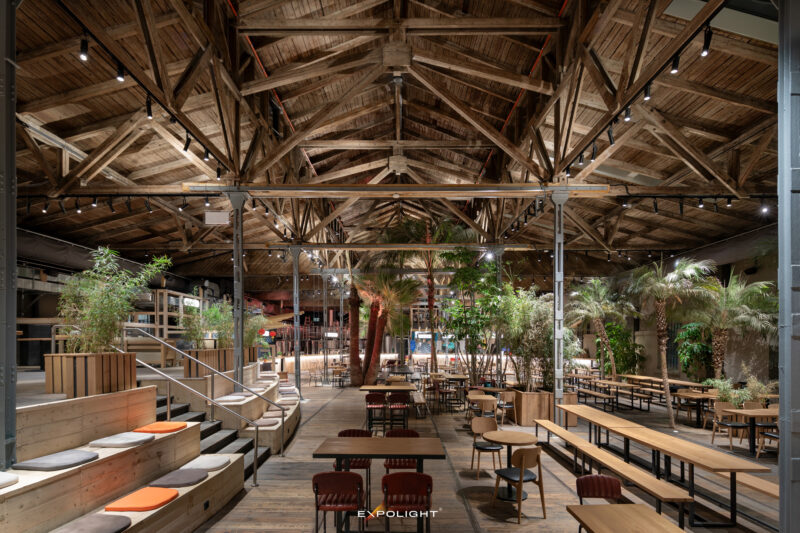
Gleis//Garten is a tropical garden in an old tram depot in the center of Vienna. Until recently, residents avoided this place, but now they try not to pass by
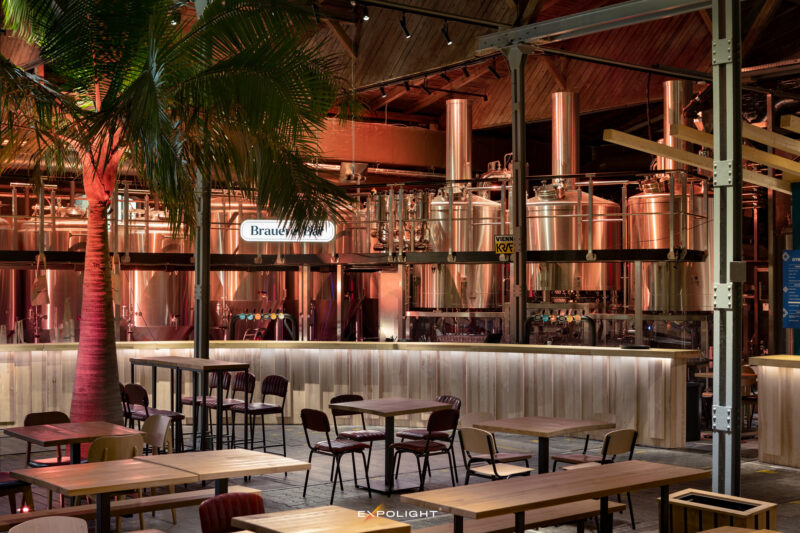
Gleis//Garten is a tropical garden in an old tram depot in the center of Vienna. Until recently, residents avoided this place, but now they try not to pass by
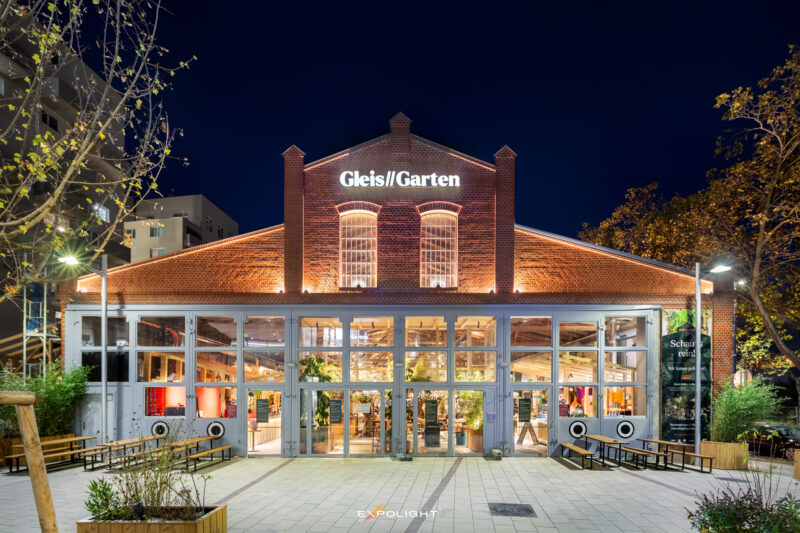
Gleis//Garten is a tropical garden in an old tram depot in the center of Vienna. Until recently, residents avoided this place, but now they try not to pass by
Mykola Kabluka: "Gleis//Garten is a good example of renovation and efficient use. He is about the fact that it is possible not to build such spaces from scratch, but to preserve a historical place and give it a new lease of life."
PM: What are the tasks at Gleis//Garten prepared for you?
M.K .: It was necessary to "finish" all this with light - to help it manifest, to strengthen the atmosphere of natural splendor, drowning in tropical greenery. We added artificial lighting that strengthens the trees and stimulates vegetation. We created several different scenarios for the space: it can be turned into a food hall or a concert hall or a place for socializing. For example, in the morning, yoga classes are held there, young mothers meet, and interest clubs meet. This place has become a point of attraction for the whole district. In my opinion, this is a very cool example of renovation and efficient use. He is about the fact that it is possible not to build such spaces from scratch, but to preserve a historical place and give it a new lease of life.
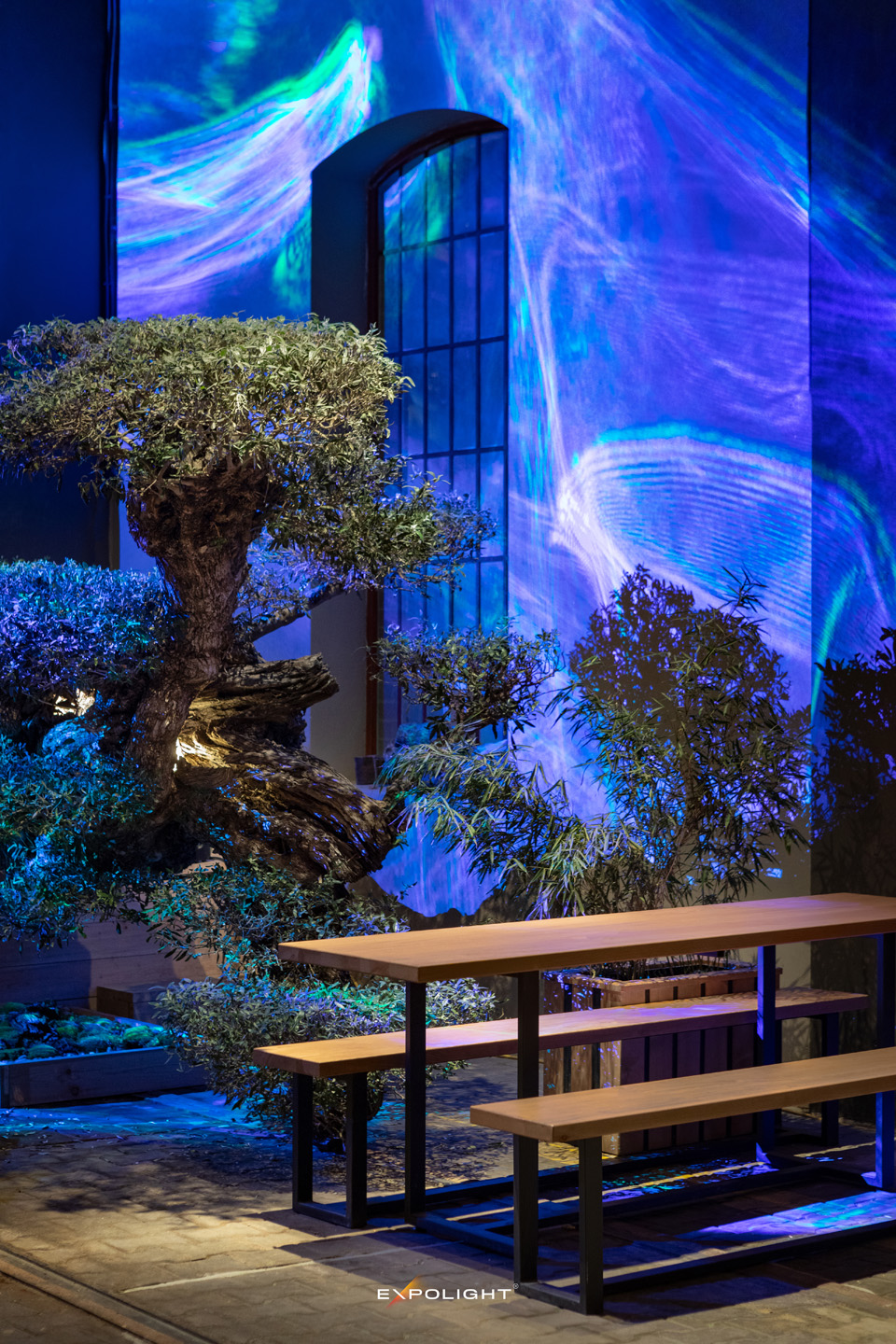
Mykola Kabluka and his team created several light scenarios for all occasions, so now this garden looks like a magical place from a fantasy movie
PM: In what form can masters of light effectively convey to people the meanings associated with sustainable development? Maybe it's sculpture or installations, performances? Is it not about the optimal form, but about ideas?
M.K .: First of all, philosophy is important. Choosing a tool is always a creative process, because we have to understand what will work this time. What is clear context from the past? Is there anything new?
In my opinion, an effective approach is when existing elements are given a new function and new meanings. On the one hand, in this case, people continue to be in contact with something they are used to seeing. But this familiarity is saturated with new narratives. It transforms and it works powerfully.

Mykola Kabluka and his team created several light scenarios for all occasions, so now this garden looks like a magical place from a fantasy movie
The previous examples that we talked about with you are the facility in Dubai, built 60 years ago. We turned the concrete structure of the tower into something completely new, giving it another life. It is an object that very strongly articulates something through visual images. The depot in Vienna was a place that everyone avoided, but now it has become the center of life.
After the installation, place or object receives the viewer's attention, he can "dive" deeper into them thanks to modern digital technologies. In the created site, in the application, to continue interaction there. It creates a deeper and longer lasting contact and works great.
In the context of the answer, I want to tell about another project implemented in my native Dnipro. It is a transformation of what used to make bad sense. I really like how the project affected the residents of the city.
Dnipro has a wonderful embankment, the longest in Europe, a popular place for walks. I always looked to the opposite bank and saw chimneys from which red or brown smoke passed over the city in one direction or another. It was upsetting and dissonant with the beauty of the green embankment, the color of the water. I remember these pipes from my childhood. Later, they stopped smoking: the pre-revolutionary factory was dismantled and a new modern one was built outside the city. The question arose: what to do with this reminder? The territory of the former factory was turned into an industrial park, an Innovation Center, similar to Kyiv's UNIT.City. A master plan was developed, according to which the pipes were planned to be demolished. However, these are colossal engineering structures, the height of the highest of them is 150 meters. Then we had an idea with a team of active Dnipro residents: to create an art installation with them that will articulate that the city is changing.
Mykola Kabluka: "Dnipro Light Flowers is an art installation that articulates that the city is changing"
PM: How exactly?
M.K .: The image of a light flower was born, where the pipe is its "leg", and the light is the flower itself, which opens in the panorama of the Dnieper. This idea is multi-layered. First of all, to create a special art object that will become one of the positive visual associations with the city. As the majority of Europeans think of the illuminated Eiffel Tower when they hear the word "Paris", we wanted a new vivid association with the Dnieper to appear. But it is not like what people have already seen somewhere.
Huge light flowers that unfold on a colossal scale over the Dnieper are something archetypal unique and at the same time determined by the context of the city. A captivating visual aesthetic object, you won't find it in America, Europe, or China. You can admire them from the opposite bank, from the embankment, look at the reflection in the mirror of the river. We also made a light show that can be watched at certain times with musical accompaniment.
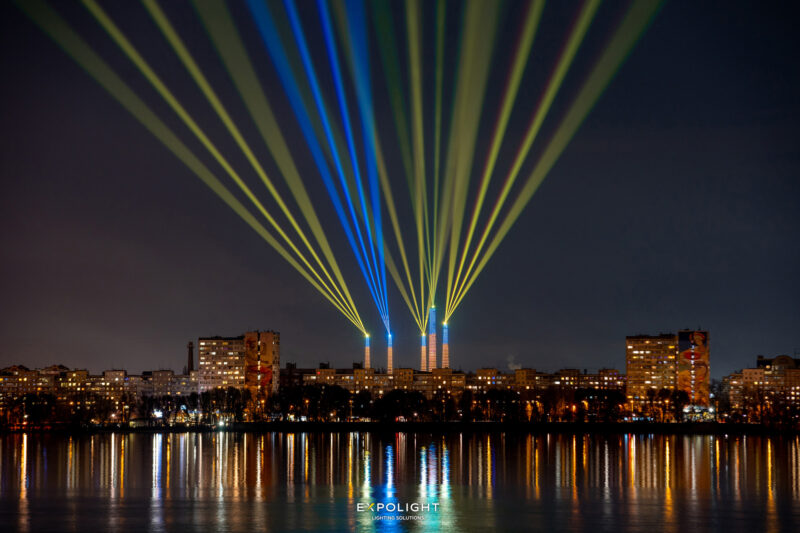
Mykola Kabluka and his team turned the pipes, which for decades spoiled the appearance of the city center of Dnipro, into huge flowers
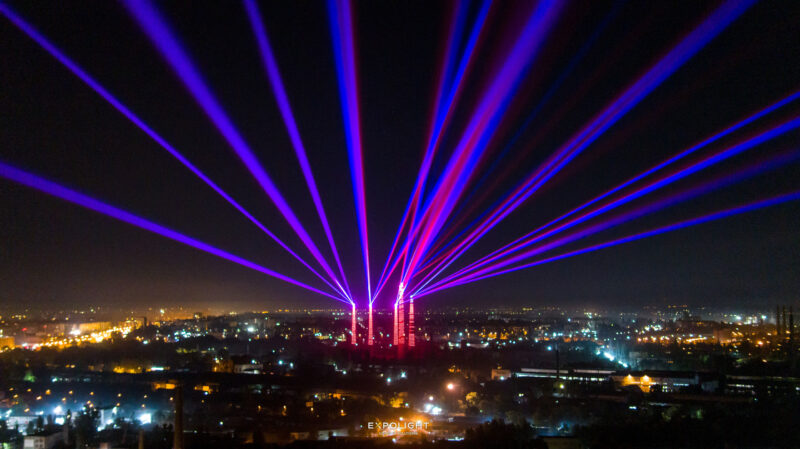
Mykola Kabluka and his team turned the pipes, which for decades spoiled the appearance of the city center of Dnipro, into huge flowers
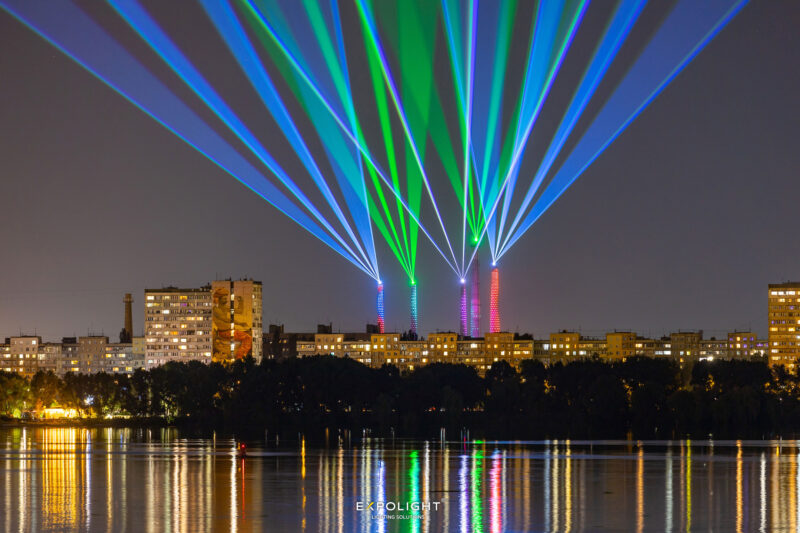
Mykola Kabluka and his team turned the pipes, which for decades spoiled the appearance of the city center of Dnipro, into huge flowers
Mykola Kabluka: "The name, essence and philosophy of the Dnipro Light Flowers project is about changes and respect for them. The factory city has become a city of high technology, art and care for the environment. We wanted to convey these theses in the installation."
In the history of Dnipro, there was an industrial era, which gave impetus to the development of the region, but now the city has entered the post-industrial era. The pipes remained, just as someone retained a negative association with the city. Someone still perceives Dnipro as a factory city. Others know that culture is actively developing here, art centers are being built, that this is a high-tech city, where, for example, they create satellites that are launched into orbit by Musk rockets.
This is a radical transformation, I wanted to show these contrasts. And to add to the installation information that is perceived on different levels: you can perceive it visually or dive deeper and read what these changes are about.
The project became a magnet that attracts people: "Did you see that such a thing was done in the Dnipro?"
PM: In your opinion, what is the advantage of light compared to other, more traditional "materials"?
M.K .: Light is a powerful tool, it contains a certain sacredness. In religious architecture, it was used to focus attention, to create awe, a feature of the moment. This is primary, fundamental: "Let there be light!"
We can refer to the light at the end of the tunnel, that which is said to be seen when on the verge of critical states. Light, or on the contrary, its absence, dosage is a very influential element, and this influence occurs at the level of the human subconscious.
This is especially noticeable on the example of city-scale installations. They always attract attention, all the more so in combination with media technologies, specially created digital media — such as, for example, the sculpture "Cube" at CHICAGO Central House in Kyiv. Or as it was with "Flowers of the Dnipro", for which we developed modern projection lasers. Technological light spreads for 10-20 kilometers, it cannot be ignored, it is a colossal scale.
Of course, it is better to combine light with matter. Perhaps I deviate a little from the topic of conversation, but as an example I would like to mention the installation "Cross of Heroes". It combines controlled optotechnical and sunlight. With mirror surfaces, we catch natural light, create reflections, "intertwine" the installation with the environment, and this makes a strong impression on the viewer.
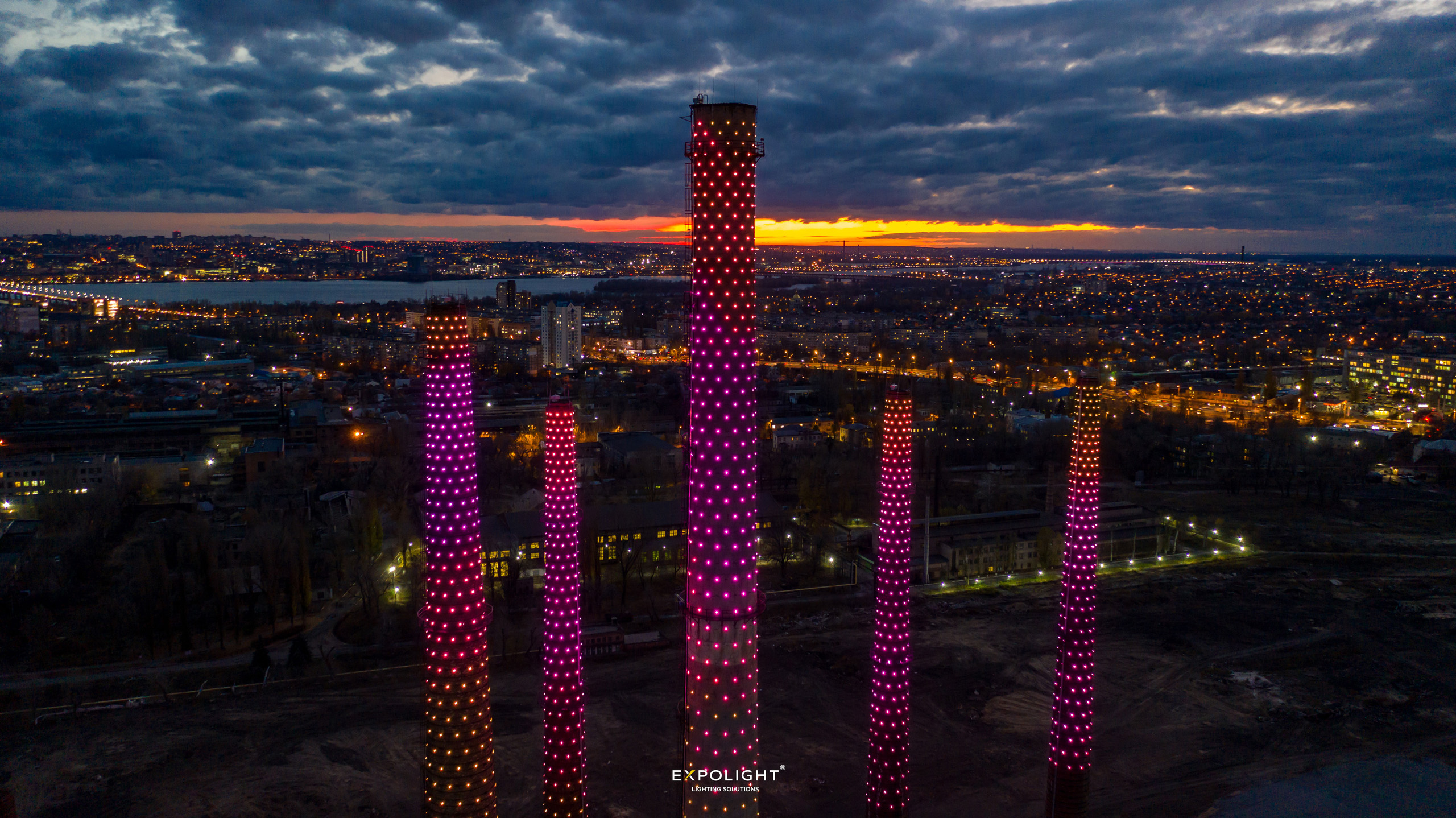
The light turned the pipes rising in the center of the Dnipro into a huge installation, the rays of which spread for 10-20 kilometers
Mykola Kabluka: "As a person who has devoted his entire professional life to the study of light and working with it, I am convinced that it is the strongest tool for influencing a person's mood and state."
PM: In your biography, there are many projects that call for spiritual work. Mentioned the "Cross of Heroes" memorial, the light show for the "Khortytsia" nature reserve... How do you start working on such projects, how is the key concept born?
M.K .: Working with such a powerful tool as light and creating something just for the sake of aesthetics and creativity is irresponsible in my opinion. It is important that projects convey meaning. The first and most important stage of work is to feel what is worth saying. What people need to hear, what they want to be reminded of and what to add to what is already being told by the place itself, the object we are working with. Each concept takes into account a certain context, aspirations and experiences. Some of them can be materialized, strengthened or pushed in the desired direction. For example, to emphasize positive changes, as was the case with the installation "Flowers of the Dnipro".
PM: What should the author do so that this message is preserved and not limited to the first strong impression for the viewer? Light installations often become "viral" during the opening, they are shared on social networks. How to maintain attention to the project in the future?
M.K .: Don't be irresponsible, be focused and don't create "beauty for beauty's sake" for a short-lived wow effect and excitement. To think that if you are able to attract people's attention, distract from the usual, routine, then it is worth weaving valuable thoughts into the project.
Mykola Kabluka: "We will need many new places, public spaces, art installations filled with important meanings. Spaces that broadcast the values that we have defended and want to support"
PM: Against the background of danger and destruction brought to our country by the war, are there currently projects in Ukraine that support the goals of sustainable development? Or will we need them in the future?
M.K .: I believe that the end of the war is on the horizon. Unfortunately, due to tragic events, our country received considerable attention in the world and has great challenges to be known not only for this. I am sure that after the end of the war, many people will want to come here, and a new great round of revival and development awaits Ukraine. We will need many new places, public spaces, large art installations filled with important meanings. In fact, this work has already begun. Those projects that we created, in fact, during the war: for example, the Peace and Freedom Square in Mariupol. They are about sustainable. The project broadcasted that the city began to invest a lot of effort in changing the ecological situation, in cleaning the sea and embankments. To solve the problem of huge tericons that went out into the sea.
The Russians again renamed the square "Lenin", because they always look back, not forward. But the square was and will be Peace and Freedom. After its opening, it changed the patterns of people's behavior, there were a lot of young people, young families with children... These are such spaces - bright, unifying, which encode something much more than the name of the leader, which are at the same time natural, modern and interactive , we will need a lot. Spaces that broadcast the values that we have defended and want to support. Where people simply live, are proud to be Ukrainians, and breathe freely.


