


The unfortunate should first deal with his misfortunes and only then approach architectural creativity. Otherwise, he risks being the unfortunate creator of an environment that generates unhappiness. The architect involuntarily projects his inner peace with all his values, hopes, aspirations and fears into the project he creates.

Olga Chernova, chief architect of ARCHIMATIKA projects
But even if the control of consciousness creates a barrier between inner experiences and architectural activity, a master focused on inner experiences cannot be 100% tuned to the perception of the external context (from the color of the architecture of the surrounding buildings to the interests and mentality of the residents of neighboring houses). Instead of listening and finding a solution that is optimal for all parties, he will not listen to anyone and will try to impose a contrived configuration.
(This is not at all about universal acceptance and "consideration" of requirements from all sides - some absurd ones cannot be rejected, otherwise the project simply cannot be called architecture. But in order to reject precisely the absurd, one must first listen carefully to everyone.)
And when, God forbid, such a "deaf and blind" object is built, be sure: the society will not forget to return the "boomerang of misfortune" to the author, and now, not without reason, the architect lamenting external circumstances will be forced to endure public rejection or even leave to seek happiness in a new place
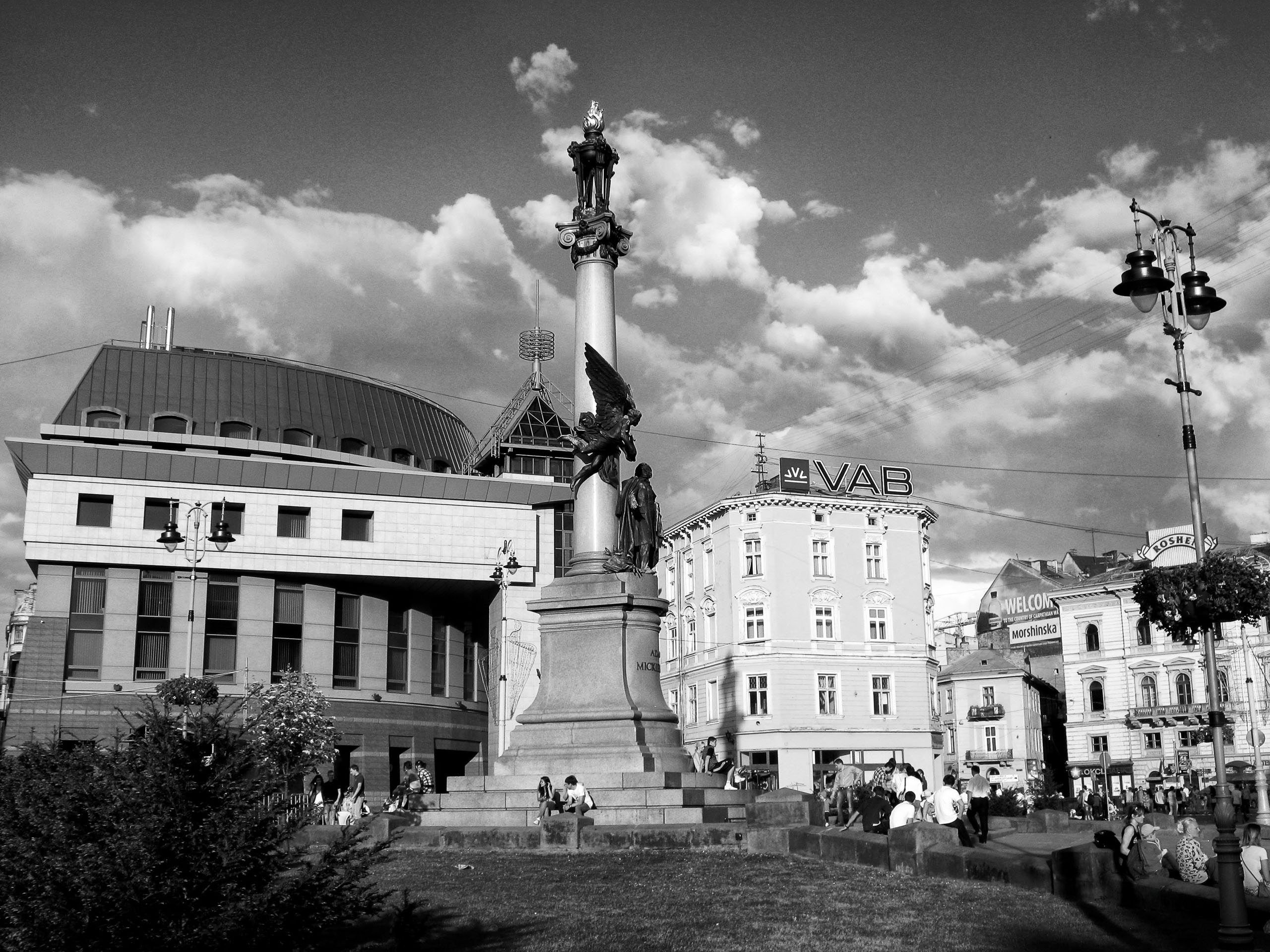
The building of "Ukrsotsbank" on Sq. Mytskevich in Lviv
Probably, in every city you will be shown a similar architectural monument of misfortune and misunderstanding and tell a story about an unlucky architect who suffered for his creation.
But theoretically, someone could stop each of them: "Maybe it's not worth it?... For now, maybe we should start with a walk in the forest, with meditation, a session with a psychoanalyst? Yes, just from a banal vacation! And then architecture. If, of course, then you really want to do it!" There is no doubt that every author who suffered for his foolish creation would give a lot to the one who would save him from the subsequent fiasco (in my opinion, such fiascos include a building on Mytskevich Square in Lviv, a house opposite the Opera House in Kyiv, the Ministry of Foreign Affairs on Mykhailo Square , "ink tool" in Rome).
Let's look at it from the other side. And what can a happy architect, of course, endowed with both talent and skill?
Each project has a chance to harmoniously harmonize with itself everyone who faces this project: residents, neighbors, builders, developers, investors, and even architectural critics, creating a noble environment in which everyone feels worthy.
Without a source of positivity for the architect himself, no architectural project will be successful!
In order for this to happen, one must be able to tune in to everyone's wave, hear, for example, that the builders (available in this region) can overpower the builders (available in this region), for example, and make a picture of the optimal architectural solution from this whole mosaic.
No matter how far from the professional level with all the regulatory requirements that determine it, logical chains of functional relationships and proportions of the architectural composition, such a factor as "positive attitude" may seem, it is precisely that factor (and not all of the listed and many more, incredibly specific categories, about which who has not given architecture ten years and suspects that he will not be able to), a simple human indomitable and positive attitude ensures the success of the project!
The professionalism and even the talent of the architect is the key to the feasibility of the project. But not the ego of success. Without a source of positivity for the architect himself (and the energy to maintain this source of positivity is enough only for an exceptionally happy person), not a single architectural project will be successful! Of course, an architectural project that is not imbued with the author's positive radiation in the literal sense may, for some time, seem successful in one aspect - for example, in terms of investment. But unheard and, therefore, ignored, other aspects will inevitably manifest themselves over time and devalue the value that those who believed in the preliminary calculations counted on.
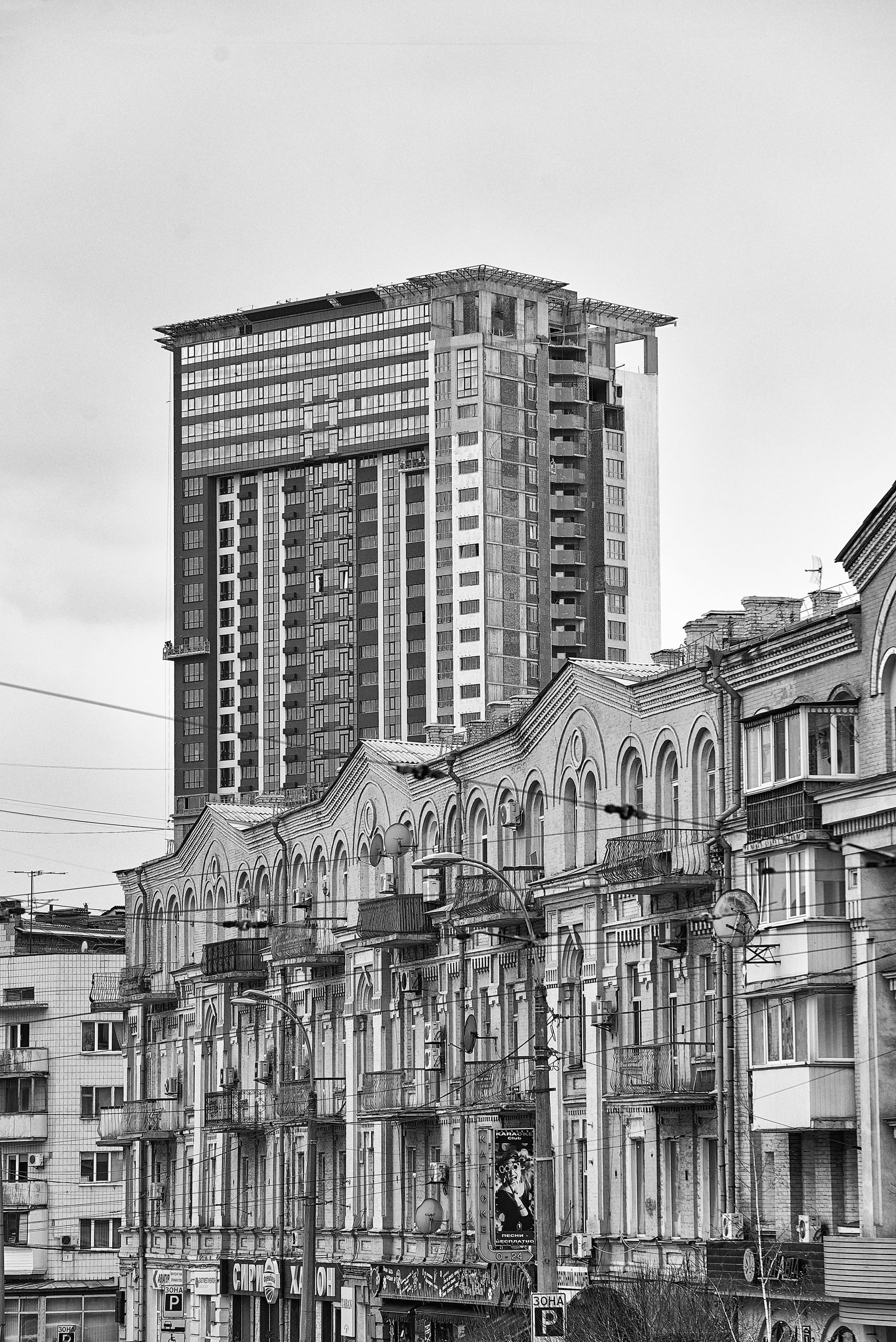
View from st. Bulvarno-Kudryavskaya in Kyiv. Photo: Yury Ferendovych
The process of creating architecture can be presented without any significant loss of meaning as a set of parallel and sequential dialogues: for example, one dialogue with the investor, the second with the future resident, the third with the builders, the fourth with expertise and other coordinating bodies, the fifth with citizens , the sixth - with the immediate neighbors of the complex, the seventh - with engineers, the eighth - with designers, the ninth, the tenth... And who does the architect represent in this process? A negotiator! Diplomat! And also the bearer of the great plan, the inspirer and the "messiah", after whom all the above must strive! And who and where, allow me to ask, will follow a person carrying negativity, lost, fixated on internal experiences? Nobody and nowhere! Everything will remain in its original place. Unless, having felt a weakness, they will try to pull the blanket in their direction without any understanding and interest in the overall success of the project!
And the result of such author's negative radiation will not be architecture, but scraps of the map of pulling the interests of the participants! Among them, of course, there may be an architect who, in this plot, along with all the others, frantically and futilely defends his rights.
Without a source of positivity for the architect himself, no architectural project will be successful!
The projection of happiness in architecture is beauty. And not only in architecture! And not only in art. An ugly plane will not fly. Even in the engineering field, where form is determined by physical formulas, not aesthetic considerations, beauty determines success!
No one will count the floors in a beautiful building. High? Noticeable from different viewpoints important for the city? Great! A beautiful building will decorate the panorama of the city! These ugly buildings have to be constantly limited in height so that, God forbid, they would not be visible and would not turn into an eyesore (an English word that literally means "an eyesore" is very suitable for this case).
If the architect managed to create a beautiful, noble urban environment, happy citizens will not ask: "Why was so much money spent?". Precious stone? Excellent! Finally, not the dreary concrete greyness! Expensive designs? Excellent! This is a city space, not a utilitarian warehouse! (Of course, at the same time, the services that verify the expenditure of budget funds will still perform their work, and beauty cannot and should not be a cover for corruption.)
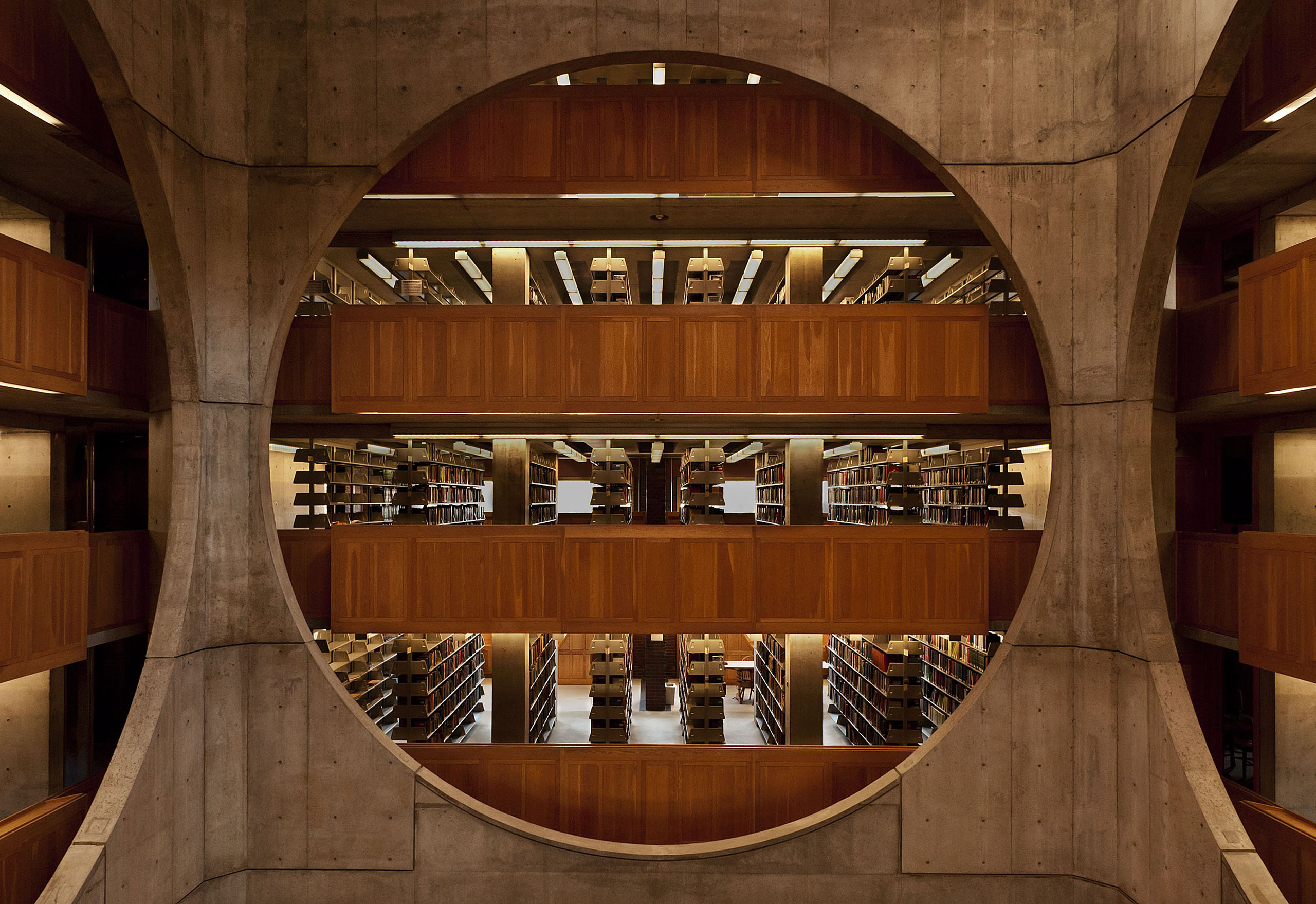
Phillips Academy Library in Exeter, USA. Architect: Louis Kahn
But for an ugly, uncomfortable urban environment, to which you do not want to return, you always feel sorry for money: they say, why did they put this expensive stone here? Why this multimillion-dollar ugliness made of glass, concrete and metal? And behind all these doubts lies a simple truth: it is not worth spending money on ugly architecture! If the architect presented an ugly project, invite another architect and wait for him to make a beautiful one. Yes, this is a loss of a year, maybe even two years. But not twenty or fifty, spent in despair over ugly architecture and in anticipation of the opportunity to redo it.
/Published in #10 volume Pragmatika, April 2019/


