


You can determine the colors for your ideal palette thanks to two assistants from Sadolin. The first is actually the Sadolin Visualizer App mobile application itself. It can be installed on IOS or Android systems. Among the features is the ability to choose a color from Sadolin paints by turning on the camera and pointing it at the object of interest. Thanks to a special moving brush, you can point to a specific element on the image with your finger, after which the application will determine a special color code and offer you paints from different series. Similar manipulations can be performed with photos already saved on the phone.

The Sadolin Visualizer mobile application tries on the color on the wall with the help of augmented reality technology. Image: Sadolin
The second assistant is the compact Color Sensor color scanning device. Its working principle is the same: you need to apply the scanner to the surface of a wall, furniture or textile, and it will determine the color without fail. The received data will be displayed in the pre-installed Sadolin Professional Expert App. You can save all the information and create your own palette in the future.

A special compact device Color Sensor from Sadolin that scans the color of any surface. Image: Sadolin
Inherited space
"The Dnipro is beautiful in its upper reaches, charming near Kyiv, but it is no less beautiful here, where it absorbs Samara, where it spreads out so widely and freely in front of the steppes that spread to the south and east. Nowhere is there as much freedom and space as here," — this is how Oles Gonchar describes the picturesque corners of the Dnieper region in the novel "Man and Weapon". This is where the city of the same name originates, which we will try to understand. Dnipro is not the oldest city in Ukraine, but the history of its formation is quite interesting. His first name is Katerynoslav. The city was officially created in the 1780s by decrees of the infamous Catherine II, but it was not created out of nowhere. Which settlement was the first on these lands and from where to start the countdown - there are still disputes among historians, but we will take into account the Cossack settlement of Polovytsia, which existed documented since 1743, from the time of the establishment of his estate by Osavul Lazar Globa. Sloboda was inhabited by Zaporozhians and their families, who led a sedentary lifestyle and engaged in farming. It is significant that each house was allocated a large amount of land so that the neighbors were quite far from each other. This sense of free space has been inherited by the city over the years. Gardens with fertile trees planted by Globa remained from the settlement. Now this is the territory of the Central Park of Culture and Recreation named after T. G. Shevchenko and the park named after Lazar Globa.
Shevchenko Park is the central and oldest park of Dnipro, a monument of garden and park art. Photo: open sources
The first drawings of the city were created by the French architect Claude Gerois, but they were rejected, either due to inattention to the natural conditions of the area, or due to the lack of funds in the Russian Empire for their implementation. Therefore, the beginning of the urban planning history of Katerynoslav is associated with the name of Ivan Starov. The main development of the new city was not concentrated on the mountain, as Gerua had planned, but in the lowland part, near the Dnieper, exactly where the buildings of Polovytsia were located. Starov also left Gerua's idea of placing the city-wide center on a high hill and later only transformed it.
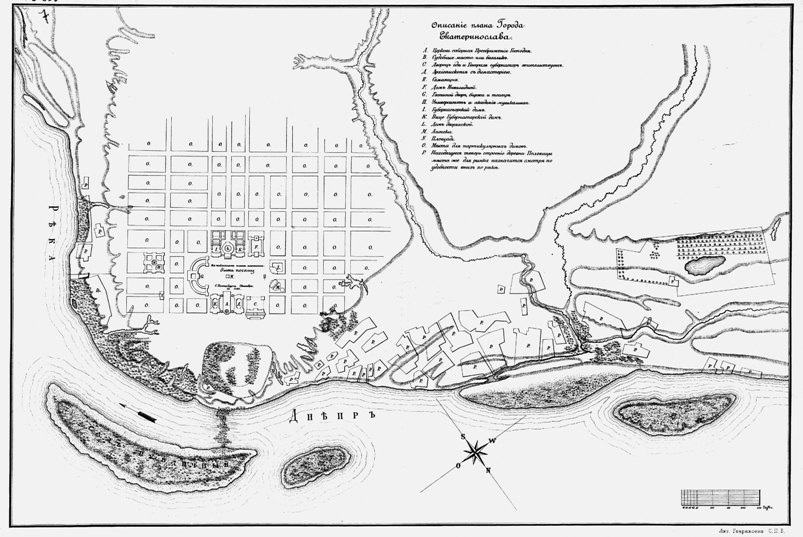
The first drawings of the city plan of 1786 by the architect Claude Gerois. Photo: open sources
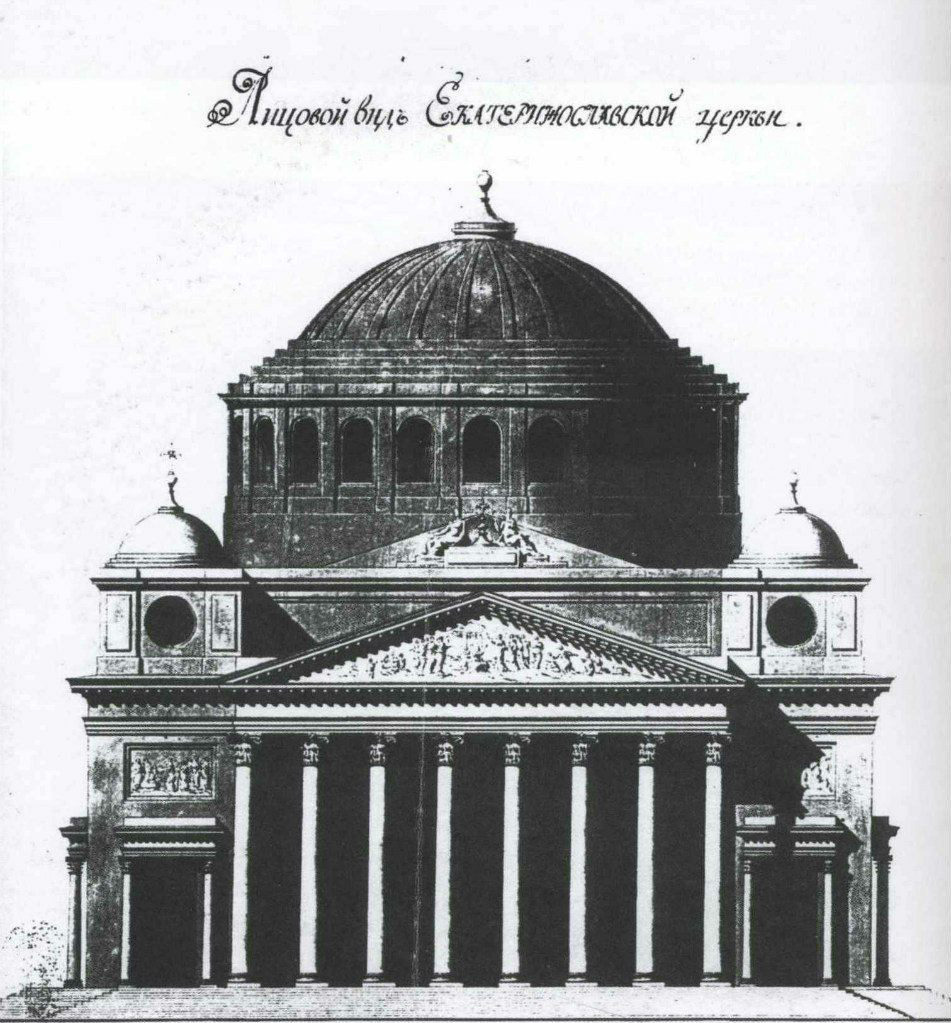
This is what the Savior and Transfiguration Cathedral should have looked like. Photo: open sources
Candidate of Architecture, Head of the Department of Fundamentals of Architecture of the Dnipro State Academy of Construction and Architecture Ivan Revskyi spoke about the further stages of the city's development. Thus, after the abolition of serfdom in 1861, the agricultural importance of the fertile Prydniprovye increased sharply. "Katerinoslav, which was located in the center of the Dnieper region, in the 1860s and 1870s became one of the main centers of the south of the country for the processing and trade of agricultural and forest products," explains Ivan Revskyi.
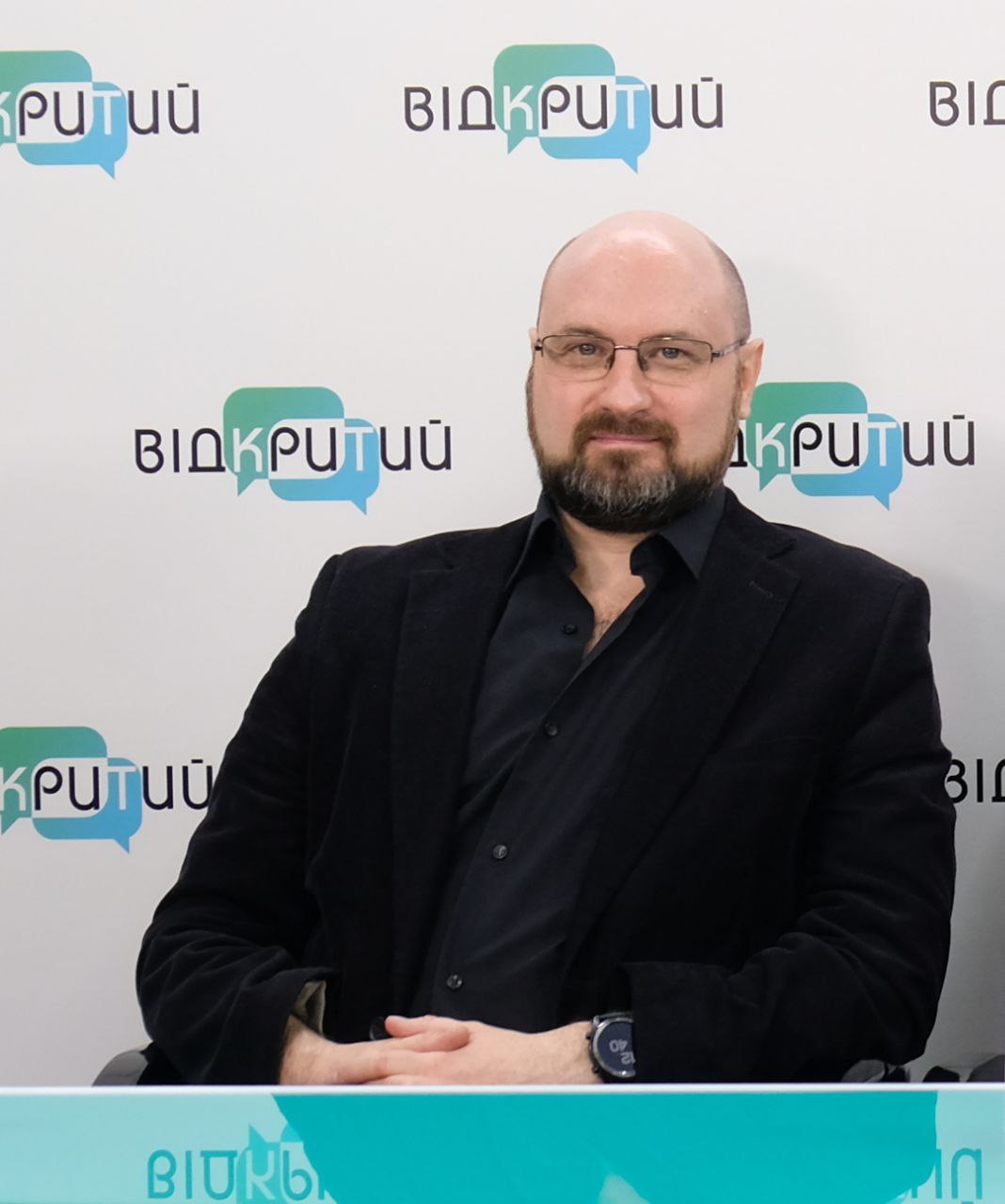
Ivan Revskyi - Candidate of Architecture, Head of the Department of Fundamentals of Architecture of the Dnipro State Academy of Construction and Architecture
This sense of free space has been inherited by the city over the years
The next significant stage of development falls on the end of the 1884th century. Ivan Revsky continues his opinion: "In 1880, with the construction of a bridge across the Dnieper in Katerynoslav, the construction of a railway line was completed, connecting the Donetsk coal basin (Donbas) on the left bank and the Kryvorizka iron ore basin (Kryvbas) on the right bank of the Dnieper. Located in the middle of this highway, Katerynoslav becomes the most profitable place for the development of metallurgy. In 1900–XNUMX, a number of large metallurgical, pipe-rolling, and machine-building enterprises appeared. The city is turning into one of the largest industrial and metallurgical centers of the country."
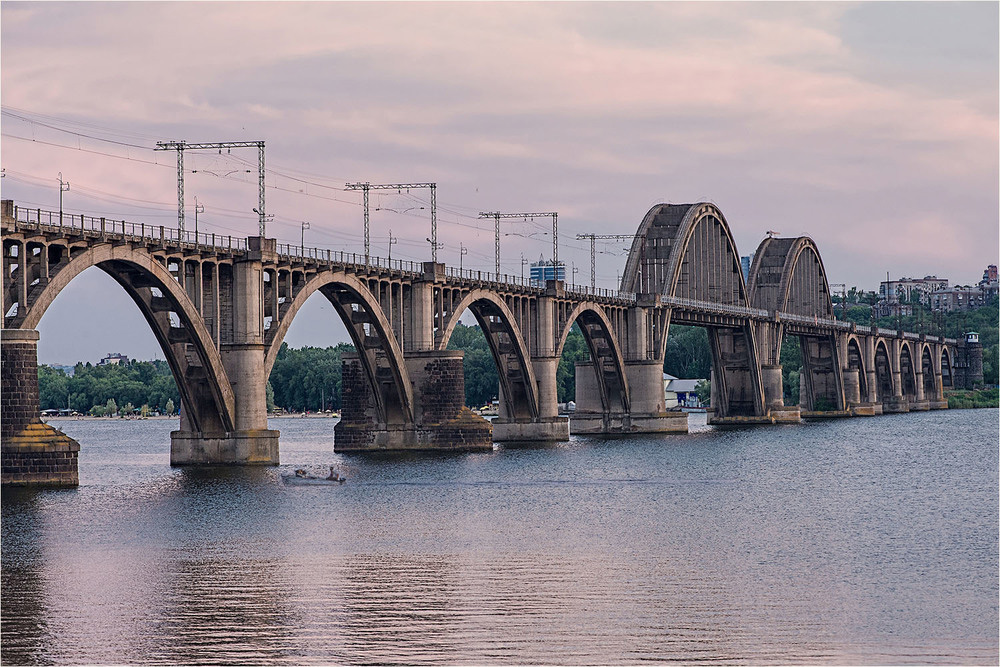
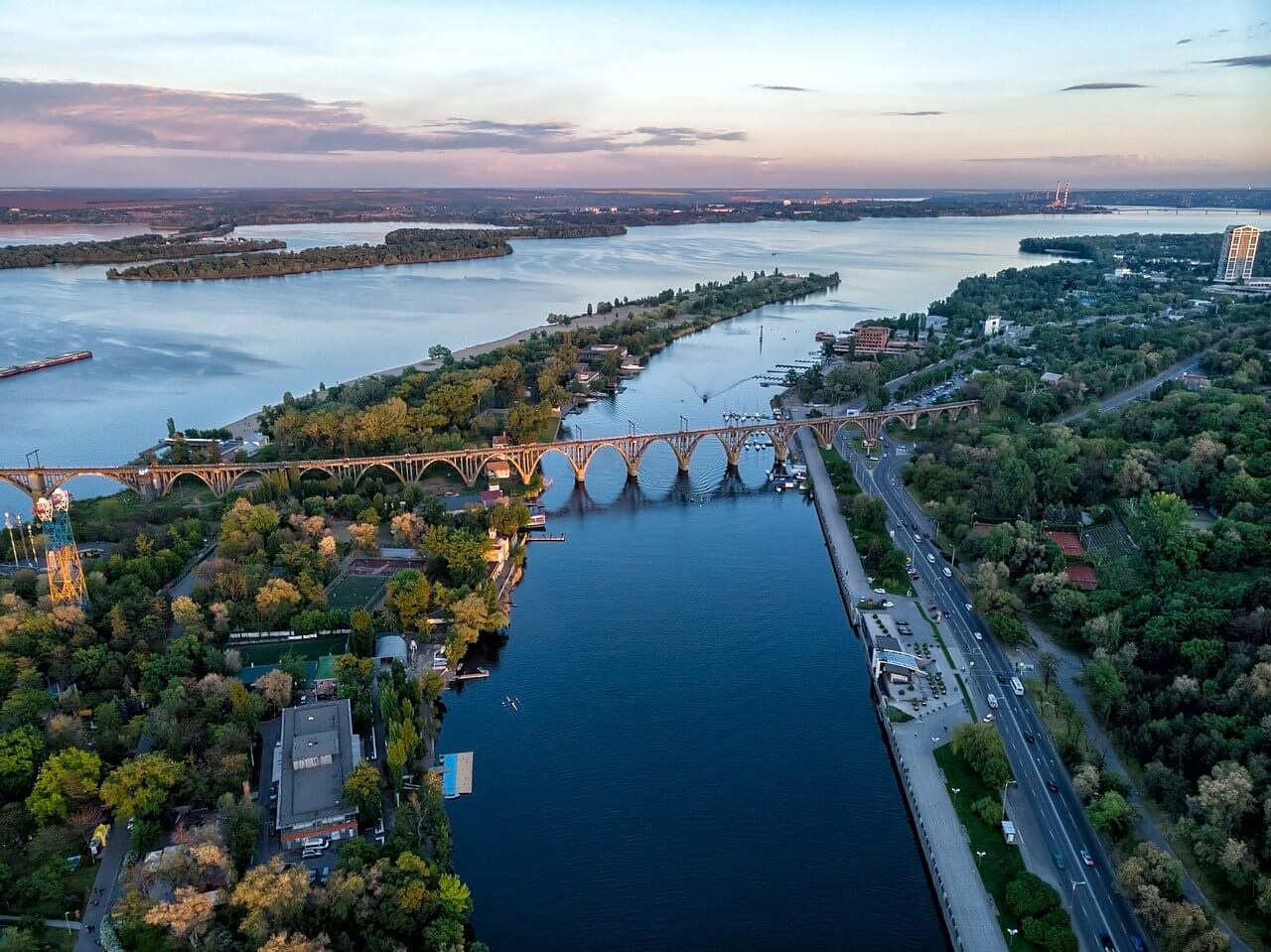
The Merefo-Kherson bridge is a symbol of the industrialization of the first half of the 20th century in the life of the city of Dnipro and the region. Photo: open sources
The rapid development of the Ekaterinoslav region at the end of the 1926th century - the beginning of XNUMXth century was interrupted by the devastating events of the First World War and revolutionary contests. In July XNUMX, Katerynoslav was renamed Dnipropetrovsk in honor of one of the figures of the communist movement, the "All-Ukrainian Starost" Hryhori Petrovskyi. During Soviet times, the city continued to develop in industry.
"Precious Stones"
You and I are interested not so much in iron ore, but in the "face" of the city of Dnipro - its streets, architecture, unique landscape, and the attitude of its inhabitants to everything as a whole. If we divide the architecture into periods, then the first stage will be the development of the city at the end of the 18th century. and the beginning of the XIX century. Its characteristic ocher yellow color is typical of classicism. A unique object for this period is the ensemble of God-pleasing institutions, which included a hospital, a pharmacy, and an insane asylum. Now it is the regional clinical hospital named after Mechnikov. Ivan Revsky notes that the building is currently in a neglected state, but it is that "precious stone that is simply hidden under a layer of dust", it just needs to be unearthed.
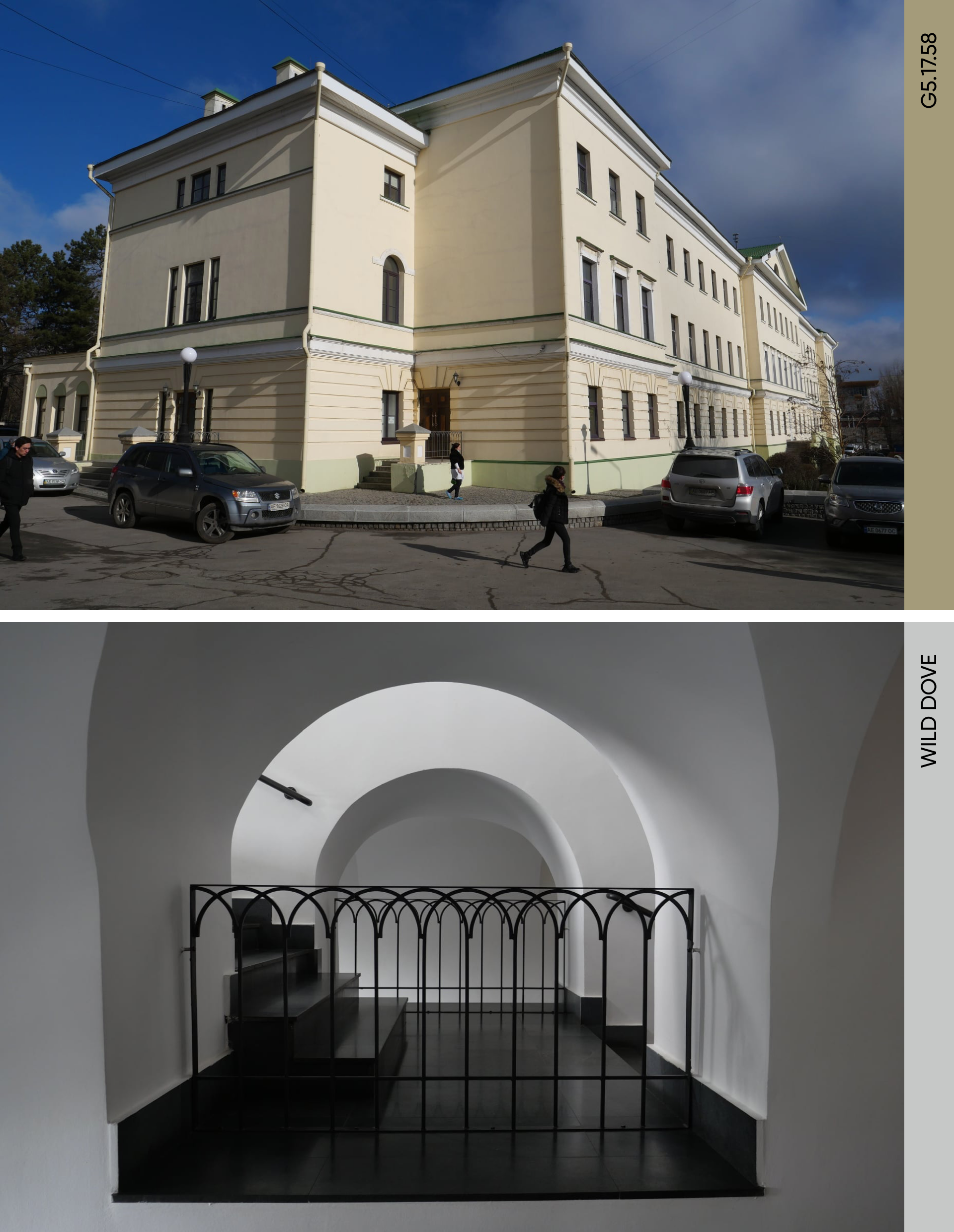
The main building of the Mechnikov regional clinical hospital. Photo: O. Besedin
One cannot ignore the building of the Transfiguration Cathedral, which has a rather dramatic fate. The already mentioned Claude Gerois developed the first plan of the cathedral, similar to the Roman temple of San Paolo fuori le mura. It was supposed to be a grand basilica with five naves. The cathedral appeared almost five decades later - in 1835 at the same place and with the same name, but several times smaller in size and with a different project. The Soviets planned to destroy the monument, but then the historian Dmytro Yavornytskyi proposed an ironic way to preserve the cathedral — to set up a museum of atheism there.
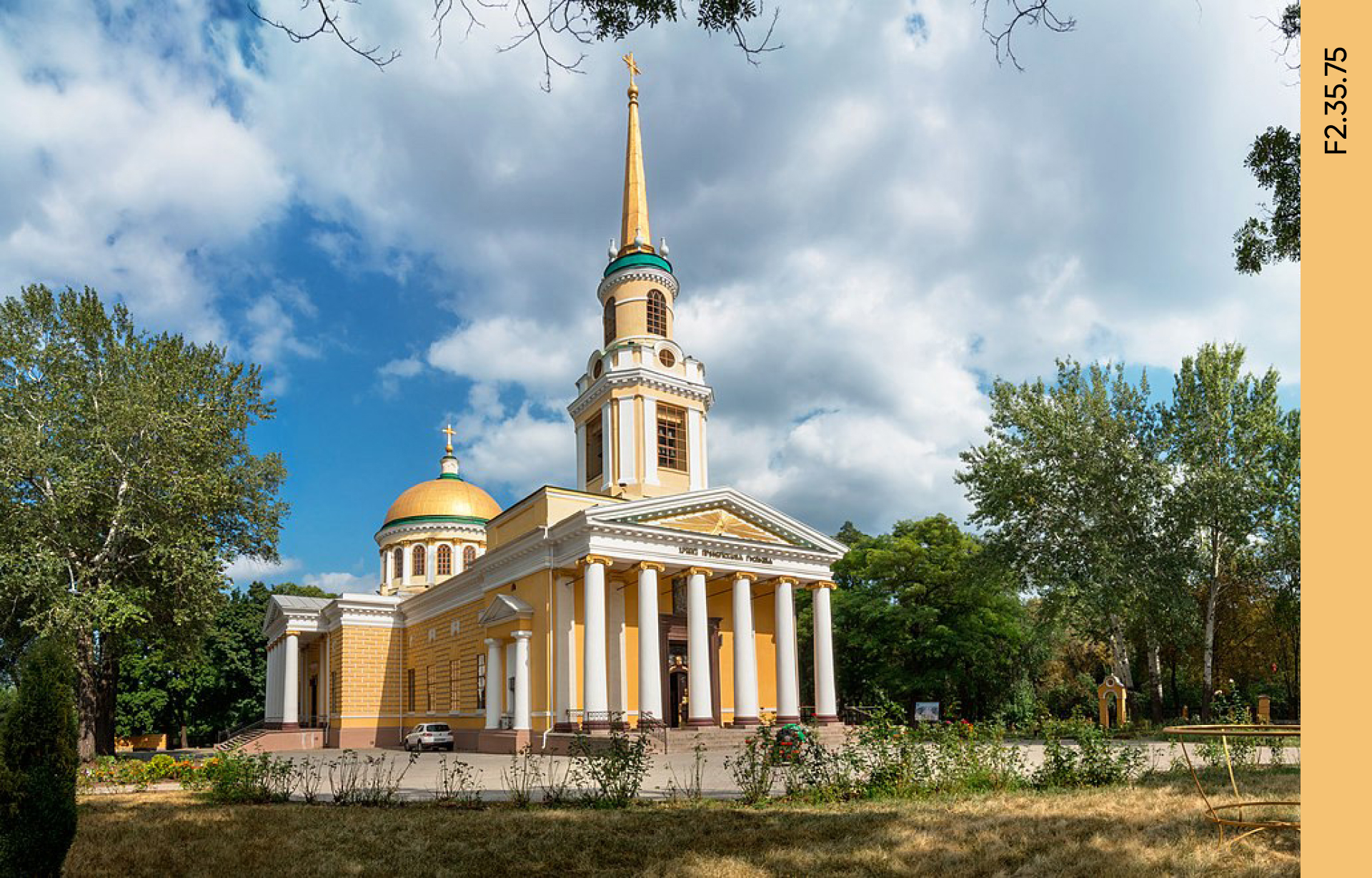
Transfiguration Cathedral, which became a symbol of the beginning of the construction of Katerynoslav. Photo: open sources
The second defining period is the end of the 19th century, characterized by an industrial boom that gave way to rapid construction. Then the main brick building of the city arose and the unique Katerinoslav brick style was born. It was expensive to decorate houses with stucco, so the decor was laid out with shaped bricks. Here we will highlight another important color in the city code - terracotta. Architect Oleksiy Valentirov told us that there is a trend in the city to use bricks in new buildings, which are still produced by modern factories. The people of Dnipro really respect this material and its influence on the formation of the city. "Several months ago, I was in a restored building in the city center, and I was shown how the customer had decorated a room in the basement, where stamped bricks that were found during the work were collected. They were presented there as exhibits, creating such a center of history," says Oleksiy.

Oleksiy Valentirov is a Dnipro architect, founder of VALENTIROV&PARTNERS
You can see a house in this style, in particular, at 13 Lyvarny Street. This estate is one of the few buildings that survived the Second World War. The amazing facade of the house is also decorated with realistic sculptures of lions with open mouths. Another interesting decoration is the brick House with a satyr, although the masquerade of the satyr disappeared without a trace a few years ago. On the facade, you can still see the valkyrie and medallions with the initials, probably of the first owner.

Katerynoslav brick. Photo: www.midnipro.museum
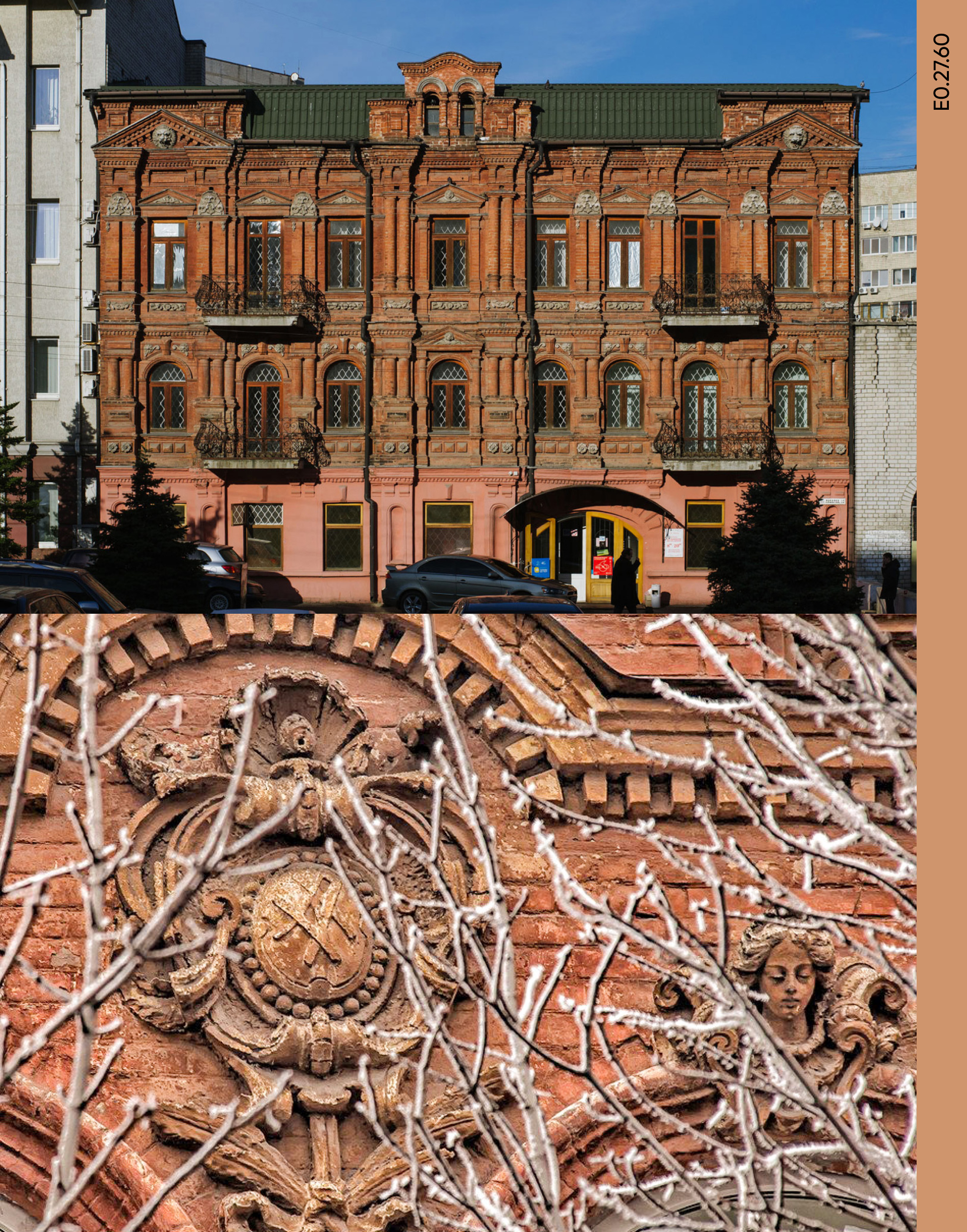
The building at 13 Lyvarna Street and 13 Venadskyi Street are typical examples of the Ekaterinoslav brick style. Photo: open sources
"Grey slag bricks, made from metallurgical production waste - slag, were also widely distributed. This brick was of extremely high quality. It was even taken to other cities and abroad, - continues Ivan Revskyi. — Gray is also the color of constructivism in the 30s of the 70th century. and modernism of the 80s and XNUMXs of the XNUMXth century."
The second defining period is the end of the 19th century, characterized by an industrial boom that gave way to rapid construction. Then the main brick building of the city arose and the unique Katerinoslav brick style was born
It is important to single out the building of the Dnipro Philharmonic named after Leonid Kogan, built in 1911-1913 according to the project of the Kharkiv architect Oleksandr Ginzburg, who is considered the progenitor of proto-constructivism. This is an example of Ukrainian modernism that was ahead of its time. The facade of the philharmonic hall is distinguished by a uniform ivory-colored plastering.
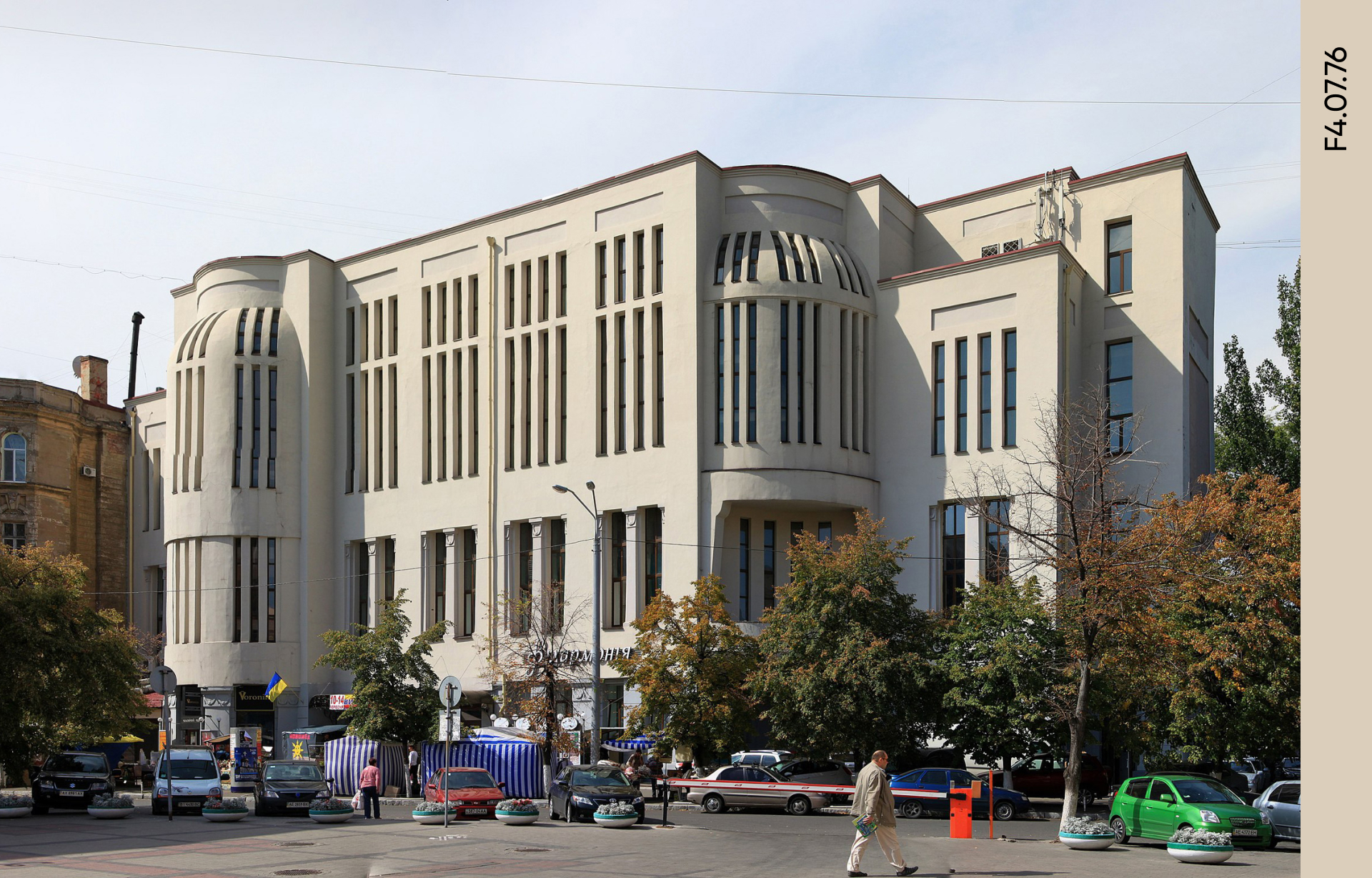
The Philharmonic building was built in 1911–1913 according to the project of the architect Oleksandr Ginzburg as a theater-club for public gatherings. Photo: open sources
The real symbol of the Dnipro can be considered the building of the "Ukraine" hotel, or the house of Volodymyr Khrinnikov, a popularizer of Ukrainian culture. Built in 1913, it is a vivid example of Ukrainian modernism. Hotel "Ukraine" stands out against the background of other buildings with ornamental inserts, elegant gables and trapezoidal windows. In 1943, the building burned down, and it was rebuilt in the 1950s with some changes in the roof structure.
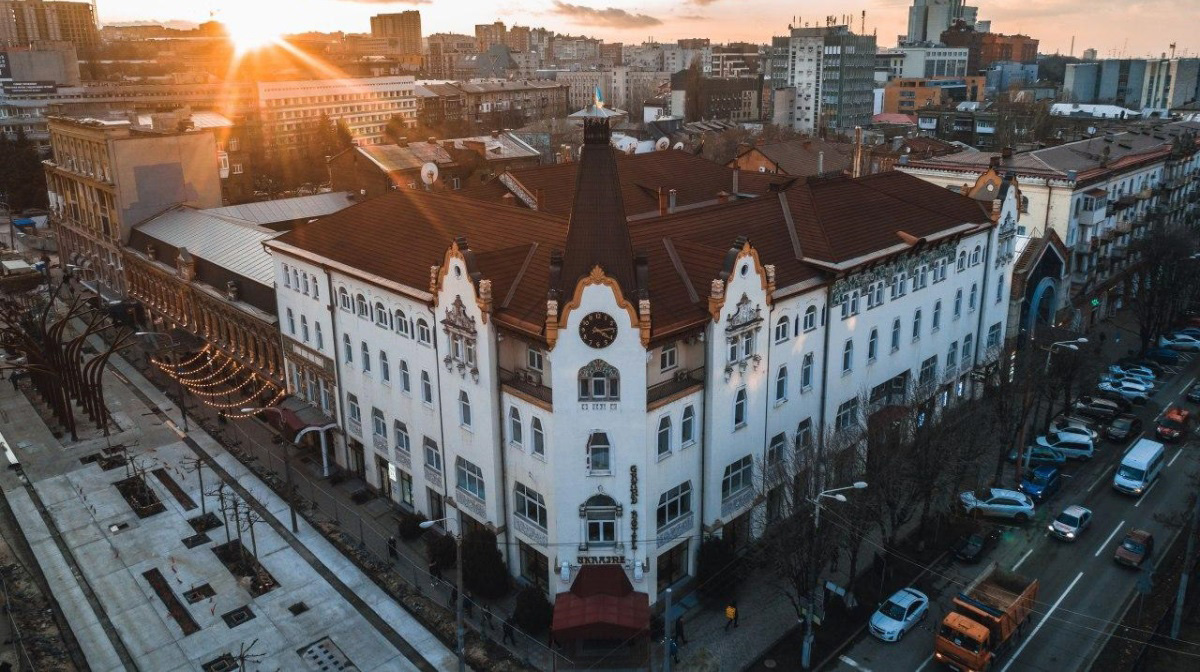
A monument of history and architecture of local importance in the Dnipro, erected in 1913 by order of the Katerynoslav millionaire and popularizer of Ukrainian culture Volodymyr Khrinnikov. Photo: informator.ua
The designer told us about the next building Valery Kuznetsov: "There is another very interesting object in Dnipro - it is a summer theater in the park named after Lazar Globa. It was built by architect Oleg Petrov. I remember when I came to Dnipro at the age of 9, I was incredibly impressed by this building with its fantastic shape. I like her, perhaps, most of all." A giant hyperbolic paraboloid literally levitates on the water of an artificial pond. The architect plays well with the viewer's imagination, as in this form you can recognize something new every time: a sea shell, and the open mouth of a whale, and even a swan.
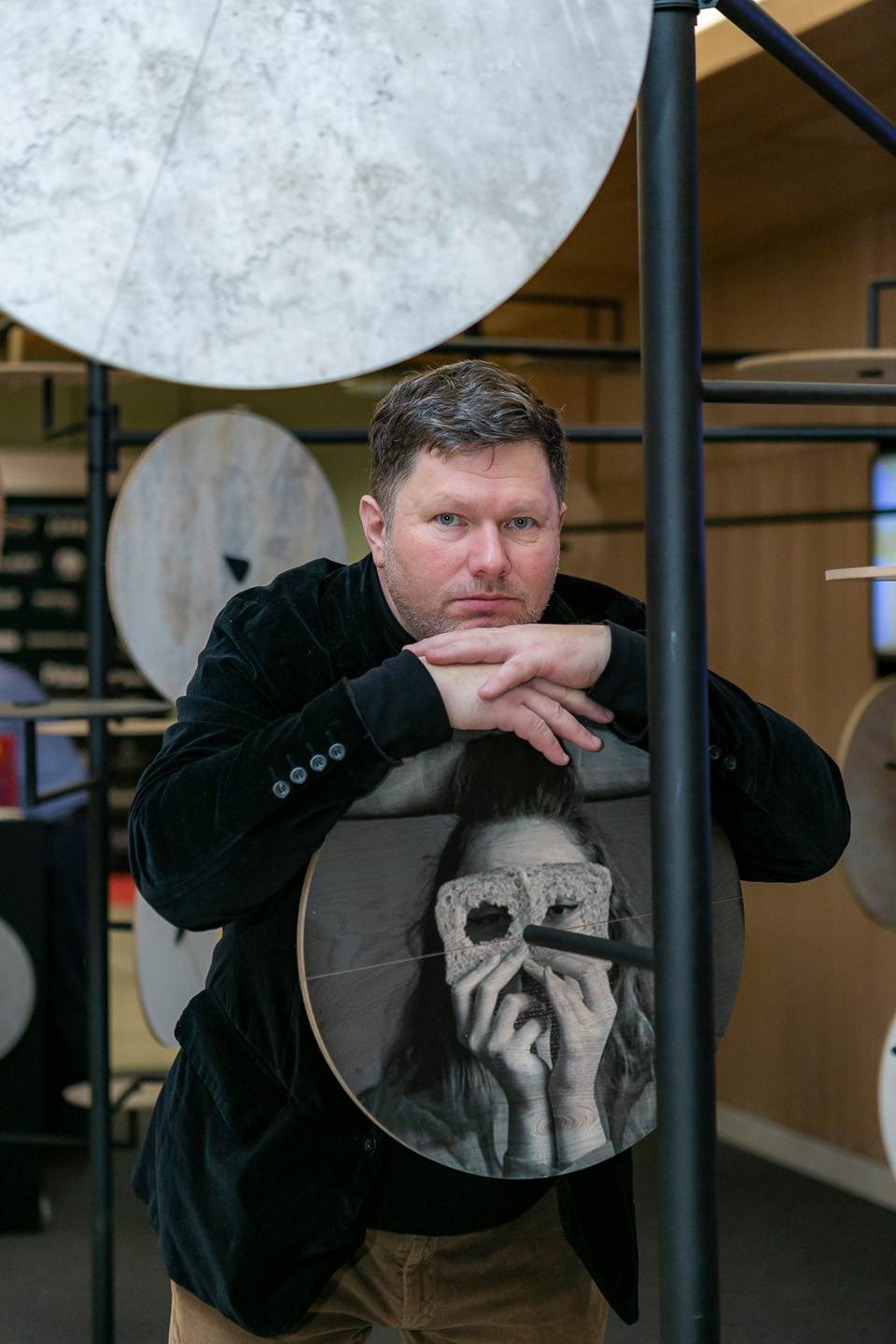
Valery Kuznetsov is a Ukrainian designer, one of the founders of Smith & Winken, founder of decorkuznetsov
Next, Valery cites another iconic name in the architecture of the Dnipro — Pavlo Nirinberg. Several bright projects were created based on his drawings. One of them is the circus building. According to the design, the reinforced concrete structure was supposed to change its appearance: during the day it should resemble a circus tent, and in the dark - a fiery volcano. The building of the Dnipro City Council on D. I. Yavornytskyi Avenue was also built according to Nirinberg's project. It even traces a peculiar "autograph" of the creator - the letter "H" on the facade.
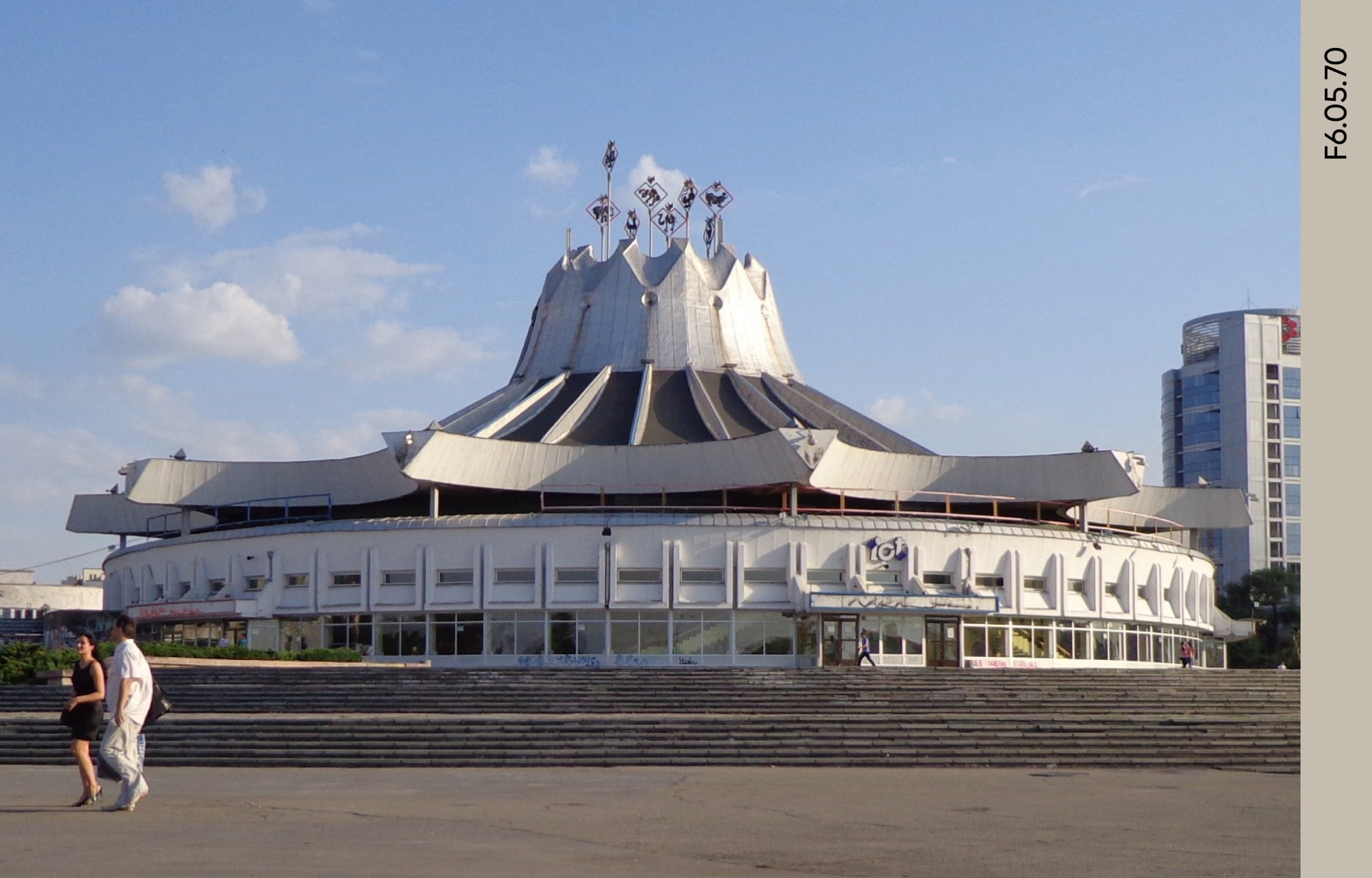
Dnipro State Circus, built according to the project of Pavel Nirinberg. Photo: Wikimedia
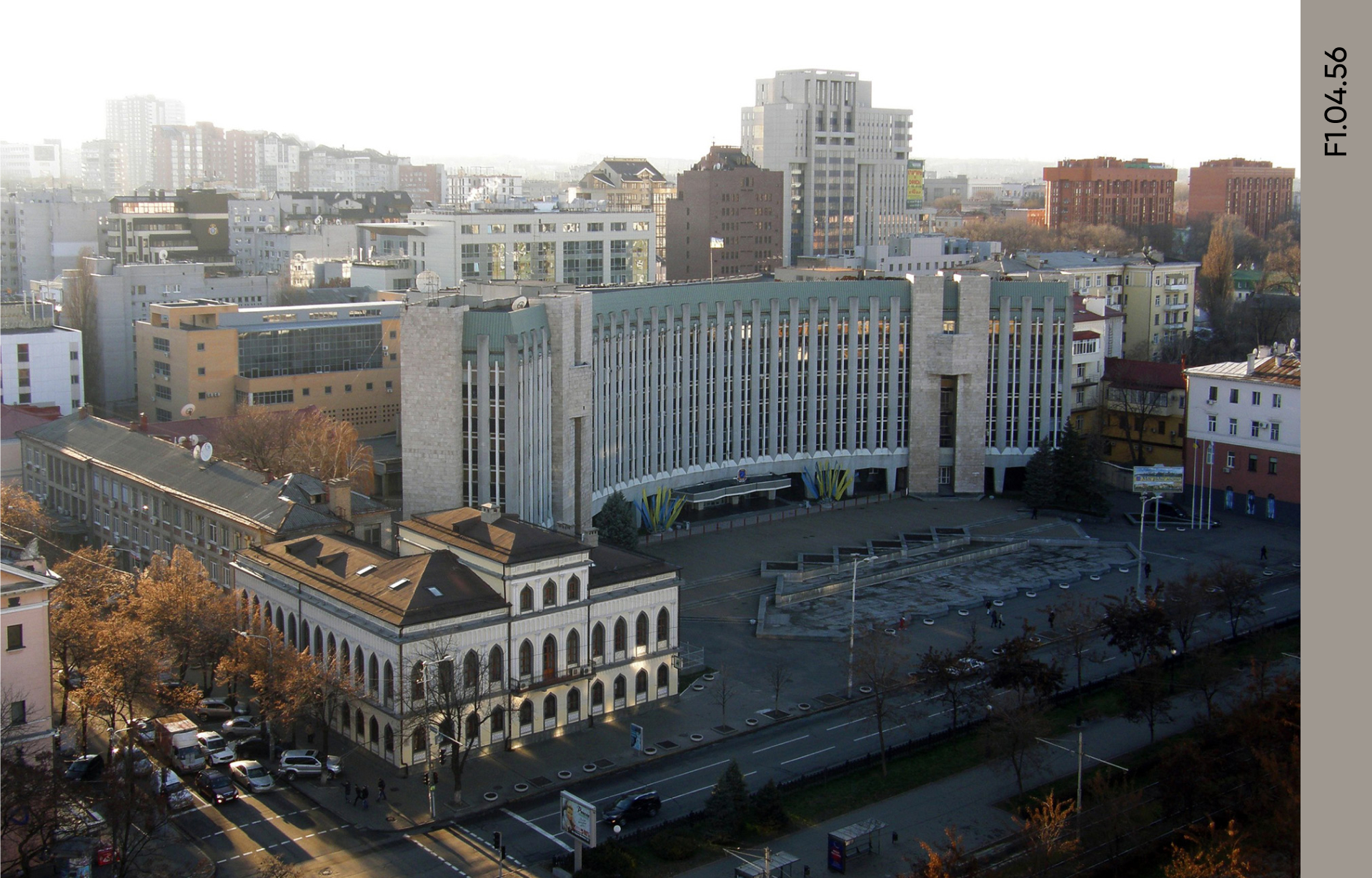
In 1983, according to the project of P. R. Nirinberg, the building of the Dnipro City Council was erected on D. I. Yavornytskyi Avenue. Photo: open sources
Valery also suggests paying attention to the works of Volodymyr Vesnin. In particular, we are talking about the bus station building in the style of late modernism, which is considered the most complex structure in Ukraine. The architect also embodied his ideas in the buildings of the river station and the regional court in Dnipro. In August 2023, the Russian occupiers launched a rocket attack on the bus station, as a result of which the building was destroyed.
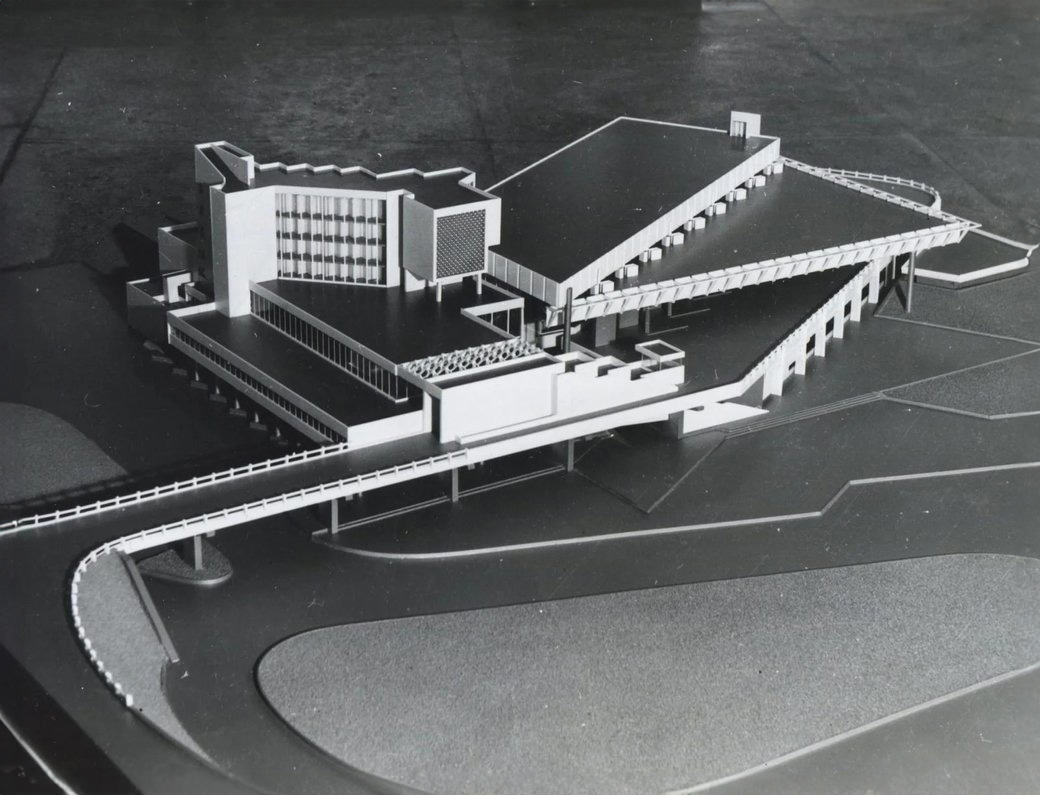
Layout of the bus station from the archive of V'yacheslav Tovstyk, 1980s. Photo: open sources
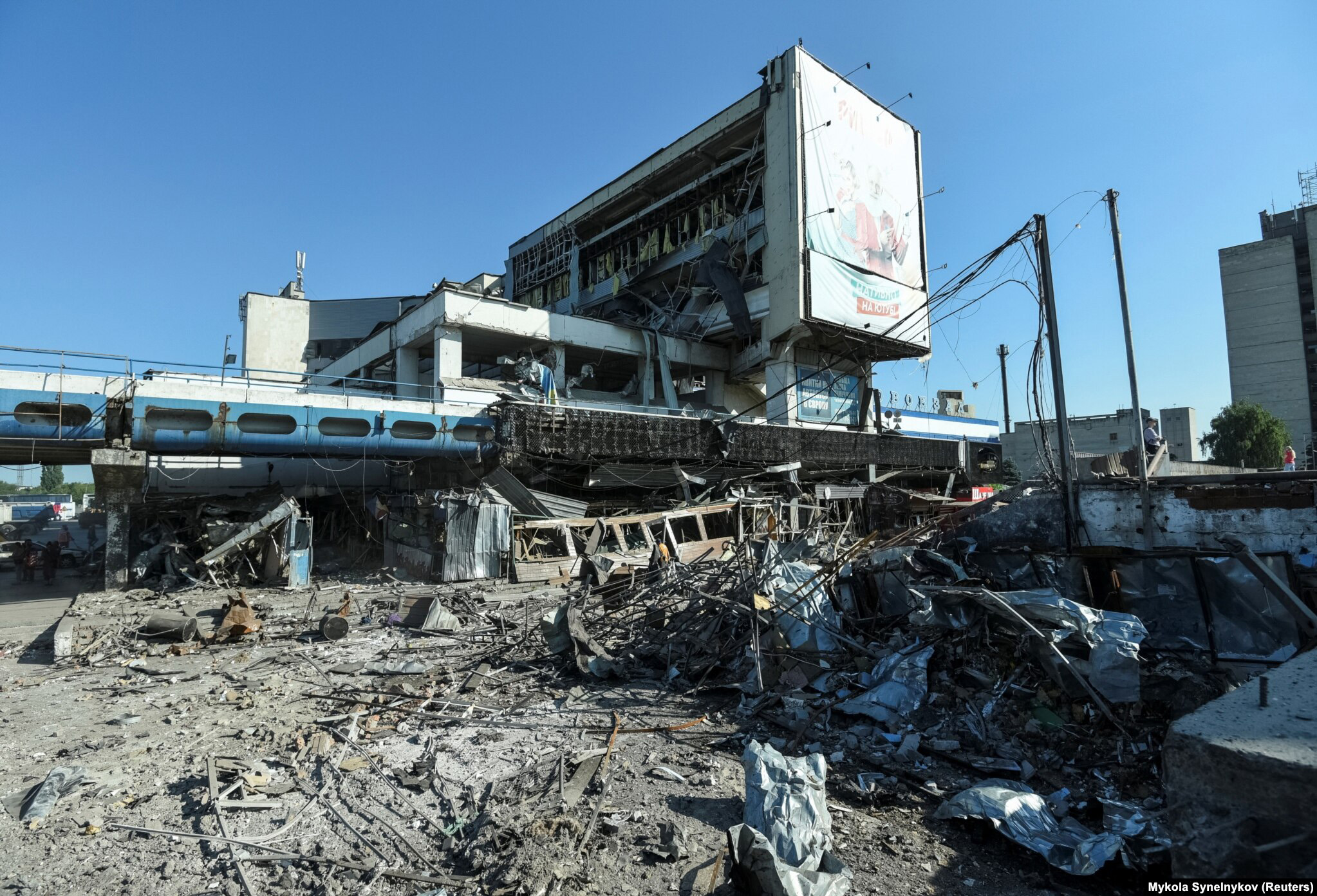
Dnipro bus station after a missile strike, August 24, 2023. Photo: Reuters
The most favorite place of Dnipro residents is the embankment. Here you can not only enjoy the scenery, but also feel the scale and spirit of the city. Valery Kuznetsov explains: "This is the most beautiful embankment in our country. It was designed by Dmytro Volyk, who today is the chief architect of the city. It is quite interestingly designed, because in fact it can be continued indefinitely along the river, which in the area of our city has the most attractive water area. In general, I will not be afraid of these words, but our view of the Dnieper Rapids is the most beautiful thing I have seen in Ukraine."
"This is the most beautiful embankment in our country," Valery Kuznetsov

View of the Dnipro and the longest embankment in Europe. Photo: gursesintour.com
We asked Valery what color he associated with the Dnieper, and the answer was very logical - it is a blue-blue color that sends us to the main river. Here, the townspeople have a good relationship with water, they have learned to use it in various water bodies, for example, in ordinary street and drinking fountains. Valery himself created a series of small and bright fountains called Candy. You can see them on the streets of Dnipro and quench your thirst there.
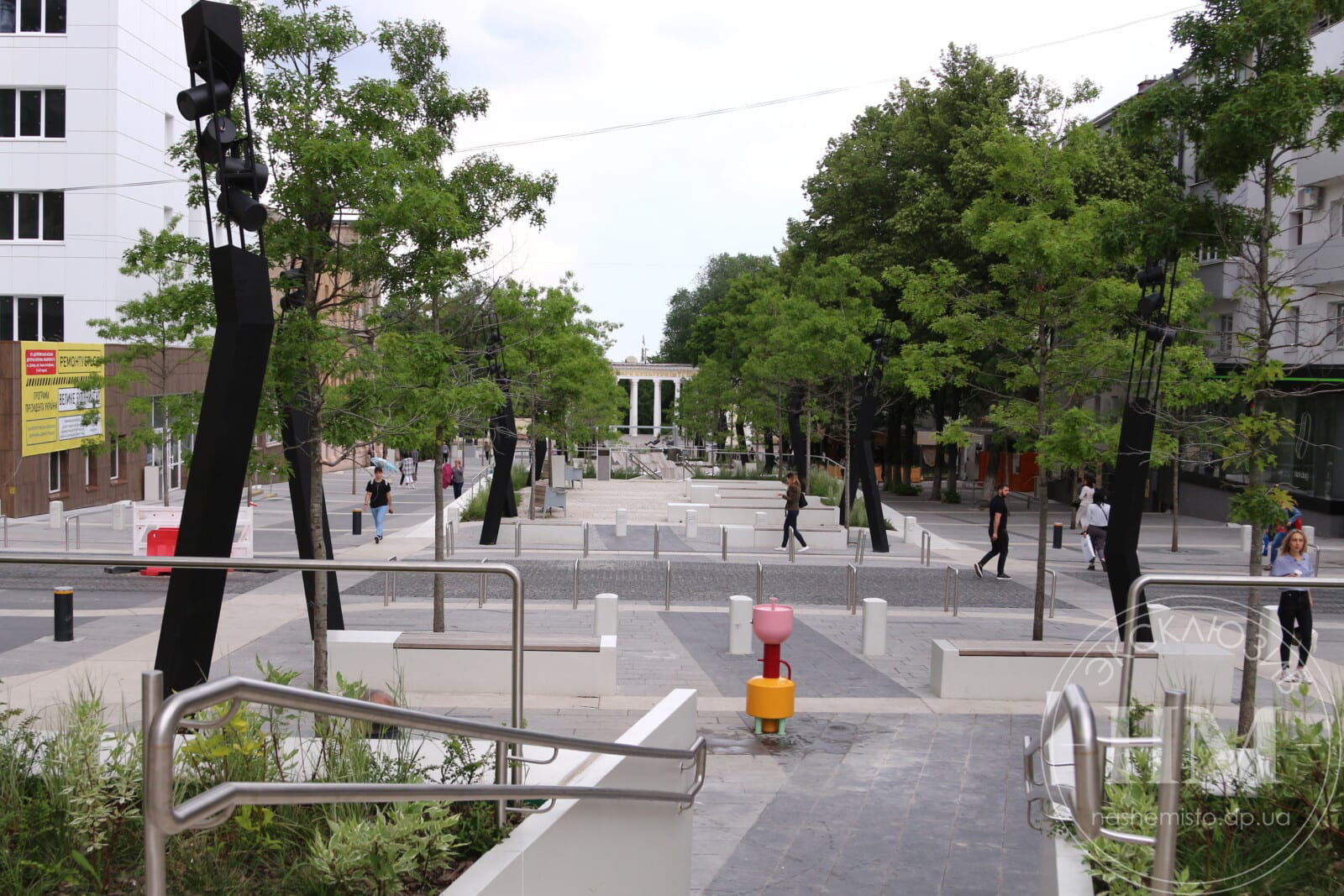
Candy fountains with drinking water on Yavornytskyi Street in Dnipro. Photo: Our city
A city that cares about harmony
"When I think about my hometown, the first thing that comes to my mind is: Dnipro is multicultural. There are many different ethnic groups, people of different faiths, and therefore the city has always been quite tolerant. We have a very large Jewish and Armenian community. Evidence of the first is the Jewish cultural center Menorah, the largest in Europe. Some cities have probably better preserved their heritage, Dnipro, unfortunately, does not stand out for the better. But it is constantly changing and developing. If during the Soviet times the city was industrial, now it is returning to the people," is how Oleksiy Valentirov describes what Dnipro is today.
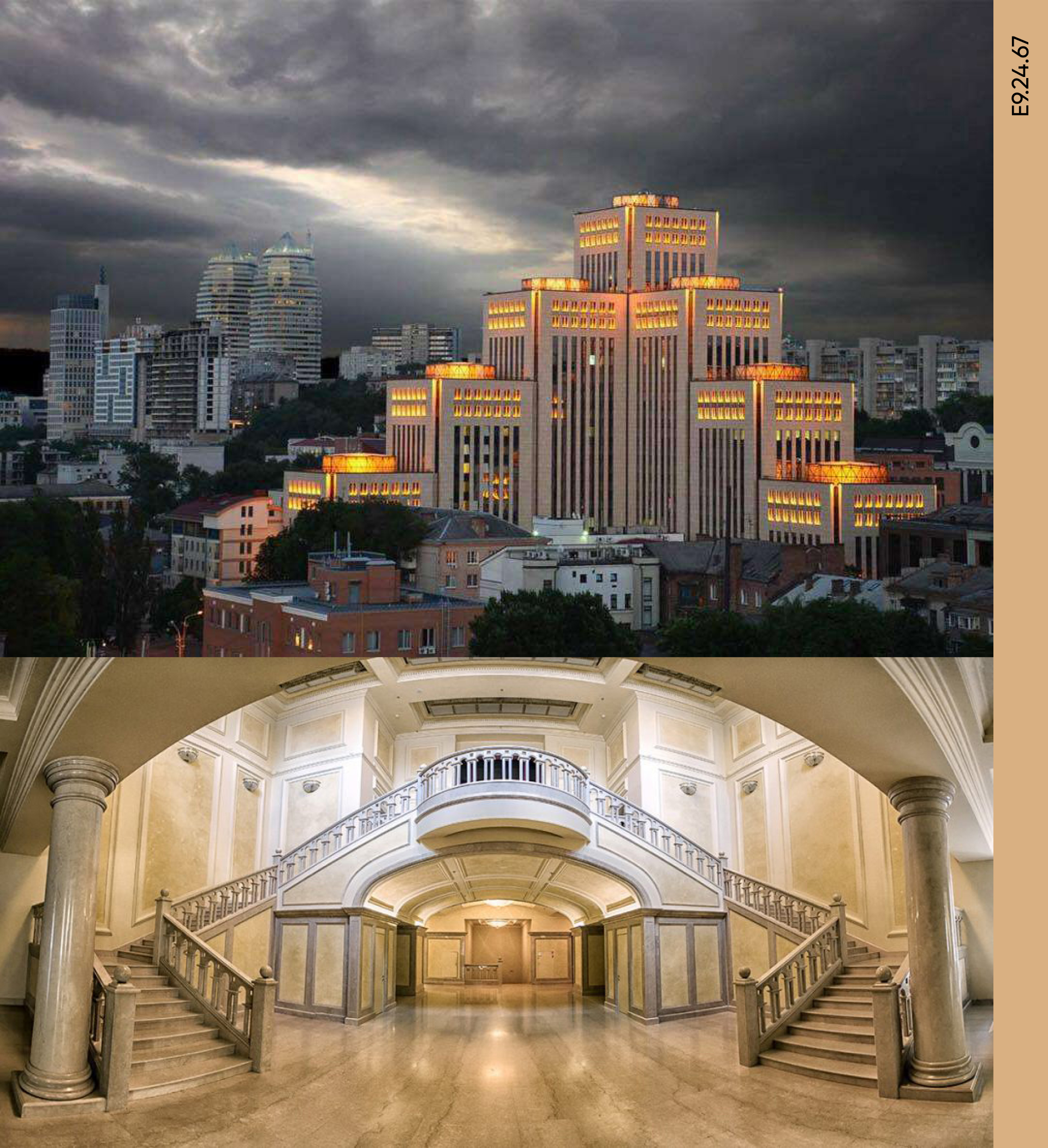
Menorah, the largest Jewish center in Europe. Photo: open sources
In fact, Dnipro is a rather unique city for Ukraine, because it can boast not only ancient monuments, but also modern and high-quality architecture. Valery Kuznetsov successfully emphasized that there are no categorically annoying objects in the Dnipro. And this thesis makes sense. Oleksiy Valentirov gives the example of the shopping center "Passage", which was built not so long ago according to the project of Oleksandr Dolnyk: "By the way, there were a lot of different controversial discussions among the townspeople, some liked it, some did not, some said it was some kind of mausoleum. But in my opinion, this is a very coolly made building, coolly designed and harmonious according to its urban planning parameters of height." Dolnyk also designed the famous "Dnieper Towers", which recognizably tower over the river. In general, his studio in the 90s and early XNUMXs was the dominant architectural office in the city. It was they who created the modern silhouette of the Dnipro that we know well.
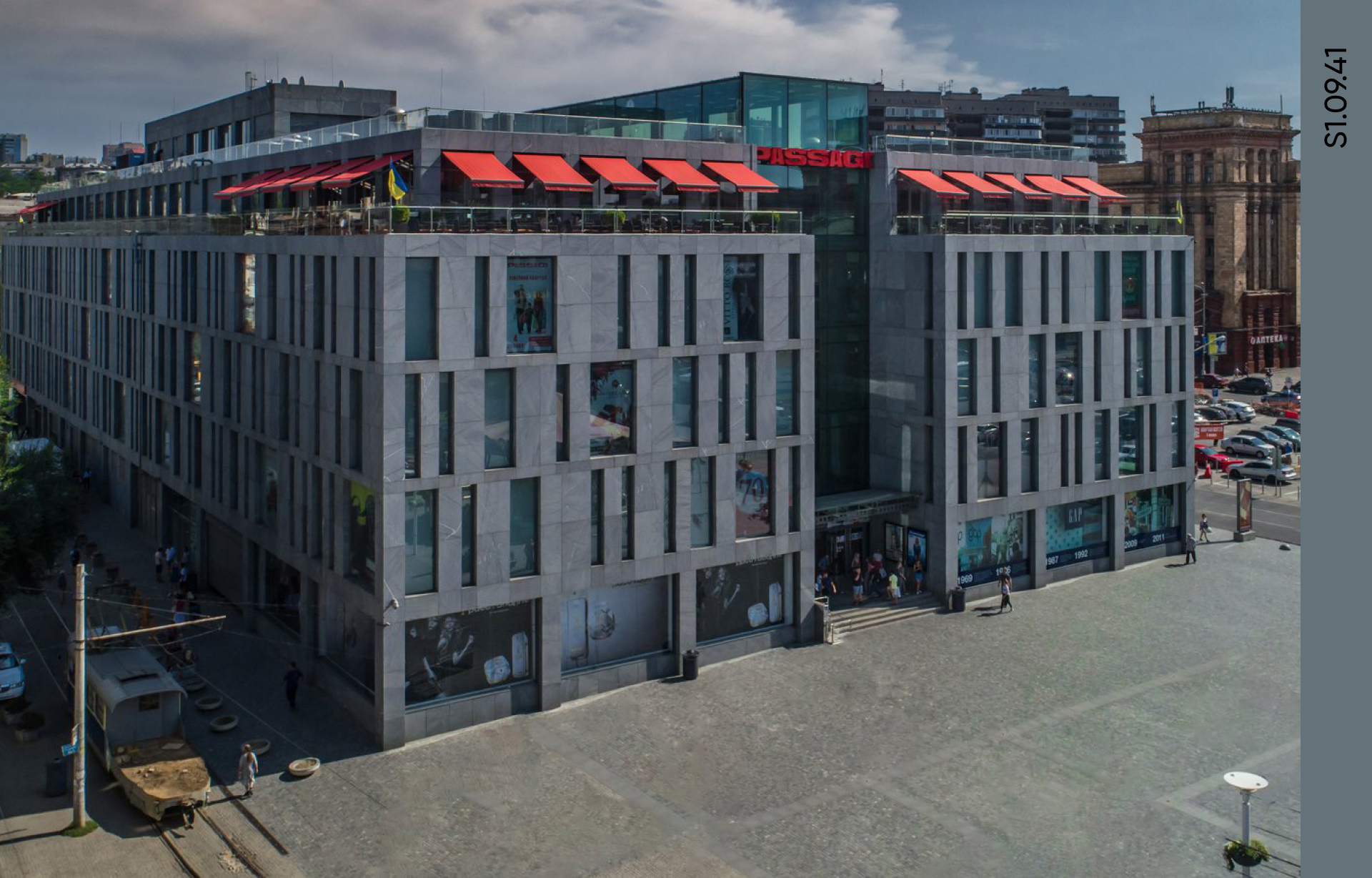
Shopping center "Passage" in Dnipro. Photo: Daytona
In recent years, public space has been actively reconstructed in Dnipro. Yes, the renewed Assumption Square was recently opened - one of the oldest squares in the city. In fact, it is part of a more global system of planning elements in the historical center of the city "Uspenska Ploshcha - St. Foundry — Embankment — Park named after Shevchenko". Here, they strive to create a space that will encourage people to interact with the city. It is also worth highlighting the reconstructed Korolenko Street. The Main Architectural and Planning Department headed by Dmytro Volyk, architects Ksenia Donetska and Serhiy Derbin worked on the project.

Reconstructed Assumption Square. Photo: Yevhen Savchenko and Oleg Melnikov
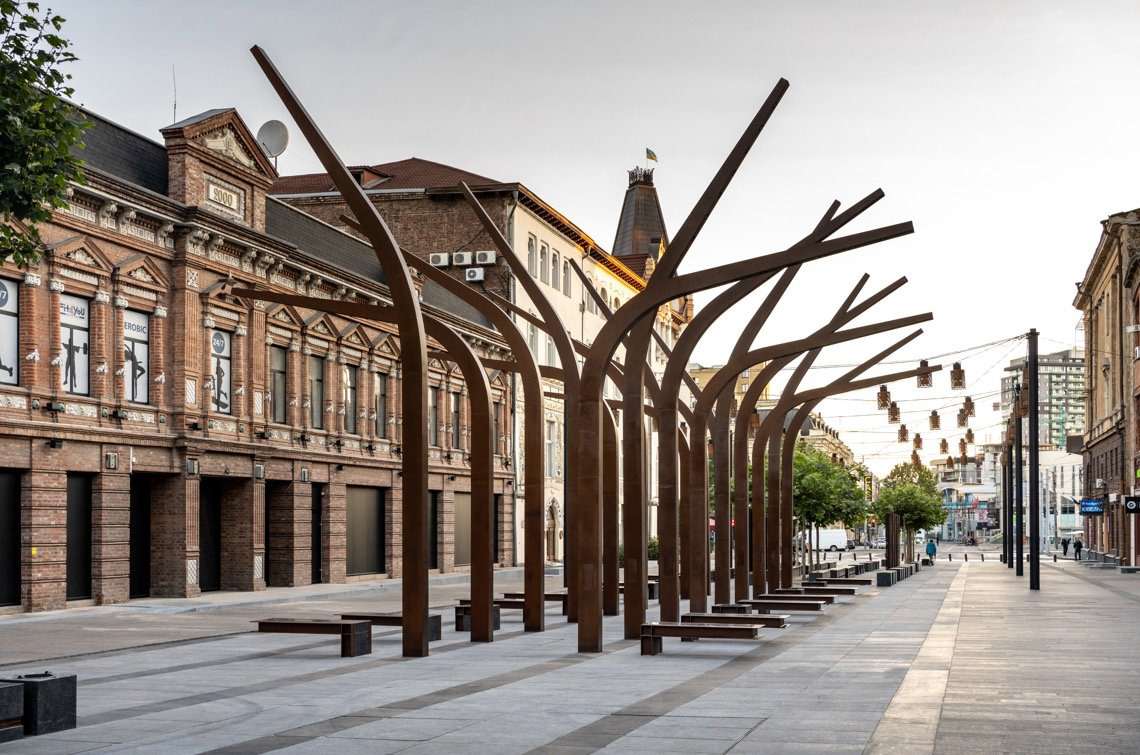
The reconstructed Korolenko Street in Dnipro. Photo: Andriy Bezuglov, Kateryna Chala
A valuable lesson that other cities of our country can learn from the Dnipro is an active discussion. The city has an effective urban planning council, which actively discusses the creation of this or that object or the reconstruction of an already built one. Thus, during project implementation, not only the interest of the developer is taken into account, but also the interest of the community. Of course, this mechanism does not always work, but there is a positive dynamic and interest in what the city will look like in the future.
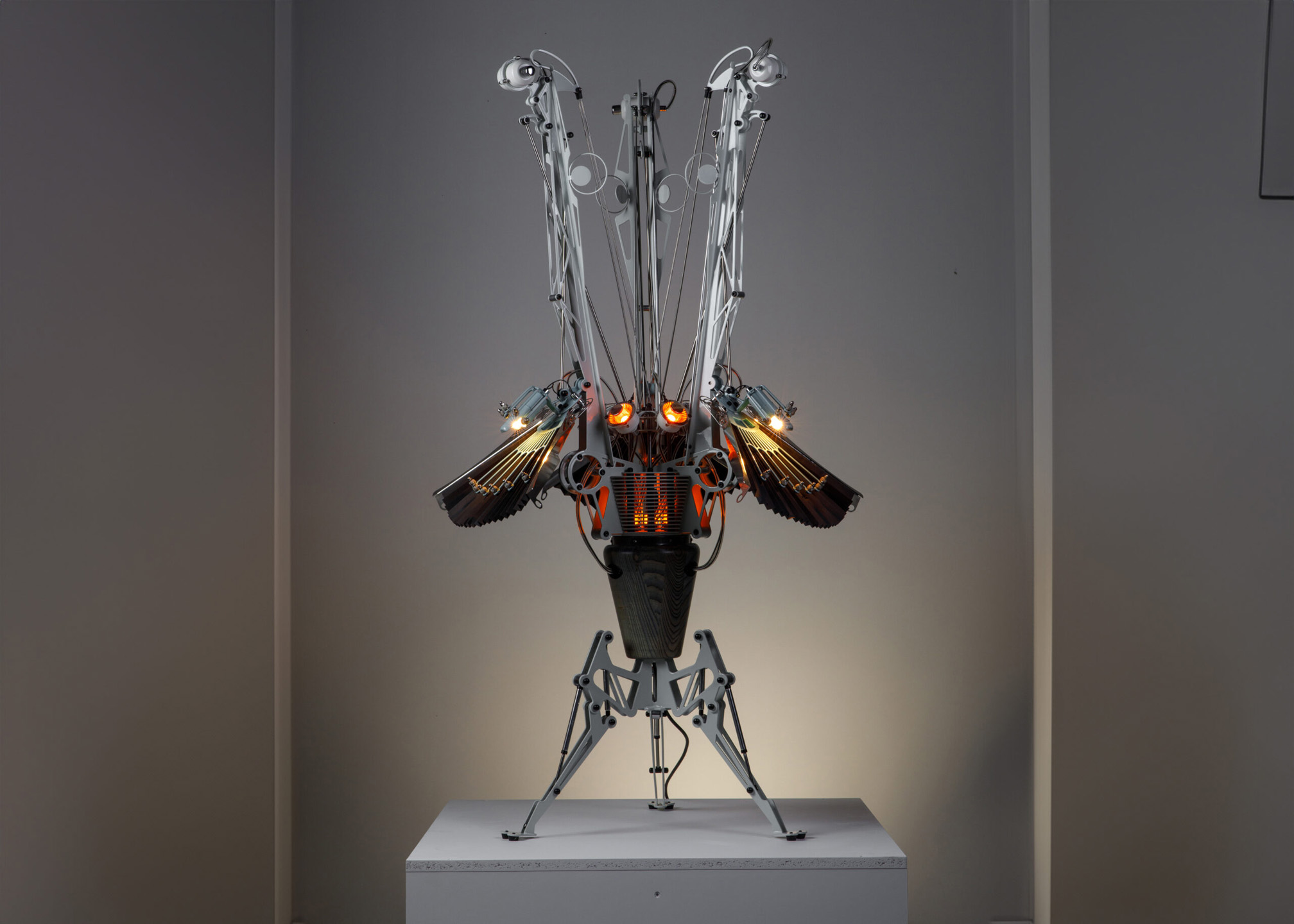
GEMINI exhibit from the Smith&Winken collection. Photo: smithwinken.com
During the interview, Valery Kuznetsov suggested one more thought, or rather, one more lesson that should also be learned from the people of Dnipro. The designer demonstrated his workshop filled with fantastic mechanical "creatures" that were created in collaboration with Oleksandr Chikurov in the Dnipro during constant rocket fire. "These facilities are technically quite complex and require high concentration. At any moment, it can fly not only to our workshop, but also to the workshop where iron is cooked, the material is painted or polished. But somehow everything works out for us. These objects give life, they help to survive, believe it or not," Valery says. And this lesson is about hope, about the fact that even under the threat of destruction, it is worth loving your city, it is worth continuing to create.


