


PRAGMATIKA.MEDIA: In previous interviews, you said that today it is difficult for landscape companies to work with the city as a customer, primarily because there is no regulatory framework. And the draft of the new General Plan is already ready and even partially published. If the document is approved by the Kyiv Council already this summer, will it change something in communications between the government and companies like yours?
Yury Korolchuk: The master plan, which they could not develop in any way for 20 years, appeared because the time had come. Rather, it has expired. The understanding came that within the framework in which the city is located today, it has already ended. In all senses. The city cannot develop and increase in scale, and the level of daily migration only increases due to the fact that the population of satellite cities - Vyshnevo, Boryspil, Vyshgorod, and so on - is growing. And it is perfectly natural to understand who is responsible for what, who pays taxes where, to the treasury of which locality.
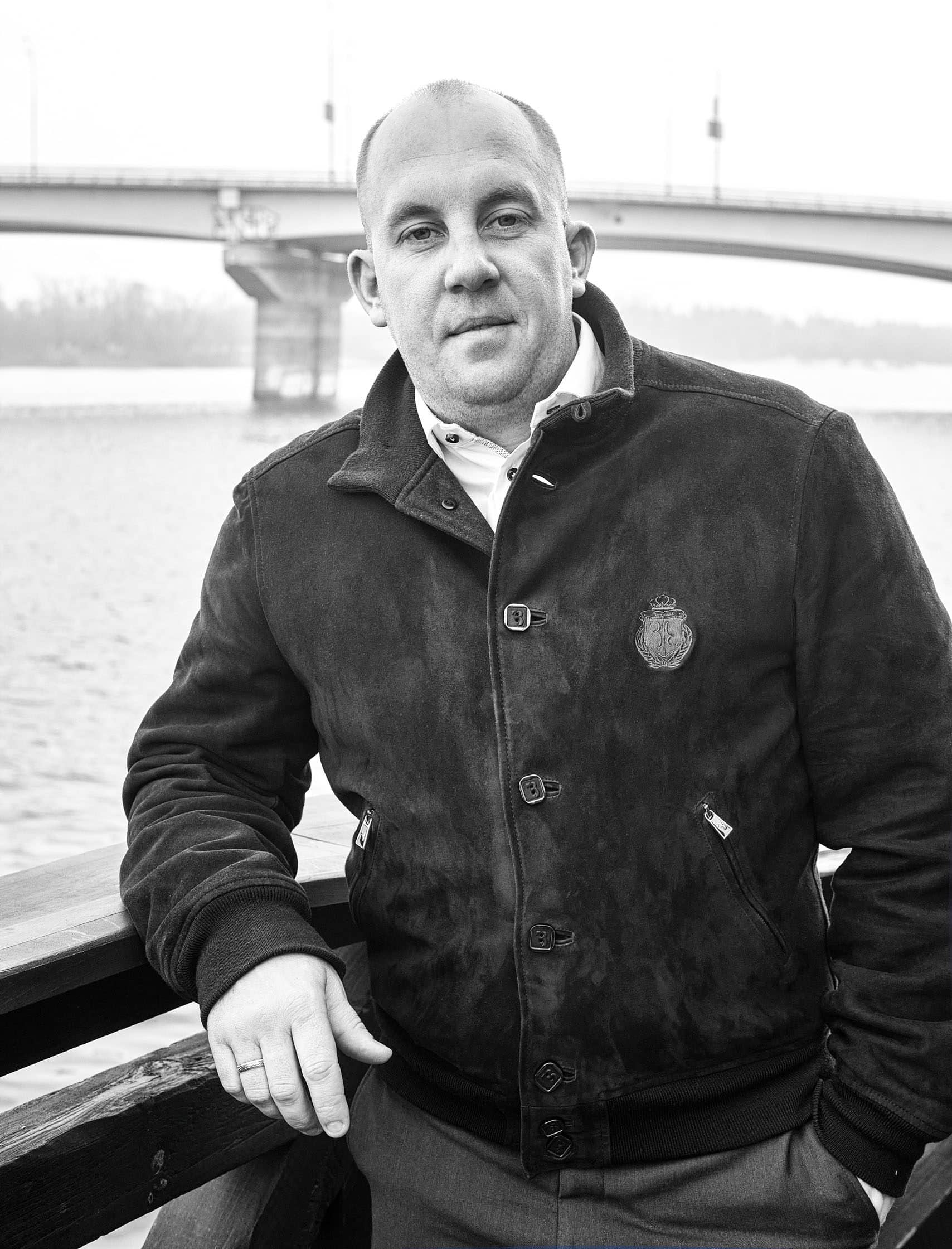
Yury Korolchuk, director of the TOPIAR landscape bureau
Adoption of the General Plan is one of the stages of the decentralization process. And we must understand that battles are not really about whether he is good or bad. This is primarily a struggle for budgets. For example, the village of Kotsyubynskoe. It is decided who he will obey - either Kiev or Irpen. Kotsyubynskoe is delicious morsels of land. And when we talk about the construction of new residential complexes, the improvement of territories, as well as the maintenance of infrastructure, roads and bridges, we are primarily talking about the budgets of the country, the city, Irpen, or Kyiv. And the budgets of companies involved in development and development.
PM: How can decentralization and the struggle for budgets affect the work of companies like yours?
Yu. K.: It is important for us to get complete information on all positions of the General Plan as soon as possible in order to understand what pool of officials and what territories we have to work with. All our projects are long-term, and it is certainly important to know the perspective in order to objectively assess one's strengths and understand the "temperature" in the market. Every year, the number of landscape companies grows. Someone is focused on working with the owners of country cottages, someone on landscaping the territory of residential complexes, someone on working with town planners, architects. The company TOPIAR is also forced to grow every year, as the number of new objects and their scale increases. Now the company has about a hundred people. That's a lot. We and our families live in Kyiv, use the city, and would like to give something back to it, to apply our professional skills, first of all, here.
So, it would be nice to calculate, but will our professional resources be enough for Kyiv tomorrow? Are we really planning to transform Vydubychi, liberate, for example, Lybeda and make a recreation area around it, such as Kyiv's Central Park? Or should we make "Central Park" on Levo Bere? What is the fate of the controversial Protasovoy Yar? Does the new General Plan answer these questions? I don't know yet.
The master plan, which they could not develop in any way for 20 years, appeared because the time had come
PM: Perhaps the government is not ready to answer these questions, because it has not yet found out what people really want. Therefore, the project has not yet been made public in its entirety. If we take democratization and decentralization as our benchmarks at the scale of the country and city, then it is impossible to make decisions from above. It is necessary to focus on the request. The presentation of the General Plan is a test layer, and it is probably important for the developers to see the reaction.
Yu. K.: I am sure that today our people are mostly ready to talk, but not to act. As soon as they try to translate the public discussion into a practical plane and the question arises whether Ivan Ivanov is ready to manage the project, the discussion immediately goes to waste. Today, it is more convenient for most of our citizens to remain in the role of victims, this removes personal responsibility. It is a well-known fact that the system of urban ZHEKs is inefficient. But can you name me at least one successful condominium? There are no successful condominiums, or only a few of them, and the success of residential complexes, such as Tetris Hall or Bulvar Fontanov, is due to management companies. We talk too much about the fact that we are ready to take away powers from the authorities and manage successfully on our own - but mostly these are words. There will be a reaction to the General Plan, it already is, but it is unlikely that the first wave of criticism will affect the final document.
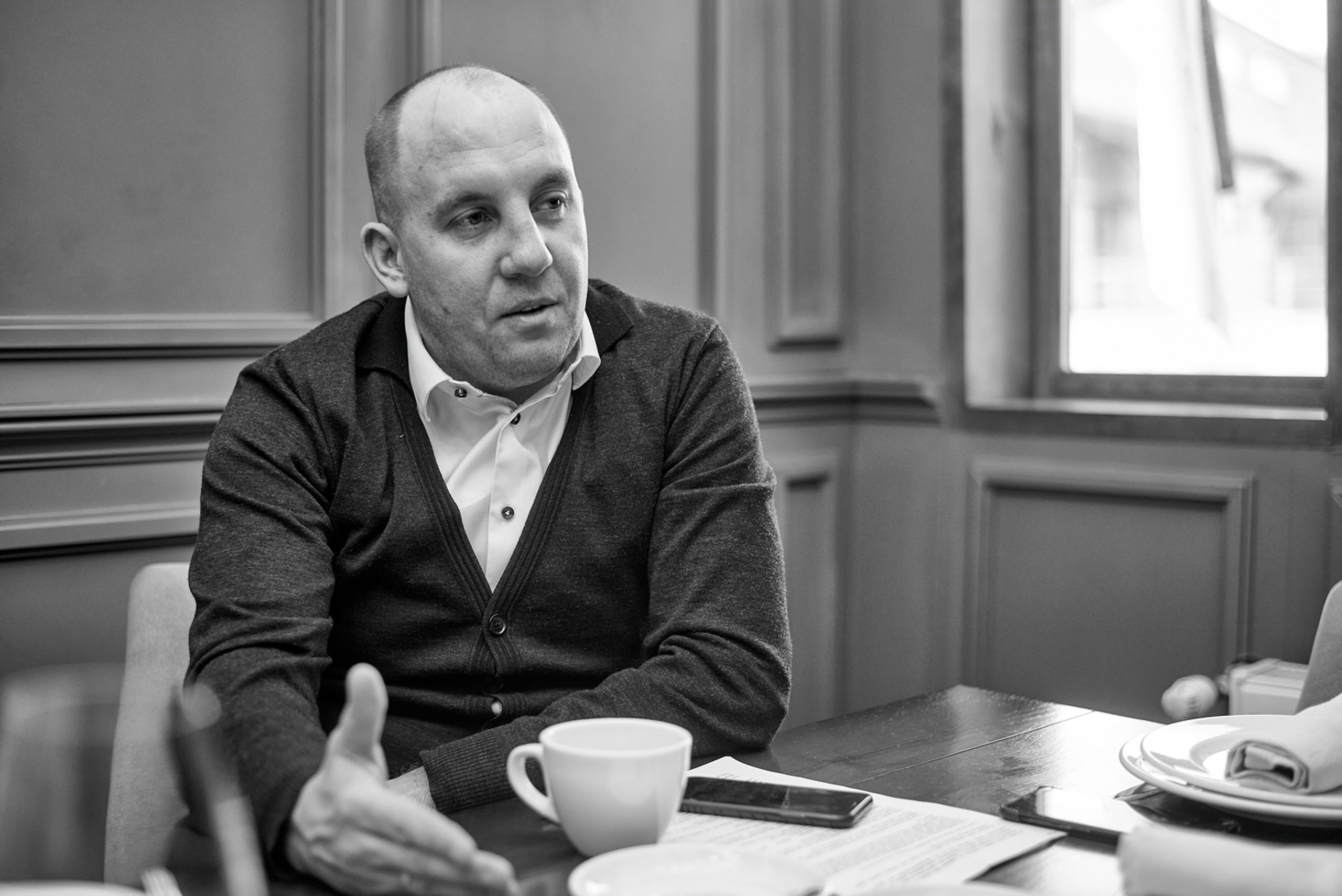
Photo: Yury Ferendovych
PM: The most frequent demand of Kyiv residents: "Leave it as it is, don't touch anything!" Such phrases sound on any of the public listeners. But the city must develop, and the plan must include prospects not only for the native inhabitants, but also for the next generations and new citizens. How to find a balance?
Yu. K.: In the presentation of the General Plan, it is indicated that 2,9 million people permanently live in Kyiv, and by 2041 their number will be 3,26 million people. Permanent residents mean residents who pay taxes and use the infrastructure. But, allow me, judging by the census, 3,7 million people live in Kyiv today! And another 5 million live in satellite cities. And as we know, almost 70% of those who live in these satellites use Kyiv's infrastructure. That is, the Kyiv Council has not yet approved the new General Plan, but it is already obvious that it was compiled with gross errors. The entire infrastructure was designed for a smaller number of residents. And even with such underestimated statistical data, the General Plan does not give an answer as to how we can rationally use the urban infrastructure. For example, I live in Obolony, where they plan to build nine houses with 25 floors. This is at least plus 30 thousand. population At the same time, I do not see new schools or kindergartens on the maps.
I don't understand how we can plan and calculate how much we will have to spend in the future on the maintenance of the city and specifically on the green area, until we calculate how much we have already spent and how much we are spending today. And here I agree with Dmytro Dubylet, who says that all documents and procedures must be transparent and clear. Therefore, I am a supporter of conducting an audit of Kyiv's parks and green zones and finding out how rationally spent last year more than 600 million UAH allocated by "Kievzelenstroy" was spent, and what exactly it is planned to spend 500 million UAH on this year. Will we see the result of these investments tomorrow if we don't see it today?
Without audits, calculations and development of standards, the draft General Plan is a pile of papers
PM: How exactly will the city be able to use the audit results? Well, in addition to the fact that, perhaps, there will be a reason to initiate several criminal cases...
Yu. K.: First of all, we will get the answer to the most important question: can we afford new green zones? This is a very expensive pleasure. The lawns, which are so loved to be arranged in "Kievzelenstroy" KO, are the most expensive covering, as they require regular watering and mowing. Today, we neglect such a basic resource as water, but there is a critical shortage of water in Crimea, and this is a real tragedy.
Therefore, before planning new parks, we need to conduct an audit and put the existing areas in order. For example, are you satisfied with the way the landscaping was done on Bul. Lesya Ukrainka, on Shevchenko Boulevard? This is the center of the city, everything here should be exemplary, maintained in accordance with high standards. And care must be standardized.
PM: Call "New parks of the city!" could become a good motto of someone's election campaign. This topic always causes a hot response from residents. The petition to turn the flooded construction site into Antonovych has collected a huge number of signatures. The developers of the General Plan announced that by 2040, 36 new parks, new squares and boulevards will be created in the project residential areas. Do you think it will stretch the budget of Kyiv?
Yu. K.: The topic of creating new parks is one of the most popular and populist. One of the heroes of the film "Orphan Brooklyn", urbanist and politician Robert Moses, adhered to the principle "If you build parks, then the angels are on your side." He demolished entire residential areas to build freeways, but New Yorkers supported him because he had a reputation as a man who builds parks. And there is a danger that our politicians will also use similar schemes. I believe that today Kyiv has enough chic parks and places for walks. Can you name at least one crowded park?
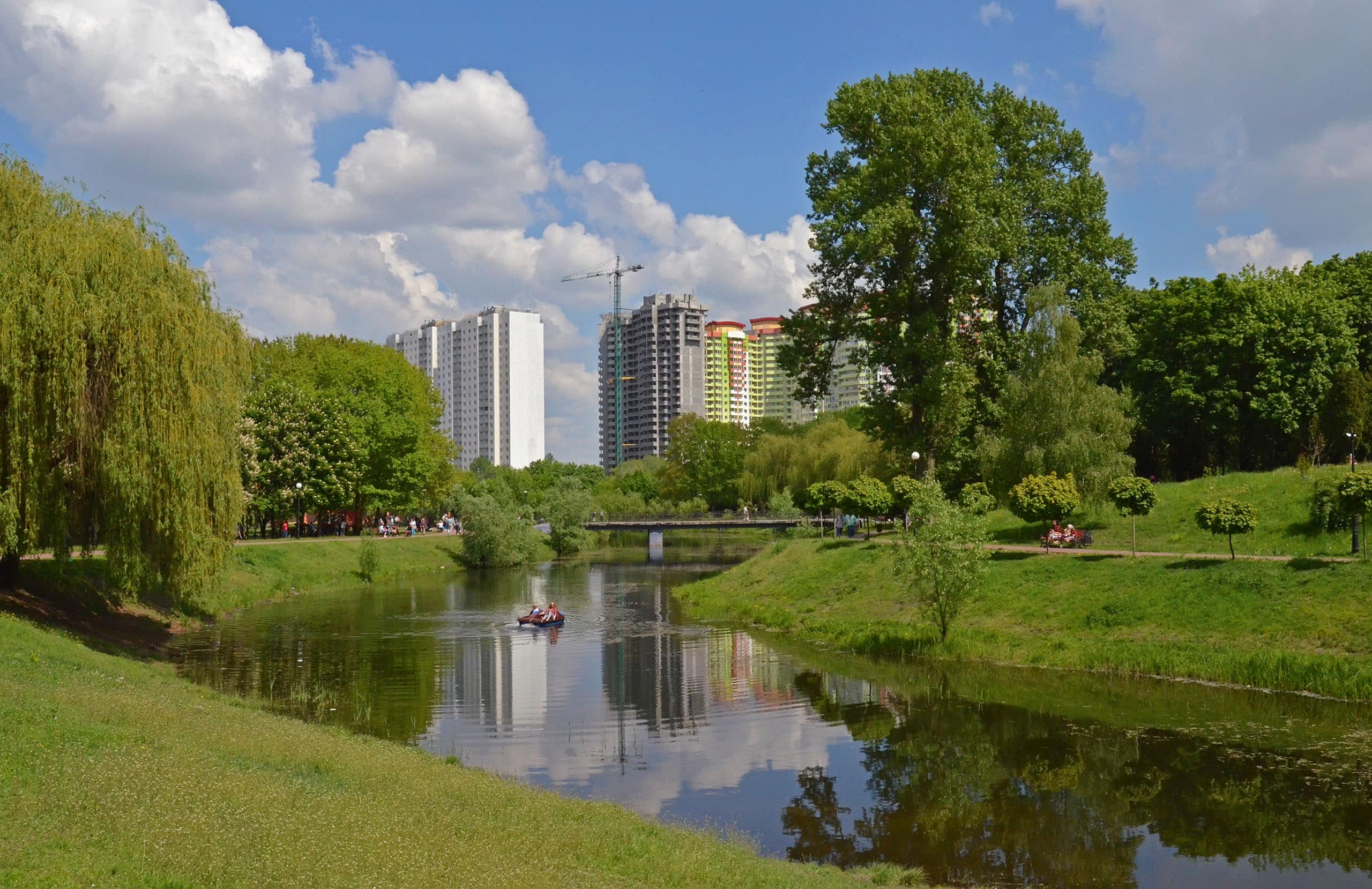
The source of the Lybyd river, Solomensky district of Kyiv, "Otradny" park. Image source: wikipedia.org
PM: For example, the Botanical Garden, especially during the spring flowering period.
Yu. K.: Come to the Botanical Garden in August and take a walk alone. Yes, there is a peak load on the park during the flowering period of magnolias, cherry blossoms, tulips, etc. Today, green areas are no longer planned in this way - they must delight, surprise and attract round the clock. The correct selection of plants will provide many waves of color that will replace each other. Examples are Peeta Udolph's all-season gardens, which are relevant at any time of the year, not just from April to the end of May.
But the Botanical Garden, for which a fee is charged, albeit a symbolic one, is a slightly different story, as are private parks. One of the people's deputies lobbied for the allocation of budget funds for a new park in Uman, although there is a luxurious historical arboretum there, as you know. The entrance ticket to the park "Novaya Sofievka" costs UAH 70, it seems. In September alone, this 10-hectare park collected UAH 3,5 million for its maintenance and development.
It is unacceptable that all parks become paid for citizens — therefore, the main green zones must remain publicly available. But our free city parks will face tough competition with private parks in the coming years — and they will appear, perhaps, not in the center, but in the borders of the new agglomeration. In the spring, they promise to open a new private arboretum along the Zhytomyr highway. And this is only the beginning - people need spectacular locations and fresh places to relax. Therefore, I believe that there will be no congestion in our central parks, on the contrary, we still need to figure out how to activate them. And when we face such a challenge, we cannot thoughtlessly plant new and new plants all over Kyiv, because they need to be cared for, and this is a burden on the budget. If you don't take care of it, you save on planting technology, the quality of the planted material, then it's just wasted money.
The topic of creating new parks is one of the most popular and populist
PM: Is the extent of the damage known and is anyone responsible for it?
Yu. K.: No, no one was held responsible. That is why, before the General Plan is approved, it is necessary to conduct an audit of each city park, assess the need for budget funds for maintenance and conduct open tenders to compare budget opportunities with market prices. But here we face our reality and the non-transparency of tender procedures.
PM: We even devoted an entire article to the imperfection of tender procedures "Opaque filters. ProZorro: easy ways to eliminate competitors". But there are examples from the architectural and construction spheres. When it comes to landscaping, what is the system error?
Yu. K.: The same problems are inherent in tenders for landscaping and landscaping works. But in our case, everything is complicated by the fact that our projects are long-term and we work with live material. Let's say that the construction of the park from scratch costs UAH 10 million. I must first invest my own funds, perform and hand over the work - not only plant the trees, but also ensure that they take root - and only then will they be reckoned with me. Am I ready today to invest UAH 10 million in the creation of a park on Syretskaya Street, for example? Perhaps, yes, but I must be sure that this money will be returned to me.
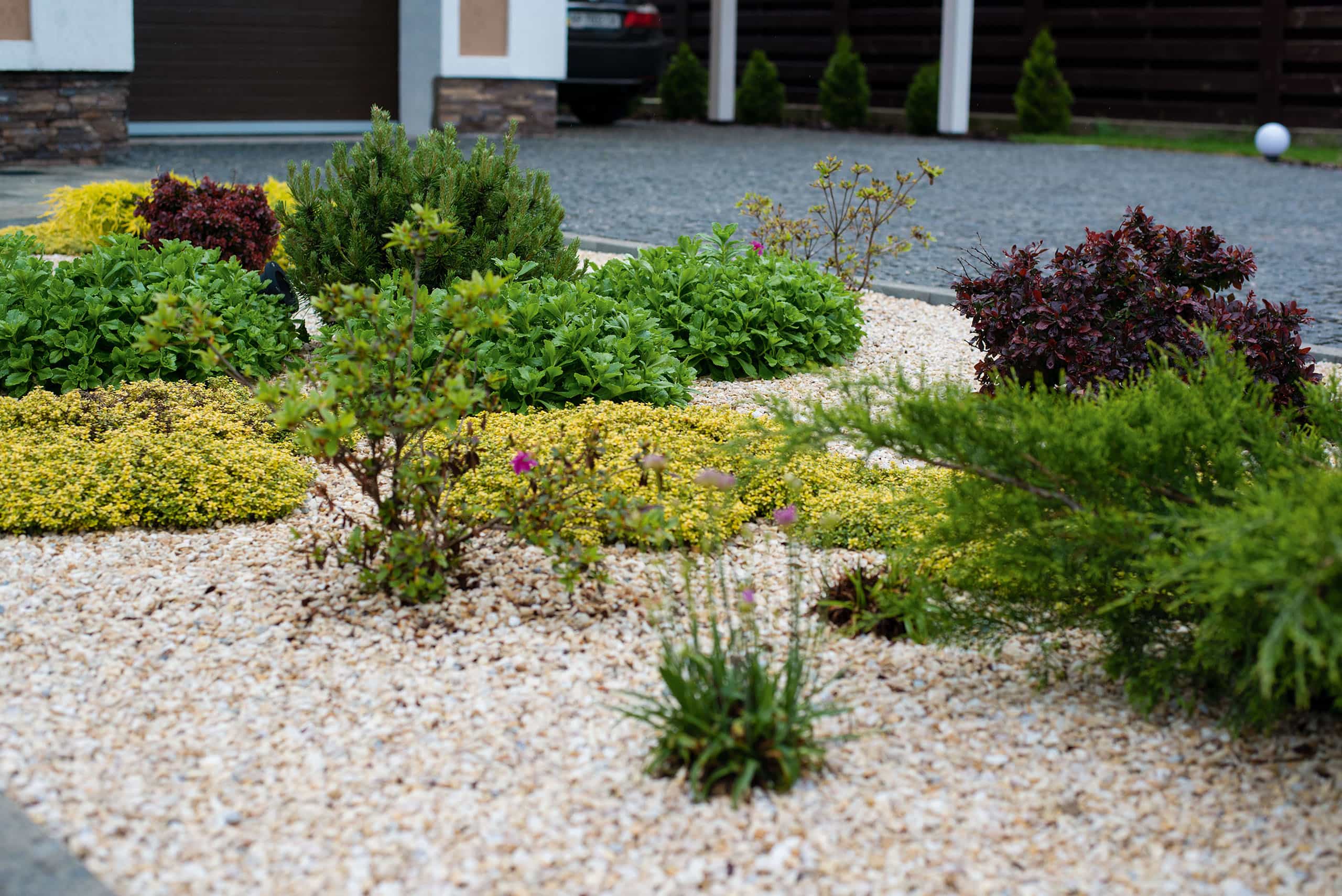
Photo source: TOPIAR
PM: Why is there no such confidence?
Yu. K.: Frankly speaking, there is no trust relationship between business and government today. And since we cannot, are not capable of building relationships based on trust, we must write everything down as clearly as possible and standardize everything in documents. That's why I believe that without an audit, without thorough calculations and the development of standards, both the tender documentation and the draft General Plan of the city are just a pile of paper.
The number of green zones and their area should be clearly recorded. All types of work on the care of urban green areas must be standardized. When allocating financing for mowing lawns, we must understand what we want to get in the end — a parterre lawn or a meadow of wild grass that is cut once a month. But when we pick up the tender documentation for the creation of a public square on Voskresenskaya Street in the Dnipro district, we read: "7 square meters of lawns have been sown. m". This act wholesale covers the entire scope of work, including landscaping, seeds, and fertilizing. But nowhere is there a maintenance task to keep this lawn a lawn. Three months later, as I saw, there was waist-high grass, which in August was simply cut with trimmers and prepared for hay. I am ready to take anyone there to demonstrate how this lawn will look in May. And a large amount from the city budget was spent on this park!
We simply cannot afford today a similar attitude towards the green spaces on the territory of the same residential complex "Bulvar Fontanov". Heads would fly! From the point of view of the head of the management company and the owner, this is criminal. So why does the city allow it?
PM: Is such an attitude towards the care of urban green spaces a mismanagement or an evil intention?
Yu. K.: We can assume anything, but first of all it is non-compliance with standards. And in order to punish non-compliance with standards, they must be drawn up and fixed in regulations. In the same DBN. Perhaps we need to gather an initiative group of professionals, opinion leaders and people with a vision of the future, those who are able to answer the question, what does high-quality green landscaping mean for us? And what is no less important, we need to know that it will be good not only for us, but for the next generation. Because the main goal is to build a city from which people, young people, will not leave.

Park "Kyiv in miniature". Image source: zeft.in.ua
PM: Investments in the future could be private, but we do not have such an opportunity. Today, the people of Kiev cannot unite and create a park from scratch with their own funds - there are no mechanisms. For example, a new Klyde Warren Park was created in Dallas at the expense of patrons, which worked as a multiplier and brings profit to the entire city. Why do you think we don't have a similar opportunity?
Yu. K.: Will they create a park from scratch for 110 million dollars and collect another 8 million per hour for ego maintenance? I am not sure that the people of Kiev are capable of such a thing. It seems to me that the ability to consolidate public resources should be honed on some small projects, for example, you recently wrote about pocket parks — this is good practice.
In Dallas, the project to create Klyde Warren Park met with the support of the authorities, because there was an understanding that the city needed magnets to keep young people. And philanthropist Kelsey Warren, donating 10 million dollars to the park for the right to name it after her son, not by chance, immediately concluded an agreement with young Clyde that he undertakes to work in the park annually as a volunteer. Yes, the multiplier effect is also important. In Kyiv, a similar approach is already being practiced, for example, by Vasyl Khmelnytskyi in UNIT.Home, which he is building on the territory of the UNIT.City innovation park.
But the authorities do not meet not only public initiatives - they do not meet developers, although many activists would argue with me now. There is a project for the construction of the Svitlo Park residential complex in the industrial zone from the Patona bridge to the islands. If this wild industrial zone were to be put in order, to create a landscaped park open to all, it would become very popular, since it is located not far from the center. But although the developer promises to finance the improvement of the territory, without guarantees and support from the authorities, it is difficult and expensive to create a high-quality public park. It would be easier for private investors to invest under the guarantees of the authorities. And this territory is one of the many industrial zones that are not yet used today. But in the draft General Plan, I have not yet seen any forecasts regarding these industrial zones.
The city needs magnets to keep young people
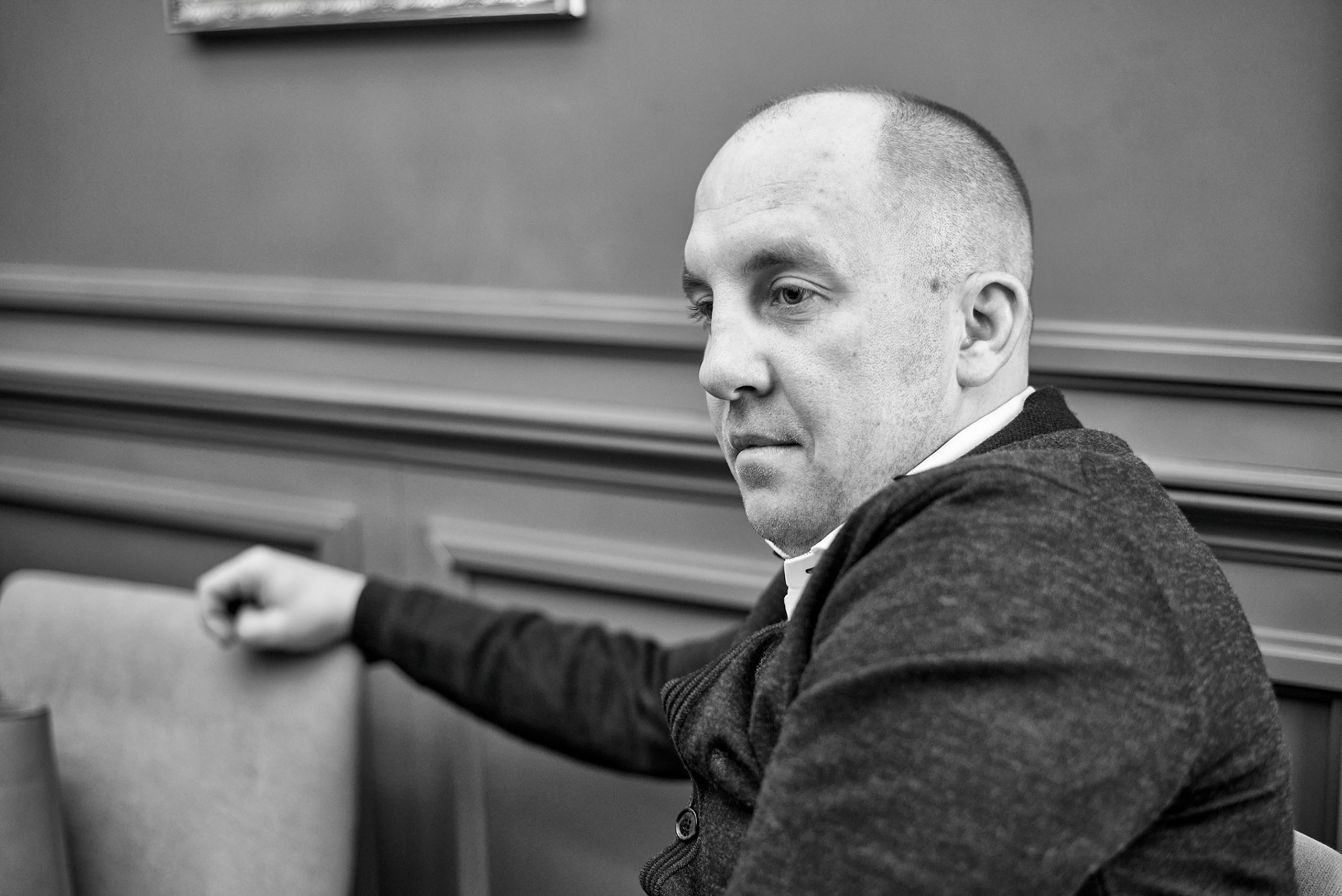
Photo: Yury Ferendovych
PM: Perhaps such forecasts will appear in 5 years, when the time comes to approve the new General Plan? After all, according to the current legislation, it must be accepted once every five years.
Yu. K.: The validity period of the General Plan is another slippery ego feature. Someone believes that corrections once every five years are necessary. But then what is the point of developing a strategy for 20 years, expecting that after the five-year period it will probably change radically? Let us develop a high-quality, balanced, rational strategy for the development of the city for 20 years, but then we will honestly stick to it. And yes, the term of office of the mayor is 5 years, the General Plan is for 5 years...
Another strange detail is the creation of an agglomeration. But let's face it: the word "agglomeration" hides the actual joining of satellites. So why not say frankly that we are expanding Kyiv because it is becoming cramped. At the same time compacting the ego. We still have entire districts of the private sector in Kyiv.
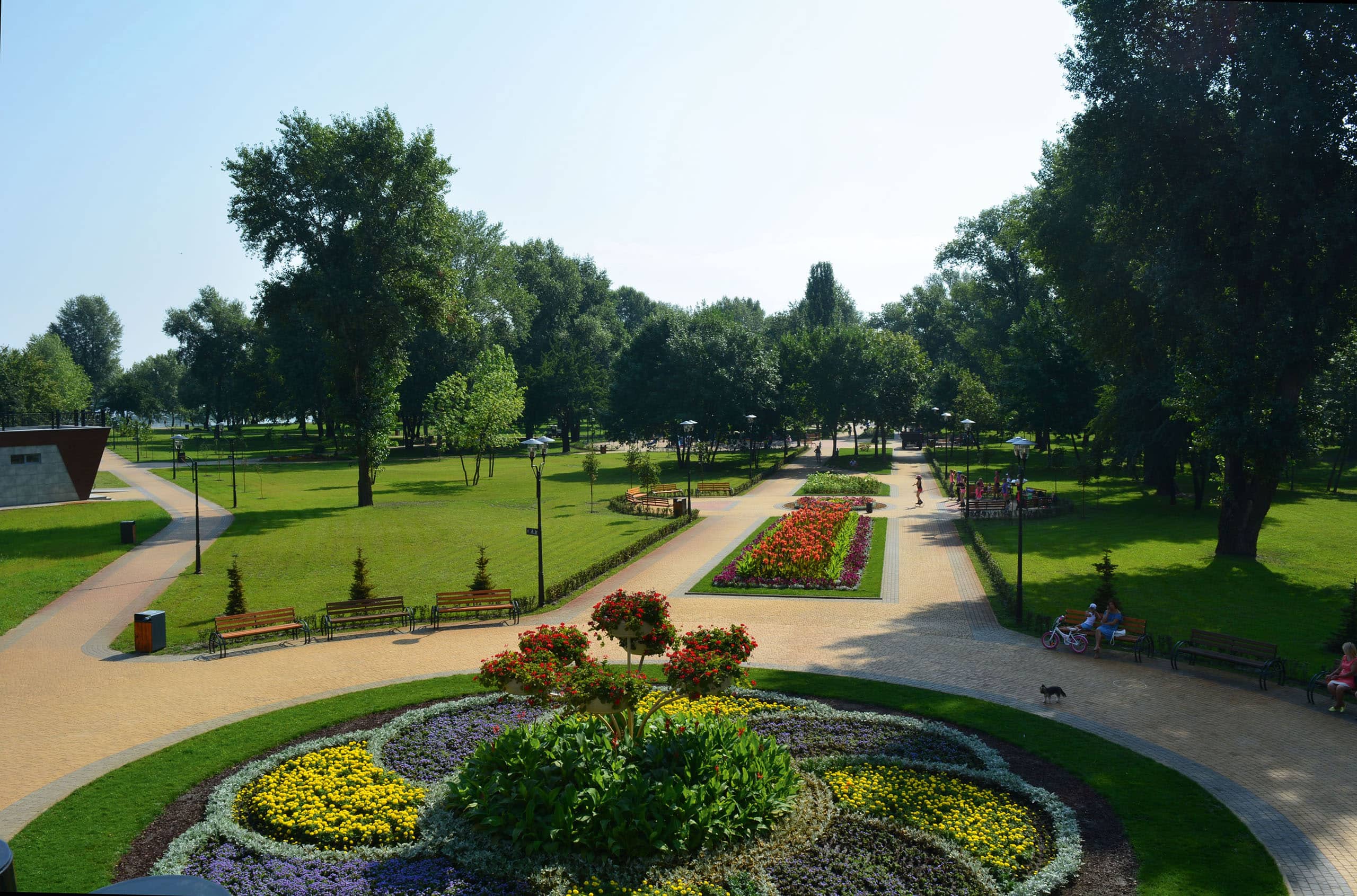
Natalka Park. Image source: obolon.kyivcity.gov.ua
PM: Private property must be inviolable, and no one can encroach on these private mansions, otherwise we will not strengthen, but destroy the foundations of society. Isn't that right?
Yu. K.: All the more so, we must thoughtfully approach the development of post-industrial and reserve territories. The general plan must demonstrate to us where there are vacant territories for the construction of housing complexes. Gorbachikha, Ministerka, Akademgorodok, Solomensky district - new complexes may arise in these places. But it is possible to allow any interference there only by providing that the developer will be punished if he does not fulfill his obligations and promises. Because these are so-called "sensitive" territories. If something goes wrong, reputational and image losses are inevitable, including for the authorities. There are also requirements for the quality of construction, there are permits, there is documentation. But why are there no requirements for landscape design? There are none, because no one wants to take responsibility and say: "Let's prescribe the standards of quality parks."
Photo: Yury Ferendovych
PM: And will we give a guarantee of stability for five, ten, twenty years? With the opportunity to make corrections, but so that the General Plan itself remains unshakable, like the US Constitution - is such an analogy appropriate?
Yu. K.: It fits, but don't be fooled that it's so easy to do. The same audit of land resources takes time. Today, it is very difficult to find out who is the owner of this or that plot, who has this or that real estate on the balance sheet. This information is not available to ordinary users, the same activists who would like to exercise public control. I know about 50 closed industrial enterprises in Kyiv, the fate of which is unpredictable. For example, the owner is ready to acquire 7 out of 2 ha, and is ready to sell another 5. And the question is how to evaluate this land, if the last time it was evaluated was in 2004, when it cost a penny? And how will the territory be divided if it is registered as an integral property complex?
If we want to attract an investor, then we must understand that he, planning to buy land in Kyiv in the Horbachykha district, let's say, at a price of 7 thousand dollars per hundred, he knows that he will pay the same, and perhaps even less, in other countries. And if we want these investments to remain in our country, then there must be some arguments. And the main thing is transparent rules guaranteed by the government, the state. Therefore, the General Plan is an extremely important document, also in an image sense. It would be nice to be able to evaluate the ego not just as a set of drawings and pictures, but to calculate the economic potential of the document.
It is unlikely that the first wave of criticism of the General Plan will affect the final document
PM: By the way, how do you assess the prospect of consolidation and decentralization of Kyiv? How to make it so that the residents of the outskirts not only sleep at home, but also work close to home? These are modern trends: if I live in Obolon, then I must rest and work in Obolon. And the district infrastructure should be enough for me to live a full-fledged life.
Yu. K.: I would not be so categorical if we are not planning the "federalization" of the city. Radical decentralization — that's when I live in Obolony, pay taxes to the district budget of Obolony — can lead to the fact that I will be indifferent to the fate of Borshchagovka. And then I don't have to worry at all about what will happen to my city as a whole. Meanwhile, my partner, friend or acquaintance from abroad or from another city will assess the state of Kyiv, not the district. The goal of decentralization is to improve the quality of life in all city quarters. And not cleaning the beautiful city center from unwanted citizens from Troeshchyna. Not discrimination.
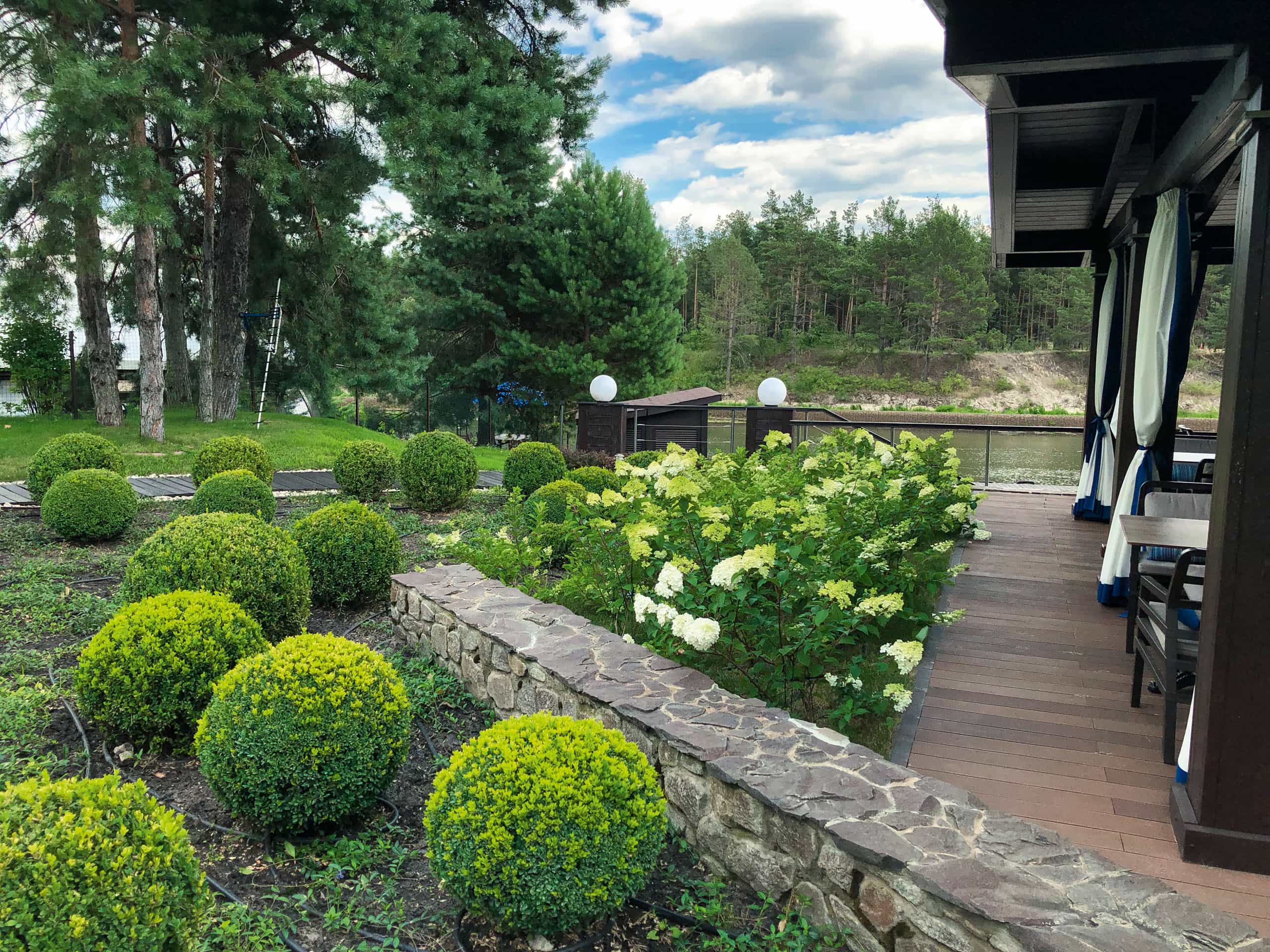
Riviera Villas cottage town, Kyiv. Photo source: TOPIAR
PM: Rather, it is about relieving the burden on the transport system, which is caused by the fact that people travel from one part of the city to another.
Yu. K.: In the end, traffic jams will remove the load. It only sounds like a paradox, but in fact it is a natural process. When a person spends 4 hours a day only on the road, he will eventually change his place of work and choose something closer to home. This is what happened in Moscow, where the city is three times larger, but in the end, not so much is moved around the city, at least by personal transport. If you live in Kuntsevo, you work there. Our Kyiv seems huge to us, but compared to Moscow, and even more so to Australian and Chinese megacities, it is not that big.
I must confess that I like Kyiv, I love this city. And interested in how to make it better. Therefore, I will repeat again to emphasize: to develop an effective General Plan, we need an audit, standards, a clear picture of the future city, and most importantly, the answer to the question: for whom are we building and planning all this? Who is the target audience?


