


Why is it necessary to tighten fines and sanctions, use modern tree protection technologies in the implementation of architectural and infrastructure projects, as well as the goals and objectives of the public organization CITY GREEN LAB - in our traditional "Lykbez" column, the founder of the Beloded Landscaping bureau, an active member of the Society of Garden, tells Designers (SGD) Lyudmila Beloded.
Lyudmila Beloded, landscape designer, director and founder of Beloded Landscaping bureau
Today, Kyiv is the greenest capital in Europe. Are we proud? Yes. But to be honest, we were just lucky with the geographical location and climate. The full-flowing Dnieper in the center of the city creates a unique microclimate, one might say, ideal for most decorative plants and trees. We have preserved a rich heritage - forest park zones, two botanical gardens and an arboretum. But the pace at which we are losing our urban trees is frankly frightening. In recent years, the situation has become so egregious that it has become the focus of attention not only of specialized specialists, but also of public activists. New messages about illegal logging, disfiguring and traumatic radical pruning appear daily in social networks.
Today, Kyiv is the greenest capital in Europe. We just got lucky with our legacy
We can judge the lack of real tree care by the results of each storm — branches and trunks fall on wires, cars, and pose a danger to people. No one protects, heals or even thinks about trees. At the same time, we have already felt clear signs of climate change - all these abnormal showers, shortened spring and autumn, sharp temperature drops. We need to urgently review the current attitude towards urban green spaces, because it is obvious that communal services and green buildings are not able to cope with the protective function and are completely unprepared for urbanization and climatic challenges.

Big panorama of Kyiv. Photo: Yuriy Buriak. Photo source: www.pizzatravel.com.ua
So, Kyiv is lucky, and from the point of view of the authorities and communal workers, there is no need to take any special measures. Is it Paris... Of the capitals of the EU, it is the most "rocky" or, as the Parisians themselves say, la minéralité. There are only 5,6 square meters per inhabitant here. m of green The effect of spot heating leads to the fact that the temperature on city streets in the peak of summer can reach +55 °C. The other day, the mayor of Paris, Anne Hidalgo, announced that the authorities are moving to a radical program of greening the city — the creation of "city forests." And in this case, even the importance of historical architecture recedes into the background. Amendments have been made to the legislation, allowing trees to be planted in front of the facades of historic buildings, which, of course, will partially obscure them. Landscaping is planned near the Hotel de Ville, Opéra Garnier, the square in front of the municipality, Lyon Square, the construction of new parks and the creation of green "oases" in schoolyards. At the same time, Ann Hidalgo, of course, coordinates her green reforms with UNESCO — the banks of the Seine will be greened not with the help of large trees, but by creating blooming meadows.

Places to relax near fountains or pavilions with shade are Ilots de fraicheur - "islands of freshness". To find "islands of freshness" in Paris, you can use the interactive map. Photo: © GERARD JULIEN / AFP Photo source: cnews.fr
All these measures were not invented yesterday. The authorities of the French capital began to develop a program of emergency greening and the search for solutions that would protect citizens from extreme temperatures 3 years ago. Today, about 1 Ilots de fraicheur have already been created in Paris — islands of coolness, pavilions equipped with a cooling system, where people can relax in the shade. The maintenance of these islands is the responsibility of the municipal services of the city. So the plans of the Paris City Hall open up new perspectives for architects and, above all, landscape architects.
In Italy, in 2018, environmental legislation and rules for the protection of green areas were tightened. The new law on forestry requires the creation of a national forest strategy, which must meet the principles of EU forestry and be updated every 5 years. "Green" strategies are also adopted at the level of municipalities. For example, in Milan they plan to plant 2030 million new trees by 3.
The authorities of Paris are moving to a radical program of greening the city — the creation of "city forests"
In parallel with active measures for the development of green economies, the country is tightening construction standards and increasing fines for violating them. In Germany, the fine for a felled tree can reach 50. euro. For comparison: according to the fees approved by the Cabinet of Ministers of Ukraine, for the destruction of a tree with a trunk diameter of 50 cm, the offender will pay compensation from UAH 1 to UAH 400. And the destruction of a square meter of an expensive ground lawn will cost only UAH 2. This is a completely ridiculous amount of compensation, considering the cost of high-quality planting material and care for green areas. Resolution No. 800 on the amount of fines was adopted back in 85, and amendments were made for the last time in 559.
In EU countries, in order to obtain permission to remove a tree, the plot owner or developer will have to go through a complex bureaucratic procedure. It is strictly forbidden to cut down trees in spring and summer, when birds are building their nests. In the case of force majeure, the crowns of trees planned for felling are protected with nets long before March to prevent birds from nesting.
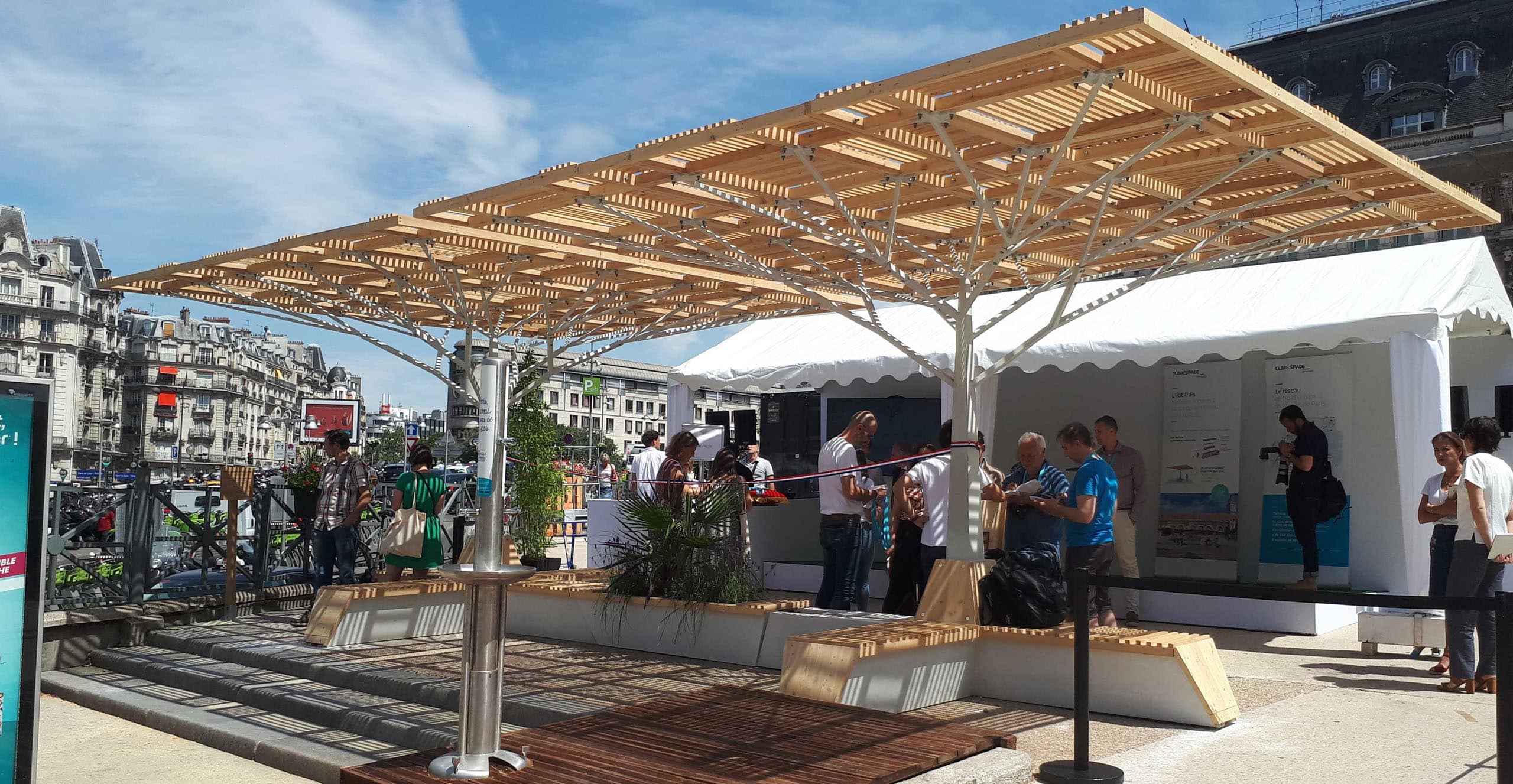
The opening of the "island of freshness" in the square in front of Gare de Lyon in Paris in 2018. Water cooling is built into the pavement of the pavilion, and wooden canopies create shade. Photo: ©GCM
In a word, the course for maximum greening is already a stable European and even global trend. In recent years, ecological and "green" parties and politicians have sharply increased their rating in the EU countries, and in some places even came out on top, overtaking nationalists and leftists. This testifies to the high demand of the population for the solution of environmental problems, including the greening of urban spaces. Judging by the results of the plebiscites, today the residents of the EU are more concerned about climate change, which affects everyone, than even about issues of national identity.
Urban tree rights in Great Britain
In Great Britain, in 2012, an updated version of the standards regulating the protection of trees during construction work and planning management was adopted (the full name of the document is Trees in relation to design, demolition and construction — Recommendation). The new standards emphasize the role of green infrastructure in counteraction and adaptation to climate change, as well as its importance for modern urban planning.
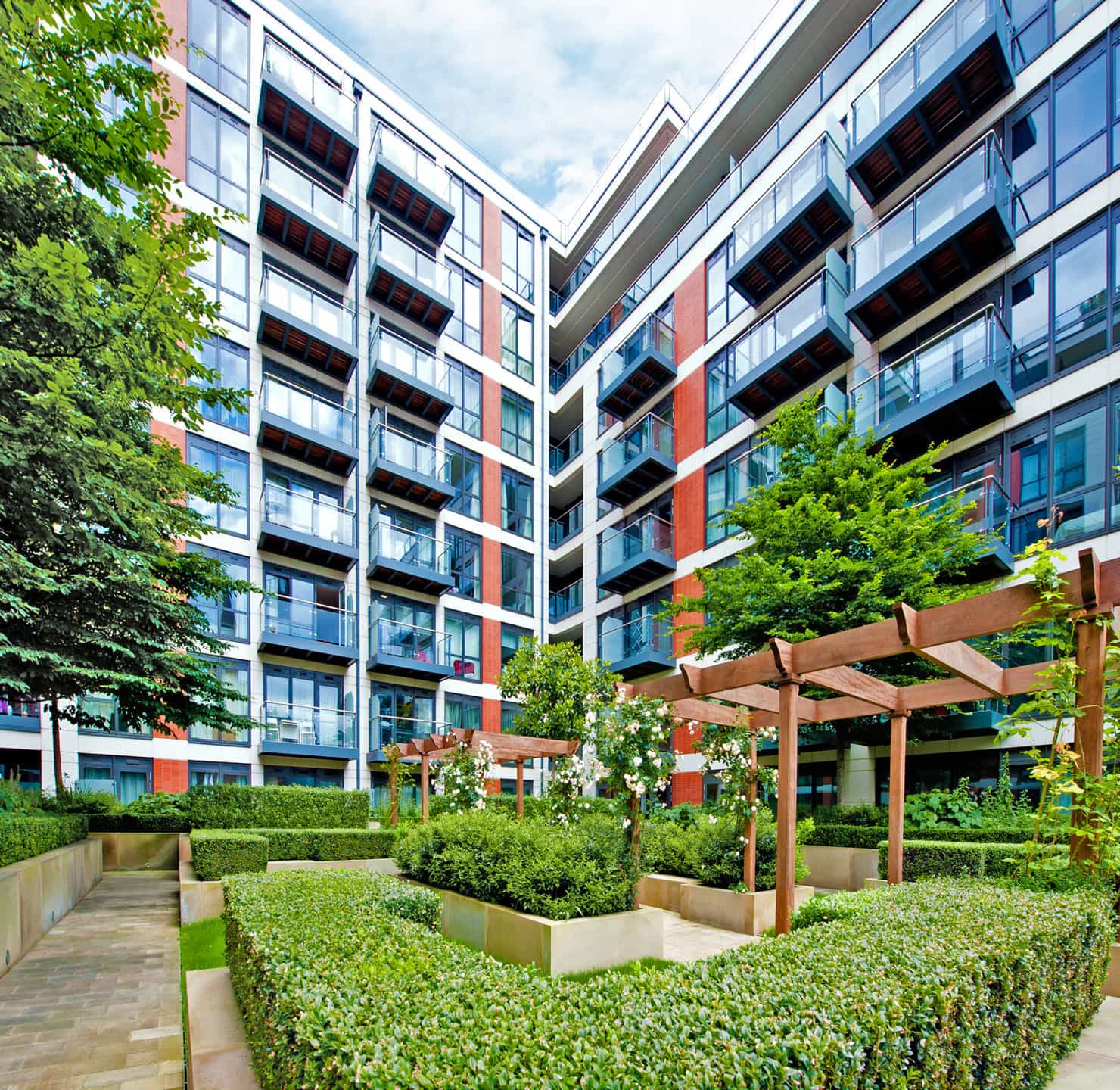
ZinCo Green Roof Systems in Dickens Yard, London (UK). Photo: Patrick Rogers
The standards are intended for arborists, architects, builders, engineers and landscape architects, as well as urban planners, municipal officials, surveyors and all those interested in the harmonious coexistence of man and nature. And although this document is called "recommendations", any deviation from their observance must be justified by the project customer. Only after that, the municipality issues a construction permit. Moreover, an examination of the design area with a detailed inventory and evaluation of each tree should be carried out before the start of design work. When evaluating, the expert describes not only the status quo, but also takes into account the perspective of development and growth of all elements - roots, trunk, crown. That is, the very first stage is screening and examination, and only then it is allowed to propose development plans. This document can become a model for the development of similar standards in Ukraine. Of course, adjusted for our realities. The main ego positions are clearly displayed in the table "Construction process and tree care".
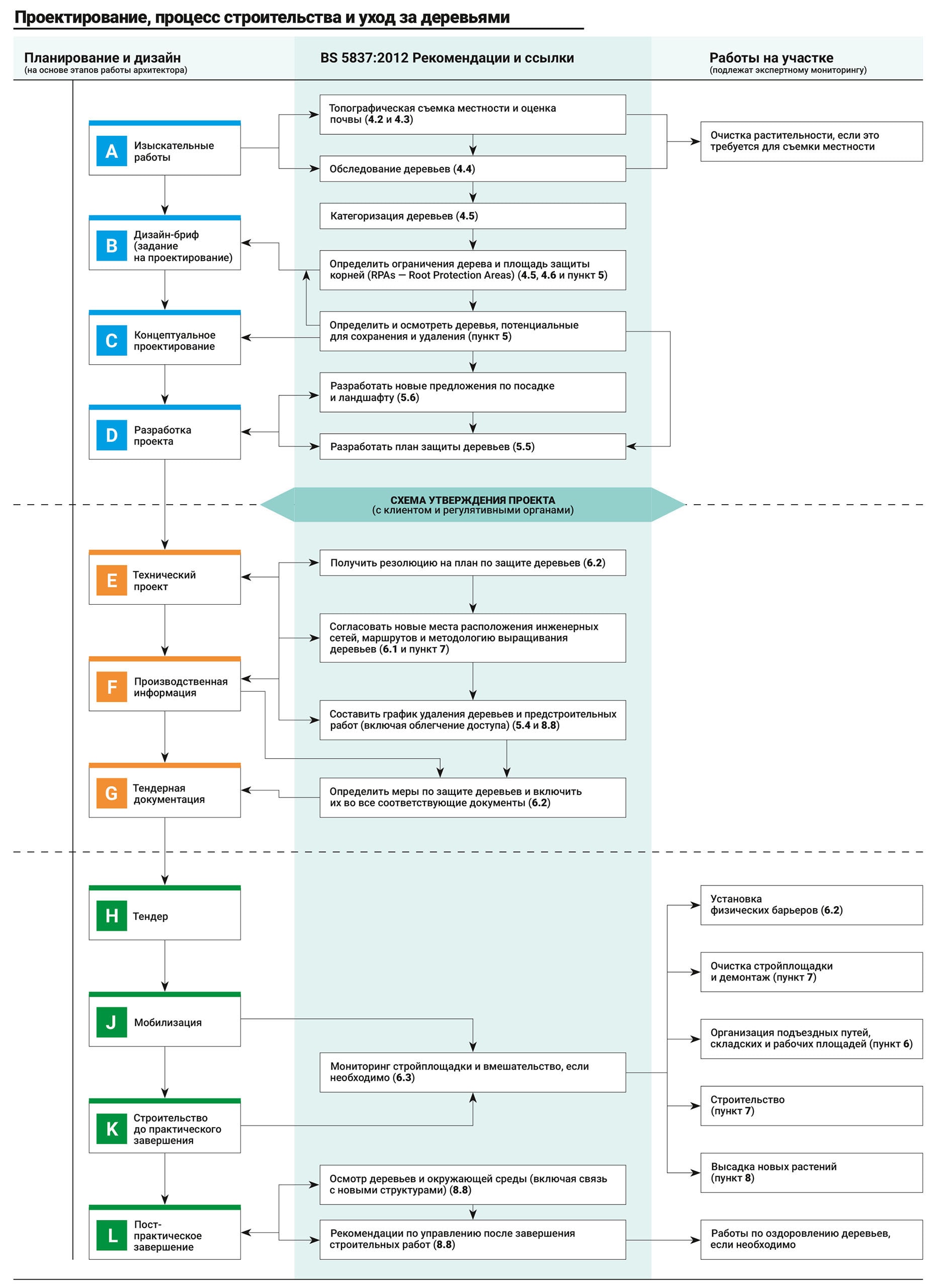
Design, construction process and tree care. Table for the publication Trees in relation to design, demolition and construction — Recommendation ©British Standard 2012
According to the standards, in Great Britain trees and their protection are given special attention within the framework of the state planning system. It can be said that the British gave their "green partners" unprecedented, practically civil rights, surrounded them with awe-inspiring care. This is understandable: trees are expensive, they are more often planted not with pencils, but with adult seedlings. The costs of maintaining green areas are high and carefully controlled.
The British granted urban trees unprecedented, practically civil rights
For us, the question of the need to minimize losses during the construction of facilities and infrastructure is rather emotional and humanitarian: we gathered, we talked... For example, even the construction of the new pedestrian "Klitschko bridge" caused significant damage to the "Kiev jungle" on the Dnieper slopes. At the same time, the authorities reported - they say, it is still good that the bridge is only on two, not three pillars, fewer trees were cut down... The same situation around the concrete stairs leading from the Vladimirsky slope to the monument to the Magdeburg Law - the builders there, as they say, cleared the site zero-point design. And there are a lot of such examples of barbaric attitude towards nature.
Ukrainian designers and builders take into account the factor of the presence of trees on the first topographic surveys and that's it - no measures are taken to protect them. There is no understanding of the need for such protection, no resources, no market for means of physical protection of plants - barriers, shields, structures that prevent soil compaction in the root zone. But there are technologies that allow you to strengthen the soil while construction equipment is moving around the site. These methods are also detailed in British standards.

Pancras Square is a new green public space at King's Cross in London. The project was developed by Townshend Landscape Architects. Photo: John Sturrock
But today, for our builders and customer-developers, the concept of "root protection zone" is an absolute abstraction. The concept of "sanitary zone" applies only to the completed and constructed, but there is nothing that would protect the trees. Root protection barriers, anti-compaction geotextiles, Urban Tree Systems (systems of complex seating equipment from GreenMax) have only recently appeared on the Ukrainian market. We already include them in our projects, but every time we have to explain to customers and contractors what it is.
Or, for example, a whole chapter of the standards is devoted to the so-called veteran trees. These are particularly valuable specimens that are sacred to the British. The most important are ancient, centuries-old plants that are home to various insects, birds, lichens, and fungi. Such specimens belong to the A3 category, that is, they enjoy the highest degree of protection from the state. This status gives them the additional function of a patron tree. Being the heart of biota, a tree cannot be separated from its usual environment, that is, symbiotic plants or plants growing nearby are automatically protected. In Great Britain, almost 100 veteran trees, while in Ukraine, a little more than 2,5 thousand trees have the status of reserved trees. This is an extremely insignificant amount, and, as ecologists have repeatedly reported, only a few of these living biological monuments, which are lucky enough to be in the territories of botanical gardens or arboretums, are provided with proper care. In Europe, a careful attitude towards nature has been cultivated for centuries. Unfortunately, we are deprived of such a historical skill.
In Europe, a careful attitude towards nature has been cultivated for centuries
In the case of a conflict of interests, if the plant interferes so much that it makes it impossible to carry out construction work, the authors of the standards insist that the possibility of deviation from the architectural project be studied. If possible, the trees are moved to another place. That is, the interests of plants are prioritized! The decision on the fate of faulty trees (defective, threatening trees) is made collegially. To us, this, like many other things in the British approach, seems like a fantasy.
Do many of our architects and planners know that architectural design and development must take into account that new buildings do not disturb the insolation of trees on the site? Well, at least this condition is also included in the British standards. Few people have heard of this in Ukrainian urban planning. Even in the field of private design, not every architect pays attention to insolation and the quality of plant life. We do not have standards for "landscape design" specialization, and specialists are often considered to be people who have attended a three-month course of lectures.
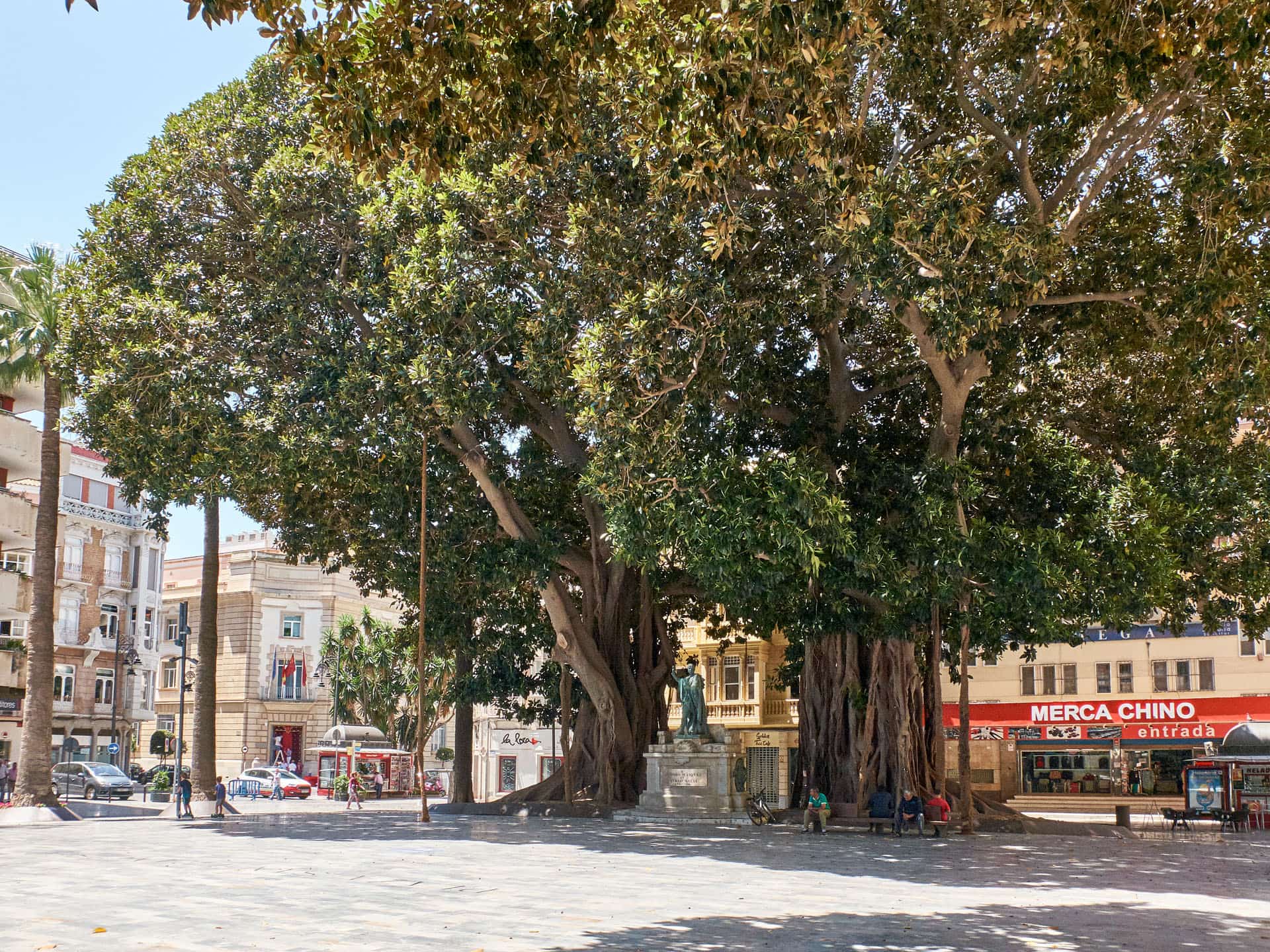
Plaza de San Francisco (Plaza de San Francisco) in Cartagena underwent a large-scale reconstruction in 2013. The authorities carefully preserved the giant ficus trees planted here in 1930. Banyan crowns almost completely cover the square, creating a deep shadow. Photo: Iryna Isachenko
We at the company Beloded Landscaping have accumulated quite a solid experience, but the customer has never once required us to draw up a tree protection plan, even if it is about innovative objects. Working as a team on the project at UNIT.City, we initiated an inspection of existing trees, proposed to invite a phytopathologist who could give a qualified opinion on the condition of several poplars on the site and measures to improve the quality of their life. Our initiative was accepted with understanding, but has not yet been implemented. Very often we have to prove to the customer that for the tree to survive, it is necessary to replace the soil and carefully arrange the planting site.
Without standards, there will be no trees
So, the answer to the question "Why do we need standards for the protection of trees in gardens?" very simple Because we don't have such standards. And without them, there probably won't be any trees left. In 2011, while reforming urban planning legislation, we lost the norm obliging the local self-government to obtain an order for the removal of greenery planted on the construction site. Draft law No. 2994 "On Amendments to Certain Legislative Acts of Ukraine on Prevention of Groundless Removal of Green Plantations", which was supposed to return this norm in 2016, was never adopted. His opponents announced that this was, they say, an attack on reforms. In their opinion, the current regulatory framework — the Law on the Improvement of Settlements, the Resolution of the Cabinet of Ministers on the Calculation and Amount of Fines — is quite sufficient. It is possible to discuss a lot, but in fact we are all witnesses of how our cities are rapidly losing their green cover. And this means that the existing legislation does not ensure proper protection of green areas.
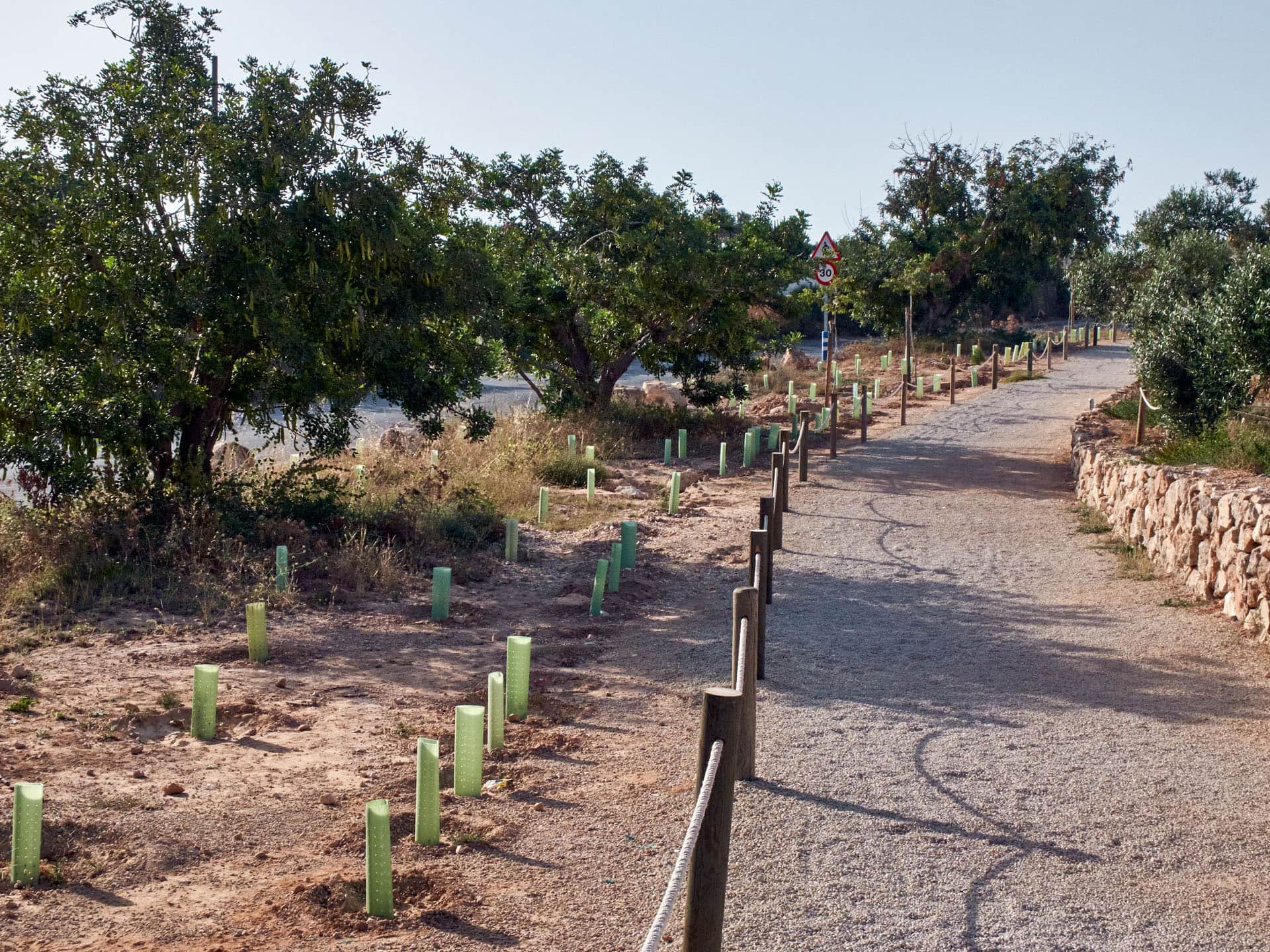
Polypropylene protective covers for young rosemary seedlings, Santa Pola, Spain. Photo: Iryna Isachenko
Ukrainian legislation does not allow cultural identification, let alone financial assessment of trees on the site. Yes, as I mentioned, there is a system of fines for cutting down green plantings. But in fact, fines can only be levied for the destruction of plants that are on the green balance sheet. There are no detailed compensatory calculations. The employees of zelenstroy are guided by state estimates, which in our field are completely detached from reality. For example, what is called "large trees" in Ukraine is considered young trees in Europe. And most often, when an adult tree is cut down, utility workers plant saplings-pencils of garbage quality as a replacement. They die en masse in the first hour, because the plants are planted in construction waste, not watered, not treated.
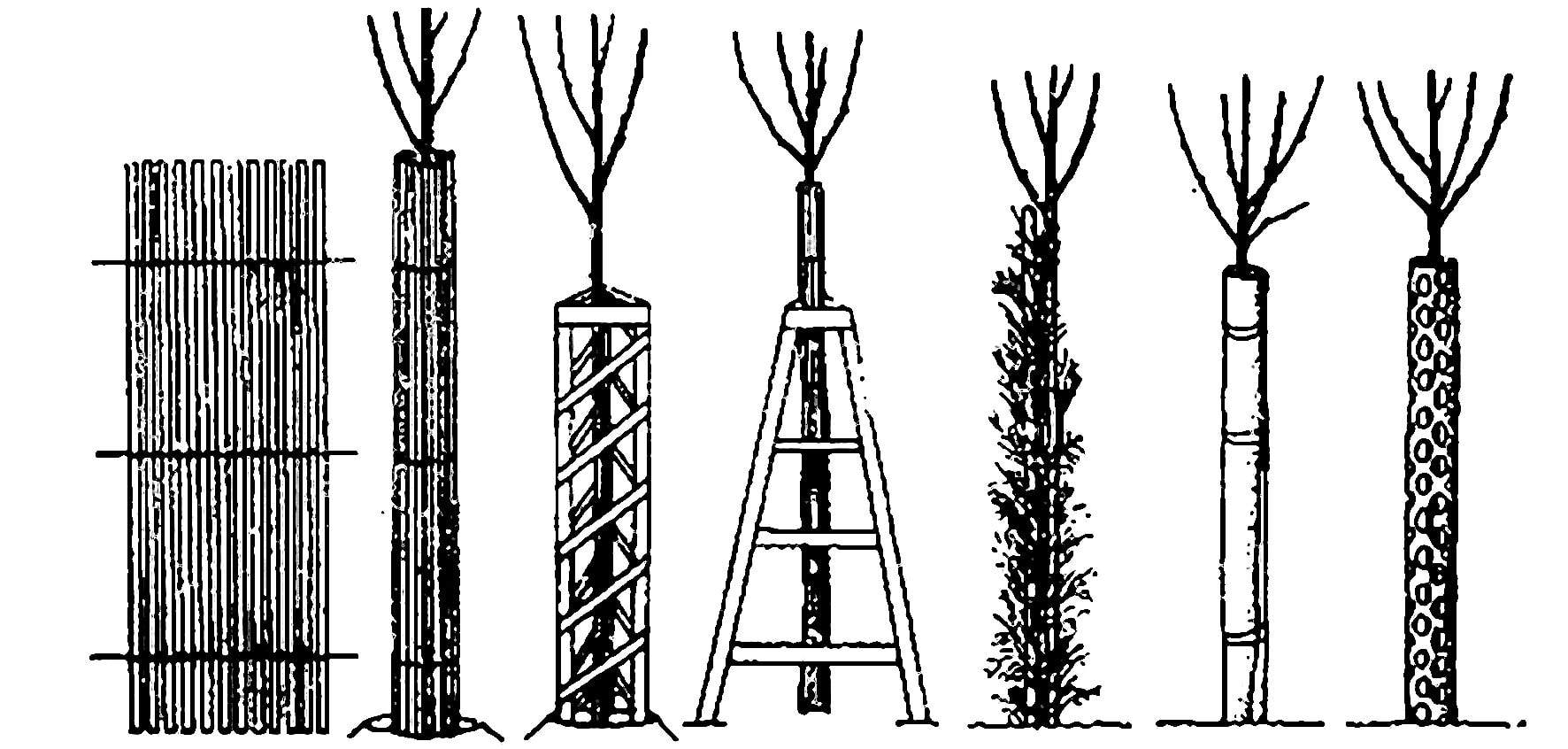
Options for protecting tree trunks
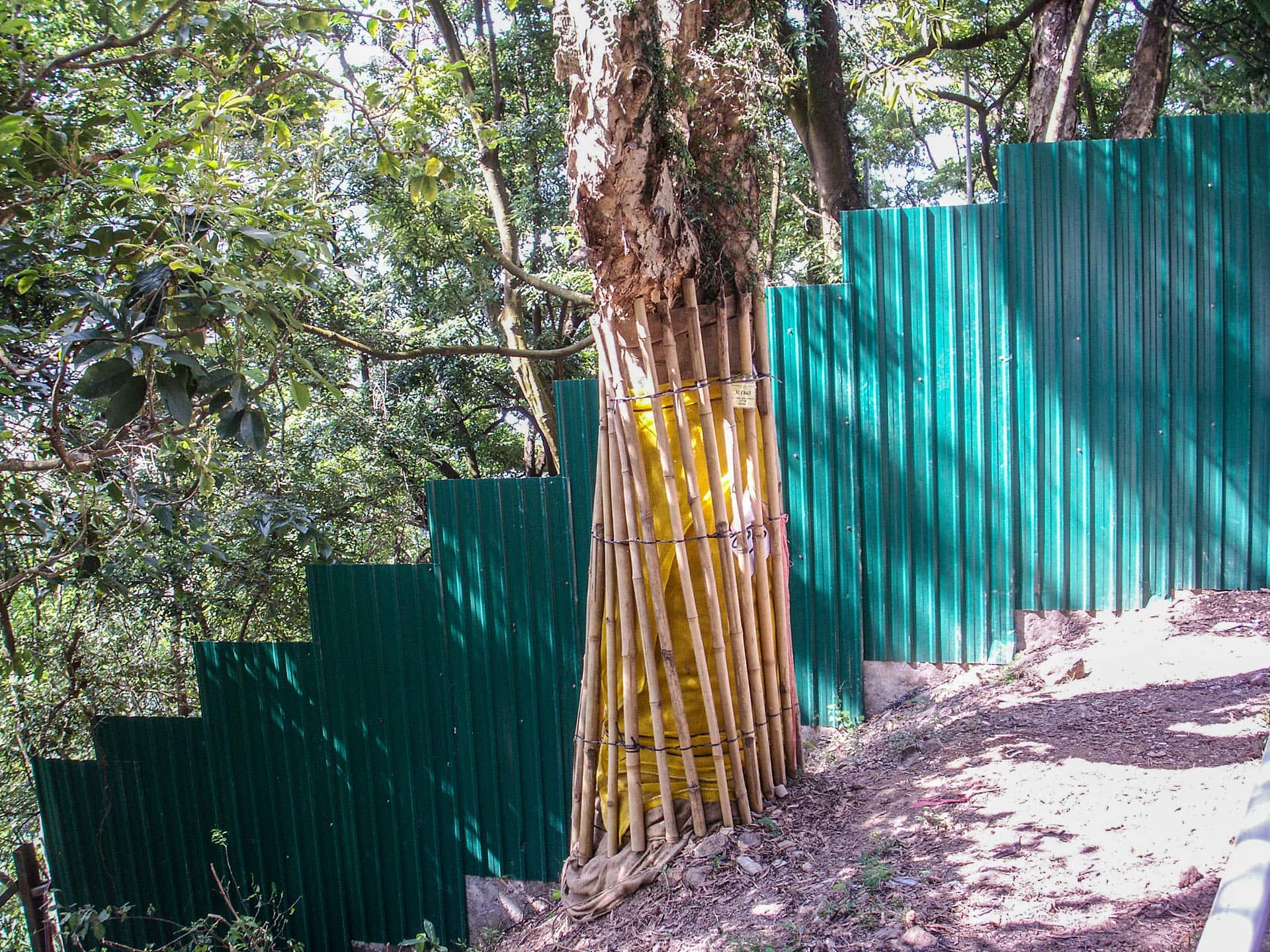
A protective screen that prevents damage to a tree trunk found on the construction site
Next year, the budget funds for landscaping are written off again, a new series of suicide saplings is purchased. In short, a closed circle. Who benefits from such a vicious scheme? First of all, to the officials and the leadership of the Greens. This is an excellent "sink" of budget funds, but the facts of abuse and corruption are very difficult to prove, because few people understand such a specific topic. We are used to perceiving nature as chaos. Therefore, no one will investigate the circumstances of the death of the tree.
Long, expensive and painful
Why should activists of a public organization be engaged in the development of Ukrainian standards on volunteer basis? Why are we joining the public organization CITY GREEN LAB, because we have more than enough work? But who, if not us? Zelenstroy lost their qualified employees and specialists. There is no qualification, no resources, and no understanding of how to properly debug the system.
Breaking the system is long and painful. But someone has to do it, otherwise we will end up in the stone age
All the requests of arborists, participants of the "green" market, aimed at accentuating and developing the topic of preservation, protection and development of trees using modern, not relict methods and technologies, rest against a deaf wall. It is not possible to have a constructive dialogue with the Zelenstroy activists, despite the fact that this, it would seem, is precisely their area of responsibility. There, they are used to being guided by only one factor: "it would be cheaper for us."
So we need to be prepared for the fact that we will continue to break this system for many years and spend a lot of effort and resources. And all this time we will continue to lose our trees.

View of Kyiv from Batyeva Hill. Photo: Yury Ferendovych
It is very difficult to convince customers to invest in the protection of trees, in the protection of engineering networks. It is necessary to change the state construction standards, dozens of standards that also "hook" architecture. It is planned to make changes to the state construction regulations, including the DBN "Planning and Development of Territories", the Law on Landscaping, Cabinet resolutions on the implementation of preparatory and construction works, creating electronic cadastres and so on. We admit that it is impossible to undergo such changes in a short period of time. It will be long and painful. But someone has to do it, otherwise we will find ourselves in the stone age - literally, without greenery on the streets. Are you ready to live in ville mineral?


