


One of the defining emotions of the XXI century. Glenn Albrecht, scientist and author of the book "Emotions of the Earth. New lexicon for the new world", published by Cornell University, called "psychotherratic pain". This is a whole complex of negative experiences that city dwellers experience due to a lack of contact with nature. The author of the new lexicon uses the word eutierria to describe an emotional state when the relationship between man and nature is spontaneous and mutually enriching. The easiest way to experience eutheria, the shortest way from home to nature is to go out into your own garden.

Lyudmila Beloded, landscape designer, director and founder of Beloded Landscaping bureau
Speaking about the latest trends in the design of private gardens, I would emphasize that today our gardens are acquiring new meaning and significance. Now the garden is designed to emphasize the individuality of the owner and, like his house and wardrobe, is an expression of a person's personal qualities and personal competencies. Gardens are becoming more and more technological, more and more complex engineering. This is completely logical: when making a choice in favor of a smart and ecological house, customers want the garden to be not just a beautiful picture, but also able to be called smart with full right. It is not even about giving up elements that require extraordinary care, such as parterre lawns, complex arabesques, lacy, knot gardens, similar to English knot gardens... Although, of course, the topic of minimizing care is still relevant and every year more in demand But I'm talking more about the fact that today people choose gardens with meaning, intellectual gardens filled with content.
The shortest way from home to nature is to go out into one's own garden
Let's recall a classic example of meaningfulness - an English family tree in the middle of a huge lawn or gravel yard, a tree that personifies the succession of generations. A great-great-grandfather planted it, for example, and then his sons and grandsons played around it, built houses on the branches. And this tree is perceived by descendants as a kind of shrine, a symbol. Such awe-inspiring attitude towards symbols now becomes valuable for us as well.
The garden ceased to be an object of vanity. From the point of view of typology, mentality, it has become very intimate - a kind of mirror that reflects the personality traits of its owner. A person creates a comfortable space first of all for himself, and not in order to have a place to bring crowds of guests and brag, they say, I planted 5 thousand people here. tulips This transformation — from form to content — is very important. A modern garden can rightly be called sensory - it appeals to all our senses - sight, smell, hearing, touch, taste. Acting on the subconscious, it causes a person to have pleasant experiences, a special state of mind. Therefore, it is so important to strive for biodiversity, to fill garden spaces not only with color, volume, textures, but also with sounds and aromas.
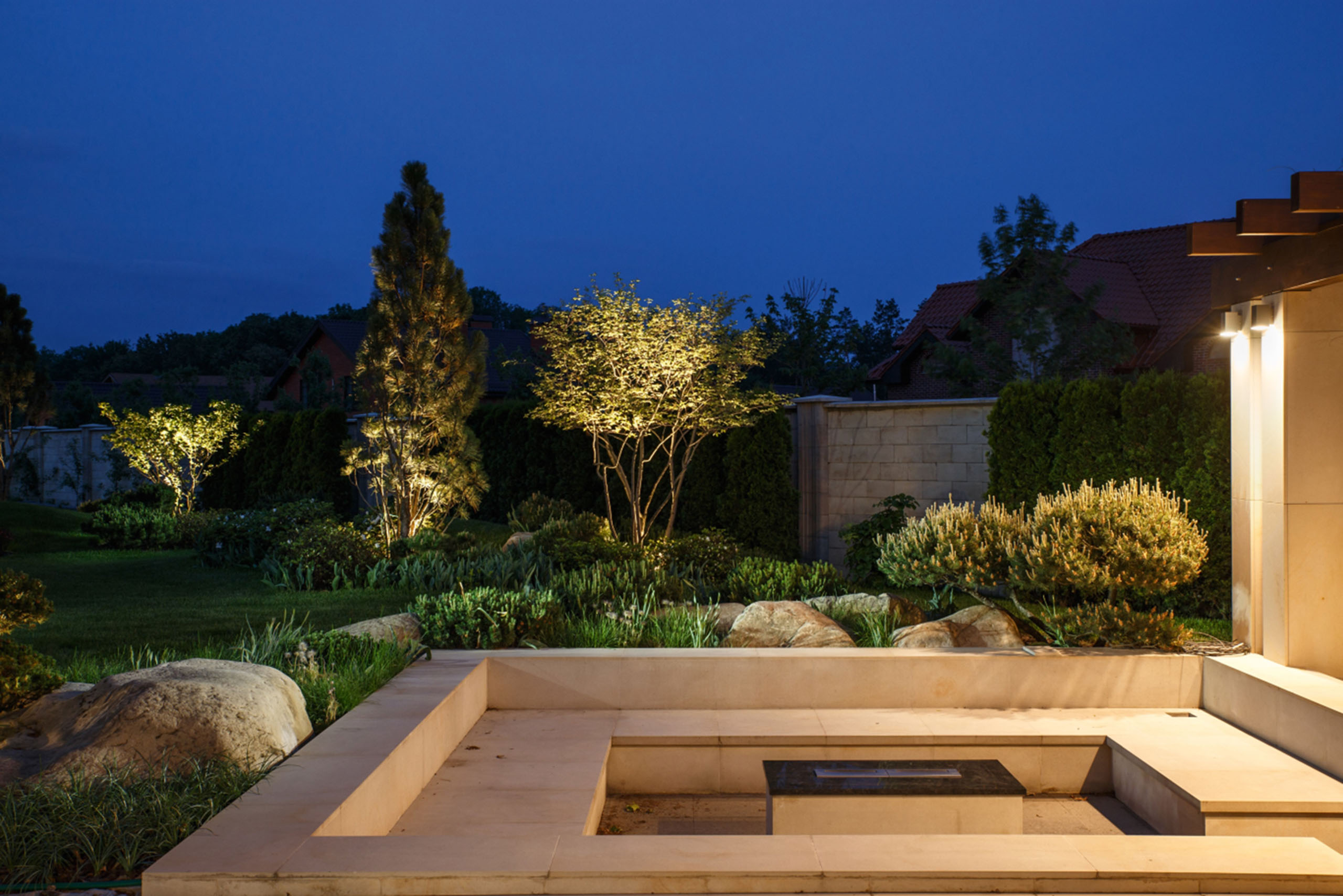
A lounge area around a stationary hearth. Private garden, village Novoselky, Kyiv region. Beloded Landscaping, 2015-2017. Photo source: belodedlandscaping.com

Private garden, village Novoselky, Kyiv region. Beloded Landscaping, 2015-2017. Photo source: belodedlandscaping.com
The style of modern gardens is becoming cleaner and more expressive every year - whether it is an oriental color, elements of a Japanese garden or elements of a loft style with poured concrete paving, the use of Corten steel or patinated copper, a minimal set of plants, a monochrome palette.
The set of functions of the garden is significantly expanded. At the same time as the attitude to life, to oneself, changes, people strive to lead a correct, healthy way of life. A sports field in the garden is no longer just a set of children's attractions, which, as soon as the child grows up, become unnecessary and all the equipment must be dismantled. Now the sports ground is equipped in the form of a complex where both children and adults can play sports.
There is a place for a garden in a modern garden, but now it is not a garden that takes energy and time, but above all an element of a healthy lifestyle and a source of joy. Decorative gardens equipped with a stationary irrigation system are easy to maintain. Beds with a comfortable height, where you can grow unpretentious vegetables and spicy herbs, arouse great interest in children, who perceive them as ecological laboratories, a place for the first scientific experiments. Wallpaper forms of fruit trees allow you to create an unusual landscape object - a "delicious gazebo" and harvest a harvest. And this is not the first time that we have been ordered stationary greenhouses, equipped practically according to industrial standards.
The garden has ceased to be an object of vanity, and the set of its functions is significantly expanded
Pools are becoming more functional. Since in our climate, outdoor pools are used for only three months, clients increasingly order systems with sliding deck structures and heating, which can be used, albeit not in severe frosts, but in autumn and spring.
Moreover, some pools can now be called pool-houses. This is a common space that organically unites several zones - a SPA, a dining area, a barbecue and a lounge for hookah lovers. In the garden, you can provide a place for a stationary kitchen, equipped with everything you need - heated marmites, woks and even tandoors. People strive to get the full range of pleasures from outdoor life, and the garden becomes a full-fledged extension of the home. We have already encountered in practice when customers asked us to combine the interior and exterior spaces with the help of lowering facades, when the glass wall can be "sunk" into the floor by pressing one button - and the garden and the living room merge into one.
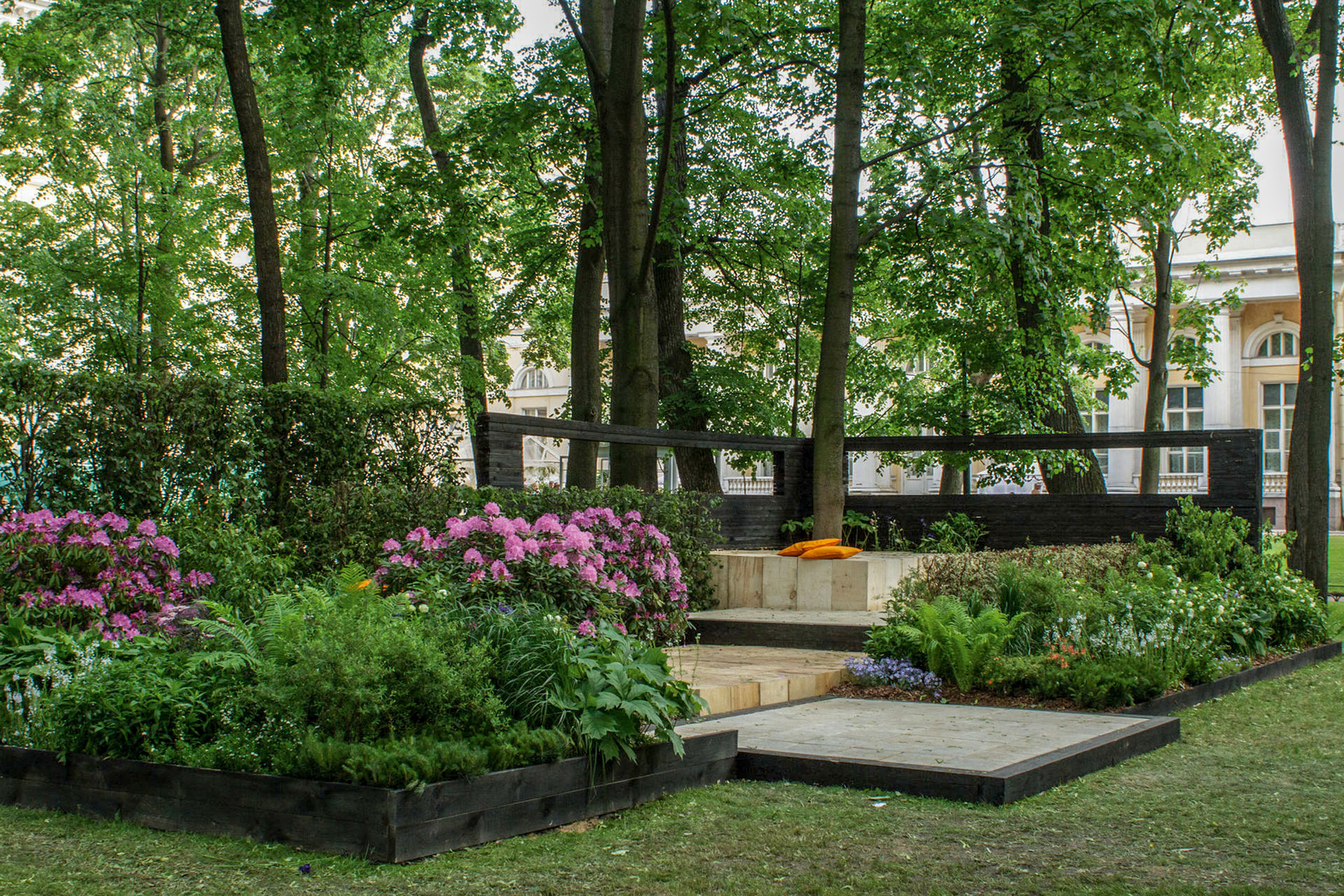
A sculptural multi-level podium to highlight an intimate zone in a large garden is a solution by British landscape designer Andy Sturgeon. Photo source: triumph-landscape.ru
Ukrainians willingly invest in garden equipment — in intellectual irrigation and fertilizer systems; in sustainable materials, which, even if they are more expensive, are durable and age beautifully, adding charm to the garden; in lighting, which makes garden spaces accessible in the dark, and so on. Decorative fireplaces - with ethanol burners or metal hearths - bowls, three-dimensional shapes with laser cutting, are in demand and popular, with their help you can easily arrange a place for a pleasant pastime. Such a hearth is surrounded by built-in benches and sunbeds. Garden furniture can also be designer, as well as textiles. By the way, garden textile is a special dense fabric with non-burning paints. People are happy to decorate their garden guest rooms, showing a huge amount of imagination.
But what is missing from the technical specifications is orders for the creation of pathetic and "palace" gardens. We rarely perform projects in the classic style. It's even a bit of a pity, because they have gained a lot of experience in this field.
Ideas and trendsetters
It becomes more and more interesting to work with customers - people travel more often and bring back a lot of personal impressions from their trips. Therefore, their desires, fantasies and dreams are becoming more and more diverse. At the first interview, customers tell the designer what they dream about, what they want. And the tasks they set are increasingly complex and all the more interesting.
In search of fresh ideas and modern images, I would recommend visiting public parks, private gardens and specialized exhibitions, of course. These days, designers are preparing for the Chelsea Flower Show in London. This year, the world's most popular garden design exhibition will be held from May 21 to 25. Judging by the announcements, guests of the show will see not just beautiful photogenic installations made of plants and art objects. Designers promise to show us gardens that can be perceived as philosophical and scientific studies on the topic of climate change, sustainability; inclusive gardens and therapeutic gardens for people suffering from various diseases; gardens-agrolaboratories; gardens in the industrial and post-industrial landscape. All this variety of ideas and concepts confirms my words about people's desire for new content.

The Facebook garden is a opportune project for the Chelsea Flower Show 2019. British designer Joe Perkins uses the natural connection between the body of water and the shore as an illustration of the relationship between online and offline life. Image source: rhs.org.uk
Of course, the Chelsea show gardens are specific. This is a kind of haute couture or demonstration screens, when in a limited space the designer tries to present an original idea as expressively as possible, to demonstrate some new elements, new functions. For example, last year, the designer from Korea Hai Hwang presented the LG eco-city garden, the photos of which quickly spread around the world. Hai Hwang felt a public request to integrate scenarios of comfortable urban life into the garden space. The kitchen-pavilion and the guest room were equipped with everything necessary - even a climate-resistant acoustic system and a plasma panel. The LG SMART GARDEN by Randle Siddeley in 2016 was no less impressive - an elegant and cozy space for living in the garden. Similar solutions are liked by our customers and are now being widely implemented here.
People strive to get the full range of pleasures from outdoor life
And, of course, at the flower show in Chelsea, you can see artistic gardens, high art for art's sake, when the garden designer decorates the space and realizes his fantasies using atypical, new materials. For example, the use of glass blocks - erklez - as a filler for gabions was once unusual, but now it is a fairly common and effective technique. So successful solutions, first implemented in haute couture gardens, are later successfully adapted to real conditions.
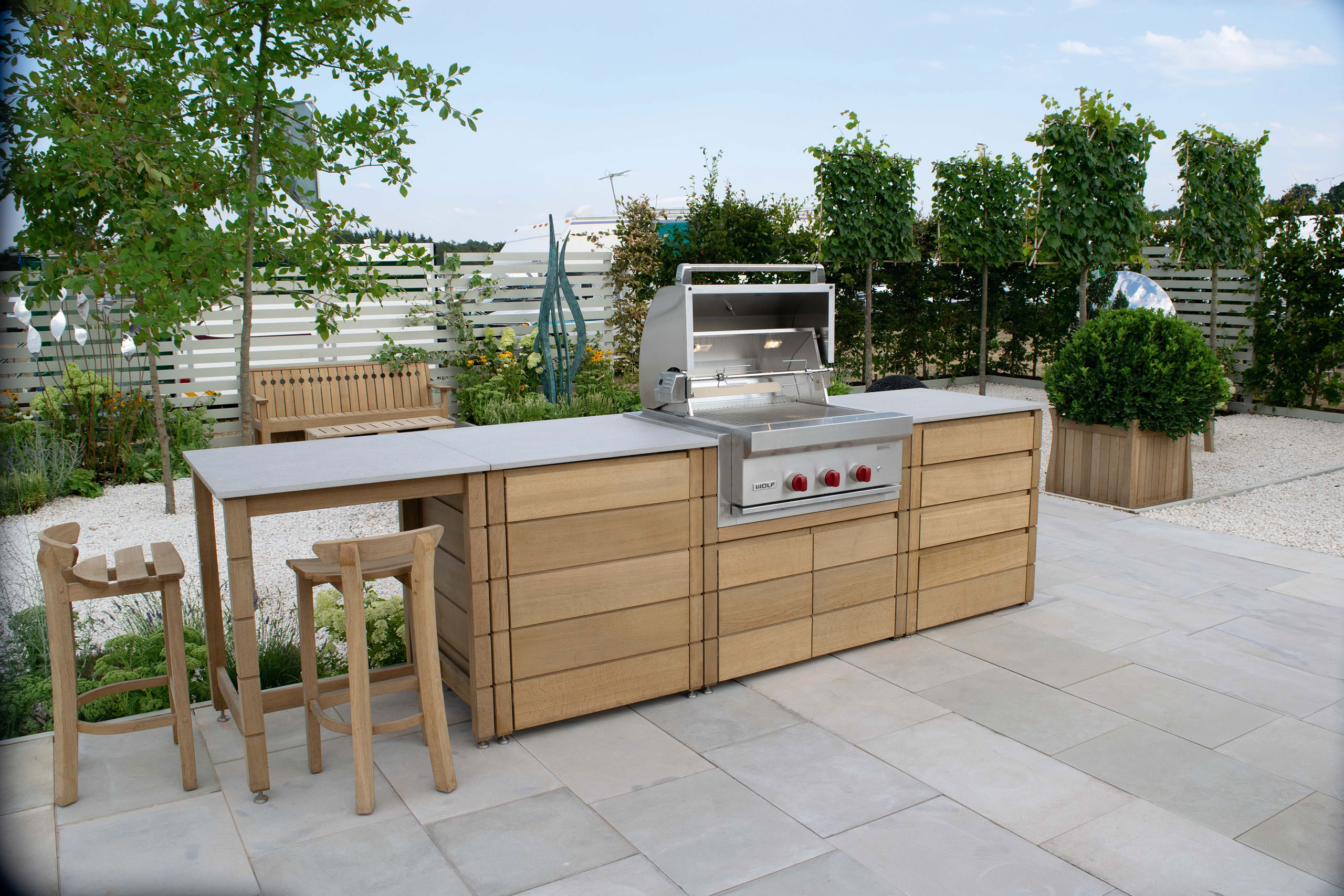
Garden kitchen with grill and bar from the British manufacturer Gaze Burvill. Materials — oak wood, Dekton composite material (tabletop) and stainless steel — are weather-resistant. Image source: gazeburvill.com

City Garden in Kingston, Great Britain. Landscape designer Joe Perkins offers a hot tub under the roof as an addition to the pool. Photo source: joeperkinsdesign.com
We carefully monitor the life cycle of some innovative solutions — whether they have been justified over time or turned out to be irrational. Did the new idea become popular, viral and viable, or did the designer create his garden as an art object? Well, this approach is very interesting. For example, we had a very interesting job - a garden of mosses, complex stylization, a small garden on a shady, wet plot on the bank of a river. It turned out to be comprehensive in meaning and extremely emotional. The garden of mosses can also be considered an art installation made of specially selected plants that are rarely used in projects. We are proud of our gardens and landscapes, which look established and developed since their completion. However, like all living projects, they flourish and mature with age, so we will show this garden later.
A fine line between landscape and garden design
For the English, gardening is one of the oldest traditions. Despite the fact that England is the home of the industrial revolution and the cradle of urban processes, the British have never lost touch with nature. For them, a garden is a must have. By the way, what can be explained about the city-planning specifics — low-rise residential architecture in English cities. The British know how to turn even the smallest plot of land into a work of garden art.
But it is necessary to understand that English gardeners mainly work in a historical environment, which is impossible, forbidden to change radically. For the English, the creation of gardens similar to what we see in Chelsea is not landscape design, but the design of landscape elements. Pay attention: this is garden design, when a specialist works with an already existing space, perfecting it, decorating it. We most often start creating a garden on an empty site with a construction site that has been zeroed out. This gives us great opportunities for modeling and landscape design.
With a landscape project, we organize space and regulate volumes — heights, tiers
If the plot is located on the relief, then it is the landscape project that we organize the space and regulate the volumes — heights, tiers. Strictly speaking, once this work was part of an architectural project, but increasingly large-scale landscape solutions are moving into our design territory. And here we practice a complex approach - we do not just solve technical problems with the help of retaining walls, but we design relationships between objects of inanimate and living architecture, between buildings, structures and plants.
Many do not understand this fine line between garden and landscape design. If a person combines plants in unusual combinations, trying to achieve harmony, a personal mood - yes, this is design, but not landscape design, but garden design.
When it comes to creating a garden from scratch, the first thing you need is a landscape project. Today, the customer no longer needs to be convinced of this, but a few years ago we were faced with a rather naive approach: "Why the project? Let's make a round flower bed here, a square one here, and here we will plant three hundred roses and three blue spruces"... Now our clients approach the issue of creating a garden meaningfully.
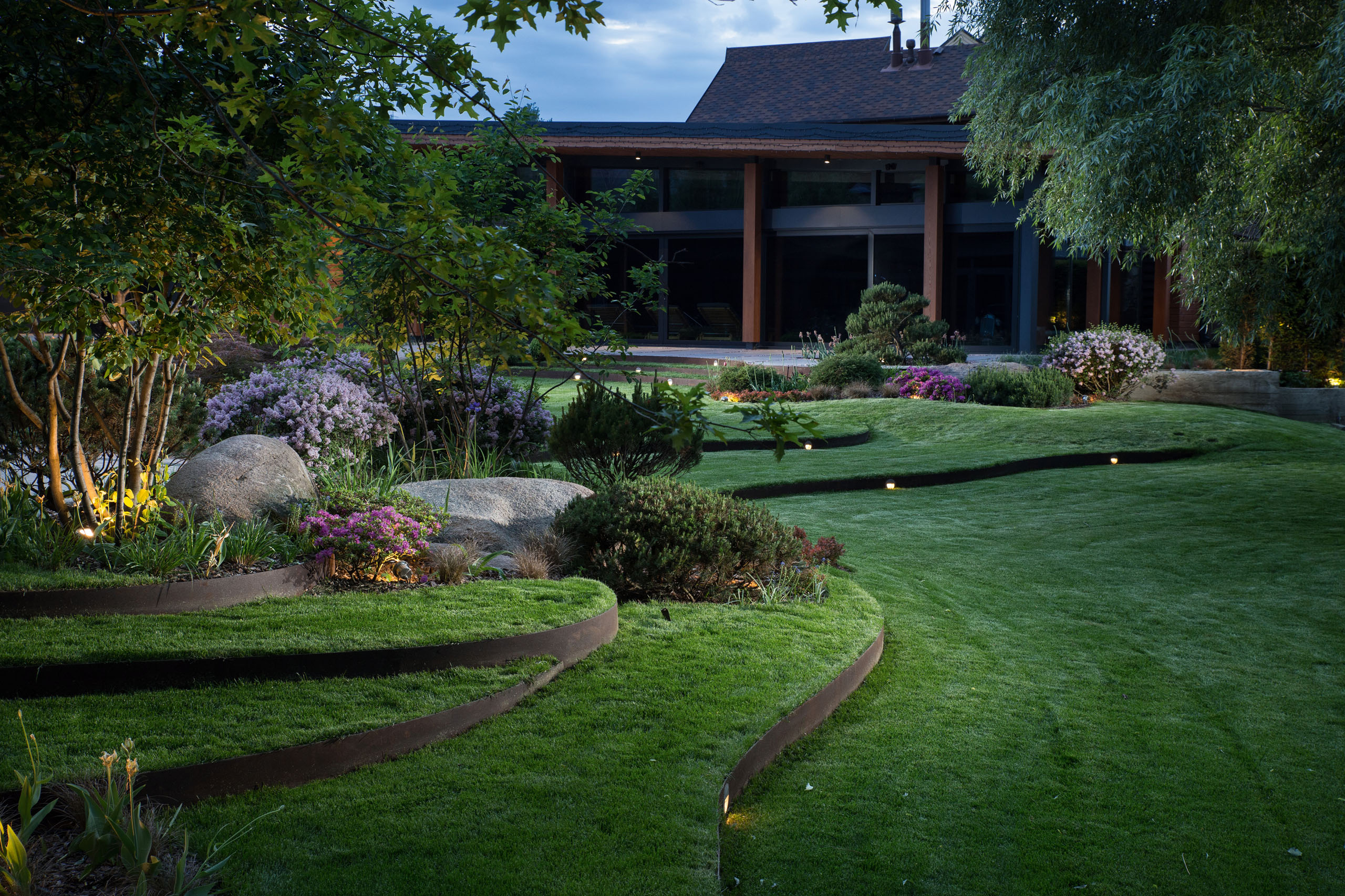
An example of relief work in the garden. Private garden, village Podhortsy, Kyiv region. Beloded Landscaping, 2015-2017. Photo source: belodedlandscaping.com
Customers already understand that the work of specialists cannot be cheap, that trees should be planted as adults, rather than saving on seedlings and then waiting a few years for them to grow up, spending money on maintenance, watering, and gardeners. They understand that in the garden it is necessary to design an irrigation system and this irrigation must be correct. It is not enough to install rotary sprinklers that evenly flood the territory with water. Trees require one watering regime, and lawns, shrubs and perennials - another. And if the plot is located on a relief, then a system of drainage and collection of rainwater is necessary so that the slopes are not washed away, the base of retaining walls and foundations are not washed away.
There was an understanding that all the information that comes from specialists is not just recommendations, but mandatory conditions for the favorable development of the garden. All these are components of the landscape project.
Stages of landscape design
Since this section is not called "lykbez" by chance, and the purpose of my articles is to develop a common language and guidelines for the successful collaboration of landscape designers, architects, urban planners and private customers, I want to tell you more about the stages of landscape design. Sometimes seemingly obvious points on closer inspection turn out to be not so obvious, which can lead to mutual misunderstanding.
The first stage of landscape design of a private garden is always a presentation of ideas, a presentation of style. After the customer has told us how he plans to spend time in the garden, about his tastes and stylistic preferences, we can already develop and propose an image of the new garden. And we create a series of sketches in which we outline the idea, the concept and give suggestions on the main materials that will be used. We can prepare visualizations. At this stage, we do not detail the assortment of planting material. We place the accents and give only their characteristics approximately as follows: there should be a tree with a spreading crown and large foliage. It is necessary to understand that there is a limited choice in the sets of cutouts for creating visualizations. It is possible to present an idea at the stage of conceptual design with the help of visualizations. Everything else is the next stage.
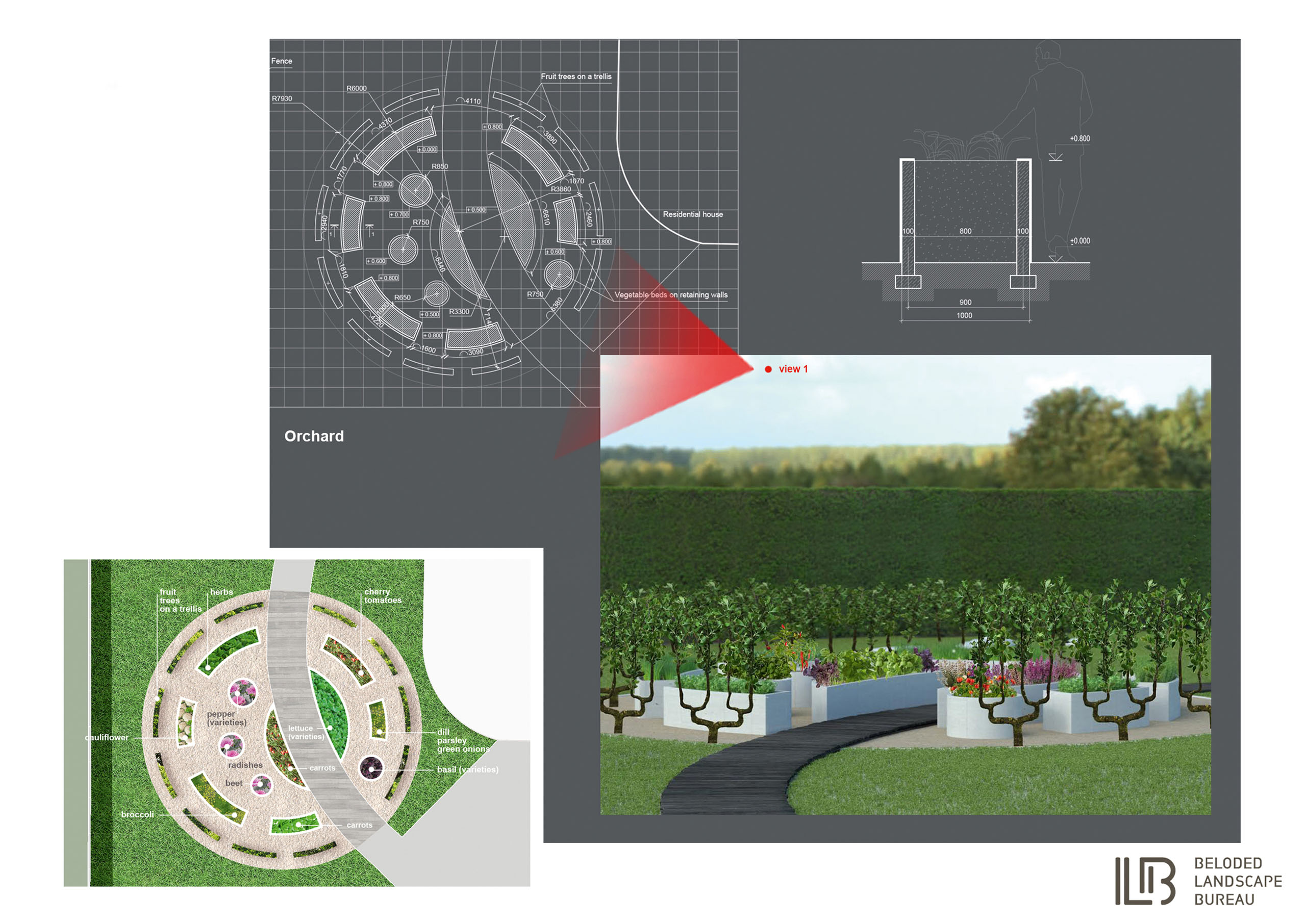
Photo source: belodedlandscaping.com
When the customer agreed on the concept, we proceed to stage "P" - the project. We design, focusing on the real area of the site, taking into account the exact dimensions, creating bindings, offering solutions for the relief organization. We decide whether we will build retaining walls or design slopes. As a result, at the "P" stage, we prepare a specific project solution, according to which it is possible to draw up an estimate. At this stage, it is possible to make corrections: it is possible to look for ways to minimize costs, or to develop some promising directions.
When the project is finally approved and the customer is ready to begin implementation, we perform the "RD" stage - we create the working documentation that the builders will work with. Of course, we pay special attention to dendrology - it is, as they say, "our everything", we can talk endlessly about plants, their features, preferences, and care for them. In addition, we calculate the volume of planting pits, areas for plant development, distances between them, draw up the specifications of the necessary equipment, solve problematic points, for example, how to bypass or protect utility networks.
The first conceptual stage usually takes about a month. Provided that we constantly interact with the customer, we receive timely feedback from him. At the project stage, when solutions, materials are chosen and the scope of work is approved, the customer can take a timeout to think things over, consult with the family. Everything depends on the customer to a greater extent. We have enough experience to ensure maximum speed and continuity of the process.
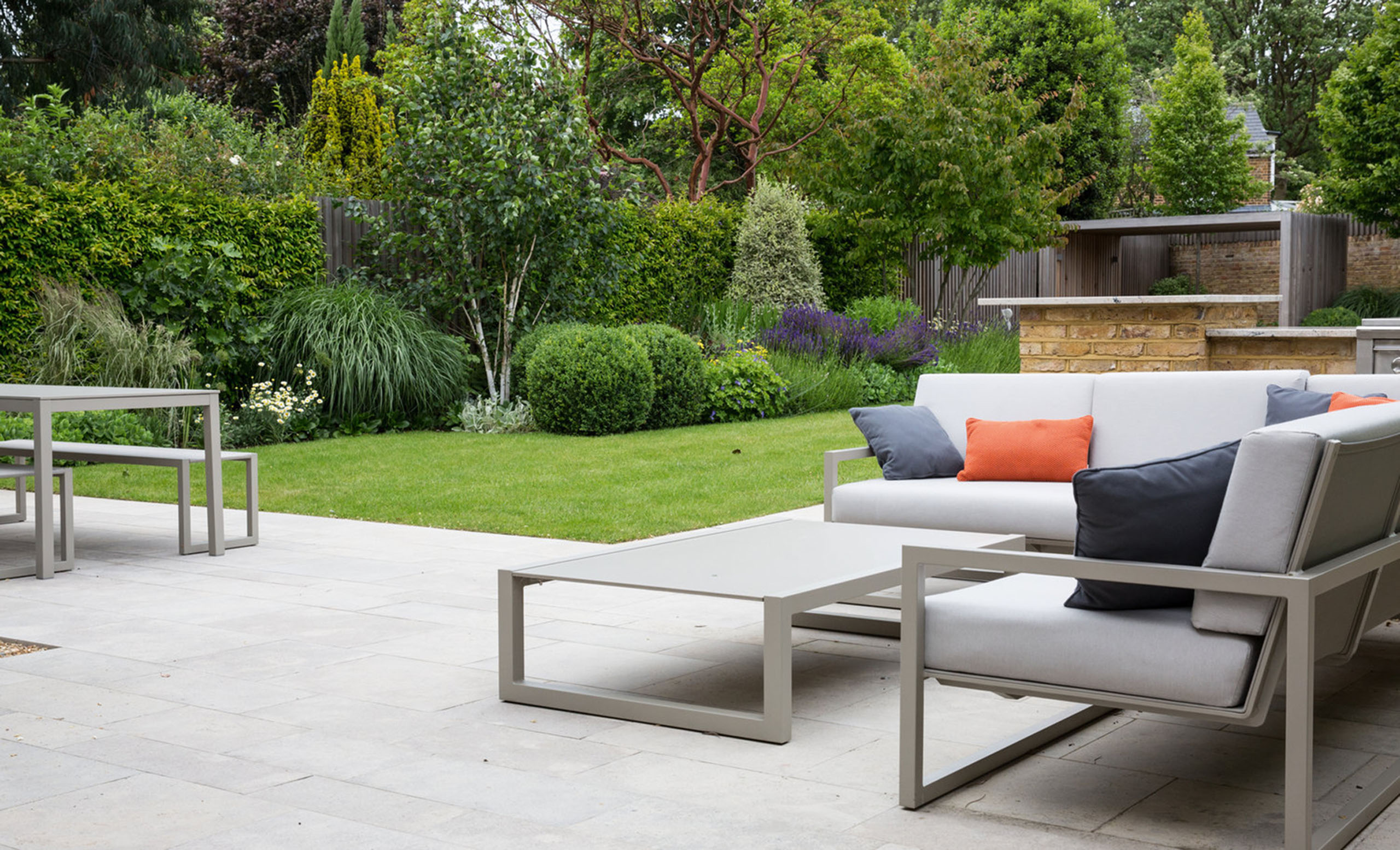
The SPA area is combined with the living room and kitchen. A solution by landscape designer Joe Perkins for an urban garden in Kingston, UK. Photo source: joeperkinsdesign.com
The only thing that can limit our and the customer's imagination is climatic conditions. There are standards for climatic zones, nursery owners always indicate which of the zones this or that plant is suitable for, and we are guided by these data. Trees from colder zones are suitable for use here, but endemics from subtropical and tropical climates, alas, are not. For example, we will not risk planting cedars in open ground in the Kyiv region, as one of our customers dreamed. Unfortunately, cedars do not overwinter in our region. But we found a solution — I suggested planting conifers that visually resemble cedars.
However, our climate is gradually changing, becoming warmer, but less mild. So we are also obliged to carefully monitor these processes. I believe that there are no such things as "too difficult problems". We are ready for new challenges, strive to gain new experience, constantly learn, grow and develop just like a garden. After all, landscape design today is creativity. As in music, there are only 7 notes, and everyone has different melodies. Our goal is to awaken feelings.
/Published in #11 volume Pragmatika, May 2019/


