


Each of the above is sometimes dangerous, and many more that are not listed! In memory of these cases, standards are issued, as their authors remind us, "written in blood", which set, in fact, meaningless parameters in the conditions of ordinary life, but which should be filled with life-saving content in an emergency.
The implementation of such an instruction in the project can be compared with the construction of the legendary Ark by the biblical Noah: the construction is not for immediate needs, but to avoid a hypothetical threat.

Olga Chernova, chief architect of archimatika projects
An architectural project developed in a normative field creates a whole collection of large and small arks for all known, and therefore, normatively described cases of danger. And the work of the architect is largely reduced to the creation of "concrete ships far from the water in anticipation of new floods."
- A fire-preventing sump in the form of a 1,2 m wide blind wall on the balcony.
- Balcony fencing with a height of 1,2 m!
- The window area is just the magic of numbers, don't believe it, but... 1,2 square meters. m!
- The width of the staircase should be... Phew! Not 1,2 m anymore! In the new version of the standard — 1,35 m!
- There should be a pair of evacuation exits from each seismic compartment, of which only one can be through the adjacent seismic compartment.
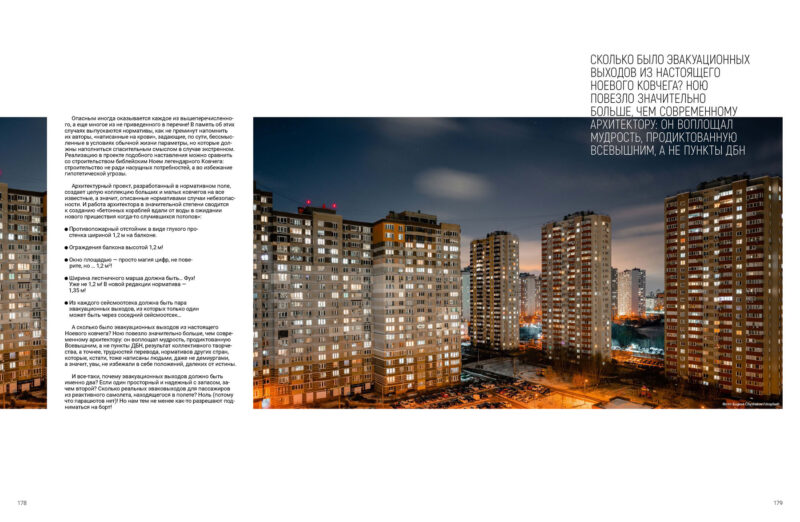
And how many escape routes were there from the real Noah's ark? Noah was much more fortunate than a modern architect: he embodied the wisdom dictated by the Almighty, and not the points of the DBN, the result of collective creativity, or more precisely, the difficulties of translating the standards of other countries, which, by the way, were also written by people, not even demiurges, and therefore unfortunately, they did not avoid provisions that are far from the truth.

Photo: Camilo Jimenez/Unsplash
And yet, why should there be exactly two evacuation exits? If one is spacious and reliable with a margin, why the other? How many real passenger escape routes are there from a jet plane that is in the air? Zero (because there are no parachutes)! But, nevertheless, we are somehow allowed to climb aboard! Because the list of means of fighting fire is not limited only to evacuation exits!
Maybe, in some case, it is worth directing efforts not to increase the number of exits, but to not prove the need for evacuation? And then the architect together with the customer will at least have a choice: to spend money on space and building materials for evacuation exits or on additional fire protection technologies. If it is not possible to formulate the truth, then do not concretize your relative judgments with an unambiguous clause of the law. Leave people a choice!
How many escape routes were there from the real Noah's Ark? Noah was much more fortunate than a modern architect: he embodied the wisdom dictated by the Almighty, and not the points of the DBN
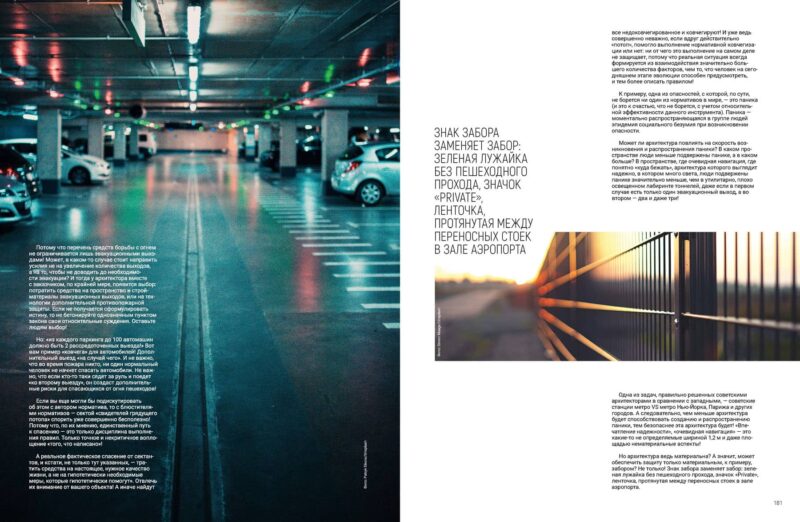
But: "every parking lot for up to 100 cars should have 2 distributed exits!". Here is an example of an "ark" for cars! Additional departure "just in case". And it is not important that during a fire no one, no normal person will start saving cars. It does not matter that if someone does get behind the wheel and go "to the other exit", he will create additional risks for pedestrians escaping from the fire!
If you could still discuss this with the author of the standard, then arguing with the guardians of the standards - the sect of "witnesses of the future flood" - is completely useless! Because, in their opinion, the only way to salvation is only the discipline of following the rules. Only the exact and indisputable embodiment of "what is written"!

Photo: Eugene Chystiakov / Unsplash
And the real actual salvation from sectarians, and, by the way, not only those mentioned here, is to spend money on a real, necessary quality of life, and not on "hypothetically necessary measures that will hypothetically help." Distract their attention from your object! Otherwise, they will find everything under-arched and ark them! And it is absolutely unimportant if suddenly there really is a "flood", whether the implementation of normative arkization helped or not: this implementation does not really protect against anything, because the real situation is always formed from the interaction of a much larger number of factors than those that a person at the current stage of evolution able to predict, and even more so — to describe with a rule!
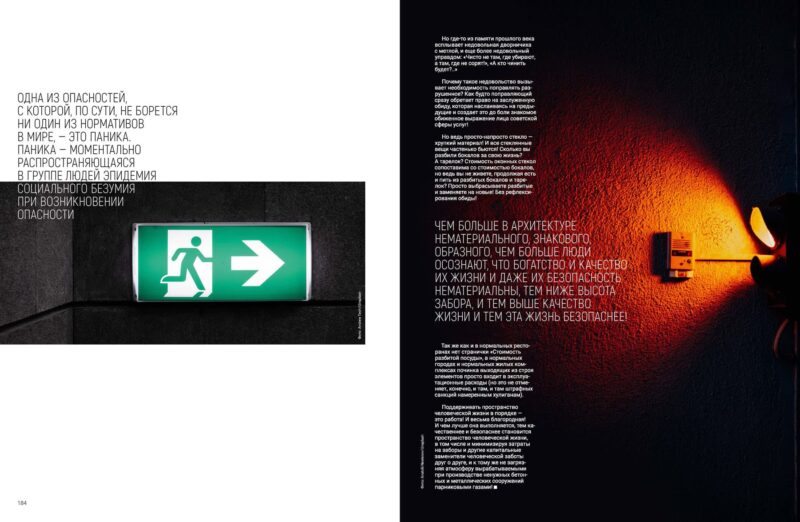
For example, one danger that virtually none of the world's regulations combat is panic (which is thankfully not combated, given the relative effectiveness of this tool). Panic is an epidemic of social insanity that spreads instantly in a group of people in times of danger.
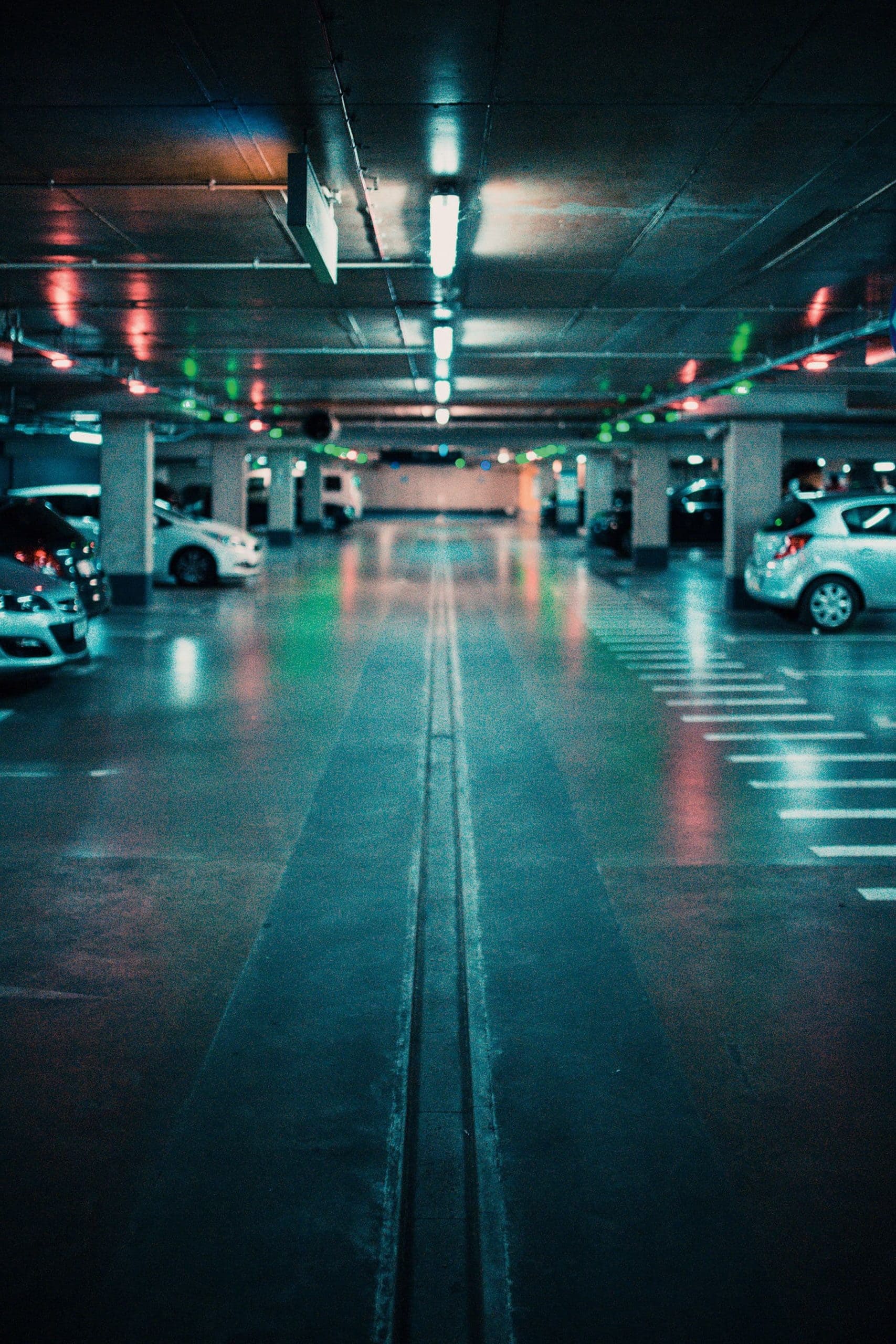
Photo: Patryk Sikora / Unsplash
Can architecture influence the speed of panic emergence and spread? In which space are people less likely to panic, and in which more? In a space where navigation is obvious, where it is clear "where to run", whose architecture seems reliable, where there is a lot of light, people are much less prone to panic than in a utilitarian, poorly lit labyrinth of tunnels, even if in the first case there is only one escape route exit, and in the second - two or even three!
One of the tasks correctly solved by Soviet architects compared to Western ones is Soviet metro stations vs the metro of New York, Paris and other cities. And therefore, the less the architecture contributes to the emergence and spread of panic, the safer this architecture will be! "Feeling of reliability", "obvious navigation" - these are intangible aspects not defined by the width of 1,2 m and even the area!
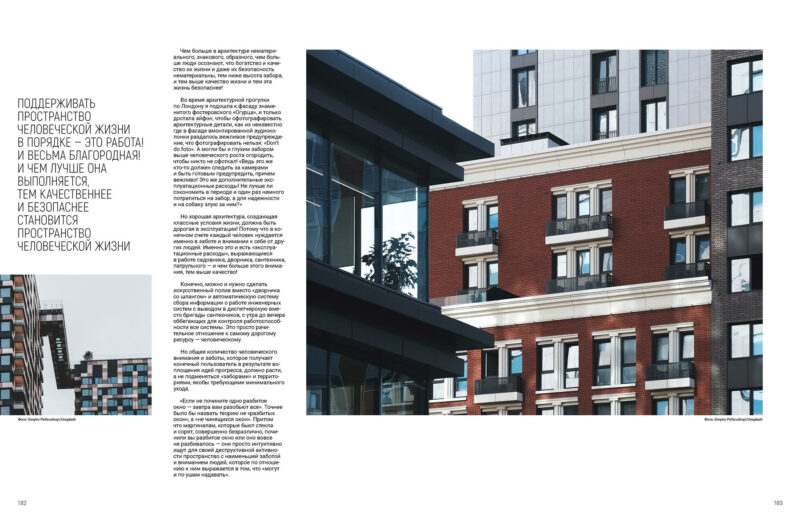
A fence sign replaces a fence: a green lawn with no pedestrian crossing, a "Private" sign, a ribbon stretched between portable posts in an airport concourse
But is architecture material? So, can provide protection only materially, for example, a fence? Not only! A fence sign replaces a fence: a green lawn without a pedestrian crossing, a "Private" sign, a ribbon stretched between portable racks in an airport concourse.
The more immaterial, symbolic, figurative in architecture, the more people realize that the wealth and quality of their life and even their safety are immaterial, the lower the height of the fence, and the higher the quality of life, the safer this life!

Photo: Simon Maage/Unsplash
During an architectural walk in London, I approached the facade of the famous Foster's "Cucumber" and had just taken out my iPhone to take photos of the architectural details, when a polite warning that you can't take photos: "Don't do foto" rang out from somewhere in the facade of the mounted audio speaker.
And they could have surrounded it with a deaf fence higher than human height, so that no one would take pictures! "After all, someone should be watching the cameras and be ready to warn, and politely! These are additional operating costs! Isn't it better to save for the period and spend a little once on the fence, and for reliability — and on the evil dog behind it?".
Keeping the space of human life in order is work! And very noble! And the better it is performed, the higher quality and safer the space of human life becomes
But good architecture, which creates cool living conditions, must be expensive to operate! Because in the end, each person needs care and attention from other people. These are the "operating costs" expressed in the work of a gardener, janitor, plumber, patrolman - and the more attention, the higher the quality!
Of course, it is possible and necessary to make artificial irrigation instead of a "cleaner with a hose" and an automatic system for collecting information about the operation of engineering systems with output to the control room instead of a team of plumbers who run around all systems for control from morning to evening. This is simply a careful attitude to the most expensive resource - human.
Photo: Dmytro Pidhrushnyi / Unsplash
But the total amount of human attention and care that the end user receives as a result of implementing the ideas of progress must be increased, not replaced by "fences" and territories that supposedly require minimal maintenance.
"If you don't fix one broken window, tomorrow they will all break." It would be more accurate to call the theory not the theory of "broken windows", but "windows beyond repair". Despite the fact that marginals who break windows and litter do not care whether you fixed a broken window or it was not broken at all - they simply intuitively look for a space for their destructive activities with the least care and attention of people, which for them is expressed in the fact that that "they can also provide by ear".
One of the dangers that virtually no regulations in the world deal with is panic. Panic is an epidemic of social madness that spreads instantly in a group of people in times of danger
But somewhere from the memory of the last century emerges a dissatisfied janitor with a broom and even more dissatisfied with the administration: "It's not clean where they clean, but where they don't litter!", "And who will fix it?...".
Why does such dissatisfaction cause the need to fix what has been destroyed? It seems that the one who fixes, immediately acquires the right to a well-deserved image, which, layered on the previous ones, creates this painfully familiar offended expression of the face of the Soviet service sector!

Photo: Andrew Teoh/Unsplash
But just glass is a fragile material! And all glass things often break! How many glasses have you broken in your life? And the plate? The cost of glass is comparable to the cost of glasses, but you don't live, continuing to eat and drink from broken glasses and plates? Just throw away the broken ones and replace them with new ones! Without reflecting insults!
The more immaterial, symbolic, figurative in architecture, the more people realize that the wealth and quality of their life and even their safety are immaterial, the lower the height of the fence, and the higher the quality of life, the safer this life!
In the same way that normal restaurants do not have a "Cost of broken dishes" page, in normal cities and normal housing complexes, the repair of elements that fail is simply included in the operating costs (but this does not cancel, of course, both there and there fines sanctions for hooligans).
Photo: Dmytro Pidhrushnyi / Unsplash
Keeping the space of human life in order is work! And very noble! And the better it is performed, the higher quality and safer the space of human life becomes, in particular, by minimizing the costs of fences and other capital substitutes for human care for each other, besides not polluting the atmosphere with greenhouse gases generated during the production of unnecessary concrete and metal structures.

Read also
Virtual metropolis. Architect Olga Chernova about the greatest modern city
The secret life of houses. How an architect can survive the "maturity" of a project with dignity


