


In Lviv, there is a unique furniture factory Varenycia Manufacture, which was founded in 2010 by Andriy Varenytsia, a carpenter-carver and furniture designer by profession. She specializes in complex individual orders — manufacturing furniture for a specific project. In production in 850 square meters. m employs 25 first-class specialists. The company is constantly expanding and building new shops. In May, the office-showroom was completely rebuilt, the doors of which are always open for architects-designers and their clients. This is a real manufactory in the classical sense, because it uses mostly manual labor in combination with the best modern robotic equipment and advanced technologies. In addition to cabinet furniture, various carpentry products are also manufactured here, including doors, panels, decorative panels, beams, and stairs. And less than a year ago, the company launched serial production. The first "swallow" was a series of dining tables and chairs DUB under the separate brand Varenycia. By the way, although the factory works mostly in a modern direction, its craftsmen are involved in the restoration of objects of domestic architectural heritage.
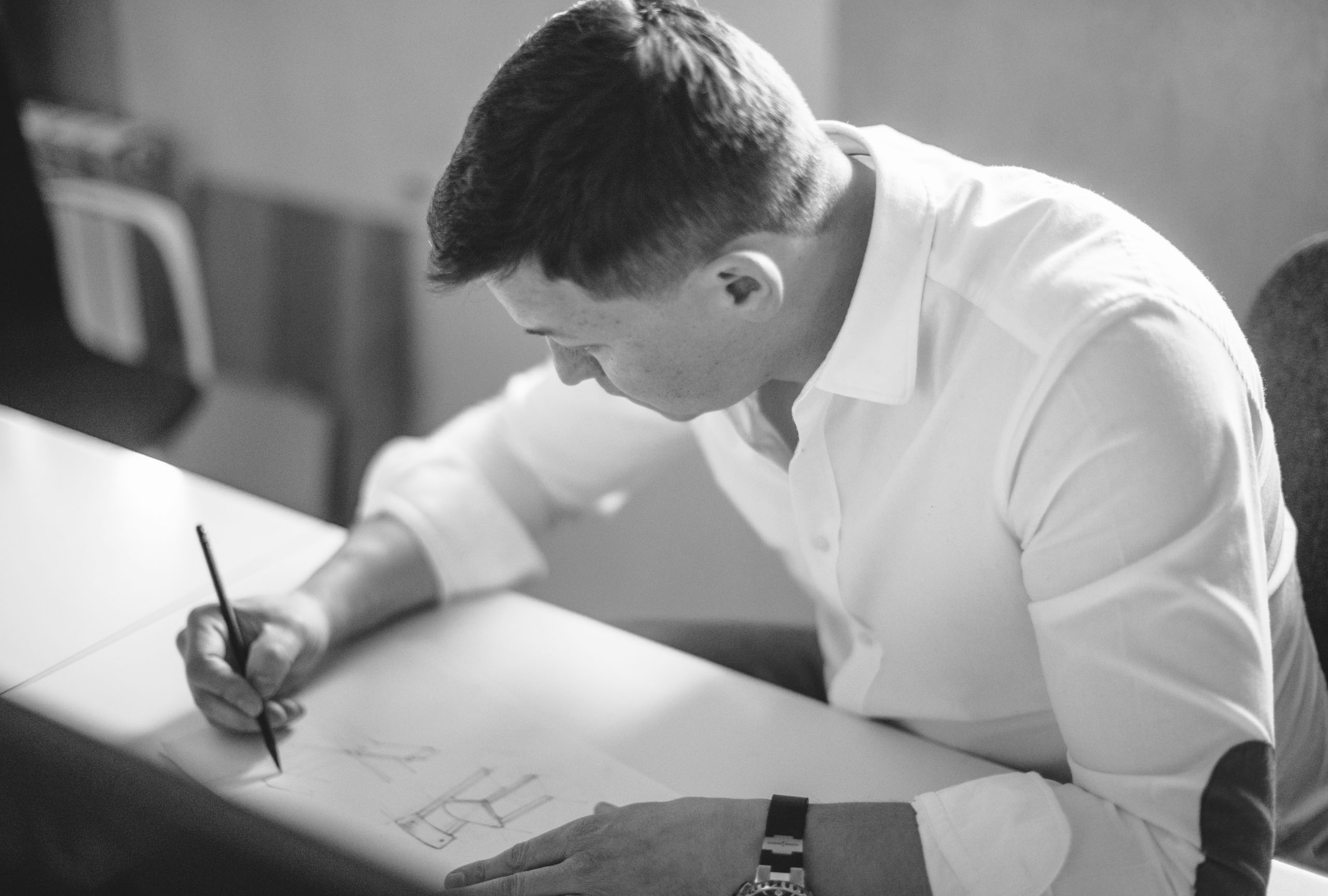
Andriy Varenytsia, founder of the Lviv furniture and carpentry manufacture Varenycia Manufacture
We became interested in how today in Ukraine it is possible to create not only a competitive full-cycle furniture production with its own design office, but also to have a number of orders implemented in the best cities of Europe - from Vienna and Graz to Madrid, Krakow and Istanbul. And even managed to open a branch of his company in Poland. Our curiosity was completely satisfied by the owner of the enterprise Andrii Varenytsia.
PRAGMATIKA.MEDIA: Did you always want to create furniture or did you have other dreams? By the way, where did you get your education?
Andriy Varenitsa: It all started from childhood, when our parents tried to force us into the house to read or draw. I was not very good with books, so the choice was obvious. I looked out the window and drew what I saw: ordinary trees, houses, fences. And what is interesting, I always drew cabinets, tables, chairs, i.e. various elements of furniture through the windows in those houses. Perhaps, this is what inspired me to go to an art vocational school after finishing school, where I acquired the profession of a carpenter-carver, and then received a furniture designer diploma at the National Forestry University of Ukraine in Lviv.
During our studies, we often visited local industry exhibitions, went to domestic factories, where we studied various structural elements of furniture, for example, the Yavoriv Furniture Factory, the Stryi Furniture Factory, as well as the Ivano-Frankivsk Furniture Factory, which at one time actually produced a lot of products throughout the Union and beyond its borders. By the way, it was at this plant that we practiced, spent a lot of time learning about the technical aspects of the profession. Even later, when we created our own Varenycia Manufacture, we started traveling abroad, in particular to Italy: to exhibitions in Milan and large manufacturing factories such as Minotti, Arca and others. Each of these trips was very inspiring, and I kept asking myself: why can't we do the same, or even better, here? Italians are so patriotic to their product, to their country, that in an hour of communication with them this stormy energy is so positively charged that you immediately want to run home and do something similar in our country, because otherwise it is simply impossible. That is, from those emotions you feel that you have no right to sit idly by.
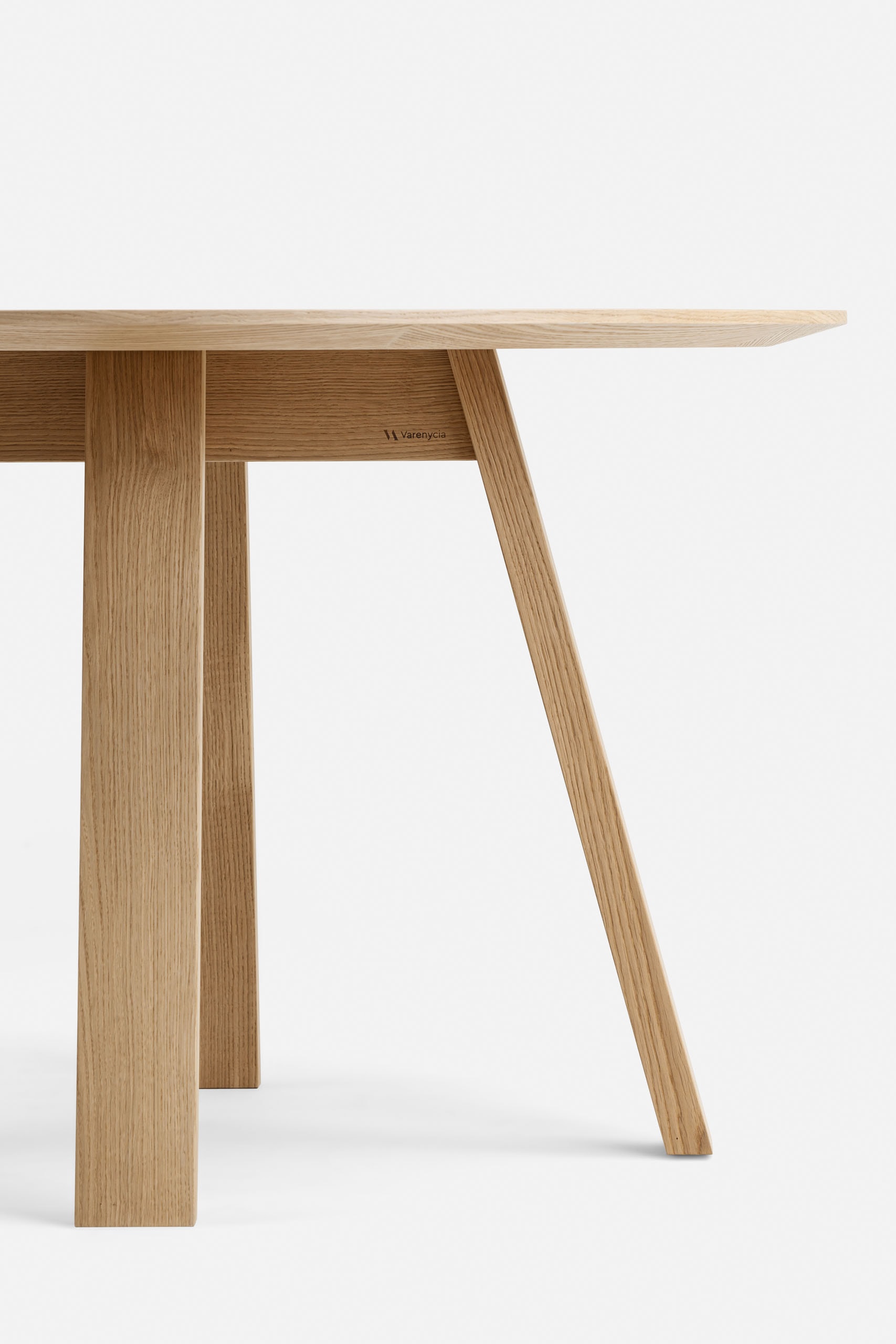
A fragment of the dining table of the DUB series of the Varenycia brand, oak, designed by Andrii Varenytsia

PM: Tell us how the Varenycia brand was born. How long has it been around?
A.V.: During my studies, I had the opportunity to simultaneously work in my specialty in my free time at some enterprises, gaining the necessary experience. That's when I realized that I like to create something with my own hands, to make various corrections to the projects that came to us ready-made: to make them better, more constructive, more perfect. When he decided to open his own business, he first worked in a garage, then the first employee appeared. It was difficult, because this is the period when you still don't know whether you need an assistant or whether it's better to do everything yourself. Later, more employees were added, then we changed the premises to a larger one, began to purchase equipment, improve the product itself. They started with laminated chipboard, and when they moved to a larger area, they began to use veneered chipboard, conquered painting, varnishing and other technologies.
Yes, 11 years ago, the Varenycia Manufacture furniture and carpentry manufactory appeared, where we fulfill individual complex orders. And last year they decided to release their own series of interior items under the Varenycia brand. That is why we have been in the furniture industry for a long time, and in serial production for less than a year. We create furniture in Lviv, and assemble it in Ukraine, Austria, Spain, Poland, Turkey, France and Germany. They even opened a subsidiary in Warsaw. A large percentage of the production process is manual work, which we combine with the use of robotic machines and innovative technologies, and the area of our facilities is currently 850 square meters. m.
"Perhaps not everyone will understand, but I will say the following: the period of crisis we are going through now is in our hands"
PM: Don't you think that we are significantly inferior to Western manufacturers in this matter? The same Italians, who have a lot of experience.
A.V.: Of course, in Italy, the art of creating furniture has been formed for centuries and has even become a national industry, known throughout the world, and the secrets of the craft are passed down from great-grandfathers. But in our country this matter has existed for a long time. The big problem is that during the collapse of the Soviet Union, many people who had talent did not know where to go and how to survive, so they decided to go abroad and work "for the master". For them, it turned out to be much easier than promoting what you know and what you have. Therefore, of course, the demand for the services of domestic craftsmen fell for a while, but now there are many people, even my acquaintances, who work well in this field. Accordingly, they are constantly improving their work: if they started with classic models, now they are modernizing their products.
Perhaps not everyone will understand, but I will say the following: the period of crisis we are going through now is in our hands. For example, the fact that it has become difficult to import something from abroad encourages customers to trust Ukrainian manufacturers more. Those who are not ashamed of what they produce and know how to sell it correctly are now, as they say, "on a horse." The biggest disadvantage of many of our manufacturers is that they are to some extent ashamed of what they do, because they think that it works better abroad, so they do not really believe in their business, that they are capable of it. But I have repeatedly visited large factories in other countries. The things made there may be significantly more expensive than ours, but the quality, approach, processes are the same. They just have faith in their product and much more patriotism.
PM: Do you remember the first piece of furniture that made an impression on you? What exactly was that? What did he look like?
A.V.: Oh yeah! This moment will remain in my memory forever. It was a birthday party for a childhood friend, and it turned out that there weren't enough chairs around the table. Then I saw for the first time a terrace folding chair, which a friend took out of the pantry and unfolded with a simple movement of one hand. I was most impressed!
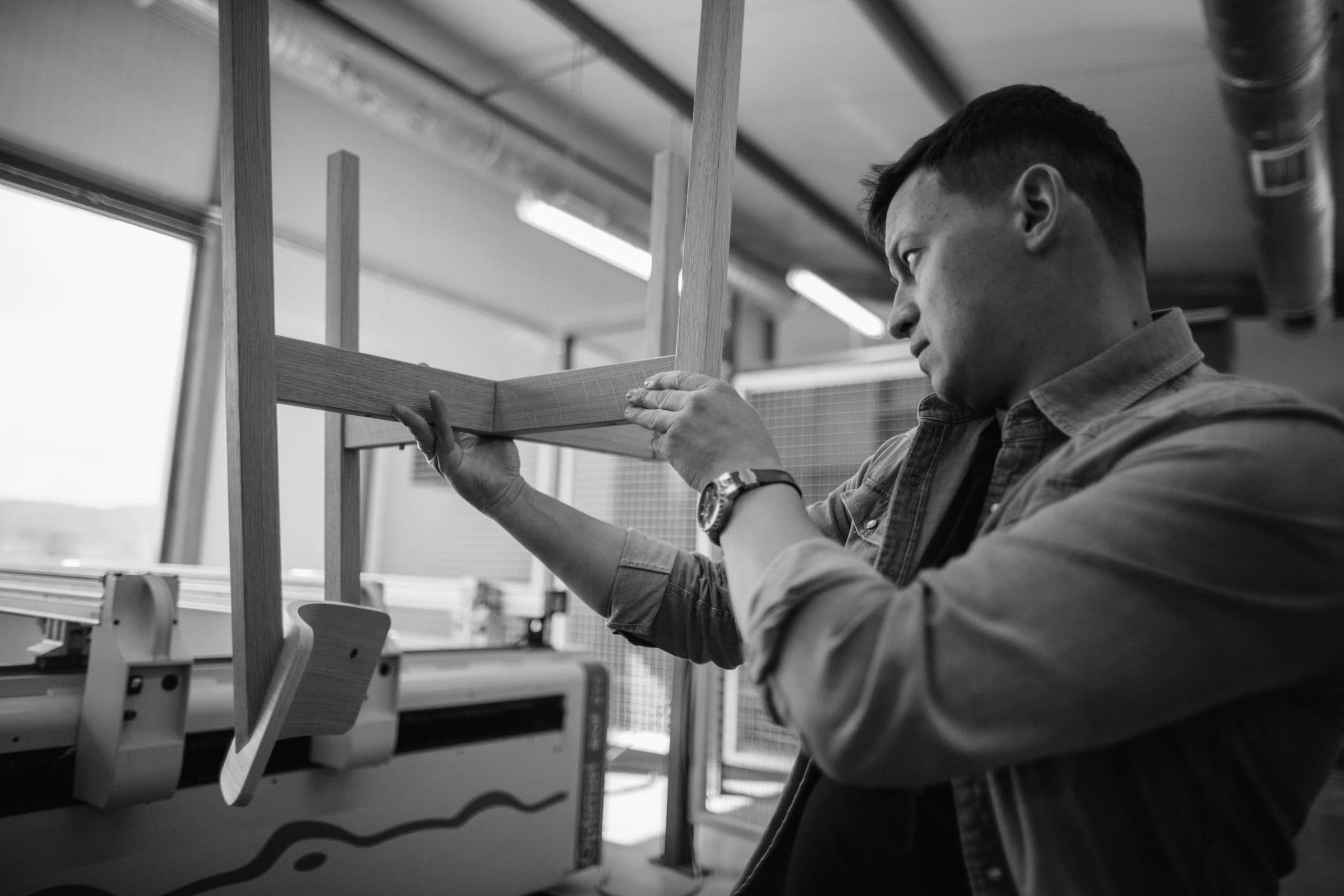
Andriy Varenytsia in the Varenycia Manufacture shop
PM: Antonio Citterio, Carlo Molino, Mies van der Rohe, Ray and Charles Eames, Jean-Marie Massot—who among the famous (or not so famous) designers is a certain authority for you? Whose views on creative approach, profession do you share?
A.V.: I really like what Ludwig Mies van der Rohe did, Michael Tonet, Charles and Ray Eames, Le Corbusier… Everyone has something to learn. For example, Mies did not have the profession of an architect at all, he is a self-taught specialist. This is a person who created products that are still relevant. Such things are very inspiring. Especially the fact that they can still be seen in various interiors, and they are even passed down from one generation of the owner's family to the next. Another example is the German Thonet factory, the heiress of the Viennese furniture inventor Michael Thonet. If you visit famous exhibitions, say in Milan or Cologne, you can make sure that this is the coolest furniture. They really believe in what they do, they respect themselves as specialists. When you see that people keep your product for years, even leave it to posterity, then you don't need more inspiration. And what are we worse? Let's take the Ukrainian market: I always tell everyone: our Ukraine is an unplowed field. What do not touch, what do not start to do - anything is possible! Because we are a clean slate. We still do not have the kind of history that our neighbors have. I want to say: if our Ukrainian product has a little taste and a good proportion, it will be in demand and create a good image for the country.
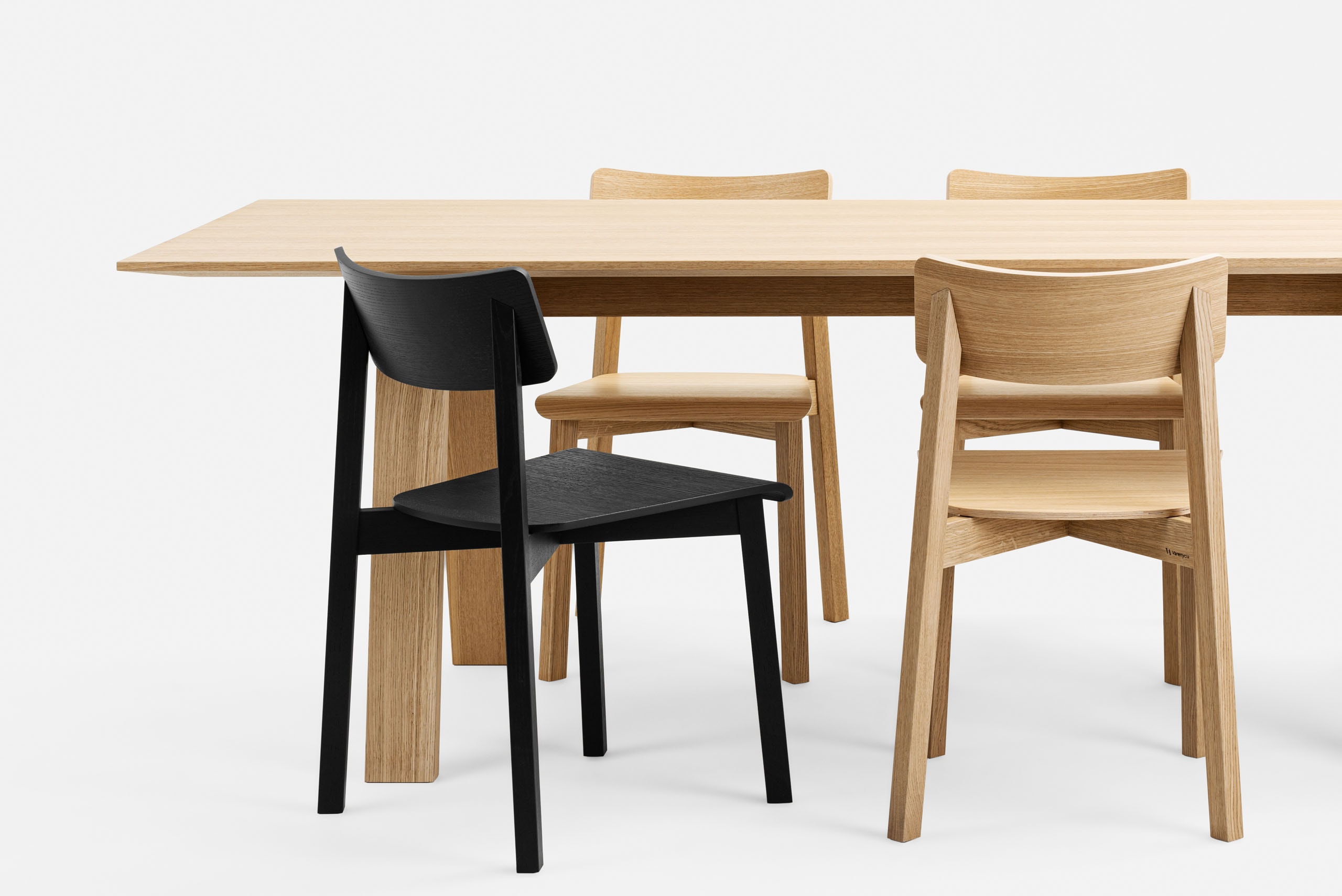
Large dining table and chairs of the DUB series of the Varenycia brand, all oak, designed by Andriy Varenytsia
PM: Describe the creative process of creating the brand's items. Where does inspiration and images come from? What exactly do you need for creativity, a creative mood? How exactly is the development of a separate model?
A.V.: We at Varenycia Manufacture have created countless interior items for 11 years. I admit that there were also orders for replicas of famous brand furniture. It was these projects that taught me to "see" in a creative sense. And the combination of the education of a carpenter and a furniture designer, multiplied by an irresistible desire to create a Ukrainian product, left no chance of being apart from the creative movement. Ideas are constantly in the air, and every day I try to "catch" them with a pencil. Next, of course, we analyze the market, look for a form, calculate the numbers and make prototypes, test all this in our company showroom and launch it into production. I was very lucky with the team.
PM: The DUB series of your Varenycia brand is made of solid oak. Do you only work with wood? How is the selection of raw materials? Where is it supplied from? Who does the processing? What other stages does the production of brand furniture include? How many people are still involved in the process?
A.V.: The DUB series is made exclusively from natural materials. We have a large network of suppliers of Ukrainian wood from various regions, for example, from Transcarpathia, Vinnytsia, Zhytomyr and other areas. It happens as follows: when we need a certain volume of some raw material, we ask our suppliers who has it in stock at a certain period, and order it. We handle the processing ourselves, which makes it possible to keep the bar at all stages of production, which is veneering, grinding, varnishing and carpentry. A total of 8 craftsmen work on Varenycia products.
"Ideas are constantly in the air, and every day I try to "catch" them with a pencil"
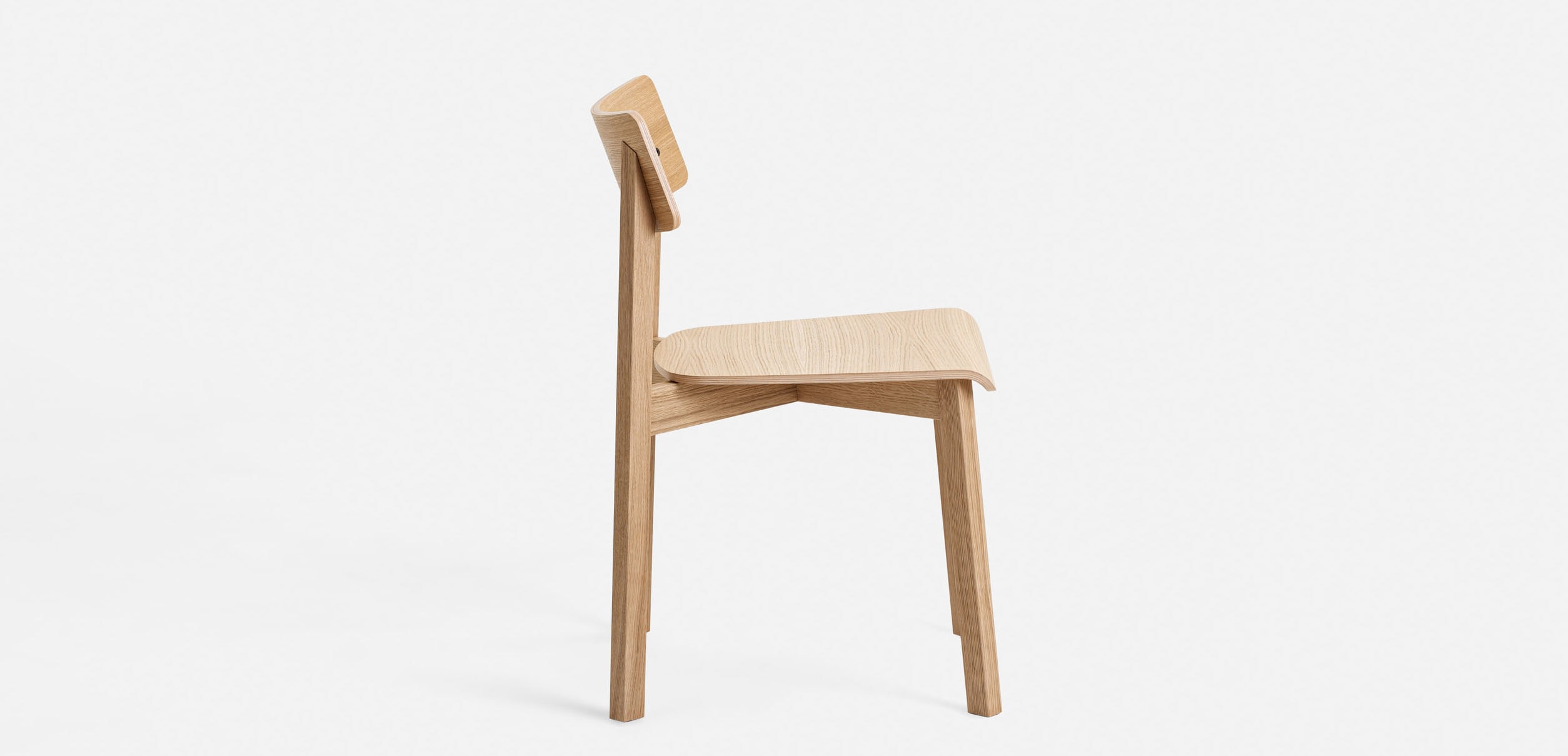
A chair from the DUB series of the Varenycia brand
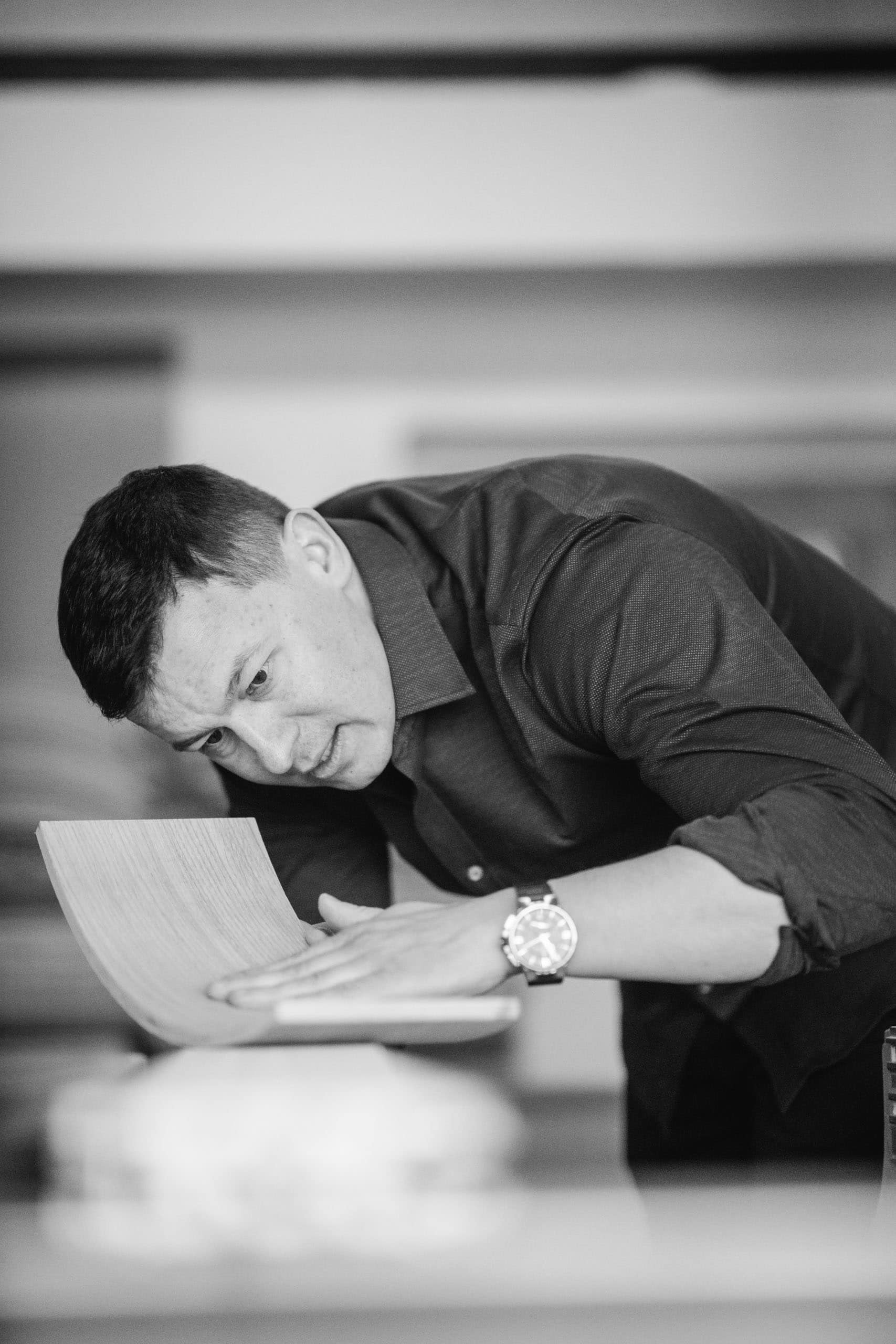
Much of Varenycia Manufacture's furniture and joinery production is done by hand
PM: How did the DUB series come about? What was the impetus for her birth? In your opinion, for whom is it created?
A.V.: DUB is a family of objects with a unique silhouette, made of solid oak, which includes a round table, a dining table and a chair. It appeared by chance - while working on another of our products, the serial modular kitchen Prosta, which is assembled as a constructor and manufactured in three days. When we created it and tried to present it correctly in the showroom, we realized that this kitchen lacked something. She is modern, minimalist, so we were looking for an object, for example, a dining table, which would perfectly suit her. We started with ready-made models of Ukrainian manufacturers. We looked at many, but they did not suit us either in terms of design or quality. They began to look for foreign, mainly Austrian, German. They found suitable ones, but it was financially unprofitable. Then they sat down, drew sketches - not worse! This is how the idea was born to create our own tables, which now beautifully emphasize our kitchen.
We have a team of designers who develop solutions for complex objects. So when I have an idea for an interesting serial product, I fix it, then we gather a small collegium, sit down together, and someone suggests something, someone starts drawing the details of the nodes, and someone starts making calculations. Then we create a prototype in the workshop, discuss, and when everything satisfies us, we put it on the stream. This is how work began on the DUB series, which later grew into a separate direction, a brand. It will appeal to both rationalists who value function above all, and people who are always guided by intuition.
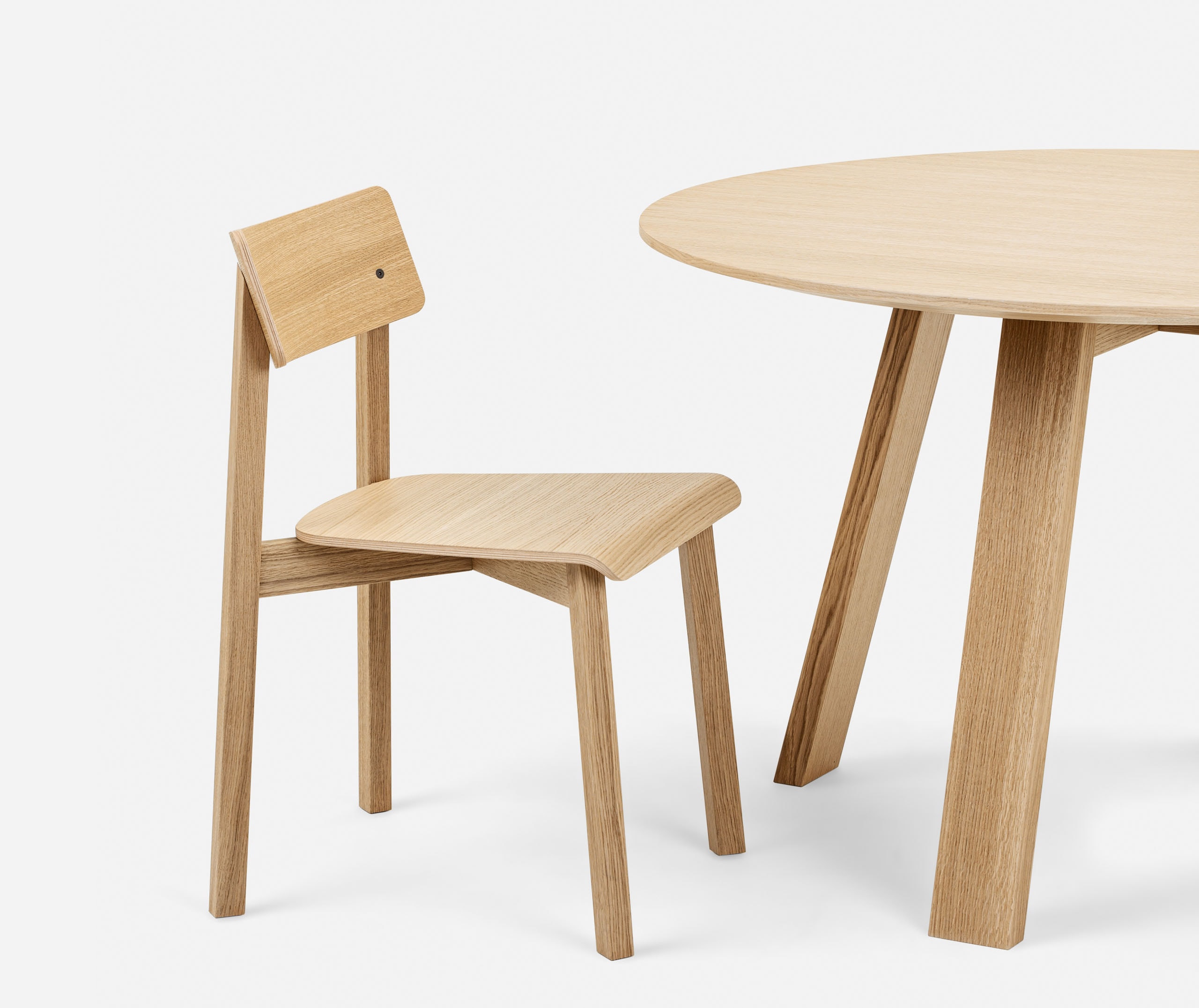
Round oak table and chair of the DUB series of the Varenycia brand
PM: Do you see the mission of your brand as making modern lifestyles more accessible by reimagining the creation of furniture? In your opinion, what should this mean?
A.V.: We are fans of simplicity. We understand not only the functionality and design of interior items, but also all the processes of turning an idea into reality, from a sketch to the final product. We simply do not have a link between the designer and the manufacturer. This gives us a unique opportunity to feel all the nuances at our fingertips and preserve the simplicity that we put into our series so that it later becomes a part of our customer's life.
Varenycia Manufacture is a good example of the well-known thesis: "Less words, more action." With daily work here, in the literal sense, they produce a product that is able to represent our country in a dignified way on the European market, at the best industry exhibitions in the world, and also one that fulfills the super-task of forming an authentic brand made in Ukraine. Let's say without too much pathos that the presence of such a production in Ukraine was a pleasant discovery and pride for us.


